
Plot Summary
Dreams of a Hidden House
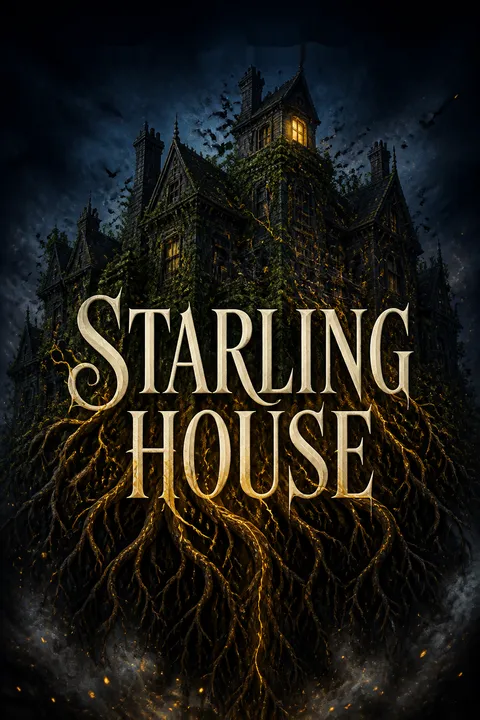
Opal, a young woman scraping by in the dying Kentucky town of Eden, is haunted by recurring dreams of Starling House—a mysterious, ivy-choked mansion on the edge of town. She's always been an outsider, raising her younger brother Jasper after their mother's death, and the house calls to her with a strange, aching sense of belonging. The town shuns both Opal and the reclusive Starling family, whispering stories of curses and misfortune. But for Opal, the house is a beacon in the darkness, a place she yearns for even as she tells herself dreams are for people with easier lives.
Strangers at the Gates
One cold evening, Opal's curiosity draws her to the iron gates of Starling House. She's caught by Arthur Starling, the house's last, brooding heir, who warns her to run. Their meeting is charged with unease and a strange recognition. Opal's blood stains the gate, and something in the house seems to awaken. Despite Arthur's warning, Opal is drawn back, unable to resist the pull of the house and the secrets it keeps. Their lives, both marked by loneliness and loss, begin to entwine in ways neither expects.
The Job Offer
Haunted by dreams and desperate for money to secure Jasper's future, Opal returns to Starling House. Arthur, wary but compelled, offers her a job as housekeeper. The house is filthy, neglected, and full of strange symbols and locked doors. Opal accepts, setting in motion a chain of events that will bind her fate to the house and its Warden. As she cleans, she uncovers fragments of the Starling legacy and feels the house's hunger for attention, for care, and perhaps for her.
Cleaning the Cursed Home
Opal's days become a rhythm of scrubbing, dusting, and exploring the labyrinthine halls. The house seems to respond to her presence, growing less hostile, almost grateful. She finds portraits of past Wardens—outsiders, misfits, people who never belonged anywhere else. Arthur remains distant, tormented by his duty and the house's demands. Opal's own wounds—physical and emotional—refuse to heal, as if the house is feeding on her pain. Yet, a fragile trust grows between her and Arthur, both of them strays in search of home.
Stories and Scars
Opal seeks the truth behind Starling House, digging through local legends, library archives, and the memories of those who remember too much. She learns of Eleanor Starling, the house's first mistress, and the dark history of the Gravely family—coal barons, abusers, and the source of Eden's curse. The house was built as a labyrinth to contain something monstrous beneath. Opal's own family history is tangled in these roots, and she discovers her mother was a Gravely, making her part of the legacy she's been trying to escape.
The House's Hunger
The house's influence deepens. Opal's dreams grow more vivid, blurring the line between waking and sleeping. She's approached by Elizabeth Baine, a corporate agent for Gravely Power, who wants access to the house's secrets and will stop at nothing—including blackmail and arson. Opal is forced to spy on Arthur, torn between survival and loyalty. The house, sensing her betrayal, grows restless. Arthur, too, is forced into impossible choices, his guilt and duty consuming him as the mist rises and the Beasts beneath stir.
Ghosts, Lies, and Family
Opal's double life unravels. Jasper, her brother, confronts her about her secrets and his own dreams of the house. The town's tragedies—fires, deaths, disappearances—are revealed to be the work of the Beasts beneath Starling House, monsters born of old sins and kept at bay by the Warden's vigilance. Opal learns that every Warden was once an outsider, called by dreams, and that the house chooses those who need it most. But the cost is always blood, and the cycle of sacrifice seems endless.
The Warden's Burden
Arthur's burden as Warden is crushing. He is bound to the house, fighting the Beasts that rise from Underland, knowing that every failure means tragedy for Eden—especially for those with Gravely blood. Opal, realizing her own connection to the curse, is torn between running and staying. The house, sensing her need, offers her a place—but at a price. Arthur, desperate to end the cycle, makes a deal with Baine and the power company, giving up the house's keys in exchange for Opal and Jasper's safety, even as it means his own doom.
The Beasts Beneath
The mist rises, the Beasts break free, and Arthur descends into Underland, the realm beneath the house where nightmares are made real. Opal, refusing to abandon him, follows—through dreams, through the river, through the haunted mines. In Underland, they confront the source of the curse: Eleanor Starling, trapped by her own rage and pain, and the Beasts she dreamed into being. The truth is revealed—Underland is a place of dreams and nightmares, shaped by the wounds of those who enter.
Betrayal and Bargains
Opal and Arthur face their own monsters—guilt, grief, and the fear of being unloved and alone. Eleanor's story is one of abuse, vengeance, and the desperate hunger for home. Opal, offered the chance to stay in Underland and escape her pain, chooses instead to forgive, to let go, and to fight for the living. She promises to tell the true story, to break the cycle of silence and complicity that allowed the curse to fester. The Beasts, no longer needed, begin to fade.
The River's Toll
Opal and Arthur, battered and changed, return from Underland. The house, freed from its curse, is no longer a prison but a place of possibility. The town of Eden, too, is changed—its bad luck spent, its wounds beginning to heal. Jasper leaves for college, forging his own path. Opal and Arthur, no longer bound by duty or guilt, choose each other, building a home not from fear, but from hope and love. The past is not forgotten, but it is no longer a shackle.
Descent to Underland
In the final confrontation, Opal and Arthur descend together, facing the Beasts and the ghosts of all who came before. They see the cost of silence, the pain of those who were never believed, and the power of stories to wound or heal. Opal, by listening and telling the truth, offers Eleanor and herself a measure of peace. The Beasts, born of pain, are laid to rest. The house, at last, is only a house—a place to live, to love, to dream.
The Truth of Monsters
The curse is broken not by violence, but by understanding and compassion. Opal and Arthur, survivors of their own haunted histories, choose to stay—not because they must, but because they want to. The house is rebuilt, not as a fortress, but as a home. The town, too, begins to heal, its stories no longer twisted by shame and silence. The Beasts are gone, but the memory of them lingers—a warning, a lesson, a promise that the past can be faced and survived.
Choosing Home
Opal and Arthur, once strays, now choose each other and the house that called them. They open the gates, welcome friends and family, and begin to write their own story—a true one, full of scars and hope. The house, once a place of nightmares, becomes a place of dreams. The town, once cursed, is simply a town, full of people who can change. The story ends not with exile, but with homecoming.
The Last Warden
Arthur, no longer the last Warden, is free to dream his own dreams. Opal, the new Warden, chooses to end the cycle of sacrifice and silence. Together, they tend the house, the land, and each other. The past is honored, the dead remembered, but the future is open. The house is no longer a prison, but a sanctuary—a place where the lost can be found, and the wounded can heal.
Flowers in Underland
In the aftermath, wildflowers bloom where the Beasts once walked. The house is filled with light, laughter, and the scent of wisteria. Opal and Arthur, surrounded by friends and family, build a life together. The town, too, is changed—its wounds not erased, but tended. The story of Starling House is told and retold, not as a warning, but as a promise: that even in the darkest places, hope can take root and grow.
A True Story Endures
The legend of Starling House becomes a story of survival, of truth, and of love. Opal and Arthur's story is not a fairy tale, but a true one—full of pain, courage, and the stubborn refusal to give up on home. The house stands, battered but beautiful, a testament to the power of stories to heal, to bind, and to set us free. In the end, the dream is not of escape, but of belonging. In the end, we come home.
Analysis
A modern Southern Gothic about trauma, home, and the power of storiesStarling House is a haunting, emotionally charged reimagining of the haunted house novel, blending Southern Gothic atmosphere with a contemporary exploration of trauma, generational pain, and the longing for belonging. At its heart, the book is about the stories we inherit and the ones we choose to tell—the lies that protect us, the truths that set us free, and the monsters we create when pain is left unspoken. Through Opal and Arthur, the novel examines the cost of survival, the burden of duty, and the possibility of redemption through love and truth. The house itself is a living metaphor for trauma—dangerous, demanding, but also capable of healing when tended with care. By breaking the cycle of silence and sacrifice, the characters reclaim their agency, choosing home not as a place of exile, but as a place of hope. The novel's lesson is clear: the past cannot be undone, but it can be faced, survived, and transformed. In the end, the true story endures, and so do we.
Review Summary
People Also Read
Characters
Opal
Opal is a young woman marked by loss, poverty, and a relentless drive to protect her younger brother Jasper. Scarred by her mother's death and the town's rejection, she's learned to survive by lying, stealing, and keeping her heart guarded. Yet beneath her cynicism is a deep longing for home and belonging, which draws her to Starling House. Her journey is one of self-discovery—facing her own wounds, her family's dark legacy, and the temptation to run from pain. Through her relationship with Arthur and her confrontation with the house's curse, Opal learns to choose love and truth over fear and silence, transforming from a stray into the Warden who finally breaks the cycle.
Arthur Starling
Arthur is the last in a long line of Starling Wardens, bound to the house by duty, guilt, and a legacy of violence. Haunted by the deaths of his parents and the knowledge that every failure unleashes tragedy on the town, he's isolated, prickly, and deeply lonely. His sense of responsibility is both his strength and his curse—he's willing to sacrifice everything, even himself, to protect others. Arthur's relationship with Opal awakens his capacity for hope and love, challenging his belief that he must always be alone. In the end, he learns to let go of the sword, to accept help, and to dream of a life beyond duty.
Jasper
Jasper is Opal's younger brother, a talented, sensitive teenager with dreams of a better life. His asthma and vulnerability make him the focus of Opal's fierce protection, but he's also determined to forge his own path. Jasper's art—strange, haunting videos—reflects the family's trauma and the town's darkness. His journey is one of growing independence, learning to accept help, and choosing his own future. Jasper's love for Opal is both a source of strength and a reminder that home is not a place, but the people who love you.
Eleanor Starling
Eleanor is the original mistress of Starling House, a survivor of abuse and betrayal who built the house as a labyrinth to contain the Beasts born of her pain. Her story is one of suffering, rage, and the desperate hunger for home and justice. Trapped in Underland, she becomes both victim and villain, her nightmares shaping the curse that haunts Eden. Eleanor's inability to let go of her wounds perpetuates the cycle of violence, but in the end, she finds a measure of peace through Opal's compassion and the promise that her story will be told.
Elizabeth Baine
Baine is the corporate agent for Gravely Power, determined to unlock the secrets of Starling House for profit. She uses blackmail, threats, and violence to get what she wants, seeing people as tools or obstacles. Baine represents the external forces of exploitation and denial that have always preyed on Eden. Her inability to understand the true nature of the house and its curse leads to her downfall, a warning that some doors should remain closed.
Bev
Bev is the owner of the Garden of Eden Motel, where Opal and Jasper live. Gruff, foul-mouthed, and fiercely protective, she provides a rough kind of stability and care. Bev's relationship with Opal is complicated—part landlord, part surrogate mother, part friend. Her own secrets and vulnerabilities are revealed over time, showing that even the hardest people need love and belonging. Bev's partnership with Charlotte is a quiet testament to the possibility of happiness, even in a place like Eden.
Charlotte
Charlotte is the town librarian and amateur historian, dedicated to uncovering the real story of Eden and its people. She befriends Opal, helps Jasper, and becomes Bev's partner. Charlotte's commitment to truth and justice, even when it's uncomfortable, is a quiet form of heroism. She represents the power of stories to heal, to connect, and to change the world.
Jasper's Father
Though never present in the story, Jasper's father represents the gaps and silences in Opal and Jasper's lives—the missing pieces, the unanswered questions, the longing for roots and identity. His absence shapes their relationship with each other and with the idea of home.
Don Gravely
Don is the current head of the Gravely family and the power company, more concerned with profit and reputation than people. He embodies the town's legacy of exploitation, denial, and complicity. His willingness to sacrifice Opal and Jasper for his own gain is a reminder that the real monsters are often human.
The Beasts
The Beasts are the monsters beneath Starling House, born of Eleanor's nightmares and fed by the town's sins. They are both literal and symbolic—creatures of mist and memory, violence and vengeance. The Beasts represent the wounds that fester when stories are silenced, when pain is denied, and when justice is never done. Only by facing them, understanding them, and letting them go can the cycle be broken.
Plot Devices
The Haunted House as Living Character
Starling House is more than a setting—it is a living, breathing entity, shaped by the dreams, fears, and needs of those who inhabit it. Its labyrinthine halls, shifting rooms, and uncanny responses to Opal's presence make it both a place of danger and a potential home. The house's hunger for care, its ability to choose its Wardens, and its role as both jailer and protector drive the narrative. The house is a metaphor for trauma, memory, and the longing for belonging.
The Warden and the Cycle of Sacrifice
The role of Warden is both a curse and a calling, passed from outsider to outsider, each drawn by dreams and need. The cycle of sacrifice—outsiders called, blood demanded, monsters fought—mirrors the generational trauma of the town and its families. The plot is structured around the attempt to break this cycle, to end the need for sacrifice by facing the truth and choosing compassion over vengeance.
Dreams, Nightmares, and Underland
Dreams are both literal and symbolic in the novel—portals to Underland, warnings of danger, and reflections of the characters' deepest wounds. The boundary between waking and dreaming is porous, and Underland is a place where nightmares become real. The use of dreams as both plot device and psychological landscape allows the story to explore trauma, healing, and the power of stories to shape reality.
Family Secrets and Generational Trauma
The novel uses family secrets, hidden histories, and the legacy of abuse and complicity to drive the plot. The revelation of Opal's Gravely heritage, the truth of Eleanor's suffering, and the town's history of looking away are all slowly uncovered, each revelation forcing the characters to confront the cost of silence and denial. The plot is propelled by the need to tell the truth, to break the cycle by naming what was done and who was hurt.
Betrayal, Forgiveness, and Chosen Family
Betrayal—of self, of others, of the past—is a recurring motif, as is the possibility of forgiveness. Opal's betrayal of Arthur, Arthur's guilt over Opal's mother, and the town's betrayal of its most vulnerable are all confronted. The novel suggests that healing is possible not through erasure, but through the creation of chosen family, the telling of true stories, and the stubborn refusal to give up on love.
Foreshadowing and Narrative Structure
The novel is structured with mirrored stories—Eleanor's, Opal's, Arthur's—each echoing the others in theme and event. The use of dreams, repeated motifs (the river, the house, the sword), and the gradual revelation of the past create a sense of inevitability and fate, even as the characters fight to change their destinies. The ending circles back to the beginning, suggesting that stories endure, and that home is something we choose, not something we inherit.
About the Author

Download PDF
Download EPUB
.epub digital book format is ideal for reading ebooks on phones, tablets, and e-readers.








































