
Plot Summary
Born of Ache and Secrets
Galilee Kincaid is born with an unexplainable ache, a gnawing emptiness that marks her as different even among the powerful, matriarchal Kincaid clan. Raised in the deep country, surrounded by women who fish, hunt, and keep secrets, Galilee is watched closely for her oddities—her affinity with bees, her ability to command the weather, and the sense that she is the product of an ancient bargain. Her mother, Collette, and grandmother, Darling, fiercely protect her, but whispers of her otherness persist. The Kincaids claim her as their own, but beneath their rituals of belonging, a deeper secret simmers: Galilee's origins are tied to a mysterious, possibly inhuman mother and a bargain struck in blood and creek water. The ache inside her is both a warning and a promise of power yet to be understood.
Leaving Home, Seeking Self
At twenty-five, Galilee leaves the safety of the Kincaid land for the city of Salvation, seeking independence and normalcy. The move is painful, severing her from the land's magic and her family's watchful love. In the city, she feels unmoored, the earth no longer humming beneath her, her powers unpredictable and sometimes frightening. She befriends Bonbon and Oriakụ, women with their own secrets and privileges, and for a while, she tastes the illusion of ordinary life. Yet, the ache persists, and strange phenomena—scorched sheets, glowing hands, bees clustering in her bathroom—remind her she cannot escape her nature. The city's unfamiliar forces and her own suppressed power foreshadow a reckoning she cannot avoid.
City Friendships and Shadows
Galilee's friendships with Bonbon and Oriakụ offer her a sense of belonging outside her family, but shadows linger. Oriakụ's father is a powerful, possibly criminal figure, and Bonbon's horror writing hints at darkness beneath her sunny exterior. When Oriakụ invites Galilee and Bonbon to a lavish party at her father's mansion, the event becomes a crossroads. The party is a swirl of wealth, art, and danger, centered on a mysterious artifact—a mask with a bloody history. Galilee's powers stir in response to the artifact, and her attraction to the enigmatic head of security, Helel, is immediate and overwhelming. The city's glamour cannot mask the supernatural forces converging around her.
The Devil's First Bargain
Galilee's first meeting with Helel—soon revealed as Lucifer, the Devil—ignites a dangerous attraction. Their flirtation escalates into a bargain: a dance in exchange for a glimpse of the artifact. The encounter is electric, culminating in a sexual encounter that leaves Galilee shaken and Lucifer burned—literally, as her touch sears him to the bone. Both are left wanting more, but the consequences are immediate. Lucifer's princes sense the threat Galilee poses, and her family's warnings echo in her mind. The Devil is fascinated and wounded, while Galilee is both empowered and terrified by her effect on him. Their connection sets off a cascade of events neither can control.
A Dangerous Attraction Ignites
Haunted by her night with Lucifer, Galilee is torn between desire and dread. Her family senses the danger and intervenes—Celestial, her cousin, warns her of visions and prophecies, while the Kincaids prepare for war. Galilee's friends confront her about her disappearance, and Lucifer's pursuit becomes more overt, culminating in a dramatic confrontation in her apartment. When Galilee's powers flare, she freezes time to protect her friends, revealing the depth of her abilities. Lucifer spirits her away, and their mutual longing is complicated by the knowledge that their connection could destroy them both. The boundaries between love, power, and danger blur.
The Artifact and the Dance
Lucifer brings Galilee to his domain, seeking answers about her nature and the threat she poses to the hellgate—the artifact that is, in truth, a portal to Hell. The princes of Hell debate whether to kill her, but Lucifer bargains for time, desperate to understand her and to keep her alive. Their intimacy deepens, but so does the peril: Galilee's family is on the hunt, and the hellgate's instability threatens to unleash catastrophe. The artifact's history is entwined with colonial violence and angelic machinations, and Galilee's presence accelerates its unraveling. The dance between her and Lucifer becomes both literal and metaphorical—a negotiation of desire, trust, and survival.
Princes of Hell Conspire
Within Lucifer's house, the princes of Hell—Leviathan, Belial, Asmodeus, and others—debate Galilee's fate. Leviathan, once Lucifer's lover, is torn between loyalty and jealousy, while Belial pushes for Galilee's execution. The princes' history with Lucifer is fraught with old wounds and shifting allegiances. As the hellgate's breach worsens, the princes prepare for war, and Galilee's power is seen as both a threat and a potential salvation. Lucifer's plea for mercy is unprecedented, revealing his vulnerability and the depth of his feeling for Galilee. The house becomes a crucible of desire, suspicion, and impending violence.
Family Warnings and Prophecies
The Kincaids, led by Darling and Celestial, arrive in the city, armed and determined to rescue Galilee. Their intervention is both loving and suffocating, rooted in old bargains and the fear of what Galilee might become. Family secrets surface: Galilee is not Collette's biological daughter, but the result of a supernatural bargain. The Kincaids' power is formidable, but so is their fear of Galilee's light. As family and Hell's princes converge, Galilee is forced to choose between the worlds that claim her. The cost of love—familial, romantic, and self-love—becomes the central question.
The Hellgate's Unraveling
The hellgate, destabilized by angelic interference and Galilee's presence, begins to break. Demons spill into the world, and the Kincaids join forces with Galilee's friends to fight them off. Lucifer and his princes struggle to contain the breach, but the artifact's wounds are too deep. The true nature of the threat is revealed: an angel, Deziel, has sabotaged the gate, seeking vengeance against Lucifer. Galilee's power, once a potential solution, now threatens to destroy everything. The apocalypse looms, and all alliances are tested as the boundaries between Heaven, Hell, and Earth blur.
Angelic Plots Revealed
Deziel, once Lucifer's beloved, is revealed as Galilee's mother and the architect of the hellgate's sabotage. Her motives are personal and cosmic—a desire to see Lucifer punished for his rebellion and for finding love in Hell. Michael, the archangel and Galilee's father, is complicit, using Deziel and Galilee as pawns in a celestial game. The truth devastates Galilee, who realizes she was created as a weapon to destroy the Devil. Lucifer is forced to confront his past, his betrayals, and the possibility that love itself is a form of rebellion. The stage is set for a final reckoning.
The Truth of Galilee
Galilee learns the full truth of her origins: she is the child of an angel and an archangel, conceived as a weapon and delivered to the Kincaids through a bloody bargain. Her life has been shaped by secrets, sacrifices, and the fear of her own power. The revelation shatters her sense of self, but also offers clarity—she is not merely a tool, but a being with agency and desire. The Kincaids, too, must reckon with the consequences of their choices, as love and loyalty are tested against the demands of survival and tradition. Galilee stands at the threshold of becoming.
The Mother's Betrayal
Deziel's betrayal is complete: she reveals herself to Galilee, recounting the calculated choices that led to her birth and the murder of her human father. Galilee's rage and grief ignite her powers, threatening to tear apart the fabric of reality. Deziel's cold logic—that Galilee's purpose is to destroy Lucifer—collides with Galilee's longing for love and belonging. The confrontation is both cosmic and intimate, a battle of wills between mother and daughter, angel and weapon. Lucifer, wounded and desperate, tries to reach Galilee, but the storm inside her is overwhelming.
Becoming the Weapon
Galilee's pain and fury transform her into a pillar of light, a force capable of annihilating Lucifer and breaking the hellgate. Time stops, reality bends, and the princes of Hell are powerless to intervene. Leviathan, moved by unexpected compassion, steps in to remind Galilee of her humanity and the possibility of change. Through his intervention, Galilee regains control, choosing not to become the weapon she was designed to be. The hellgate is healed, but the cost is immense—Galilee is left exhausted, her sense of self fractured, and her relationships forever altered.
The Storm and the Gate
In the aftermath, Galilee recovers under the watchful care of Leviathan and Lucifer. The hellgate is sealed, Deziel is cast out of Heaven, and Michael's schemes are temporarily thwarted. Galilee's friends and family rally around her, offering forgiveness and support. The bonds between Galilee, Lucifer, and Leviathan deepen, evolving into a complex, polyamorous love that defies the binaries of Heaven and Hell. The Kincaids, though wary, accept Galilee's new reality, and alliances are forged between worlds. The storm has passed, but its lessons linger.
Aftermath and New Alliances
Galilee, Lucifer, and Leviathan navigate the aftermath of trauma and betrayal, forging a new kind of family. Their love is tested by guilt, longing, and the scars of old wounds, but also strengthened by mutual forgiveness and desire. The Kincaids extend a cautious welcome to Lucifer and Leviathan, recognizing that power, once feared, can also be a source of protection and belonging. Galilee's friendships with Bonbon and Oriakụ endure, grounded in honesty and acceptance. The boundaries between monster and human, lover and enemy, blur as new alliances are formed.
Forgiveness, Desire, and Choice
Galilee and her lovers find healing in each other's arms, exploring intimacy that is both physical and emotional. The trauma of being made a weapon is countered by the choice to love and be loved, to forgive and be forgiven. Leviathan and Lucifer reconcile their own history, and Galilee learns to accept her power without fear. Together, they imagine a future that is not dictated by prophecy or vengeance, but by desire and agency. The possibility of happiness—once unthinkable—becomes real.
Homecoming and Belonging
Galilee returns to the Kincaid land, welcomed by Darling and the family that claimed her from the start. The alliance between the Kincaids and the denizens of Hell is sealed, and Galilee is affirmed as both a Kincaid and something more. The story ends with Galilee, Lucifer, and Leviathan building a life together, rooted in love, power, and the hard-won knowledge that belonging is a choice. The ache that once defined Galilee is gone, replaced by the certainty of home—wherever she chooses to make it.
Analysis
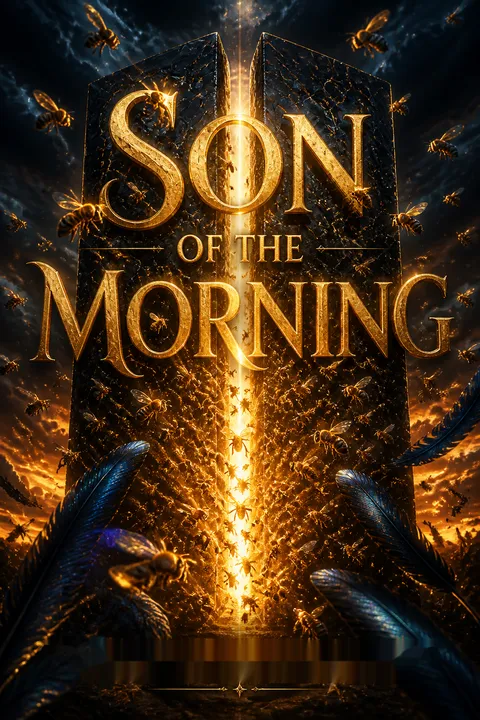
Son of the Morning is a lush, genre-defying novel that reimagines the war between Heaven and Hell as an intimate, intergenerational drama about power, love, and the right to self-determination. At its core, the book interrogates what it means to be made for a purpose not of one's choosing, and how agency can be reclaimed even in the face of cosmic manipulation. Galilee's journey—from a girl haunted by ache and secrets to a woman who chooses love, forgiveness, and belonging—is a powerful meditation on trauma, identity, and the possibility of healing. The novel's polyamorous love triangle subverts traditional narratives of romance and redemption, suggesting that true salvation lies not in purity or obedience, but in the messy, courageous work of building family and future from the ruins of the past. Emezi's storytelling is both mythic and deeply personal, using supernatural plot devices to explore the psychological realities of grief, desire, and the longing for home. Ultimately, Son of the Morning is a testament to the resilience of the self, the necessity of chosen family, and the radical act of loving—and being loved—on one's own terms.
People Also Read


Characters
Galilee Kincaid
Galilee is the novel's protagonist, a young woman born of a supernatural bargain and marked by an ache that sets her apart even among her magical family. Raised by the Kincaids, she is both cherished and feared, her powers—controlling weather, healing, commanding bees—hinting at a destiny beyond human. Psychoanalytically, Galilee embodies the struggle for self-definition in the face of inherited trauma and secrecy. Her journey is one of agency: from being a pawn in celestial schemes to choosing her own path, her own loves, and her own identity. Her relationships—with her family, her friends, Lucifer, and Leviathan—are fraught with longing, betrayal, and ultimately, forgiveness. Galilee's arc is a reclamation of selfhood, transforming from weapon to person, from ache to belonging.
Lucifer (Helel, the Devil)
Lucifer is the fallen angel, the Morningstar, both king of Hell and a being haunted by loss and longing. His attraction to Galilee is immediate and consuming, but also dangerous—her touch burns him, threatening his very existence. Lucifer's relationship with his princes is complex, marked by old wounds, shifting power, and a desire for genuine connection. Psychoanalytically, he represents the archetype of the outcast seeking redemption, but also the dangers of unchecked desire and the pain of being misunderstood. His vulnerability with Galilee is both his weakness and his salvation, and his willingness to beg for her life marks a profound transformation. Lucifer's arc is one of learning to love and be loved, even at the risk of annihilation.
Leviathan
Leviathan is Lucifer's second-in-command, a prince of Hell with a history of intimacy and betrayal with the Devil. He is both executioner and protector, initially advocating for Galilee's death but ultimately choosing to defend her and Lucifer against the other princes. Leviathan's psychoanalytic depth lies in his struggle with loyalty, jealousy, and the fear of being hurt again. His relationship with Galilee evolves from suspicion to desire to genuine care, and his reconciliation with Lucifer is both erotic and emotional. Leviathan embodies the possibility of change, the courage to forgive, and the complexity of loving those who have wounded us.
Darling Kincaid
Darling is the formidable grandmother of the Kincaid clan, a woman who has made terrible sacrifices to keep her family safe. She is both loving and ruthless, willing to bargain with supernatural forces and pay the price in memory and grief. Darling's psychoanalytic role is that of the gatekeeper—she controls access to truth, belonging, and power. Her relationship with Galilee is fraught with love, fear, and regret, and her eventual acceptance of Galilee's choices marks a turning point in the family's history. Darling represents the costs and rewards of loyalty, the pain of necessary secrets, and the wisdom of letting go.
Celestial Kincaid
Celestial is Galilee's cousin and closest confidante, a seer with her own chaotic power and a fierce sense of loyalty. She is both a bridge and a barrier between Galilee and the rest of the family, often knowing more than she can say. Celestial's psychoanalytic function is that of the truth-teller, the one who pushes Galilee toward self-knowledge even when it hurts. Her wildness is both a source of strength and alienation, and her willingness to accept Galilee's strangeness is a model for unconditional love.
Deziel
Deziel is Galilee's biological mother, an angel whose love for Lucifer curdled into hatred after the war in Heaven. She orchestrates the sabotage of the hellgate and Galilee's creation as a weapon, driven by a need for justice and revenge. Deziel's psychoanalytic profile is that of the wounded lover turned destroyer, unable to let go of past betrayals and willing to sacrifice anything—including her own child—for vengeance. Her arc is a cautionary tale about the dangers of obsession and the inability to forgive.
Michael
Michael is the archangel, Galilee's biological father, and the ultimate enforcer of Heaven's will. He is both judge and executioner, using Deziel and Galilee as pawns in his cosmic schemes. Michael's psychoanalytic role is that of the superego—unyielding, punitive, and blind to nuance. His relationship with Lucifer is fraught with rivalry, envy, and a twisted form of love. Michael's arc is a study in the costs of absolute power and the dangers of moral certainty.
Belial
Belial is one of Lucifer's princes, a warrior who values order and loyalty above all. She is the most vocal advocate for Galilee's execution, seeing her as a threat to Hell's stability. Belial's psychoanalytic function is that of the enforcer, the one who upholds the rules even when they hurt those she loves. Her relationship with Lucifer is marked by both devotion and frustration, and her eventual acceptance of change is hard-won.
Bonbon
Bonbon is Galilee's friend from the city, a horror writer with a gentle soul and a deep well of empathy. She represents the possibility of acceptance and love outside the supernatural world, grounding Galilee in humanity. Bonbon's psychoanalytic role is that of the witness, the one who sees and affirms Galilee's personhood even when the world would reduce her to a weapon.
Oriakụ
Oriakụ is the daughter of a powerful Nigerian family, Galilee's friend, and Bonbon's eventual partner. She is both a source of privilege and vulnerability, her family's secrets mirroring the supernatural dangers around Galilee. Oriakụ's psychoanalytic function is that of the guardian, the one who uses her resources to protect those she loves, even when she cannot fully understand their world.
Plot Devices
Bargains and Deals
The novel's central plot device is the motif of bargains—supernatural deals struck in blood, memory, and desire. From the Kincaids' ancestral bargains to Galilee's fateful deal with Lucifer, consent and its violation are recurring themes. Bargains are both empowering and dangerous, offering agency but also binding characters to destinies they cannot escape. The narrative structure uses these deals to foreshadow betrayals, reversals, and moments of transformation, highlighting the tension between free will and fate.
Dual Worlds and Liminality
The story is structured around the tension between the human world (the Kincaid land, the city, friendships) and the supernatural realms of Heaven and Hell. Galilee exists in the liminal space between these worlds, her journey marked by crossings—leaving home, entering the city, passing through portals, and shifting forms. The narrative uses these thresholds to explore identity, belonging, and the costs of power. Foreshadowing is achieved through dreams, visions, and the persistent ache that signals Galilee's otherness.
Polyamory and Chosen Family
The evolving relationship between Galilee, Lucifer, and Leviathan is both a plot device and a thematic statement. Their polyamorous bond challenges traditional binaries of good and evil, human and monster, lover and enemy. The narrative structure uses their intimacy to explore forgiveness, desire, and the possibility of building new families out of the ashes of old wounds. The chosen family motif is mirrored in Galilee's friendships and her eventual reconciliation with the Kincaids.
The Hellgate as Apocalypse Engine
The hellgate—the artifact at the center of the plot—is both a literal and symbolic engine of apocalypse. Its instability drives the action, forcing characters to confront their secrets, allegiances, and the consequences of their choices. The hellgate's breach is foreshadowed by Galilee's growing power and the convergence of Heaven and Hell's interests. Its healing marks the possibility of renewal, but only after the old world has been irrevocably changed.
Memory, Secrets, and Revelation
The novel's structure is built on layers of secrets—family, personal, cosmic—that are gradually revealed through memoryscapes, confessions, and confrontations. The withholding and unveiling of truth drive the emotional arc, with each revelation forcing characters to renegotiate their relationships and sense of self. The use of memory as both weapon and gift underscores the importance of storytelling as survival.
Download PDF
Download EPUB
.epub digital book format is ideal for reading ebooks on phones, tablets, and e-readers.








































