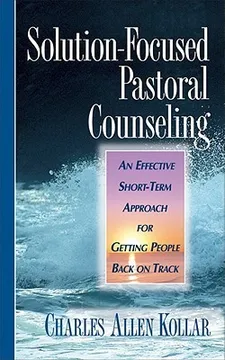

Key Takeaways
1. Shift from a problem-focused to a solution-focused paradigm
If you keep doing what you have always been doing, you will keep getting what you have always been getting.
Paradigm shift. Traditional counseling models, whether secular or biblical, often obsess over the root causes of problems, inadvertently reinforcing them. Solution-Focused Pastoral Counseling (SFPC) busts this paradigm by focusing on the desired outcome first, allowing the solution to dictate the process. This prevents both the counselor and the counselee from getting bogged down in a "problem-saturated" life situation.
Imagineering the future. By visualizing a "problem-free" future, counselors help counselees get unstuck and back on track. This approach treats counseling as a spontaneous, hopeful journey rather than a grueling excavation of past failures. It shifts the focus from what is wrong to what is possible.
Outcome-driven process. Instead of digging deeper into a hole, SFPC encourages doing something different. The process is simple:
- Find out what the counselee actually wants.
- Look for what is already working in their life.
- Stop doing what doesn't work and try a new direction.
2. Reject deficiency language and the disempowering "expert" model
This deficiency language has created a world of description that understands only through what is wrong, broken, absent or insufficient.
The trap of labeling. The mental health system relies heavily on diagnostic manuals like the DSM-4, which categorize individuals by their dysfunctions. This deficiency language labels people as "diseased" or "disordered," stripping them of their personal agency and making them passive recipients of treatment. Once categorized, the solution is viewed as outside of the counselee's control.
The expert illusion. When counselors position themselves as the ultimate experts on pathology, they foster dependency and ignore the counselee's inherent resources. SFPC flips this dynamic, asserting that the counselee is the true expert on their own life and goals. The counselor's expertise lies in the process of counseling, not in diagnosing the "mental illnesses" of the counselee.
Empowering the individual. By rejecting pathological labels, we open up space for the Holy Spirit to work through the counselee's existing strengths.
- Avoid viewing the person as the problem; the problem is the problem.
- Externalize issues to reduce self-blame and shame.
- Utilize the supportive, grace-filled environment of the local church.
3. Recognize that meaning is perception and reality is constructed
Meaning is perception. By this I mean that what we perceive to be true becomes true for us.
Constructing personal reality. We do not experience the world objectively; rather, we constantly construct meaning based on our unique experiences, beliefs, and perceptions. In counseling, it is not the objective event that matters most, but how the counselee makes sense of that event. Different people regard things as problems that others find normal and acceptable.
Suggesting new meanings. Because our personal constructs can bind and blind us, the counselor's task is to gracefully suggest alternative, healthier perceptions. By shifting the focus from a problem-saturated past to a hopeful future, we alter the counselee's immediate experience of reality. This is in keeping with the creative influence of the Holy Spirit, who is always moving us forward in our faith.
Reframing the narrative. Changing the meaning of an experience directly transforms how it is lived.
- Introduce alternative explanations that align with God's grace.
- Help the counselee see exceptions to their self-imposed limitations.
- Co-create a new, victorious narrative with the Holy Spirit's guidance.
4. View identity formation as the unfolding of God's grace through "grace events"
The choices we make, make us. We are constantly, and consistently, being formed by our choices.
Sovereign identity formation. Unlike linear psychological developmental theories, a biblical view of personality is rooted in God's sovereign intention and grace. God uses the difficult battles of life—what Kollar calls "grace events"—to shape our character and form Christ within us. These events are turning points where our choices define who we become.
The lesson of David. When young David faced the lion and the bear, these were not just problems; they were grace events that prepared him to face Goliath. Had he hidden, he would have been formed by fear rather than faith. The choices we make in the midst of trials determine our future capacity for spiritual victory.
Spontaneous spiritual growth. God is always doing a "new thing," breaking through our rigid developmental categories.
- View past trials as divine preparation rather than permanent damage.
- Recognize that the Holy Spirit is actively completing His work of formation.
- Align counseling with God's ultimate intention for the believer's life.
5. Trust that God is already active and has prepared the counselee
SFPC assumes that the counselee is capable of knowing and doing what is necessary to move toward God’s intended outcome for his problem and for his life.
Divine preparation. Before a counselee ever steps into a counseling room, the Holy Spirit has been actively working in their life. Counselors do not need to generate change from scratch; they simply need to look for the "writing of the Spirit" already in place. This assumption of God's activity brings a profound sense of hope and expectation to the session.
Uncovering hidden strengths. By assuming God's active involvement, the counselor acts as a detective, searching for clues of competence, resilience, and past victories. This shifts the counselor's role from a heavy-handed fixer to a hopeful collaborator. Focusing on these capabilities is of far greater assistance than focusing on problems.
The fuel of grace. Just as a car won't run without fuel, a counselee cannot progress without their "emotional tank" being filled with God's love and grace.
- Look for exceptions where the problem does not occur.
- Focus on filling the emotional tank with love, acceptance, and encouragement.
- Trust that complex problems do not require complex, exhausting solutions.
6. Practice attentive listening to search for clues of competence
Attentive listening is different in intention... By it the counselor validates feelings while carefully listening for clues that may represent strengths and exceptions.
Listening with purpose. Unlike passive listening (preparing a response) or active listening (merely mirroring words), attentive listening is highly strategic. It validates the counselee's emotional pain while actively scanning their story for hidden resources, strengths, and exceptions. This ensures the counselee feels validated without allowing the session to become a pity party.
Demonstrating fit. To walk together, the counselor and counselee must be in agreement. The counselor demonstrates "fit" by matching the counselee's emotional pace, body language, and tone, ensuring they feel deeply heard before suggesting change. This collaborative relationship is essential for co-creating solutions.
Spotlighting the positive. Once a clue of competence is dropped, the counselor immediately turns the spotlight on it.
- Listen for "exceptions"—times when the problem was absent or less severe.
- Identify "strengths"—skills or resources the counselee has used successfully.
- Wait for an invitation to intervene before offering alternative perceptions.
7. Utilize diverse track options to initiate a shift in focus
The intention of each track option is to help the counselor answer questions such as: What will life be like for the counselee without this problem?
Navigating the tracks. When the counselor is invited to intervene, they select a "track option" to guide the conversation away from the problem. These tracks are flexible pathways designed to meet the counselee at their current level of cooperation and readiness. They help the counselor suggest a world of possibility where the problem is no longer in charge.
The Miracle Question. The "Future Focus" track often utilizes the "Miracle Question" (based on Romans 8:28) to help the counselee bypass their current limitations and imagine a problem-free future. This shifts their focus from past failures to future possibilities. It encourages them to respond to desired goals as actualities already achieved.
Meeting the counselee's position. Depending on how the counselee presents, the counselor chooses the most effective track:
- Recent Change: Exploring what has already improved since they made the appointment.
- Future Focus: Co-creating a detailed vision of life after a miracle solves the problem.
- Managing: Asking how they keep things from getting worse when they feel hopeless.
- Externalizing: Separating the person from the problem (e.g., fighting "blame" instead of each other).
- Self-Interest: Engaging involuntary attendees by focusing on what they want (e.g., getting parents off their back).
8. Clarify the vision by defining specific, action-oriented goals
Vague goals are hard to evaluate and harder still to accomplish.
Defining the destination. A vague desire to "be happy" or "stop arguing" does not provide a clear track for change. Vision clarification refines these general wishes into highly specific, positive, and action-oriented goals that the counselee can actively pursue. This process of clarifying the vision gets to the nuts and bolts of starting along the track toward realizing that goal.
The video camera test. To make a goal specific, the counselor asks what a video camera would record if the miracle occurred. This forces the counselee to describe concrete behaviors, interactions, and expressions rather than abstract emotional states. It focuses on the presence of positive behaviors rather than the absence of negative ones.
Using tracking scales. Scaling questions (1 to 10) are powerful tools to organize the goal and measure subjective progress.
- Ask where the counselee is on the scale today (e.g., a 3).
- Explore how they managed to achieve that number instead of a lower one.
- Define exactly what a small step forward (e.g., moving to a 4) would look like.
9. Deliver supportive feedback and assign simple observational tasks
It is easier to take a new action and your feelings may change. If you wait for a feeling first you may wait a long time.
The power of the break. Near the end of the session, the counselor takes a short break to step back, reflect, and organize their thoughts. This pause allows the counselor to draft a highly encouraging, structured message that highlights the counselee's strengths and defines a clear next step. It gives both counselor and counselee some time to think through what would be helpful.
Deliberate action and observation. Instead of traditional, heavy homework, SFPC utilizes "del/ob" (deliberate action and observation) tasks. These tasks are simple, positive, and designed to encourage the counselee to do a small piece of their envisioned goal and observe the results. This encourages success and triggers a positive "ripple effect" in their relationships.
Structuring the feedback. The counselor's final message is carefully structured to promote and support change.
- Praise positive actions and normalize the struggle.
- Reduce fears of failure and fortify existing strengths.
- Offer brief, relevant educative comments or scriptural insights.
- Review the goal description and present the simple, observational task.
10. Consolidate change in subsequent sessions by focusing on what is better
In the second session, and later sessions if necessary, the counselor evaluates the counselee’s progress. The counselor’s primary responsibility will be to highlight, support, and consolidate gains...
Starting with success. Subsequent sessions always begin with a variation of the question, "What is better since the last time we met?" This immediately directs the conversation back to change talk, preventing the session from sliding back into a rehashing of problems. It assumes that positive change has occurred and encourages the counselee to search for it.
Highlighting and supporting. When the counselee reports even a minor improvement, the counselor acts with enthusiastic curiosity. By asking "How did you do that?" the counselor reinforces the counselee's personal agency and helps them see the change as meaningful. This consolidates their progress and builds momentum for further growth.
Consolidating the gains. To ensure lasting progress, the counselor helps the counselee prepare for future challenges.
- Explore what is needed to keep the positive changes happening.
- Identify potential setbacks and plan how to get back on track.
- Gradually increase the spacing between sessions to foster independence and confidence.








































