
Plot Summary
Awakening in the Grave
Rue's first moments are confusion and terror—she's not in her bed, but in a shallow grave, rain soaking her, unable to move. Panic claws at her as she realizes she can't breathe, her memories swept away. The sound of barking dogs and shouting voices pierces the night, and she musters a desperate cry for help. A man's voice, calm and safe, finds her. Detective Nathan Hask pulls her from the earth, promising safety as she slips into unconsciousness. This harrowing awakening sets the tone: Rue is a survivor, but her ordeal is only beginning, and the trauma of her rescue is matched only by the void where her identity should be.
The Girl Without a Name
In the hospital, Rue is surrounded by strangers—doctors, detectives, and federal agents. She cannot remember her name, her past, or why she was left for dead. The media dubs her "Jane Doe," and the police are tight-lipped about the investigation. Nathan, her rescuer, becomes her anchor, but even he cannot fill the emptiness inside her. The revelation that she is the only survivor of a serial killer's spree—dubbed the Lullaby Killer—brings no comfort. Instead, it isolates her further, as she grapples with the knowledge that she alone survived where others did not, and that her attacker may still be watching.
The Voice of Safety
As Rue struggles with her lost identity, Nathan's presence is a balm. He brings her the truth of her name—Rue Anderson—and offers her protection, even as she fears the killer will return. Nathan's gentle care and steadfastness are contrasted with Rue's vulnerability and fear. She is haunted by the knowledge that her survival is an anomaly, and that the killer's pattern has been broken. Nathan's offer to stay with her, to be her shield, is both comforting and fraught with the tension of unspoken attraction and the ever-present threat lurking in the shadows.
The Lullaby Killer's Pattern
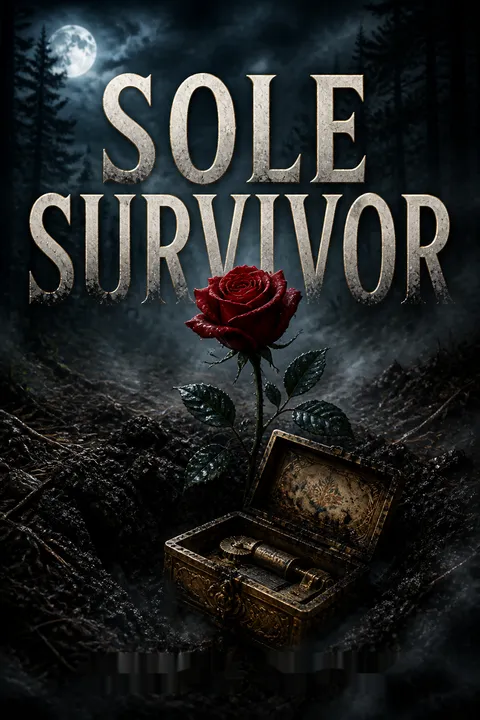
Rue learns that the Lullaby Killer's victims were all drugged with a rare substance, Sono-d, and left with a music box. The killer's methods are chillingly precise—no sexual assault, only death and a haunting melody. Rue's own body bears the marks of survival, but not of violation, and the police are desperate for any memory she might recover. The killer's ritualistic pattern, the use of the music box, and the connection to a mysterious drug all point to a calculated madness. Rue's amnesia becomes both a shield and a curse, as she is the only one who might hold the key to stopping the killer.
A Psychic's Blank Slate
As she returns to her home, Rue is confronted by the emptiness of her life—no friends, no family, no memories. Nathan reveals that she worked as a psychic consultant for the police, tracking the very killer who targeted her. The irony is bitter: the woman who saw visions of death can no longer see her own past. Rue's skepticism about her abilities is matched by Nathan's belief in her, and the two form a fragile partnership. The psychic's blank slate becomes a metaphor for trauma and survival, as Rue searches for meaning in the fragments of her lost life.
The Man with the Key
A chance encounter at a grocery store introduces Valen, a magnetic billionaire who insists he and Rue are lovers. Rue, desperate for connection, is drawn to his confidence and the sense of belonging he offers. Valen's home by the sea becomes a sanctuary, but also a place of unsettling intensity. Their chemistry is undeniable, but Rue's lack of memory makes her question everything—especially when she learns Valen's company manufactures Sono-d, the drug used by the killer. The lines between protector and predator blur, and Rue is caught between two men, each with secrets of their own.
Memories in the Shadows
Rue's time with Valen is marked by flashes of memory and haunting visions. The ocean soothes her, but the darkness within her grows. She is plagued by nightmares—some her own, some belonging to the killer. The music box's melody becomes a trigger, unlocking glimpses of violence and fear. As Rue and Valen's relationship deepens, so does the sense that something is being hidden from her. The past is a shadowy presence, and Rue's search for truth becomes a race against the killer's next move.
The Billionaire's Obsession
Valen's devotion to Rue borders on obsession. He is protective, passionate, and at times, controlling. Their intimacy is intense, a mix of comfort and danger. Valen's past is shrouded in trauma—he, too, was a resident of Briarwood House, the institution that links all the killer's victims. As Rue's memories begin to return, she realizes that Valen's love is both her salvation and her undoing. The boundaries between love and possession, safety and threat, are tested as the truth about Valen's connection to the murders comes to light.
Visions and Nightmares
Triggered by sensory cues, Rue experiences vivid visions of the killer's crimes—sometimes as the murderer, sometimes as the victim. These visions are not just memories, but windows into the killer's mind. The horror of reliving the murders is compounded by the realization that the killer is someone close, someone who knows her intimately. The visions become clues, but also a source of torment, as Rue struggles to separate reality from nightmare. The psychic's gift is both a weapon and a wound, and Rue must learn to wield it before it destroys her.
The Past Unburied
The investigation uncovers the dark history of Briarwood House—a place of abuse, corruption, and cover-ups. All the killer's victims were connected to the institution, either as staff or patients. Rue's own sister, Hope, died there, and Valen was a resident. The lines between victim and perpetrator blur, as the true extent of the trauma inflicted by Briarwood comes to light. The killer's motive is rooted in vengeance for past wrongs, and Rue's own identity is inextricably tied to the institution's legacy of pain.
The House of Ghosts
Rue's memories return in a flood, revealing that she is not who she thought she was. She is Hope, her twin sister, who survived Briarwood by switching places with Rue. The trauma of abuse, rape, and betrayal is laid bare, and the true nature of the killer's vendetta is exposed. Hope's quest for vengeance is both personal and universal—a reckoning for all the ghosts of Briarwood. The revelation shatters the fragile peace Rue had found, and the final confrontation with the killer becomes inevitable.
The Truth About Hope
The narrative shifts as Hope (formerly Rue) confronts Nathan, the detective who saved her but is also revealed as one of her abusers and the Lullaby Killer. The confrontation is brutal, both physically and emotionally, as Hope enacts her final act of vengeance. The lines between justice and revenge blur, and the cost of survival is laid bare. Hope's transformation from victim to avenger is complete, but the price is steep—her innocence, her peace, and her ability to trust.
The Twin's Secret
With Nathan dead and the truth exposed, Hope and Valen must navigate the aftermath. The police and FBI are eager to close the case, and Hope's performance as the traumatized survivor is flawless. The evidence is carefully planted, and the narrative is controlled. Hope's identity as Rue is solidified, and the ghosts of the past are laid to rest. The final act is one of survival—not just of the body, but of the self. Hope and Valen's love, forged in trauma and vengeance, becomes their salvation.
The Cop and the Corpse
Hope and Valen stage the perfect ending, manipulating the investigation and public perception. The narrative of the sole survivor, the heroic detective, and the billionaire fiancé is accepted without question. The true story—the abuse, the revenge, the twin's switch—is buried with the bodies. Hope's psychic abilities fade, her visions silenced by the closure of her quest. The performance is over, and the curtain falls on the tragedy of Briarwood House.
The Final Performance
In the aftermath, Hope and Valen retreat from the world, finding solace in each other. The weight of their actions lingers, but the burden is shared. The world sees them as survivors, but they know the truth—they are both victims and perpetrators, shaped by the violence inflicted upon them. The final performance is one of healing, as they learn to live with the ghosts of their past and the choices they made to survive.
The Last Kill
Years later, Hope (now Rue) tracks down Valen's abuser, Hailey Bale, and enacts her own brand of justice. The cycle of vengeance is complete, and the last loose end is tied. Hope's transformation is total—she is no longer the girl in the grave, but a woman who has reclaimed her power. The act is both a gift to Valen and a final exorcism of the past. The story ends not with forgiveness, but with freedom.
Freedom in the Ashes
Hope and Valen, now married with a child, Casper, find peace in the aftermath of violence. Their love, forged in fire, endures. The ghosts of Briarwood House linger, but they are no longer prisoners of their past. The story closes on a note of hard-won hope—a testament to the resilience of survivors, and the possibility of healing even in the wake of unimaginable trauma.
Analysis
A modern gothic of trauma, survival, and vengeanceSole Survivor is a dark, unflinching exploration of the aftermath of abuse and the lengths to which survivors will go to reclaim their power. Through the lens of amnesia, psychic visions, and the twin-switch trope, the novel interrogates the nature of identity, the legacy of trauma, and the blurred boundaries between victim and perpetrator. The story's nonlinear structure and use of unreliable memory mirror the experience of PTSD, drawing the reader into the protagonist's disorientation and pain. The relationship between Hope (as Rue) and Valen is both a love story and a study in codependency, obsession, and healing. The novel refuses easy answers—justice is not restorative, but retributive; healing is not a return to innocence, but an acceptance of scars. The final act of vengeance, the murder of Valen's abuser, is both a catharsis and a warning: the cycle of violence is hard to break, and the ghosts of the past linger. Yet, in the end, the story offers a hard-won hope—a testament to the resilience of survivors and the possibility of forging a new life from the ashes of the old. Sole Survivor is a haunting, visceral meditation on the cost of survival and the meaning of freedom.
Characters
Rue Anderson / Hope Anderson
Rue is introduced as a woman with no memory, the sole survivor of a serial killer's attack. As the story unfolds, it is revealed that she is actually Hope, her twin sister, who survived years of abuse at Briarwood House by switching places with Rue. Hope's journey is one of trauma, vengeance, and transformation. She is both victim and perpetrator, haunted by the violence inflicted upon her and driven by a need for justice. Her psychic abilities—real or feigned—are a metaphor for her deep empathy and the scars left by her past. Hope's relationship with Valen is intense, passionate, and at times, toxic, but it is also her salvation. Her arc is one of reclaiming power, confronting her abusers, and ultimately finding freedom in the ashes of her old life.
Valen Ward
Valen is a complex figure—wealthy, powerful, and deeply scarred by his own time at Briarwood House. His love for Hope is obsessive, possessive, and unwavering. He is both her shield and her accomplice, aiding her in her quest for vengeance and helping her navigate the labyrinth of her lost memories. Valen's own trauma shapes his actions, and his need for control is both a source of comfort and conflict. His relationship with Hope is marked by intensity, darkness, and a shared understanding of pain. Valen's arc is one of redemption—he is both a victim and a perpetrator, but his love for Hope becomes his path to healing.
Nathan Hask
Nathan is introduced as Rue's rescuer, the voice of safety who pulls her from the grave. He becomes her protector and confidant, but beneath the surface lies a darker truth. Nathan is revealed to be one of Hope's abusers and, ultimately, the Lullaby Killer. His duality is central to the story's tension—he is both hero and villain, shaped by his own family's legacy of violence and corruption. Nathan's obsession with Hope/Rue is rooted in guilt, desire, and a twisted sense of justice. His arc is one of exposure and downfall, as his crimes are brought to light and he is destroyed by the very woman he sought to possess.
Hope Anderson (as Rue's twin)
Hope's death is the inciting trauma that sets the story in motion. Her experiences at Briarwood House—abuse, betrayal, and suicide—are the foundation of Rue's (Hope's) quest for justice. The revelation that Rue is actually Hope reframes the entire narrative, casting the story as one of survival through transformation. Hope's legacy is one of pain, but also of resilience and the refusal to be erased.
The Lullaby Killer
The Lullaby Killer's identity is a central mystery, with the pattern of drugging victims with Sono-d and leaving a music box as a signature. The killer's motive is rooted in the trauma of Briarwood House, and the victims are all connected to the institution. The killer's actions are both a quest for vengeance and a reenactment of past abuses. The revelation that Nathan is the killer ties together the themes of betrayal, justice, and the cyclical nature of violence.
Briarwood House
Briarwood House is more than a location—it is the crucible in which the characters' identities are forged and shattered. The institution's history of abuse, corruption, and cover-ups is the root of the story's violence. Briarwood is a house of ghosts, and its legacy haunts every character. It is both a literal and metaphorical grave, and the site of both destruction and rebirth.
Hailey Bale
Hailey is the woman who abused Valen and set in motion his path to Briarwood House. Her presence is a shadow over Valen's life, and her eventual death at Hope's hands is the final act of vengeance. Hailey represents the generational cycle of abuse and the difficulty of escaping the past.
Casper Ward
Casper is the child of Hope and Valen, a living testament to survival and the possibility of healing. His presence in the epilogue is a reminder that life can emerge from trauma, and that the future is not predetermined by the past.
The FBI Agents (Jones and Davis)
The agents represent the outside world's attempt to make sense of the chaos. They are both obstacles and facilitators, seeking closure and justice but ultimately manipulated by Hope and Valen's performance. Their presence underscores the theme of performance and the difficulty of discerning truth from deception.
The Victims of the Lullaby Killer
Each victim is a reminder of the cost of silence and the consequences of unchecked abuse. Their stories are woven into the narrative as both warnings and calls to action. They are the ghosts that haunt Hope, Valen, and the world of the novel.
Plot Devices
Amnesia and Unreliable Memory
The use of amnesia allows the narrative to unfold as a mystery, with Rue's lost memories serving as both a source of suspense and a metaphor for trauma. The gradual return of memories, triggered by sensory cues and visions, creates a sense of discovery and dread. The unreliability of memory is central to the story's tension—what is forgotten, what is fabricated, and what is revealed all shape the characters' fates.
Dual Identities and the Twin Switch
The revelation that Rue is actually Hope, her twin, is a masterful use of the doppelgänger trope. The twin switch allows for a meditation on the nature of self, the impact of trauma, and the lengths to which one will go to survive. The performance of identity—both as a psychic and as a survivor—is a recurring motif, blurring the lines between truth and deception.
The Music Box and Sono-d
The music box is both a literal and symbolic device, marking the killer's presence and triggering Rue's visions. Sono-d, the memory-erasing drug, is a tool of both the killer and the survivors, used to manipulate reality and escape the past. Both devices underscore the themes of control, ritual, and the cyclical nature of violence.
Nonlinear Narrative and Flashbacks
The use of flashbacks, visions, and nonlinear chronology reflects the fractured nature of memory and the experience of trauma. The reader is drawn into Rue's disorientation, experiencing the story as a puzzle to be solved. The gradual revelation of the past heightens suspense and deepens emotional impact.
The House as Metaphor
The institution is both a setting and a symbol—a place where innocence is destroyed and identities are remade. The house is a grave, a prison, and a crucible. Its legacy shapes every character, and its destruction is both literal and metaphorical.
Performance and Manipulation
The characters' ability to perform—to play the roles of victim, survivor, lover, and avenger—is central to their survival. The manipulation of evidence, narrative, and perception is both a plot device and a commentary on the nature of truth and justice.




Download PDF
Download EPUB
.epub digital book format is ideal for reading ebooks on phones, tablets, and e-readers.








































