
Key Takeaways
1. Humanity's Flawed Journey Towards Wholeness
The story of Joseph is the journey of a spoiled and selfish young man finally becoming, through betrayal, anger, abandonment, unfairness, and pain, a full and complex human being.
Growth through adversity. Madeleine L'Engle re-interprets the biblical narrative of Joseph, highlighting his transformation from an indulged, arrogant youth into a mature, compassionate leader. His early life was marked by his father Jacob's favoritism, which fostered his self-indulgence and led to his brothers' deep resentment. This initial character flaw, coupled with his naive boasting about prophetic dreams, set the stage for his eventual betrayal and suffering.
Betrayal and suffering. Joseph's brothers, poisoned by envy, conspired to kill him, ultimately selling him into slavery in Egypt. This act of profound betrayal, though cruel, became the crucible for Joseph's growth. Stripped of his privileged status and forced to confront harsh realities, he began to shed his youthful arrogance. His subsequent experiences—from being Potiphar's trusted overseer to being unjustly imprisoned—further refined his character, teaching him integrity, patience, and resilience.
Universal human experience. L'Engle draws parallels between Joseph's journey and the universal human experience of navigating "adventures and misadventures" to become "more human." She emphasizes that suffering and loss, though painful, are often essential for personal development and for understanding the complexities of life and faith. Joseph's story, therefore, is not just an ancient tale but a timeless narrative about the arduous, yet ultimately redemptive, path to becoming a complete human being.
2. God's Redemptive Presence in All Circumstances
You meant it for evil, but Yahweh meant it for good.
God's overarching purpose. Joseph's profound statement to his brothers encapsulates a central theme: even the most malicious human actions can be woven into God's larger, benevolent plan. The brothers' betrayal, intended for evil, ultimately positioned Joseph to save countless lives from famine, including their own family. This perspective offers a powerful lens through which to view personal and collective suffering, suggesting that even in the darkest moments, a divine purpose may be at work.
Finding strength in affliction. L'Engle reflects on her own grief after her husband's death, noting that God's presence became acutely real during times of intense pain. She suggests that Joseph, too, despite his afflictions—slavery, false accusations, imprisonment—did not question God's presence, but rather accepted these trials as part of his journey. This acceptance, rather than despair, allowed him to remain strong and capable, even in the most challenging circumstances.
Beyond human understanding. The author acknowledges that understanding God's ways is often beyond human comprehension. The "why" of suffering, such as the death of a child or the injustice of betrayal, may not be revealed in this life. However, faith affirms that God's love does not abandon or annihilate, and that meaning can be made from everything that happens. This belief provides comfort and strength, allowing individuals to navigate life's "incredible reversals" with a sense of underlying purpose.
3. Embracing the Mystery of God
The phrase about God which means the most to me is the mysterium tremendum et fascinans.
God as ultimate mystery. L'Engle emphasizes that God is not a concept to be fully defined or understood by human intellect, but rather a "tremendous and fascinating mystery." This perspective challenges rigid theological frameworks and encourages an open, humble approach to faith. She contrasts the "tribal god" of early Genesis, often depicted as a warrior deity, with the "One God, the Maker of the Universe," a God of universal love and mercy, suggesting that our understanding of the divine evolves.
Beyond human limitations. The author argues that attempts to confine God within human-made definitions or systems inevitably fall short. Whether through scientific dogma or religious literalism, limiting God's nature diminishes the Creator. Instead, she advocates for embracing paradox and contradiction, recognizing that truth often resides beyond what can be logically proven. This openness allows for a more expansive and dynamic faith, one that can accommodate new revelations and changing knowledge without being shaken.
Faith in the unprovable. For L'Engle, faith is not about proving God's existence or understanding every divine action, but about trusting in God's love and purpose despite the unknown. She finds solace in the idea that God's love "will not let us go," even when prayers seem unanswered or suffering is inexplicable. This acceptance of mystery allows for a deeper, more resilient faith, one that can endure personal tragedies and cosmic uncertainties without succumbing to fear or despair.
4. The Call to Be Fully Human, Not Perfect
God does not ask us to be perfect; God asks us to be human.
Rejecting crippling perfectionism. L'Engle argues that the pursuit of perfection is "crippling" and inhuman, leading to moral breakdown or a fear of vulnerability. Instead, she asserts that God calls us to be "perfectly human," which means embracing our fallibility, emotions, and contradictions. Jesus, she notes, was sinless not by avoiding "wrong things" (like picking corn on the Sabbath) but by remaining perpetually connected to the Source of love, demonstrating a robust and authentic humanity.
Embracing emotions and vulnerability. The author highlights the importance of expressing genuine human emotions, including grief, anger, and even fear. She praises Joseph for weeping openly, and finds comfort in the biblical verse "Jesus wept," which dignifies human tears. This contrasts with societal pressures to repress emotions or maintain a facade of constant happiness, especially within some Christian circles. To be human is to experience the full spectrum of life's joys and sorrows, and to allow these experiences to deepen our connection with God.
Integrity and self-awareness. Being human also involves self-awareness and integrity, as exemplified by Judah's admission of fault with Tamar, and Joseph's eventual acknowledgment of his own youthful arrogance. It means recognizing our dependence on God's grace rather than relying on self-merit or legalistic adherence to rules. This journey towards authentic humanity is a continuous process of growth, learning from mistakes, and remaining open to change, rather than striving for an unattainable, rigid ideal.
5. The Sacred Act of Observing and Contemplating Creation
We human creatures are called to be the eyes and ears and nose and mouth and fingers of this planet.
Co-creators with God. L'Engle posits that humanity's unique calling is to "observe and contemplate" God's creation, thereby making it real and hallowing it. This isn't a passive act but an active participation in the ongoing work of creation. By truly seeing and appreciating the world around us—from a tiny blue eggshell to the vastness of the Milky Way—we affirm its worth and contribute to the "health and beauty and reality of the entire universe."
Beyond ego-centrism. This calling requires humility, moving beyond the "self-satisfied human ego" that once believed the Earth was the center of all things. L'Engle embraces scientific discoveries, like the Copernican Revolution and quantum mechanics, as revelations of God's "glorious work," expanding our understanding of the universe's immensity and intricacy. She argues that these discoveries should inspire wonder, not fear, and challenge us to continually update our "icons" (images of truth) rather than clinging to outdated "idols."
Consequences of neglect. The author warns that failing in this vocation—by becoming "consumers" driven by greed and self-indulgence—leads to dehumanization and destruction. Pollution, war, and the degradation of the planet are direct results of our failure to observe, contemplate, and hallow creation. She challenges the notion that caring for the environment is "unChristian," asserting that stewardship of God's good creation is a fundamental aspect of faith and love.
6. Story as the Vehicle for Truth
Story is the closest we human beings can come to truth.
Truth beyond facts. L'Engle distinguishes between "fact" and "truth," asserting that while not all facts in a story may be historically verifiable, a story can still convey profound truth. She emphasizes that Jesus himself taught primarily through parables, not to provide factual information, but to reveal deeper truths about God and humanity. This perspective encourages readers to engage with biblical narratives, like Joseph's, not as mere historical accounts, but as living stories that illuminate the human condition and God's interaction with it.
The power of narrative. Stories, L'Engle argues, are essential for understanding what it means to be human. They serve as "mirrors" in which we can find the "image of God in ourselves," helping us to navigate life's complexities, accept human fallibility, and recognize both the terrible and marvellous things people do. She laments the "radical loss of vocabulary" in modern society, suggesting that a diminished language capacity hinders our ability to think clearly, understand theology, and appreciate the richness of sacred stories.
Danger of literalism and censorship. The author criticizes rigid literalism, particularly when it leads to censorship or a narrow interpretation of faith. She points out the absurdity of censoring a book like The Secret Garden for using the word "magic" while ignoring its deeply Christian themes of love and renewal. Such literalism, she contends, is "inhuman" and dangerous, akin to Hitler's book burning, as it stifles truth and prevents us from embracing the paradox and contradiction through which God often reveals Himself.
7. Love, Forgiveness, and Reconciliation as Core to Faith
What was important was that because Joseph had come to love God in this land of strangers, he no longer needed to brag, to thrust himself onto center stage. He had learned to love.
The transformative power of love. Joseph's journey culminates in his ability to forgive his brothers, not out of mere pragmatism, but from a place of profound love and understanding. His suffering in Egypt, rather than hardening him, cultivated compassion and humility. This transformation allowed him to see God's hand in his trials, recognizing that what his brothers "meant for evil, God meant for good." His ultimate act of reconciliation, embracing his betrayers, demonstrates a love that transcends resentment and seeks restoration.
God's boundless mercy. L'Engle highlights God's "lovingly merciful" nature, which is "quick to forgive" and constantly invites us to "Come home!" She contrasts this with human reluctance to forgive, noting that even Joseph's brothers, after years of kindness, still feared his revenge. This underscores the challenge for humans to emulate divine mercy, to let go of "elder-brotherism, our stiff-neckedness, our resentments," and embrace a love that breaks through all barriers.
Reconciliation as a divine purpose. The author suggests that reconciliation is a fundamental aspect of God's ultimate purpose for creation. Just as Joseph's family was reunited, and his personal pain was used for collective good, so too does God work towards the "reconciliation of all things." This vision extends beyond individual relationships to encompass the entire planet, implying that true peace and wholeness cannot be achieved until all of God's children learn to "dwell together in unity" and return to the Source of Love.
8. The Eternal and Incarnate Christ
Christ was the Word that shouted all of Creation into being, all the galaxies and solar systems, all the subatomic particles, and the wonderful mix of Creation that is what makes up each one of us.
Christ's timeless presence. L'Engle emphasizes that Christ, the Second Person of the Trinity, is not confined to the historical figure of Jesus of Nazareth, but is an eternal presence, existing "before the beginning" and actively involved in the creation of the entire universe. This expansive view challenges a narrow focus on the Incarnation as a singular event, reminding us that Christ is continuously available to all people, at all times, and in all places, as the "Word" that brought everything into being.
The paradox of Incarnation. The author expresses "utter awe" at the "incredible sacrifice of all Power and Glory" in Christ's willingness to limit Himself to the form of a "tiny baby." This paradox—fully human and wholly God—is central to her faith. She critiques modern attempts to dilute the story of the Virgin Birth, arguing that it diminishes Jesus' divinity and the profound mystery of God becoming one of us. The Incarnation, for L'Engle, hallows our humanness and strengthens us to fulfill our calling.
Christ in all things. L'Engle sees Christ's presence not only in grand theological concepts but also in the mundane and the miraculous. She references Paul's idea of the "Rock that went before the people" in the desert as Christ, and Nebuchadnezzar's vision of a "son of God" in the fiery furnace with Shadrach, Meshach, and Abednego. This suggests that Christ is with us in our trials, our daily lives, and in the very fabric of creation, calling us to a "fullness of humanity" that reflects His own.
9. Stewardship and Compassion for Creation
If we really cared about God and Creation, how could we continue to cut down the rain forests? To tear apart the ozone layer? To forget that our grandchildren will suffer from the results of our greed?
Responsibility for the planet. L'Engle passionately argues that our role as "observers and contemplators" of God's creation inherently includes a responsibility for its care. She condemns human greed and "consumerism" for "consuming the planet" through pollution, deforestation, and other destructive practices. This disregard for the Earth, she contends, is a betrayal of our divine calling and a failure to honor what God declared "good, very good."
Compassion for all life. The author extends this stewardship to encompass compassion for all living beings and for each other. She questions how anyone who has truly observed a child could "blast that child with napalm," or how those who claim faith could neglect the suffering of others. The rise of famine, disease (like AIDS), and social unrest are seen as symptoms of a deeper "inhumanity" that stems from a separation from God's love and a failure to care for creation and fellow humans.
A call to action. L'Engle challenges Christians, in particular, to re-evaluate their priorities, noting the "absurd idea that religion and science have nothing in common" and the "unChristian" notion that caring for ecology is atheistic. She calls for a "resurgence of compassion" to match our technological advances, emphasizing that our ability to mend the "terrible damage we have done" depends on our willingness to work "with our hands in the hand of God." This involves a return to "central things"—love for God and neighbor, and care for our shared planet.
10. The Danger of Legalism and Dehumanization
Why are we so afraid to be human, depending on legalism and moralism and dogmatism instead?
The trap of rigid systems. L'Engle critiques legalism, moralism, and dogmatism as forces that "dehumanize" us and separate us from God. She points out how rigid interpretations of faith can lead to judgmentalism, suspicion, and hate, turning people away from the very love that Christianity professes. Examples include:
- The Church's resistance to scientific discoveries (e.g., Earth not being the center of the universe).
- The historical persecution of those with differing interpretations of faith.
- The "Christian" groups who "slander" books or individuals based on superficial criteria rather than content or love.
Loss of authentic self. The author suggests that an overemphasis on self-gratification, coupled with impersonal systems (like excessive paperwork or ID cards), paradoxically leads to a "loss of self" and alienation. She contrasts this with the "wonderful wildness of Jesus," who challenged rigid social norms and religious leaders, prioritizing love and compassion over strict adherence to rules. Joseph's early self-centeredness alienated him from his brothers, demonstrating how focusing on personal power can lead to dehumanization.
Reclaiming humanness. L'Engle advocates for a faith that is "fearful rather than joyful" and embraces the "wonderful wildness of Jesus." She believes that true virtue is "loving power," not self-righteous moralism. By letting go of the need to be "right" and embracing our fallibility, we open ourselves to God's forgiveness and the possibility of genuine human connection. This involves moving beyond "us" versus "them" mentalities and recognizing the shared humanity in all people, regardless of their beliefs or backgrounds.
11. Living in the Present Moment with Openness
What we have is this day, this moment.
Embracing the "now-ness." L'Engle emphasizes the importance of living in the "immediate moment," rather than clinging to the past or projecting into the future. She contrasts "chronos" (human, chronological time) with "kairos" (God's time, moments that break free of time and simply are). While acknowledging the past as a foundation, she warns against burying ourselves in it or being overly anxious about the future, advocating for a present-focused awareness that allows us to fully experience life.
Accepting uncertainty and change. The author highlights the constant "shift and flux" of modern life, where new technologies and societal changes create uncertainty and fear. She encourages an openness to new revelations, whether scientific or spiritual, rather than resisting change out of fear. Joseph's journey, marked by "incredible reversals," demonstrates the necessity of adaptability and learning from radical change. This flexibility allows us to grow and develop, rather than becoming "rigid, stuck in one position."
Faith in God's eternal "is-ness." For L'Engle, living in the present moment is deeply connected to God's "eternal is-ness." This means trusting that God is always present, always caring, and that His love "will not let us go." Even in the face of death, which she views as a "beginning of a new journey" rather than a medical failure, faith provides comfort and a sense of continuity within God's ultimate purpose. This perspective allows for joy and gratitude amidst life's precariousness, knowing that God "will make meaning out of everything that happens."
Review Summary
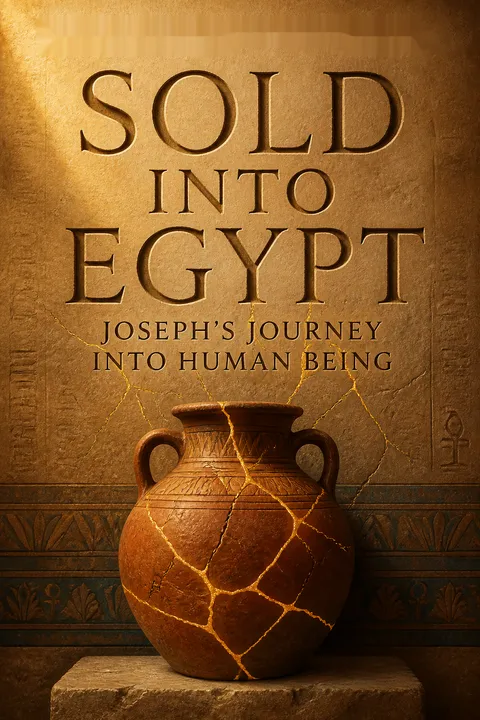
Sold into Egypt, the final book in L'Engle's Genesis Trilogy, receives mixed reviews. Readers appreciate her imaginative retelling of Joseph's story and her ability to humanize biblical characters, while weaving in personal reflections on grief following her husband's death. Many praise her integration of science and faith. Common criticisms include the book feeling disjointed, repetitive of earlier trilogy installments, and theologically liberal. Reviewers generally consider it the weakest of the three, though fans of L'Engle still find meaningful wisdom and inspiration throughout.
People Also Read




About the Author





Download PDF
Download EPUB
.epub digital book format is ideal for reading ebooks on phones, tablets, and e-readers.








































