Key Takeaways
1. Slave Breeding: A "Truth" in African American Memory
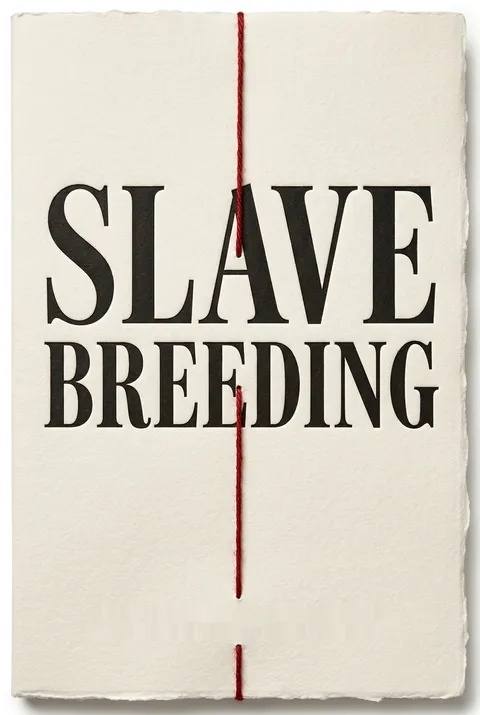
Slave breeding, as coercive, often violent, reproductive practices were known among the enslaved and their descendants, structured African American historical, ethnographic, and cultural understandings of black life in the United States.
Enduring historical reality. For generations of African Americans, slave breeding was not a myth but a lived reality, deeply embedded in their collective memory and cultural narratives. This "vernacular history" offered a profound understanding of the past, often invisible to mainstream white Americans and professional historians who dismissed it due to a lack of "empirical" evidence. It served as a narrative shorthand to convey complex social norms, cultural values, and historical consciousness.
Beyond economic data. While professional historians often sought economic or demographic proof, African Americans understood slave breeding in broader terms. It encompassed:
- Racial violence and sexual coercion shadowing reproductive practices.
- A historical trope to contextualize contemporary acts of racial and sexual violence.
- A focal point for understanding the immoral essence of slavery.
This perspective highlighted that human experiences and emotions are rarely captured in account books or census statistics.
Contested historical ground. The persistent dismissal of slave breeding by many (predominantly white, male) historians reflected a methodological myopia, prioritizing quantifiable data over oral histories and personal testimonies. This intellectual divide created a contested space where African American "truth" clashed with academic "objectivity," often leading to marginalization of subaltern histories and scholars who dared to explore them.
2. Sexual Exploitation as Slavery's Core
Slave breeding is therefore a phrase with broad interpretive significance in black American culture. It refers to more than the reproduction of human beings; it is a malleable narrative shorthand in which social norms, cultural values, and historical consciousness can be “bred,” or learned, over time.
Coercion and degradation. At its heart, slave breeding involved the coercive and often violent sexual exploitation of enslaved women, reducing them to "breeding machines" for profit. This practice was not merely about increasing population numbers but about asserting absolute power over black bodies and lives, distorting gender roles, and undermining the sanctity of family. The phrase "slave breeding" became a powerful symbol of this profound degradation.
Master's calculated intent. Slave owners, from figures like Thomas Jefferson to lesser-known planters, actively sought to increase their slave populations through reproduction, viewing fertile women as valuable assets. This involved:
- Selecting "good breeders" and "potent men."
- Providing incentives like lighter workloads or better food.
- Acting as matchmakers, often forcing unions.
These actions, regardless of their "scientific" rigor, demonstrated a clear intent to manipulate human reproduction for economic gain.
Beyond demographics. While economic historians focused on "natural increase," African Americans emphasized the brutal power dynamics. The sexual encounters were rarely consensual, often amounting to rape, and left little "empirical evidence" in plantation records. This forced scholars to look beyond traditional archives to understand the "complex, dynamic power relations" inherent in slave breeding.
3. Family Disruption: The Enduring Trauma of Slave Breeding
The tear of sorrow flows from ev’ry eye; Groans answer groans, and sighs to sighs reply! What sudden pangs shot thro’ each aching heart! When, Death! Thy messenger dispatch’d his dart! Thy dread attendants, all-destroying Pow’r, Hurry’d the infant to his mortal hour.
Profound emotional anguish. The forced separation of enslaved children from their mothers, or spouses from each other, was a central and agonizing feature of slave breeding. This trauma, whether through sale or death, left deep emotional scars that resonated through generations of African Americans. Phillis Wheatley's poem on infant death captures the universal pain of loss, amplified by the precariousness of slave life.
Commodification of kinship. Slave owners often encouraged "marriages" not out of benevolence, but to maximize reproduction and profit. These unions, however, lacked legal recognition, making families vulnerable to arbitrary sale and dissolution. This commodification of kinship meant:
- Children were seen as "stock" to be sold.
- Parental bonds were routinely severed.
- The emotional well-being of enslaved individuals was disregarded.
The internal slave trade, fueled by breeding, constantly threatened to tear families apart, leaving lasting psychological wounds.
Resilience amidst despair. Despite these brutal realities, enslaved people strove to forge and maintain family bonds, often through "abroad marriages" or by instilling strong moral values in their children. These efforts, though fragile, represented a profound act of resistance against a system designed to dehumanize them. The memory of these struggles became a cornerstone of African American identity, emphasizing endurance and the importance of family.
4. Abolitionist Weapon: Slave Breeding in Anti-Slavery Discourse
Abolitionists defined slave breeding as the coercive reproduction of new generations of slave laborers for sale and resale. They added that slave-breeding practices highlighted the immoral commodification of reproductive sexuality in Caribbean and North American plantation societies.
Moral outrage and political tool. From the late 18th century, abolitionists, both black and white, seized upon slave breeding as a powerful rhetorical device to expose the moral bankruptcy of slavery. They argued that the abolition of the international slave trade in 1808 inadvertently incentivized domestic breeding, turning states like Virginia into "slave-breeding districts" for the burgeoning cotton economy of the Lower South. This imagery was designed to shock and galvanize public opinion.
Sensational and sentimental appeals. Abolitionist discourse combined sensational accusations of sexual exploitation with sentimental appeals to bourgeois morality, emphasizing:
- The emotional and physical abuse of enslaved women.
- The anguish of family separation.
- The violence and exploitative power of slaveholders.
Figures like Frederick Douglass and Harriet Jacobs used their personal narratives to give firsthand accounts of these horrors, making the abstract concept of "slave breeding" intensely personal and morally urgent.
Critique of national hypocrisy. Abolitionists argued that slave breeding contradicted America's founding ideals of liberty and equality, exposing the nation's deep-seated hypocrisy. They condemned "compromise politics" that allowed slavery's westward expansion, seeing it as a perpetuation of this "train of moral evils." This discourse framed slave breeding not just as an economic practice but as a fundamental threat to the republic's moral fiber.
5. Challenging White Narratives: Black Scholars and Slave Breeding
Du Bois, the scholar and civil rights activist, was deeply troubled by the idea of slave populations being augmented through sexual manipulation.
Countering sanitized histories. Early 20th-century African American scholars like W.E.B. Du Bois, Carter G. Woodson, and E. Franklin Frazier directly challenged the "Lost Cause" mythology and "scientific" histories that portrayed slavery as benign. They insisted that slave breeding was a historical fact, crucial for understanding the "Negro problem" and the enduring legacies of slavery. Their work was a "life-and-death struggle" to preserve black history.
Slavery's enduring impact. These scholars meticulously documented how slave breeding contributed to:
- The dramatic growth of the black population after 1808.
- The "sexual chaos" and "economic motives" behind forced reproduction.
- The "maladjustment" of black families, often headed by women, due to historical dislocation.
Du Bois, in particular, used census data to argue that the systematic encouragement of breeding was a "hypocritical America's" way of maintaining its labor force.
Exposing white hypocrisy. Black intellectuals highlighted the sexual hypocrisy of white society, arguing that the mixed-race population was a direct result of white men's sexual exploitation of enslaved women, not black promiscuity. Woodson's "The Mis-Education of the Negro" critiqued how white historians used skewed sources to pathologize black people, while Frazier's work on the matriarchal black family traced its roots to the structural forces of slavery and breeding.
6. The Theater of Protest: Slave Breeding in Black Arts
“In dis world, black women ain’t nothing but breeders, tuh have chilluns fuh de white folks tuh sell down river lak dey do horses and cows.”
Dramatic re-creations of trauma. Early 20th-century black playwrights like Randolph Edmonds and Mary P. Burrill used theater to confront the brutal realities of slavery and its legacy, including slave breeding. Their "dialect dramas" and anti-lynching plays served as powerful counter-narratives to the romanticized "plantation genre" prevalent in white popular culture. Edmonds's Breeders vividly portrays the despair of enslaved women forced into reproductive labor.
Connecting past and present. Black theater linked the historical trauma of slave breeding to contemporary racial violence and sexual exploitation in Jim Crow America. Plays explored:
- The fear of lynching and castration of black men.
- The sexual harassment and rape of black female domestics.
- The fragility of black families under white supremacy.
This artistic activism aimed to inspire collective political action against ongoing injustices, showing that the "burnin' an killin'" of black bodies had deep historical roots.
Challenging stereotypes and asserting dignity. While often using dialect, these plays aimed to transcend racial stereotypes, portraying complex black characters with dignity and resilience. They explored themes of black masculinity, female agency, and the struggle for self-determination. The theatrical stage became a vital space for African Americans to process historical pain, assert their humanity, and cultivate a shared political consciousness.
7. Voices from the Past: WPA Narratives Confirm Breeding Practices
“Lots of old slaves closes the door before they tell the truth about their days of slavery. When the door is open, they tell how kind their masters was and how rosy it all was.”
Unveiling hidden truths. The WPA narratives, collected in the 1930s, offered a rare and invaluable glimpse into the memories of former slaves, often revealing the "truth" about slave breeding that was suppressed in public discourse. Despite the challenges of white interviewers and the racial etiquette of Jim Crow, many former slaves candidly recounted the coercive reproductive practices they endured or witnessed. This collection became a powerful testament to the "darker history" of slavery.
"Studs," "bucks," and "wenches." Former slaves frequently used terms like "stud," "buck," and "wench" to describe individuals selected for breeding, highlighting the dehumanizing commodification of black bodies. They recalled:
- Masters selecting "mostest p'olific" men and women.
- The physical and emotional toll of regular pregnancies and childbirth.
- The perception of sexual potency granting a "special status" that often came with profound emotional loss.
These terms, though sometimes reflecting early 20th-century racialized language, underscored the animalistic treatment of enslaved people.
Commodification and family fragmentation. The narratives consistently linked slave breeding to the economic imperative of increasing slave "stock" and the resulting breakup of families. Former slaves remembered:
- "Marriage" as a tool for profit, not love.
- The auction block as a site of "daily heart breaking separations."
- The constant fear of losing loved ones through sale.
These testimonies provided a powerful counterpoint to sanitized histories, emphasizing the profound grief and moral outrage caused by the commodification of human life.
8. Civil Rights Roots: Connecting Historical Violence to Modern Struggles
“For two centuries,” he insisted, “black families had been denied human status in order to safeguard the property rights and breeding prerogatives of slave owners.”
Historical continuity of oppression. Civil rights leaders, including Martin Luther King Jr. and Bayard Rustin, explicitly connected the sexual exploitation and racial violence of slavery and slave breeding to the systemic discrimination of Jim Crow segregation. They argued that the civil rights movement was not just about legal equality but about rectifying centuries of historical injustice and reclaiming the dignity denied to black families.
Slavery as "SIN" and "anemic democracy." King viewed slavery as a profound "SIN" that had "scientifically" mandated and enforced the oppression of black people, leaving them "defenseless, emotionally and physically." He characterized Jim Crow as an "anemic democracy" that perpetuated a "new form of slavery," continuing the cycle of violence and sexual exploitation. This historical framing imbued the civil rights struggle with moral urgency and a sense of historical destiny.
Challenging "maladjustment" narratives. Leaders like King countered the "Moynihan Report's" controversial "tangle of pathology" by arguing that any "maladjustment" in black families stemmed from the historical violence and interracial rape associated with slave breeding and segregation, not inherent racial flaws. This perspective empowered activists to fight for social justice, economic uplift, and the restoration of self-respect stolen from their ancestors.
9. Pop Culture Confronts the "Unspeakable": Slave Breeding in Post-1970s Media
“The whole slavery story has been lied about, covered up and romanticized so much that I thought it really had to stop.”
Breaking the silence. In the wake of the Civil Rights and Black Power movements, literature and film began to graphically depict the sexual exploitation and racial violence of slave breeding, challenging the romanticized "plantation genre." Authors like Frank Yerby (The Foxes of Harrow) and Kyle Onstott (Mandingo) presented uncompromising narratives that exposed the brutality and immorality of the slave South. These works, though often controversial, aimed to force a reckoning with America's racial past.
"Blaxploitation" and "shockumentaries." The 1970s saw the rise of "blaxploitation" and "slavesploitation" films, including the adaptation of Mandingo, which brought graphic scenes of rape, sadism, and slave breeding to mainstream audiences. Director Richard Fleischer aimed for "the first honest representation of slavery," portraying plantations as "a beautiful wedding cake that's filled with maggots." These films, often dismissed by critics, resonated with some black audiences who saw them as reflecting historical realities.
Artistic and cultural impact. Despite critical backlash and accusations of sensationalism, these cultural productions played a significant role in reshaping popular perceptions of slavery. They highlighted:
- The pervasive sexual hypocrisy of white society.
- The dehumanizing treatment of black bodies.
- The enduring legacy of violence and exploitation.
Artists like Kara Walker later used evocative silhouettes to depict shocking scenes of enslavement, forcing viewers to confront the complexities and brutalities of slavery in a deeply personal way.
10. The Unresolved Legacy: Slave Breeding and Contemporary Debates
“The danger of an ‘apology’ for slavery is that it may become the benediction (end), instead of the opening hymn (means)! So if you are going to apologize, please print it on the back of a deed to my 40 acres and send it by way of my mule!”
Ongoing historical contestation. The memory of slave breeding continues to be a focal point in contemporary debates about racial and sexual violence, apologies for slavery, and reparations. While professional historians still grapple with methodological divisions, African Americans consistently link historical trauma to present-day issues, viewing the past not as "dead" but as a living legacy.
Apologies and reparations. The debate over a national apology and reparations for slavery highlights the deep divisions in American society. A majority of African Americans favor both, seeing them as essential steps to acknowledge historical injustice and address ongoing racial disparities. However, many white Americans remain opposed, often oblivious to the profound and lasting impact of slavery and practices like breeding.
New media and historical narratives. The rise of the Internet and new media technologies has democratized historical discourse, allowing African American "vernacular histories" to reach wider audiences. Blogs, social media, and digital art forms like Kara Walker's work continue to challenge dominant narratives, ensuring that the "perplexing connection between slavery and race" remains a vital and relevant topic in the 21st century.
People Also Read

Download PDF
Download EPUB
.epub digital book format is ideal for reading ebooks on phones, tablets, and e-readers.








































