
Plot Summary
Six Little Words
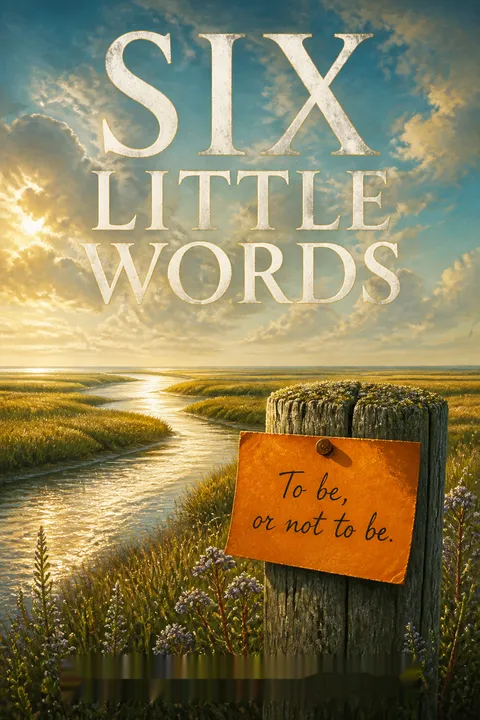
In a small Norfolk town, a simple orange card pinned to a café noticeboard reads, "To be, or not to be." Kate, a divorced mother and cancer survivor, is drawn to the phrase's ambiguity. The card's six little words become a catalyst, stirring questions about existence, happiness, and purpose. As Kate cycles home through the marshes, she reflects on her life's upheavals—her husband's betrayal, her battle with illness, and her daughters' departures. The card's message lingers, echoing her own uncertainties about what it means to truly live. This quiet moment of introspection sets the tone for a story about second chances, creative longing, and the search for meaning in the everyday.
Marshland Beginnings
Jon "Bardy" Shakespeare, a retired English teacher, and Kate's former neighbor, is also haunted by the orange card. Bardy's life is colored by loss—his wife Hana left him after decades together, and his sons have moved abroad. He finds solace in old friendships, especially with café owner Lou, and in his unique way of seeing people as colors. The marshlands, with their shifting tides and migratory birds, mirror the characters' own feelings of being rooted yet restless. The town's rhythms—café chatter, birdwatchers, and the ever-present sea—create a backdrop for the intersecting lives of Kate, Bardy, and a cast of locals, each carrying their own burdens and hopes.
The Orange Card Mystery
The orange card's cryptic Shakespearean quotes multiply, soon accompanied by an Instagram account and a call to "create." Kate and her new friend Pia, an elegant Danish lawyer, discover the MACKL competition—a community arts challenge inspired by Shakespeare's productivity during plague quarantine. The competition invites locals to write, paint, compose, or craft, fostering creativity as a balm for pandemic-era malaise. Bardy, nudged by his foster granddaughter Tay, is roped into reviving the creative group he once led. The stage is set for a motley crew of would-be artists, each seeking connection and renewal through shared creative endeavor.
Gathering the Creatives
The first meeting of the creative group is held in the lifeboat station, overlooking the marshes. The attendees are a cross-section of the town: Kate, yearning to paint again; Pia, hesitant about her own creativity; Linda and Leonard, a long-married couple with gentle humor; Lou, the woodturner; Tay, the tough but vulnerable teen; and Bardy, their reluctant leader. The group's dynamic is immediately tested by the arrival of Tash, a brash professional artist who quickly alienates everyone. Yet, as they share their creative ambitions—some modest, some grand—a sense of camaraderie begins to form, grounded in mutual encouragement and the promise of transformation.
Past Hurts, Present Hopes
As the group meets weekly, old wounds surface. Kate grapples with guilt over her sister Alice's death and her own survival, while Bardy is haunted by his failed marriage and the ache of his sons' absence. Pia reveals her struggles with loneliness and the aftermath of a painful breakup. Tay's tough exterior masks deep scars from her chaotic upbringing. Through candid conversations and shared vulnerability, the group members begin to trust one another. Their creative pursuits become a way to process grief, regret, and longing, offering hope that new beginnings are possible even after profound loss.
The MACKL Challenge
The MACKL competition becomes both a goal and a metaphor. Each member chooses a project: Kate returns to painting, Pia attempts quilting, Linda tries poetry, Leonard dabbles in watercolors, Lou crafts wooden bowls, and Bardy writes stories and poems about color. The group's sessions are filled with laughter, self-doubt, and gentle ribbing. They confront the myth that creativity is only for the gifted, learning instead that the act of making—regardless of outcome—can restore joy and meaning. The group's diversity, from age to background, enriches their collective journey, and the marshland's ever-changing beauty becomes a silent witness to their growth.
New Friendships, Old Wounds
As the weeks pass, friendships solidify. Kate and Pia's bond grows, with hints of unspoken attraction complicating matters for Bardy, who finds himself drawn to both women. Linda and Leonard's marriage is tested by aging and communication struggles, while Satya, a successful entrepreneur, joins the group seeking respite from work and family pressures. Tay faces bullying at her job, and Bardy's support becomes crucial. The group's creative progress is uneven—some flourish, others flounder—but their willingness to show up for one another becomes the true measure of success. Old wounds are not erased, but they are shared, lessening their sting.
Life Drawing Lessons
A life drawing class, led by Kate, becomes a turning point. The group's initial discomfort gives way to laughter and camaraderie, especially when their model, Bazza, proves both professional and delightfully eccentric. The session exposes insecurities and sparks conversations about body image, aging, and the courage to try new things. For Tay, the experience is empowering, while for others, it's a reminder that art is as much about seeing as it is about skill. The class cements the group's sense of belonging, and the marshland's shifting light becomes a metaphor for the beauty found in imperfection.
Confessions and Comparisons
As creative projects take shape, the group confronts the pitfalls of comparison and the fear of not being "good enough." Linda's humorous poetry, Leonard's earnest paintings, and Pia's evolving quilt all reflect the unique perspectives each brings. Kate's secret as the once-famous "JoJo Rose" artist weighs on her, especially as the competition's rules for amateurs threaten to expose her past. The group's willingness to confess failures and insecurities fosters deeper trust. They learn that creativity is not a competition but a shared journey, and that honesty—about both strengths and shortcomings—can be liberating.
The Power of Color
Bardy's unusual ability to see people as colors becomes a lens for understanding the group's dynamics. He associates Tay with red ocher, Linda with mellow plum, and Kate with a shimmering silver light. This synesthesia is both a gift and a burden, coloring his relationships and shaping his empathy. Bardy's poems about color become a quiet thread running through the narrative, offering insight into the emotional lives of those around him. His struggle to choose between the comfort of home and the pull of family abroad mirrors the migratory birds of the marshes, always torn between staying and leaving.
Tangled Hearts
Romantic tensions simmer as Bardy, Kate, and Pia navigate their feelings. Bardy's affection for Kate is complicated by his lingering attachment to Hana, his ex-wife, who reappears with the prospect of a new life in New Zealand. Pia's gentle flirtation with Kate adds another layer of complexity. Misunderstandings and missed signals abound, with each character wrestling with the fear of rejection and the desire for connection. The group's creative work becomes a safe space to explore these emotions, and the marshland's liminal spaces—where land meets sea—mirror the uncertainty of their hearts.
The Disciplinary Battle
Tay's battle with workplace bullying comes to a head in a disciplinary meeting. Supported by Bardy and, unexpectedly, Pia's legal expertise, Tay confronts her tormentors with courage and clarity. The group rallies around her, their solidarity a testament to the power of chosen family. The victory is bittersweet—Tay decides to leave for new opportunities, but her growth and resilience inspire everyone. The episode underscores the importance of standing up for oneself and others, and the creative group's role as a haven for those who feel out of place in the wider world.
Revelations and Reconciliations
The group's exhibition approaches, and secrets come to light. Kate's identity as JoJo Rose is exposed, causing a brief rift but ultimately leading to understanding and acceptance. Linda reveals her health fears, Leonard confesses his creative ambitions, and Lou admits to seeking new love after his wife's death. The group's willingness to forgive—both themselves and each other—becomes their greatest strength. The exhibition itself is a celebration of their journey, with each work reflecting personal transformation. The marshland, ever-changing yet enduring, stands as a symbol of renewal and hope.
Loss, Lies, and Letting Go
A sudden accident leaves Lou hospitalized, shaking the group to its core. The fragility of life is brought into sharp focus, prompting reflections on mortality, regret, and the importance of seizing joy where it can be found. The group members confront their own lies—big and small—and the ways they have hidden from pain or pretended to be less than they are. Through shared grief and honest conversation, they find the courage to let go of old hurts and embrace the messy, beautiful reality of their lives. The marshes, with their cycles of migration and return, offer comfort in the face of uncertainty.
The Exhibition Unveiled
The group's exhibition is a triumph, drawing crowds and acclaim. Each member's work tells a story: Kate's painting captures the marsh's liminal beauty; Pia's quilt is a tapestry of migration and belonging; Linda's sculpture celebrates patience and growth; Tay's drawing honors Bardy's quiet strength. Even Brenda, the unassuming neighbor, surprises everyone with her whimsical knitted figures. The exhibition is not just a showcase of talent but a testament to the power of community, resilience, and the willingness to be seen. The group's journey from strangers to chosen family is celebrated in every brushstroke and stitch.
Truths in the Light
In the aftermath of the exhibition, truths are spoken and accepted. Bardy chooses to stay in Norfolk, embracing his love for Kate and the life he has built. Kate, freed from the weight of her past, finds joy in painting and in the possibility of new love. The group, now calling themselves the King Lear Liars, commits to continuing their creative journey together. They recognize that everyone lies—about their fears, their dreams, their worth—but that honesty, when finally spoken, brings light and healing. The marshland, bathed in silver and gold, becomes a place of belonging for all.
The King Lear Liars
With the MACKL competition behind them, the group rebrands as the King Lear Liars, a nod to their shared deceptions and Shakespearean inspiration. They pledge to keep meeting, supporting each other's creative pursuits and personal growth. Their next mission: to save the local gallery from closure, using wit, art, and a bit of mischief. The group's diversity—of age, background, and talent—becomes their greatest asset, and their willingness to embrace imperfection is their secret strength. The marshes, ever-shifting yet constant, reflect their journey: sometimes turbulent, always beautiful, and full of possibility.
All's Well That Ends Well
The story concludes with a flourish of humor and hope. The group's campaign to save the gallery succeeds, thanks to a daring (and comical) act of protest inspired by real-life art heists. Relationships are mended, new love blossoms, and old wounds begin to heal. The marshland, with its cycles of migration and return, stands as a testament to the enduring power of community, creativity, and second chances. As Bardy and Kate share a quiet moment by the creek, the six little words that began it all—"Come on, and kiss me, Kate"—echo as a promise of joy, belonging, and the courage to begin again.
Analysis
Six Little Words is a luminous meditation on creativity, community, and the courage to begin again. Sally Page crafts a narrative that is both tender and incisive, exploring how ordinary people—bruised by loss, regret, and self-doubt—can find renewal through art and friendship. The novel's structure, echoing Shakespearean comedy and drama, allows for both humor and pathos, while the marshland setting provides a rich metaphor for change and resilience. At its heart, the story is about the lies we tell—to protect ourselves, to fit in, to avoid pain—and the liberation that comes from speaking truth. The creative group, with its mix of ages, backgrounds, and talents, embodies the idea that everyone has a story worth telling and a gift worth sharing. In a world that often prizes productivity over play, Six Little Words is a gentle but urgent reminder that creativity is not a luxury but a necessity—a way to make sense of chaos, to heal, and to connect. The novel's ultimate message is one of hope: that even after the darkest winters, new growth is possible, and that, in the end, all's well that ends well.
Review Summary
Six Little Words receives an overall positive reception, averaging 4.09 stars. Readers frequently praise its warm, character-driven narrative set in coastal Norfolk, where a diverse group assembles around a creative arts competition. Standout elements include the Shakespearean quotes, synaesthesia-inspired colour descriptions, and the authentic depiction of friendship, second chances, and creativity. Many highlight the loveable, flawed characters, particularly Bardy, Kate, Linda, and Tay. Common criticisms include a slow start, occasional pacing issues, and an abundance of characters initially difficult to track. Most readers ultimately found the journey uplifting and emotionally rewarding.
People Also Read
Characters
Kate Oliver
Kate is a divorced mother of three, a breast cancer survivor, and a once-famous artist known as JoJo Rose. Her life has been shaped by loss—her husband's betrayal, her sister Alice's death, and her own brush with mortality. Kate's relationship with her daughters is loving but tinged with the ache of their independence. She is introspective, compassionate, and quietly courageous, yet haunted by guilt and the fear of not being "enough." Through the creative group, Kate rediscovers her passion for painting and her capacity for joy. Her journey is one of self-forgiveness, the reclamation of identity, and the willingness to risk love again.
Jon "Bardy" Shakespeare
Bardy is a retired English teacher whose life is marked by both deep empathy and profound loneliness. His unique synesthesia—seeing people as colors—gives him insight into others' emotions but also sets him apart. Abandoned by his wife Hana and distanced from his sons, Bardy finds solace in old friendships and the rhythms of the marshland. He is a reluctant leader, drawn into the creative group by Tay's insistence. Bardy's journey is one of learning to let go of the past, embrace vulnerability, and choose belonging over escape. His eventual romance with Kate is a testament to the healing power of connection.
Pia
Pia is a Danish lawyer who exudes grace and reserve. Her life in England is marked by a sense of displacement, compounded by the end of a long-term relationship. Pia's initial reluctance to claim creativity masks a deep well of sensitivity and longing for connection. Her friendship with Kate is transformative, offering both women a safe space to share fears and dreams. Pia's legal acumen proves invaluable in Tay's workplace battle, and her journey is one of moving from observer to participant, embracing both her heritage and her place in the community.
Tay
Tay is a seventeen-year-old with a sharp tongue and a guarded heart. Raised in chaos by a mother struggling with addiction, Tay has learned to rely on herself. Her relationship with Bardy and Hana, who fostered her mother, is complex—she craves their approval but resists vulnerability. Tay's creative talent emerges in unexpected ways, and her battle against workplace bullying reveals her resilience and courage. Her eventual decision to leave for new opportunities is bittersweet, marking both a loss and a triumph. Tay embodies the hope that even the most wounded can find healing in community.
Linda Cowland
Linda is a retired nurse, married to Leonard, and the emotional heart of the group. Her warmth, humor, and willingness to try anything make her a natural encourager. Yet, beneath her cheerful exterior lies anxiety about aging, her husband's health, and her own mortality. Linda's journey is one of learning to ask for help, accept love, and find creativity in unexpected places. Her friendship with Kate is deepened by the revelation that she cared for Alice in her final days, offering solace and a sense of continuity. Linda's story is a reminder that kindness and laughter are forms of courage.
Leonard Cowland
Leonard is Linda's husband, a retired businessman, and an enthusiastic birder. His practical nature and penchant for organization mask insecurities about aging and relevance. Leonard's creative ambitions—writing a musical, painting—are both a source of pride and anxiety. His struggles with hearing loss and communication reflect deeper fears of being left behind. Through the group, Leonard learns to embrace imperfection, accept help, and celebrate the joys of late-life creativity. His marriage with Linda, tested but enduring, is a portrait of love's resilience.
Lou
Lou is Bardy's lifelong friend, a café owner, and an aspiring woodturner. His jovial exterior hides the pain of losing his wife Tina, whose memory colors his world in citrus orange. Lou's loyalty to Bardy is unwavering, and his quiet wisdom anchors the group. His journey through grief is marked by small acts of courage—trying new things, seeking companionship, and eventually opening himself to the possibility of new love. Lou's story is a testament to the enduring power of friendship and the slow, patient work of healing.
Satya
Satya is a successful businesswoman whose life is a whirlwind of work, family, and self-imposed expectations. Her marriage to Jack is strained by miscommunication and the pressures of ambition. Satya's creative longing is expressed through photography and the simple act of knitting hats for her husband. Her journey is one of learning to ask for help, accept imperfection, and prioritize joy over achievement. Satya's story highlights the challenges of balancing personal fulfillment with the demands of modern life.
Hana
Hana is Bardy's ex-wife, an artist whose restless spirit and longing for home led her to leave both Bardy and England. Her return stirs old feelings and forces Bardy to confront what he truly wants. Hana's presence is both comforting and disruptive, embodying the tension between past and future, home and away. Her relationship with Tay is nurturing but not sentimental, offering a model of care that is both engaged and detached. Hana's story is one of seeking belonging, making peace with loss, and inspiring others to create.
Brenda
Brenda is Pia's neighbor, a dog lover and prolific knitter whose quiet creativity surprises everyone. Often overlooked, Brenda's whimsical knitted figures become a highlight of the group's exhibition. Her gentle persistence and willingness to embrace new friendships reflect the story's theme that creativity and kindness can flourish in the most unexpected places. Brenda's journey is one of moving from the margins to the center, finding her voice and her value in community.
Plot Devices
The Orange Card and Shakespearean Motifs
The orange card, with its Shakespearean quote, serves as the inciting incident, drawing disparate characters together and prompting existential reflection. Shakespearean motifs—quotes, play titles, and themes of disguise, mistaken identity, and transformation—are woven throughout, providing both structure and resonance. The MACKL competition, inspired by Shakespeare's productivity during plague quarantine, becomes a narrative device for exploring creativity as both healing and disruptive. The marshland setting, with its cycles of migration and return, mirrors the characters' emotional journeys, while Bardy's synesthesia offers a unique lens for understanding connection and difference.
Alternating Perspectives and Interwoven Timelines
The narrative alternates between Kate and Bardy's perspectives, with interludes from other characters. This structure allows for deep psychological insight, revealing how each character's past shapes their present choices. Flashbacks to formative experiences—Kate's art school days, Bardy's fostering years, Pia's legal battles—provide context and emotional weight. The group's weekly meetings serve as both anchor and crucible, where personal histories collide and new bonds are forged. The gradual revelation of secrets—Kate's identity, Bardy's color vision, Linda's health fears—creates suspense and emotional payoff.
Community as Redemption
The creative group is both a literal and metaphorical device, offering a space for redemption, forgiveness, and growth. The act of making—whether painting, writing, quilting, or baking—becomes a way to process trauma, reclaim agency, and build community. The group's evolution from strangers to the self-named King Lear Liars reflects the story's central message: that honesty, vulnerability, and shared purpose can transform lives. The final campaign to save the gallery, with its playful nod to real-life art heists, underscores the power of collective action and the enduring value of art.
Download PDF
Download EPUB
.epub digital book format is ideal for reading ebooks on phones, tablets, and e-readers.








































