
Key Takeaways
1. The Fumi-e: A Universal Symbol of Betrayal and Hidden Faith
What haunted me, and continues to haunt me to this day, is that all of the fumi-e images were worn smooth.
A haunting encounter. Makoto Fujimura's journey into "Silence" began with a profound encounter at the Tokyo National Museum: ancient fumi-e (stepping images of Christ or Mary) worn smooth by centuries of forced trampling. These objects, used during the 17th-century Tokugawa persecution to make Christians publicly renounce their faith, became for him a powerful symbol of trauma and betrayal. The smooth, defaced images represented not just historical apostasy but a universal human tendency to betray cherished ideals under pressure.
Endo's obsession. Shusaku Endo, the author of "Silence," was similarly obsessed with fumi-e, seeing them as emblems of "failed faith" and the "wretchedness of the human condition." He identified with the apostates, the "children of failed faith," who lived double lives, hiding their true beliefs. For Endo, the fumi-e was a personal metaphor for his own struggles and betrayals, a portal into understanding the deep sense of alienation he experienced as a Catholic in Japan.
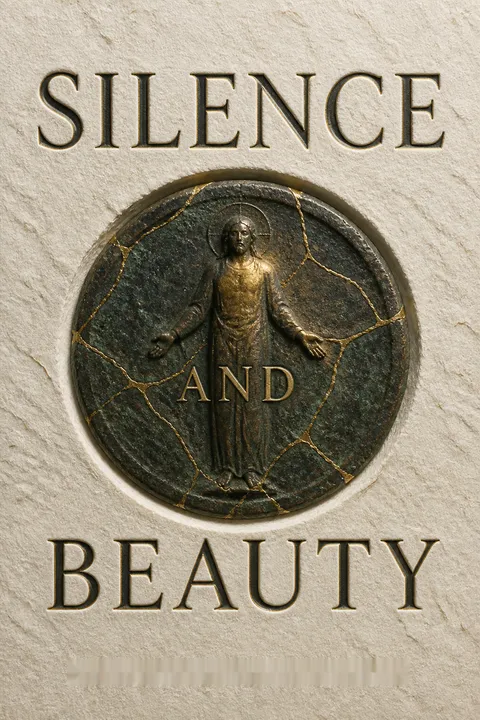
A visual culture's paradox. In Japan's highly visual culture, the fumi-e was more than just an image; it was a powerful icon designed to break the will. Paradoxically, this instrument of persecution, made smooth by countless feet, became for Fujimura and others "the best portrait of Christ" – a visage of forgiveness and liberation revealed through defacement, embodying the beauty of sacrifice.
2. Japan's "Mud Swamp": A Culture Forged in Ambiguity and Trauma
Shusaku Endo described Japan as a swampland for Christianity, and missionaries who have served there tend to agree.
A culture of ambiguity. Japan's history of isolation and persecution, particularly the 250-year Tokugawa era, fostered a "mud swamp" culture characterized by deep ambiguity (aimai) and a strong emphasis on group harmony (wa). This environment made clear declarations of faith or individual thought threatening, leading to a societal preference for silence and hiddenness. Kenzaburo Oe, another Nobel laureate, described Japan as "split between two opposite poles of ambiguity," a polarization deeply imprinted on its people.
The anatomy of dependence. This cultural context bred a profound sense of dependence (amae), a childlike reliance on filial and communal ties, and a psychological distinction between inner (hon-ne) and outer (tate-mae) selves. The gonin-gumi (bands of five neighbors spying on each other) enforced conformity, creating a "fumi-e culture" where individual expression was suppressed, and "the nail that sticks out will be hammered down."
Trauma's enduring legacy. From the 17th-century persecution to the atomic bombings of Hiroshima and Nagasaki, and even modern phenomena like hikikomori (social withdrawal), Japan has grappled with deep-seated trauma. This has resulted in a fatalistic "shikata-ga-nai" (nothing can be done) mindset, where stoic resignation often replaces purposeful action, leaving many Japanese feeling semai (confined) in their psychological landscape.
3. Beauty Born of Sacrifice: Japan's Aesthetic Counterpoint to Suffering
The Japanese word for beauty is 美, a Chinese ideogram composed of two ideograms: 羊 (sheep) on top and 大 (great) on the bottom.
Beauty and sacrifice intertwined. Japanese aesthetics uniquely link beauty with sacrifice, decay, and death. The ideogram for beauty (bi) suggests a "greater sheep" or "greater sacrifice," implying a willing self-offering beyond mere ritual. This concept resonates with the Christian narrative of Christ's sacrifice, making it a hidden, yet profound, point of connection within Japanese culture.
Rikyu's aesthetic of resistance. Sen no Rikyu, the 16th-century tea master, embodied this aesthetic. His wabi sabi philosophy found beauty in imperfection and transience, and his black tea bowl, a subtle defiance of the warlord Hideyoshi, symbolized protest through art. Rikyu's nijiri-guchi (small tea house entry) forced humility and the removal of swords, creating a space for vulnerable, deep communication amidst feudal violence.
Hidden messages in art. Rikyu's demise, ordered by Hideyoshi, marked the beginning of the fumi-e culture, where individual freedom was suppressed. Yet, artists like Tohaku Hasegawa, in works like "Pine Forest Screens" and the "black moon" in "The Watermill at Willow Tree Bridge," embedded hidden messages of lament and resilience. These works, often darkening with age, silently communicated enduring beauty and resistance to dictatorial power, preserving a "Christ-hidden" reality within Japanese art.
4. The Silence of God: A Voice of Compassion in Suffering
"I did not write a book about the Silence of God; I wrote a book about the Voice of God speaking through suffering and silence," he noted in the later documentary about the writing of Silence.
Beyond God's silence. Endo's original title for "Silence" was "The Aroma of the Sunshine," a stark contrast to the novel's pervasive darkness, rain, and fog. This reveals his true intent: not to depict God's absence, but to show God's voice emerging through suffering and silence. Like Graham Greene's "whiskey priest," Endo's characters grapple with profound inadequacy and the "silence of God," yet through their brokenness, God's grace is refracted.
Compassion in the mud swamp. Endo believed that faith without compassion was not true faith. He sought to portray a God who suffers with humanity, particularly the weak and marginalized, rather than an aloof, authoritarian figure. This "mother love" of God, as Endo termed it, resonates deeply with the orphaned psyche of Japanese culture, offering solace in a world where traditional "father love" often felt distant or punitive.
A new path for faith. Endo's work challenges rigid, black-and-white interpretations of faith, embracing ambiguity and doubt as integral to a deeper spiritual journey. He saw God working in the "dark crevices of our experiences," a "hataraku Kami" (active and moving God) who speaks through the very silence that seems to deny Him. This perspective offers a path for faith to rejuvenate a traumatized culture, finding hope in unexpected places.
5. Ground Zero: A Universal Starting Point for Healing and Transformation
It occurred to me during these trips that Ground Zero can be a starting point, as much as it is the designation of devastation.
Personal and collective trauma. Fujimura's experience as a Ground Zero resident after 9/11, coupled with his visits to Hiroshima and Nagasaki, led him to redefine "Ground Zero" not just as devastation, but as a "starting point" for transformation. He recognized that human depravity and evil create universal Ground Zero conditions, both public and private, that demand a journey through darkness, chaos, and confusion.
Recovery through forgiveness. The stark contrast between Hiroshima's recovery (focused on modern commerce) and Nagasaki's (rebuilding churches, communal infrastructure, and embracing prayer and forgiveness) highlights a crucial path. Fujimura argues that true recovery from trauma, whether from war or personal suffering, requires resilient prayer and forgiveness, moving into the pain rather than trying to bypass it.
The wretchedness within. The question "Where is God?" in the face of Ground Zero leads to a deeper realization: the inner darkness within humanity. Like Paul's confession in Romans 7, "What a wretched man I am! Who will rescue me from this body that is subject to death?", this cry acknowledges that true liberation begins with confronting our own internal "Ground Zero" of sin and inadequacy, rather than solely blaming external forces.
6. The Redemption of Father Rodrigues: From Imperialism to Hidden Ministry
"Even now I am the last priest in this land. But Our Lord was not silent. Even if he had been silent, my life until this day would have spoken of him."
A journey of inversion. Father Rodrigues's mission to Japan begins with an imperialistic confidence in Western Christianity, but his journey is one of profound inversion. Stripped of his priestly identity, tortured, and forced to apostatize by stepping on the fumi-e, he reaches the nadir of human experience. Yet, in this ultimate act of betrayal, he hears Christ's voice telling him to "Trample!" – a paradoxical command that leads to a deeper, more authentic faith.
Hidden ministry and resilience. After his apostasy, Rodrigues (now Okada San'emon) lives under house arrest, seemingly disgraced. However, the novel's appendix reveals his continued, hidden ministry, absolving Kichijiro and becoming a "quiet witness" to the Japanese. He embodies Endo's ideal leader: one who has fallen, lost credentials, but maintains personal faith and ministers without reward, demonstrating resilience in the face of overwhelming oppression.
A voice for the voiceless. Rodrigues's transformation from a zealous missionary to a hidden, compassionate minister reflects Endo's own journey as a misfit. His silenced voice, amplified through Endo's novel and Scorsese's film, becomes a powerful, ubiquitous voice for the persecuted worldwide. This redemption illustrates that true faith can persevere even when all is taken away, finding freedom and purpose in the most confined circumstances.
7. The Gospel as "True Myth": Liberating Orphaned Hearts
Tolkien . . . had shown that pagan myths were, in fact, God expressing Himself through the minds of poets, using the images of their “mythopoeia” to reveal fragments of His eternal truth. Yet, most astonishing of all, Tolkien maintained that Christianity was exactly the same except for the enormous difference that the poet who invented it was God Himself, and the images He used were real men and actual history.
Orphaned hearts and universal longing. Japan's "fumi-e culture," marked by a minimized father figure and a pervasive sense of being orphaned by war and societal pressures, creates a deep longing for belonging. Universal "rags-to-riches" myths, like "Anne of Green Gables" or "The Lord of the Rings," resonate profoundly in Japan because they speak to this desire for transformation from an orphan to a prince or princess, a new identity as a "royal priesthood of God."
Christ as the True Myth. J.R.R. Tolkien's argument to C.S. Lewis that Christianity is the "True Myth" – a myth that actually happened in history – offers a powerful framework for understanding the gospel's appeal. It's not just a story, but a historical reality that fulfills humanity's deepest mythical longings. This concept challenges the modern suspicion of myths as unrealistic, presenting Christ's life, death, and resurrection as the ultimate, factual narrative of liberation.
Beyond reductionism. The gospel, as a "True Myth," transcends the reductionist, either-or dichotomies of modern thought. It offers a comprehensive truth that integrates complexity and mystery, allowing for doubt as part of a childlike trust in God. This perspective liberates individuals from the "materialist argument" that confines existence to a closed system, opening a wider vista of grace and purpose for those trapped in despair.
8. Art as a Sacramental Act: Healing Brokenness and Revealing Truth
The ultimate question that any of us, or any art, can ask is this: “How may I die generously?”
Art as a cultural meal. Art, like the Lord's Supper, offers a metaphorical power of "broken bread," serving as a cultural meal that can bridge divides and offer healing. Just as the sacrament acknowledges the brokenness of Christ's body and the church, art can depict societal fissures and personal trauma, creating a space for universal reception and shared understanding, even in despair.
Truth-telling through brokenness. Endo's work, like Shakespeare's or Rouault's, champions truth-telling by unflinchingly depicting evil and human failure. This "art of brokenness" is not nihilistic; rather, it skillfully exposes the dark realm to contrast with what is good and holy. By venturing into the "darkness inside a chrysalis," art reveals what is truly beautiful on the other side of suffering, transforming the "useless into the permanent."
A deposit into God's new world. Every creative act, when done in faith, can be a sacramental act that connects to the divine and contributes to God's new creation. Like the cherry trees grafted onto foreign soil, art can invigorate and transform, becoming a "deposit into the future of God's making." This perspective challenges the notion that art is merely entertainment, elevating it to a profound means of grace and restoration.
9. Japan as a Christ-Hidden Culture: A Unique Missional Potential
Japan may be the culture to lead us into abundance, thriving and true integration of culture and nature.
Beyond "katakana religion." Despite Christianity being labeled a "katakana" (foreign) religion in Japan, the nation is, in essence, a "Christ-hidden culture." This is evidenced by the Japanese affinity for Christian-influenced art forms (Bach, Van Gogh, Anne of Green Gables) and the significant number of Christian influencers in Japanese culture. Fujimura advocates for a "hiragana" (lyrical, poetic) faith that integrates with Japanese aesthetics, moving beyond rigid, foreign impositions.
An incubator for the gospel. Japan's unique cultural traits—its deep alliance with beauty, its integrated view of nature and culture, and its art of compression—make it an ideal incubator for the gospel to flourish in new ways. The "mud swamp" of its past, tainted by trauma, can become fertile soil, transforming into an "oasis for the gospel to find nourishment for the world."
A global catalyst. Japan, often seen as a hikikomori (withdrawn) nation, possesses the potential to become a global leader in "culture care" and missional vision. By embracing its diverse heritage and healing its wounds, Japan can offer the world a unique integration of culture and nature, leading to a "posthuman era" where the humanness of bi (beauty) and "greater sacrifice" catalyze renewal worldwide.
10. Beyond the Waves: Embracing Generous Death for New Creation
The ultimate question that any of us, or any art, can ask is this: “How may I die generously?”
Navigating the great wave. Hokusai's iconic "Great Wave off Kanagawa" symbolizes Japan's struggle against overwhelming forces, with boatmen clinging to survival as Mount Fuji is dwarfed. This image reflects the anxiety and stoicism of a nation facing an unknown future, a "moment of silence" that captures the "finality of our being" in the face of trauma and death.
A generous death. Richard Fleming's observation that "Silence is a statement of the finality of our being" prompts the profound question: "How may I die generously?" This concept, rooted in the beauty of falling cherry blossoms and Christ's sacrificial death, transforms mortality from an end into a beginning. It suggests that our losses and sufferings can become a "Word to others," making our lives fruitful even in death.
Grafting into new life. Like the cherry trees grafted onto foreign soil and later reintroduced to Japan, Father Rodrigues's survival and hidden faith represent a "graft" of authentic belief. His story, resurrected by Endo, embeds a voice of compassion and resilience into global consciousness. This "art of brokenness" and the mystery of Christ's post-resurrection presence offer a path into "God's new world," where silence and beauty reveal the enduring portrait of Christ.
Review Summary
Reviews of Silence and Beauty reveal a largely admiring reception, averaging 4.16/5 stars. Readers praise Fujimura's layered exploration of Japanese culture, Endo's novel, and Christian faith under persecution. Many highlight his unique insights into trauma, beauty, and ambiguity within Japanese consciousness. Common criticisms include the book's non-linear structure, overly personal digressions, and a Protestant lens that inadequately addresses the Catholic and Jesuit roots of Endo's work. Most reviewers strongly recommend reading Endo's Silence first, viewing Fujimura's work as an invaluable companion text.
People Also Read



About the Author
Other books by Makoto Fujimura
Download PDF
Download EPUB
.epub digital book format is ideal for reading ebooks on phones, tablets, and e-readers.








































