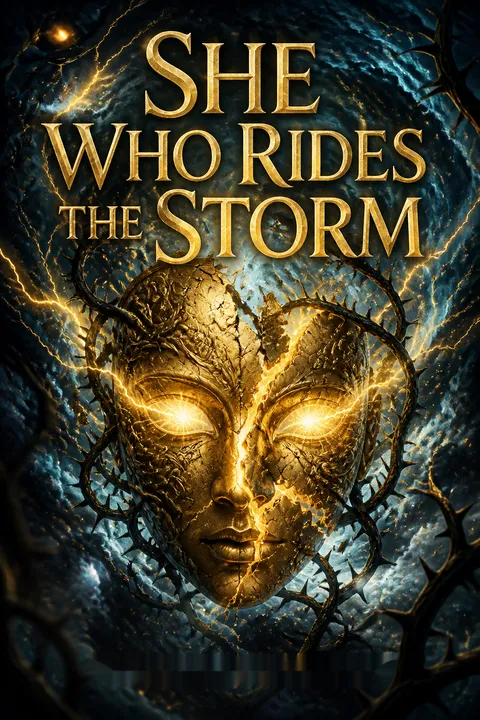

Plot Summary
Night of Stolen Shadows
In the city of Chaol, Anwei and Knox, partners in crime and survival, break into a bureaucrat's home to steal a precious figurine. The job is a cover for Anwei's true quest: to find her brother's killer, a shapeshifter known only by the nothingness he leaves behind. The theft goes awry, and the scent of death and forbidden magic lingers. Knox, a fugitive Devoted with a haunted past, and Anwei, a healer marked by trauma, are bound by secrets and the need to stay hidden. Their partnership is tested by the city's dangers, the presence of Devoted soldiers, and the ghosts of their own losses. The night's events set in motion a chain of betrayals, alliances, and revelations that will force them to confront the darkness within and around them.
Bonds Forged in Secrets
Anwei and Knox's uneasy alliance is built on unspoken rules: no questions about the past, no demands for the truth. Yet, as they navigate Chaol's underworld, their bond grows more complex. Knox's Devoted powers, granted by the goddess Calsta, are both a shield and a curse, while Anwei's uncanny sense of smell and healing mark her as something more than human. Their mutual dependence is threatened by the arrival of a mysterious job offer, the reappearance of old enemies, and the ever-present risk of exposure. Each is haunted by loss—Anwei by her brother's murder, Knox by the ghost of his sister trapped in a cursed sword. Their secrets are both their armor and their undoing.
The Plague and the Ghost
A mysterious plague sweeps through Chaol, marked by rashes and a wasting sickness that echoes the Devoted's own affliction. Anwei is drawn into the heart of the epidemic, discovering that the illness is not natural but the work of a shapeshifter feeding on souls. The city's underbelly is rife with fear, and the lines between healer and witch blur. Meanwhile, Knox is pursued by the ghosts of his past and the literal ghost of his sister, whose presence in the sword grows stronger. The plague is both a symptom and a symbol of the deeper rot in the city and in the hearts of those who dwell there.
The Devoted and the Damned
Lia, a powerful spiriter Devoted, arrives in Chaol on the Warlord's orders, tasked with rooting out threats to the Commonwealth. Her oaths to Calsta have cost her everything: family, love, even her own face, hidden behind a veil. Ewan, her partner and would-be suitor, is both protector and predator, his devotion twisted by ambition and desire. Mateo, the sickly son of an aukincer, is drawn into the web of secrets, his own magic a dangerous inheritance. The Devoted are not saviors but enforcers, and the line between the righteous and the damned is razor-thin. As Lia's path crosses with Anwei and Knox, the city becomes a crucible where faith, power, and love are tested.
Masks, Veils, and Oaths
Masks—literal and metaphorical—define the lives of Chaol's denizens. Anwei hides behind her healer's braids and criminal persona; Knox behind the remnants of his Devoted oaths; Lia behind her veil and the rules of her order; Mateo behind the expectations of his father and the sickness that drains him. Oaths to gods, to family, to self, are made and broken. The Warlord's arrival brings new dangers, as the hunt for the shapeshifter intensifies and the city's fragile peace shatters. The characters must decide who they are when the masks fall and what they are willing to sacrifice for freedom, love, and vengeance.
The Shapeshifter's Tomb
The heart of the story lies in the tomb of Patenga, a legendary shapeshifter king. The tomb is both a prize and a trap, filled with deadly puzzles, ancient magic, and the promise of unimaginable power. Anwei, Knox, Lia, and Mateo are drawn together by the promise of answers and the threat of annihilation. The tomb's secrets are guarded by more than stone and poison; they are protected by the weight of history, the hunger of the nameless god, and the legacy of betrayal. As the group descends into the darkness, they must confront not only the shapeshifter but the monsters within themselves.
The Snake-Tooth Man's Game
The shapeshifter, known as the snake-tooth man, manipulates events from the shadows, using the city's chaos and the characters' desperation to his advantage. He is not merely a killer but a soul-stealer, feeding on the energy of Devoted and ordinary people alike. His power is rooted in ancient, forbidden magic, and his motives are as personal as they are apocalyptic. The hunt for the sword, the cure for wasting sickness, and the quest for vengeance all converge in a deadly game where the stakes are nothing less than the fate of the Commonwealth and the souls of those who would defy him.
Poisoned Hearts, Poisoned Hands
Trust is a rare and dangerous commodity. Allies become enemies, and enemies become reluctant partners. Anwei's healing is both a gift and a weapon; Knox's devotion is both a shield and a shackle. Lia's loyalty to Calsta is tested by love and loss, while Mateo's quest for survival leads him to the edge of monstrosity. The shapeshifter's poison infects not only bodies but hearts, turning love into a weapon and sacrifice into a curse. The characters must choose whom to save and whom to let go, knowing that every choice carries a cost.
The Sword and the Storm
The cursed sword, the storm goddess Calsta, and the nameless god's legacy converge in a final confrontation. The bonds between Anwei and Knox, Lia and Mateo, are tested to the breaking point as the shapeshifter's true nature is revealed. The sword is both a key and a curse, capable of granting power or demanding the ultimate sacrifice. The storm that has been brewing—within the city, within the tomb, within the hearts of the characters—breaks in a torrent of violence, magic, and revelation. Not all will survive, and those who do will be forever changed.
The Truth in the Blood
The secrets of the tomb are laid bare: shapeshifters are not born but made, through the betrayal of love and the perversion of sacred bonds. The true nature of wasting sickness, the origins of the sword, and the cost of power are revealed. Anwei's quest for vengeance is upended by the discovery that her brother is alive—and transformed. Knox must confront the ghost within him and the goddess who has both saved and used him. Lia faces the loss of everything she has fought to protect, and Mateo must decide what he is willing to become to survive. Blood, both literal and metaphorical, binds and divides them all.
The Price of Power
Power is never free. The characters are forced to confront the cost of their desires: the lives lost, the loves betrayed, the oaths broken. The shapeshifter's defeat demands a sacrifice, and the bonds that have sustained the characters are tested to the limit. Anwei must decide whether to save Knox or avenge her brother; Knox must choose between love and devotion; Lia must face the consequences of her freedom; Mateo must accept the truth of his own nature. The price of power is paid in blood, and the world will never be the same.
The Unmaking of Monsters
The final battle is not only against the shapeshifter but against the monstrousness within. The characters must unmake the monsters they have become—through forgiveness, through love, through the acceptance of their own brokenness. The tomb becomes a crucible where old wounds are cauterized and new bonds are forged. The legacy of the shapeshifter is not only destruction but the possibility of healing, if the survivors are willing to pay the price.
The Last Sacrifice
In the aftermath of the storm, the survivors must reckon with what they have lost and what they have gained. The bonds between them—friendship, love, family—are both a comfort and a burden. The sacrifices made in the tomb echo through the city and the hearts of those who remain. The world is changed, not by the defeat of a monster, but by the willingness to love in the face of despair. The last sacrifice is not death, but the choice to live.
Roots, Ruins, and Rebirth
The city of Chaol is scarred by fire, plague, and betrayal, but in the ruins, seeds of hope take root. Anwei, Knox, Lia, and Mateo must find their place in a world remade by their choices. The old gods are silent, but the bonds they have forged—across lines of faith, magic, and blood—offer the promise of something new. The hunt is over, but the journey toward healing and redemption has only begun.
The Goddess and the Nameless
The true nature of Calsta and the nameless god is revealed: not as distant, uncaring deities, but as forces shaped by the love, sacrifice, and choices of mortals. The bonds between Basist and Devoted, between healer and warrior, between the living and the dead, are the true source of power. The gods are not above the world, but within it, their stories written in the lives of those who dare to love and to fight.
The End of the Hunt
The hunt for the shapeshifter is over, but the scars remain. Anwei and Knox, Lia and Mateo, must decide what kind of world they will build from the ashes. The lessons of the tomb, the price of power, and the bonds of love and friendship will guide them as they step into an uncertain future. The storm has passed, but the memory of its fury will shape them forever.
Analysis
She Who Rides the Storm is a masterful exploration of trauma, power, and the redemptive potential of human connection. Caitlin Sangster weaves a complex tapestry of characters whose lives are defined by loss, secrecy, and the struggle for agency in a world ruled by gods and monsters. The novel interrogates the nature of power—how it is gained, wielded, and abused—and the cost of survival in a society built on sacrifice and betrayal. At its heart, the story is about the bonds we forge: between friends, lovers, family, and even enemies. These bonds are both a source of strength and a potential curse, capable of healing or destroying. The novel's use of duality—healer and thief, Devoted and Basist, love and vengeance—serves as both a narrative engine and a thematic core, challenging readers to question the boundaries between good and evil, self and other. The tomb, with its deadly puzzles and ancient secrets, is a metaphor for the characters' own buried wounds and the possibility of transformation through pain. Ultimately, the novel suggests that true power lies not in domination or sacrifice, but in the willingness to love, to forgive, and to choose hope in the face of despair. The lessons of the story are both timeless and timely: that healing is possible, that monsters can be unmade, and that the bonds we choose are stronger than the chains we inherit.
Review Summary
She Who Rides the Storm receives mixed reviews averaging 3.74/5 stars. Readers praise the immersive worldbuilding, complex magic system, and four distinct POV characters. Many compare it favorably to Six of Crows and Brandon Sanderson's work. Common complaints include slow pacing, confusing exposition, lack of context for terminology, and misleading marketing as a heist novel when the actual heist occurs only in the final pages. Some found the 600-page length excessive. Positive reviews highlight the engaging character dynamics, mythology, and major plot twists. Several readers DNF'd due to confusion or lack of engagement.
People Also Read
Characters
Anwei
Anwei is a Beildan healer marked by trauma, loss, and a fierce determination to avenge her brother's murder. Her extraordinary sense of smell and skill with herbs make her both a healer and a feared "dirt witch." Scarred by a purging ritual that nearly killed her, Anwei's magic is both a gift and a curse, tied to the nameless god's legacy. She is driven by vengeance but finds herself drawn into bonds of friendship and love with Knox, whose presence both shields and challenges her. Anwei's journey is one of learning to trust, to forgive, and to accept her own power—not as a weapon, but as a means of healing. Her relationship with Knox is the emotional heart of the story, a bond forged in pain and tested by betrayal, sacrifice, and the possibility of redemption.
Knox
Knox is a former Devoted, marked by oaths to the storm goddess Calsta and hunted by his own order. Gifted with supernatural senses and abilities, he is both protector and predator, his power a double-edged sword. Knox is haunted by the ghost of his sister, trapped in a cursed blade, and by the weight of his broken oaths. His partnership with Anwei is both a lifeline and a source of torment, as love and devotion come into conflict. Knox's journey is one of self-discovery, as he learns that true strength lies not in obedience or power, but in vulnerability, trust, and the willingness to choose love over fear. His struggle with the ghost within him mirrors the larger battle against the shapeshifter, and his ultimate sacrifice is both a defeat and a victory.
Lia
Lia is a powerful spiriter, bound by oaths to Calsta that have cost her family, freedom, and self. Her ability to read auras and thoughts makes her both a weapon and a target, and her veil is both protection and prison. Lia's journey is one of breaking free—from the Warlord's control, from the expectations of her order, and from the trauma inflicted by those who would use her. Her relationship with Mateo is fraught with danger and possibility, as love becomes both a source of healing and a potential curse. Lia's struggle to define herself outside of her oaths, to claim agency and joy, is a central theme, and her courage in the face of loss and betrayal is both inspiring and heartbreaking.
Mateo
Mateo is the adopted son of an aukincer, marked by a wasting sickness that is both a curse and a clue to his true nature. Gifted with Basist magic, he is both a healer and a potential shapeshifter, his power a source of fear and hope. Mateo's relationship with his father is complex, shaped by love, manipulation, and the desperate quest for survival. His bond with Lia is both a lifeline and a threat, as the possibility of love becomes entangled with the risk of becoming a monster. Mateo's journey is one of self-acceptance, as he confronts the truth of his origins, the cost of power, and the possibility of redemption through connection rather than sacrifice.
The Snake-Tooth Man (Tual)
The shapeshifter known as the snake-tooth man is both villain and victim, a soul-stealer whose power is rooted in ancient, forbidden magic. His motives are deeply personal—rooted in love, loss, and the desire to save his son at any cost. Tual's ability to manipulate, to steal energy, and to reshape reality makes him a terrifying adversary. Yet, his humanity is never entirely lost; his actions are driven by a twisted form of love and the fear of being alone. Tual embodies the dangers of unchecked power, the perversion of sacred bonds, and the tragedy of sacrificing others for one's own survival.
Noa
Noa is a high khonin, a performer, and a contact in Chaol's underworld. Her wit, beauty, and resourcefulness make her an invaluable ally, but her true nature is shrouded in mystery. As the story unfolds, Noa's role becomes increasingly ambiguous—her loyalty, motives, and even her identity are called into question. She is both a friend and a potential enemy, embodying the dangers of trust and the complexity of human relationships in a world where nothing is as it seems.
Ewan
Ewan is a Devoted whose loyalty to Calsta is twisted by ambition, desire, and the trauma of his own oaths. His relationship with Lia is marked by violence, obsession, and the abuse of power. Ewan is both a victim and a perpetrator, his devotion corrupted by the very system that created him. His fate is a cautionary tale about the dangers of blind obedience, the cost of power, and the thin line between protector and predator.
The Warlord
The Warlord is the embodiment of the Commonwealth's authority, a figure both revered and feared. Her power is waning, threatened by the wasting sickness that afflicts her Devoted and by the ancient evils stirring beneath the city. The Warlord's actions are driven by desperation, the need to maintain control, and the fear of what will happen if the old gods return. She is both a symbol of order and a harbinger of chaos, her presence a catalyst for the story's climactic confrontations.
Altahn
Altahn is a Trib, caught between loyalty to his clan, the demands of the city, and the machinations of the shapeshifter. His skills with salpowder and his knowledge of the underworld make him a valuable ally, but his true allegiance is always in question. Altahn's journey is one of learning to choose sides, to act with honor, and to find his own place in a world where the old rules no longer apply.
Gulya
Gulya is the apothecarist who takes Anwei in, offering both shelter and tough love. Her wisdom, stubbornness, and refusal to be intimidated make her a grounding force in the chaos of Chaol. Gulya's fate is a reminder of the cost of kindness in a world ruled by fear and suspicion, and her relationship with Anwei is a testament to the power of chosen family.
Plot Devices
Duality and Bonding
The narrative is structured around the interplay of dualities: healer and thief, Devoted and Basist, love and betrayal, power and sacrifice. The central plot device is the concept of bonding—magical, emotional, and spiritual—between characters who are otherwise opposed. These bonds are both a source of strength and a potential curse, capable of healing or destroying. The story uses alternating points of view, shifting alliances, and mirrored traumas to explore how connection can be both salvation and damnation. The tomb's puzzles, the cursed sword, and the shapeshifter's manipulations all serve as externalizations of the characters' internal struggles, with foreshadowing woven through dreams, omens, and the recurring motif of storms and roots.
Masks and Hidden Identities
Masks, veils, and false identities are used both literally and metaphorically to explore themes of selfhood, trust, and deception. Characters hide their true natures—Anwei as a healer and witch, Knox as a Devoted and vessel for a ghost, Lia as a spiriter and survivor, Mateo as a Basist and potential monster. The plot is driven by the gradual unmasking of these identities, with revelations timed to maximize emotional impact and narrative tension. The shapeshifter's ability to change form and steal souls is the ultimate expression of this device, blurring the line between self and other, victim and villain.
The Tomb as Crucible
The tomb of Patenga is both a literal setting and a symbolic crucible, where the characters' fears, desires, and traumas are brought to the surface. The tomb's traps, puzzles, and magical barriers force the characters to confront their own limitations and the consequences of their choices. The final confrontation with the shapeshifter is both a battle for survival and a reckoning with the past, with the tomb's secrets serving as the key to understanding the true nature of power, love, and sacrifice.
Foreshadowing and Revelation
The narrative is rich with foreshadowing—dreams, omens, and recurring motifs (storms, roots, masks, swords)—that hint at the true nature of the characters and the world. Revelations are carefully timed, with each new piece of information recontextualizing what has come before. The story's structure allows for both suspense and catharsis, as the characters' secrets are revealed and their fates entwined.
Download PDF
Download EPUB
.epub digital book format is ideal for reading ebooks on phones, tablets, and e-readers.








































