
Plot Summary
Dragon's Pact Forged
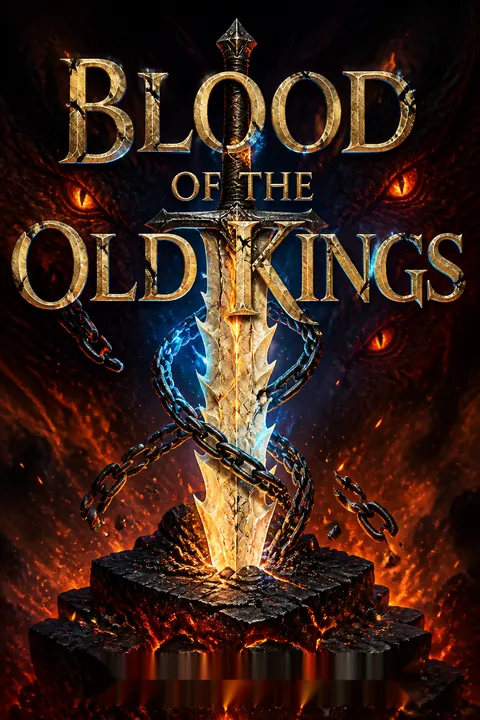
Loran, a grieving widow in conquered Arland, braves the volcano to seek the legendary fire-dragon's aid. Facing the chained, many-eyed beast, she offers her own eye and a reckless promise: to become king and free her land. The dragon, bound by Imperial chains and haunted by its own failures, forges a pact with Loran, gifting her a sword made from its fang—Wurmath, burning with dragonfire. Loran's pain and loss are transmuted into resolve. She leaves the volcano, sword in hand, no longer just a mourner but a would-be liberator, her destiny forever altered by the dragon's ancient power and her own willingness to sacrifice everything for vengeance and hope.
Shadows in the Capital
In the Imperial Capital, Cain, an Arlander exile, is drawn into a web of intrigue after his friend Fienna's mysterious death. Pursued and beaten by strangers with Kamori accents, he realizes Fienna's murder is no random crime. The city's underbelly is alive with secrets—provincial resentments, Imperial surveillance, and the ever-present threat of the Ministry of Intelligence. Cain's investigation leads him through alleys, taverns, and the memories of his own family's execution. The city's shadows are thick with danger, but Cain's determination to uncover the truth about Fienna—and perhaps himself—only grows sharper.
Chains of Power
Arienne, a young Arlander sorcerer, is trapped in the Imperial Academy, where sorcerers are trained not for magic, but to become Power generators—living batteries for the Empire's machines. Haunted by a mysterious voice in her mind, Arienne breaks the Academy's strictest rules, descending into forbidden depths to steal a generator. The voice, revealed as Eldred—a sentient, tormented generator—guides her, promising freedom and forbidden knowledge. Arienne's theft sets her on a path of escape, but also marks her as a fugitive, hunted by the Office of Truth and entangled in the Empire's darkest secrets.
The Voice in the Mind
As Loran wages a campaign of vengeance with her dragonfang sword, she is drawn into the orbit of Kamori's resistance, led by King Gwaharad and his brother Emere. Their alliance is uneasy, fraught with questions of legitimacy, destiny, and the true meaning of kingship. Meanwhile, Arienne's bond with Eldred deepens—his voice both mentor and manipulator, teaching her forbidden sorcery but also revealing his own monstrous past. In the Capital, Cain's investigation brings him into contact with Imperial agents, who see in him both a useful tool and a potential threat. Across the Empire, the fates of these exiles and rebels begin to intertwine.
Funeral of the Forgotten
Fienna's funeral becomes a gathering of Arlander exiles, each touched by her quiet acts of kindness. Cain, wracked by guilt and loss, discovers the depth of Fienna's sacrifices—her secret support of the community, her entanglement with powerful figures like the merchant Gladdis. The mourners' stories reveal the hidden networks of care and resistance beneath Imperial rule. Rumors swirl of a princess fighting back in Arland, kindling hope. Cain's resolve hardens: Fienna's death will not be forgotten, and the truth behind it must be uncovered, no matter the cost.
Swords and Scars
Loran's campaign escalates as she faces Imperial legionaries in Powered armor. In a brutal duel, she unleashes the dragon's power within herself, transforming—scales, claws, and blue fire—becoming something more than human. Her victory is both triumph and terror, witnessed by Emere and the Kamori resistance. Yet, the cost is high: each act of violence deepens her isolation and the burden of leadership. The line between vengeance and justice blurs, and Loran must confront what it truly means to lead—and to be changed by the power she wields.
The Gathering Storm
In the underground palace of Kamori, Loran navigates the politics of resistance. Gwaharad's ambitions, Emere's loyalty, and Gladdis's shadowy support all complicate the struggle. The specter of the Empire's ultimate weapon—the Star of Mersia—haunts their plans. Meanwhile, Arienne, now a fugitive, finds refuge among unlikely allies, including Cain. Their paths cross in the Capital's labyrinth, each carrying secrets and scars. The storm of rebellion gathers force, but trust is fragile, and the Empire's reach is long.
The Circuit of Destiny
Cain's investigation uncovers a plot to use a stolen Power generator to sabotage the Empire's greatest treasure: the Circuit of Destiny, a network of generators said to predict—or create—the future. Gladdis, Safani, and other conspirators plan to unleash devastation on the Capital, perhaps even to recreate the Star of Mersia's cataclysm. Arienne, with Eldred's guidance, learns the true nature of the Circuit and the terrible power it holds. The fates of rebels and innocents alike hang in the balance, as the machinery of destiny grinds toward disaster.
The King's Burden
Loran's victories bring not peace, but new dangers. The Empire's retaliation is swift and brutal. In a tense confrontation, she kills Prefect Hesperus, avenging her family but dooming Arland to further suffering. The Kamori alliance fractures; Gwaharad's self-interest and fear lead to betrayal. Loran, poisoned and isolated, chooses to surrender herself to save her people. Yet, the people refuse to let her go, following her in growing numbers, demanding hope and leadership. The burden of kingship grows heavier, and Loran must decide what she is willing to sacrifice for her land.
The Fire-Dragon Unbound
Arienne, tasked with freeing the fire-dragon, confronts the limits of her power and the dangers of Eldred's ambition. To break the dragon's chains, she must release Eldred fully—knowing he may betray her. Eldred possesses the dragon, merging ancient sorcery with living fire, and threatens to consume Arienne and all of Arland. In a desperate act, Arienne turns her own mind and memories into a weapon, collapsing the rooms of her past to defeat Eldred and restore the dragon's will. The cost is great, but the fire-dragon is unbound, and hope returns to Arland.
The Fall of Prefect Hesperus
In the aftermath of battle, Loran and Gwaharad confront Prefect Hesperus, the architect of Arland's suffering. Gwaharad seeks compromise and gold; Loran, unable to accept blood money for her people's pain, executes Hesperus in a blaze of dragonfire. The act severs the alliance and marks Loran as an enemy of both Empire and rebel alike. Her path is now her own, guided only by the memory of her family and the demands of justice. The world shifts, and the old order begins to crumble.
The Fugitive and the Witch
Arienne, hunted by the Office of Truth and haunted by Eldred's legacy, flees through forests, towers, and mountain passes. She learns to wield her own unique sorcery—cutting, severing, unraveling—transforming her trauma into power. Encounters with inquisitors, rebels, and the memories of lost friends shape her journey. In the crucible of pursuit and survival, Arienne becomes not just a fugitive, but a witch—a teacher and protector for the next generation of sorcerers, determined to break the Empire's cycle of exploitation.
The Battle for Arland
The Empire's legions, led by the monstrous gigatherion Clarios, descend upon Arland. Loran, now fully king, leads a ragtag army of Arlanders, Kamori, and Ledonites. The fire-dragon, freed by Arienne's courage, joins the battle. The clash of titans—dragon and gigatherion—shakes the land. Loran, transformed and transcendent, fights at the dragon's side. The people, inspired by her defiance, refuse to flee, choosing to stand with their king. The fate of Arland hangs on the edge of a blade, as hope and despair war in every heart.
The Gigatherion's Shadow
The gigatherion devastates the battlefield, its power overwhelming. Loran's strength and the dragon's fury are not enough. The people's resolve is tested; many fall, but none retreat. In a final act of faith and leadership, Loran ascends—wings unfurled, crowned by light—embracing her destiny as king. The dragon and the people rally, and the Empire's might is met with the unbreakable will of Arland. The shadow of defeat lingers, but a new dawn breaks through.
The Collapse of Rooms
Arienne, in the aftermath of battle, reckons with the destruction of her inner room—the collapse of childhood, safety, and the past. She rescues Tychon, the innocent generator, and creates a new sanctuary in her mind. The cost of victory is the loss of innocence, but also the birth of new purpose. Arienne becomes a teacher, a witch, and a guardian of the next generation, determined to ensure that no more children are sacrificed to the Empire's hunger for Power.
The King Ascends
Loran's victory reshapes Arland. The Empire, shaken by defeat and the loss of its gigatherion, is forced to negotiate. Arland gains self-governance, and Wilfrid, once a farmer, becomes prefect. The people's council, the memory of sacrifice, and the legend of the king who fought with dragonfire become the foundation of a new era. Loran vanishes, her fate unknown, but her spirit endures in the hearts of her people. The banners of Arland fly with two dragons—one of fire, one of hope.
The Aftermath and Tomorrow
In the peace that follows, Arienne, Wilfrid, and Cain each find new roles—teacher, leader, caretaker. The scars of war and oppression remain, but so does the determination to build a better world. The Empire's shadow lingers, but Arland's spirit is unbroken. The lessons of sacrifice, memory, and the refusal to accept fate as given echo through every act of governance, every secret lesson, every act of kindness. The story ends not with final victory, but with the promise that the struggle for freedom, dignity, and hope will continue—carried by those who remember, and those who dare to dream.
Analysis
Blood of the Old Kings is a sweeping, emotionally charged fantasy that interrogates the nature of power, memory, and resistance under empire. Through its interwoven narratives, the novel explores how trauma and loss can be transmuted into hope and leadership, but only at great personal cost. The story refuses easy answers: vengeance and justice blur, heroes become monsters, and victories are always partial and fraught. The Empire's machinery—literal and metaphorical—feeds on the bodies and souls of the conquered, but the spirit of resistance endures in acts of kindness, sacrifice, and the forging of new magic from old wounds. The collapse of Arienne's inner room, the transformation of Loran into king, and Cain's refusal to seize power for himself all speak to the necessity of letting go of the past in order to build a better future. The novel's ultimate lesson is one of collective memory and ongoing struggle: freedom is never given, only won and defended, again and again, by those who remember, who mourn, and who dare to hope.
Review Summary
People Also Read
Characters
Loran
Loran begins as a broken woman, her family executed by the Empire for a simple act of mourning. Her journey to the volcano and pact with the fire-dragon transform her from victim to avenger, and ultimately to reluctant leader. Psychoanalytically, Loran is driven by loss, guilt, and a desperate need for meaning—her quest for vengeance becomes a quest for justice, and then for kingship. Her relationship with power is fraught: each victory brings new burdens, each act of violence deepens her isolation. Through alliances, betrayals, and the adoration of her people, Loran is forced to confront what it means to lead, to sacrifice, and to be changed by the very power she sought. Her arc is one of transformation—human to monster to king—anchored by memory, love, and the unyielding hope of a better future.
Arienne
Arienne is a young woman marked by the Empire's cruelty—taken from her family, trained to become a Power generator, denied agency and identity. The voice of Eldred in her mind is both a curse and a catalyst, pushing her to rebel, to learn, and to create her own sorcery. Arienne's psychological journey is one of trauma, resilience, and self-invention. She is shaped by fear, but also by curiosity and compassion. Her relationships—with Eldred, with Cain, with Loran—are fraught with mistrust and longing for connection. Ultimately, Arienne's greatest act is the destruction of her own inner room, a metaphor for the painful but necessary collapse of childhood and the forging of a new self. She emerges as a witch, a teacher, and a protector, determined to break the cycle of exploitation for the next generation.
Cain
Cain is a survivor—his family executed, his homeland lost, his life rebuilt in the shadows of the Capital. His friendship with Fienna anchors him, and her death propels him into a dangerous investigation that uncovers the Empire's darkest secrets. Cain's psyche is marked by guilt, loyalty, and a deep-seated need for justice. He is both pragmatic and idealistic, willing to bend rules but unwilling to abandon those he cares for. His relationships—with Fienna, with Arienne, with the agents of the Empire—reveal a man torn between self-preservation and the call to something greater. In the end, Cain's refusal to seize power for himself, his choice to care for the forgotten and the vulnerable, marks him as a true king in spirit, if not in title.
Eldred
Once the Grim King of Mersia, Eldred is now a sentient Power generator, a relic of a world destroyed by the Empire. His voice in Arienne's mind is seductive, manipulative, and deeply wounded. Eldred embodies the dangers of unchecked power, the allure of forbidden knowledge, and the corrosive effects of trauma and isolation. His relationship with Arienne is complex—mentor, abuser, victim, and ultimately adversary. Eldred's desire for revenge and restoration is both understandable and monstrous, and his final defeat is as much a liberation for Arienne as it is a tragedy for himself.
Fienna
Fienna is the unseen thread binding the Arlander exiles in the Capital. Her acts of kindness, her secret resistance, and her tragic death reveal the hidden networks of care that sustain the oppressed. Fienna's relationship with Cain is one of deep, platonic love—a bond forged in exile and loss. Her memory haunts Cain, driving him to seek justice and, ultimately, to become a caretaker for others. Fienna represents the quiet heroism of those who resist not with swords, but with compassion and sacrifice.
Gwaharad
King Gwaharad of Kamori is a study in the limits of power and the temptations of compromise. His alliance with Loran is pragmatic, his leadership marked by caution, self-interest, and a deep fear of Imperial reprisal. Gwaharad's relationship with his brother Emere, with Loran, and with his own people is fraught with tension—he is both a necessary ally and a potential betrayer. Psychologically, Gwaharad embodies the dilemmas of leadership under occupation: when to fight, when to negotiate, and what costs are acceptable for survival.
Emere
Emere, Gwaharad's brother, is the heart of the Kamori resistance—loyal, generous, and unwavering in his support for Loran. He believes in destiny, in the power of symbols, and in the possibility of a better world. Emere's kindness and conviction provide a counterpoint to Gwaharad's caution, and his relationship with Loran is one of mutual respect and hope. Emere represents the idealism that sustains resistance, even in the face of overwhelming odds.
Wilfrid
Wilfrid begins as a simple villager, but her loyalty, courage, and common sense elevate her to the role of Loran's general and, eventually, prefect of Arland. Wilfrid's journey is one of empowerment—she becomes the bridge between king and people, embodying the collective will and memory of Arland. Her relationship with Loran is marked by respect and devotion, and her leadership after Loran's disappearance ensures that the spirit of resistance endures.
Gladdis
Gladdis is a powerful Kamori merchant whose wealth and connections fuel the resistance—but her willingness to embrace catastrophic violence in pursuit of liberation marks her as both visionary and dangerous. Her relationship with Fienna, with Safani, and with the rebel cause is complex—she is both benefactor and betrayer, driven by grief, ambition, and a willingness to sacrifice all for the dream of freedom.
Safani
Safani is the silent, deadly hand behind many of the novel's darkest events. His hatred for the Empire is absolute, his methods ruthless. Safani's relationship with Gladdis, with Cain, and with the broader resistance is one of utility and violence—he is both tool and agent, shaped by trauma and a single-minded desire for retribution. His actions force Cain and others to confront the costs of vengeance and the dangers of becoming what one hates.
Plot Devices
Intertwined destinies and shifting perspectives
The novel weaves together the stories of Loran, Arienne, and Cain, each with their own voice, trauma, and quest. Their paths cross and diverge, their choices echoing and amplifying one another. The use of shifting perspectives allows the reader to see the same events from different angles, deepening the emotional resonance and thematic complexity. The narrative structure is cyclical—acts of violence, sacrifice, and hope repeat across generations, each time altered by memory and choice.
The room of the mind and the collapse of memory
Arienne's inner room—her sanctuary, her prison, her weapon—serves as a central metaphor for the psychological cost of oppression and the power of self-invention. The collapse of the room, the destruction of childhood, and the forging of new magic all mirror the broader themes of the novel: the necessity of letting go, the pain of growth, and the possibility of creating new futures from the ruins of the past.
Power, sacrifice, and the cost of freedom
The novel interrogates the nature of power—magical, political, personal—and the sacrifices required to wield it responsibly. The pacts with dragons, the forging of Power generators, the acts of rebellion and vengeance—all come with terrible costs. The story repeatedly asks: who pays the price for freedom? What is the difference between vengeance and justice? How do leaders avoid becoming monsters themselves?
Foreshadowing and mythic resonance
The narrative is rich with foreshadowing—rumors of princesses, the shadow of the Star of Mersia, the ever-present threat of Imperial retaliation. The characters are haunted by the past—personal, familial, and national—and their actions are shaped by the stories they tell themselves and each other. The use of mythic language and imagery (dragons, kings, witches, titans) elevates the personal struggles of the characters to the level of legend, while also questioning the costs and consequences of such myths.
Download PDF
Download EPUB
.epub digital book format is ideal for reading ebooks on phones, tablets, and e-readers.








































