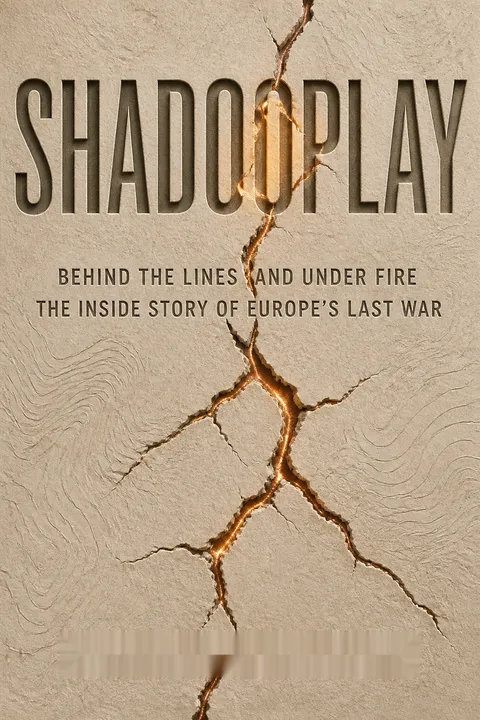

Key Takeaways
1. The Shattering of Naive Beliefs About War in Europe
The shattering of Yugoslavia shattered my naive belief that war in Europe was over.
Personal awakening. For the author, the breakup of Yugoslavia was a profound personal and professional turning point, revealing the brutal nature of conflict in a continent many believed had moved past such horrors. It exposed the fragility of peace and the ease with which societies can descend into division. This initial experience shaped a "hard realist view of the world," tempered only by witnessing unexpected kindness amidst suffering.
Lessons learned. The conflict taught crucial lessons about the dynamics of war. It demonstrated how easily malevolent actors could sow discord, turning communities against "the other" through poison whispered into ears. The author observed that ethnic and religious identity often overpowered political ideals, and raw emotion frequently triumphed over logic, leading people to fight fiercely for causes they barely understood.
Intervention's paradox. The Yugoslav wars also highlighted the complex and often contradictory nature of international intervention. While a swift, well-planned foreign intervention could avert disaster, a prolonged and poorly executed one could deepen the abyss. The author's experiences in Bosnia, Serbia, Kosovo, and later conflicts like Iraq and Syria, consistently brought him back to Yugoslavia as the crucible where he learned that violence was rarely "mindless," but often driven by a cold, evil logic.
2. International Inaction and Miscalculation Fueled the Conflict
After four years of complete failure by the EU to halt the mass bloodshed, the Americans found their dog and stepped in.
Initial European failure. When Yugoslavia began to unravel in 1991, European leaders confidently asserted their ability to manage the crisis, dismissing American involvement. However, their efforts proved utterly ineffective, leading to years of mass bloodshed in Croatia and Bosnia. This prolonged inaction allowed the conflict to escalate, demonstrating a critical failure of European diplomacy and collective security.
American intervention and subsequent neglect. The US eventually intervened in Bosnia with airpower, forcing the Dayton Agreement in 1995. Yet, both the US and EU then "took their eyes off the Balkans ball," allowing the Serbian province of Kosovo to slide into conflict. This renewed neglect created a vacuum that Milošević exploited, leading to intensified clashes between the KLA and Serbian forces, culminating in NATO's bombing campaign in 1999.
Račak as a turning point. The Račak massacre in January 1999, where 54 Kosovar Albanians were found dead, became the decisive catalyst for NATO intervention. Despite conflicting accounts and Serbian claims of a staged event, US Secretary of State Madeleine Albright seized on the incident to push for military action. This event solidified the international resolve to act, transforming the conflict from a regional crisis into a major international intervention.
3. The Devastating Human Cost of "Collateral Damage"
The reality was hideous enough without inflating figures for NATO’s propaganda purposes.
Civilian suffering. The NATO bombing campaign, while aimed at military targets, inflicted immense suffering on Serbian civilians, often dismissed as "collateral damage." The author recounts harrowing scenes of destruction and death, such as:
- Three-year-old Milica Rakić killed by a missile in her Belgrade apartment.
- Jovan and Sofija Radojičić, a couple in their seventies, crushed in their home in Aleksinac.
- Fifteen-year-old Sanja Milenković killed by shrapnel on a crowded bridge in Varvarin.
- A passenger train hit by missiles in Grdelica, killing 12 and injuring 16.
Questionable targeting. Many civilian casualties resulted from questionable targeting decisions. The bombing of the Varvarin bridge on market day, for instance, raised serious questions about NATO's intelligence and common sense. The subsequent admission that cockpit footage of the Grdelica train attack had been sped up further eroded trust in NATO's narrative of precision and minimal civilian harm.
Propaganda vs. reality. While NATO and Western media often inflated casualty figures for propaganda purposes, the actual death toll, estimated by organizations like Human Rights Watch at 3,000 to 6,000 people, was horrific enough. These deaths, alongside the destruction of schools, hospitals, churches, and infrastructure, deeply impacted the Serbian population, fostering widespread anger and a sense of victimhood, often overshadowing the atrocities committed by their own forces in Kosovo.
4. Propaganda and Media Manipulation Defined the Narrative
Belgrade, governed by a bunch of stolid, communist, nationalist, out-of-touch, criminal conspiracy theorists, told the outside world to mind its own business, and prodded visiting journalists in the chest. They lost the public relations war along with all the other wars, for two reasons. Firstly, their side committed the majority of the crimes; secondly, they were stupid and didn’t even bother with PR.
Serbian media control. The Milošević regime maintained tight control over state media, particularly Radio Television of Serbia (RTS), using it as a propaganda mouthpiece. Every event was twisted to support the regime or ignored if it didn't fit the narrative. This included downplaying the flight of 300,000 Serbs from Croatia by leading the news with a story about a Portuguese circus, and later claiming Kosovar refugees were "actors, paid by NATO."
Western media's role. The international media, while often critical of Belgrade, also played a role in shaping perceptions. The dramatic images of hundreds of thousands of Kosovar Albanian refugees pouring into Albania and Macedonia provided NATO leaders with crucial justification for their bombing campaign, solidifying public opinion in the West. This "battle of public relations" was as vital as the military conflict itself.
The cost of truth. Independent journalists in Serbia faced immense pressure, including fines, equipment confiscation, and violence. The murder of Slavko Ćuruvija, a newspaper editor critical of the regime, sent a chilling message, curtailing even muted criticism. This suppression of truth, coupled with the regime's ineptitude in public relations, ensured that Serbia lost the information war, further isolating its population from reality and the outside world.
5. Covert Operations and Intelligence Warfare Shaped the Battlefield
What the press release didn’t say was that at least a hundred elite British military personnel were already on their way to Kosovo, wearing civilian clothes and carrying diplomatic passports.
British "sneaky beaky" operations. Long before NATO's official intervention, British intelligence and military units were conducting covert operations in Kosovo. Elite units like the SAS, 14th Intelligence, and Royal Signals were deployed under the guise of the Kosovo Verification Mission (KVM). Their mission was to conduct "Intelligence Preparation of Battlefield" (IPB), gathering crucial information on Serbian and KLA positions, terrain, and potential escape routes for KVM monitors.
US CIA's active role. The US CIA was even more deeply embedded, running a well-established operation within the Kosovo Diplomatic Observer Mission (KDOM). They were not merely monitoring but actively training and supplying the KLA with equipment like satellite phones and GPS systems. This direct support to the KLA, even while diplomatic efforts were ongoing, indicated a clear US agenda to influence events on the ground.
Serbian counter-intelligence. Belgrade was not entirely blind to these covert activities. Yugoslav military intelligence had anticipated NATO intervention and implemented Cold War-era deception tactics:
- Moving equipment into underground bunkers.
- Deploying plastic decoy planes and tanks.
- Using "random order movement" for troops to confuse spy satellites.
- Listening to NATO pilots' unencrypted communications.
These efforts, combined with leaked NATO target lists, allowed Serbian forces to largely preserve their military assets despite intense bombing.
6. Milošević's Downfall: A Calculated Strategy of Political Warfare
The thinking in 1999 was 'we have an adversary, we have to use political warfare to bring him down'.
Post-war isolation. After the Kosovo War, Milošević remained in power, a "bloody annoying" and embarrassing fact for NATO. He still had the capacity to destabilize the region, particularly Montenegro. This led to a concerted international strategy of "political warfare" aimed at isolating his regime and empowering the opposition.
Multi-pronged approach. The strategy involved several key elements:
- Undermining Milošević's lies: Exposing his claims that the world hated Serbs and that he was the only link to the outside.
- Supporting independent media: Providing funds, equipment, and training to outlets like B92 Radio and the Independent Journalists Association.
- Empowering opposition politicians: Offering training, money, and assurances that the West would no longer deal with Milošević.
- Financial pressure: Freezing bank accounts linked to Milošević and his cronies, making it harder for regime figures to steal.
"Talent spotting" and internal dissent. British and American intelligence actively sought out individuals within the regime who were disillusioned or could be swayed. This involved identifying those who could be blackmailed, paid, or simply convinced that Milošević's time was up. The growing fear among regime members, fueled by unexplained murders of figures like Arkan and the Defence Minister, created an environment ripe for defection and non-cooperation.
7. The October 5th Revolution: A People's Uprising with Hidden Support
This was a people’s army organized into five columns and led by men and women who knew what they were doing and knew the potential consequences of their actions.
The election catalyst. Milošević's decision to call elections in September 2000, believing his opposition was hopelessly divided, proved to be his final miscalculation. When official results showed him losing outright to Vojislav Koštunica, but the Federal Election Commission manipulated figures to force a second round, the "big lie" became undeniable, galvanizing widespread public anger.
Mass mobilization and police defection. On October 5th, hundreds of thousands of Serbs, organized into five columns, converged on Belgrade. Police checkpoints, intended to halt them, crumbled as officers either fled or were overwhelmed. Crucially, many police commanders had secretly agreed to allow the columns through, and units in Belgrade were ordered not to fire on the crowds, signaling a critical shift in loyalty away from Milošević.
The storming of power. The revolution culminated in the storming of the Yugoslav parliament and the state TV building (RTS), symbols of Milošević's power. While the crowds provided the necessary cover, the operation was meticulously planned, involving:
- Armed men and off-duty soldiers among the protestors.
- A bulldozer used to breach defenses.
- The strategic non-intervention of elite special forces, like "the Legionnaire" (Milorad Ulemek), who refused Milošević's orders to fire on civilians.
The army's eventual pledge of loyalty to Koštunica sealed Milošević's fate, marking a relatively peaceful transfer of power.
8. Unresolved Legacies and Lingering Tensions Plague the Region
After the nightmare of the break-up, the dreams of those who wanted to build a modern, stable region, where the ghosts of the old ultra-nationalists would be laid to rest, are yet to be realized.
Post-Milošević challenges. Despite the euphoria of the October 5th revolution, Serbia's path to stability and EU integration has been fraught. The assassination of Prime Minister Zoran Djindjić in 2003, a democrat committed to reform and cooperation with The Hague, dealt a severe blow. His murder by organized crime figures allied with former paramilitaries highlighted the deep-seated corruption and criminal elements still embedded within Serbian society.
Stalled progress. Djindjić's death led to a faltering of the new system, with corruption surging and democratization slowing. The dream of a modern, stable region, free from ultra-nationalist ghosts, remains elusive. Serbia's EU accession process has been "very ambitious" and "possibly unattainable" by 2025, lagging behind due to unfulfilled economic and social policy requirements.
Enduring nationalism. Figures like current President Aleksandar Vučić, a former Milošević information minister and ultra-nationalist, illustrate the persistent influence of past ideologies. His past support for Ratko Mladić and opposition to naming a Belgrade avenue after Djindjić underscore the ongoing struggle within Serbia to confront its past and fully embrace democratic values. The ethnic cleansing of Serbs in Kosovo post-1999, including the destruction of churches and graveyards, further complicates reconciliation and stability.
9. The Balkans Remain a Geopolitical Chessboard for Global Powers
Moscow seeks to plant itself more firmly in this geopolitical crossroads, just as it has in the Middle East and Central Asia.
The Kosovo land swap dilemma. A proposed land swap between Serbia and Kosovo, involving the transfer of Serb-dominated northern Kosovo municipalities to Serbia and Albanian-dominated southern Serbian municipalities to Kosovo, aims to resolve their dispute. However, this "border correction" is fraught with danger, risking further displacement of Serbs in Kosovo and potentially sparking wider regional conflicts, as well as impacting Serbia's vital trade routes.
Russian resurgence and influence. A resurgent Russia views the Balkans as its "backyard" and actively seeks to expand its influence, challenging Western integration efforts. President Putin's frequent visits to Serbia, defense agreements, and support for Bosnian Serb leader Milorad Dodik demonstrate a clear strategy to prevent Balkan countries from aligning with the West. This includes training Bosnian Serb police forces and supporting Slavic culture.
A complex geopolitical crossroads. While Russian domination remains unlikely due to the EU's economic power and NATO's military presence, Moscow acts as a significant destabilizing factor. Hard-line Serbian nationalists still hope for a Russian intervention to rebuild a "Greater Serbia," while liberal Serbs fight against authoritarian tendencies. The region remains a complex geopolitical crossroads where external powers vie for influence, and the painful lessons of the past continue to echo.
Review Summary
Shadowplay by Tim Marshall receives mixed reviews averaging 3.87/5. Readers appreciate Marshall's firsthand account as a Sky News correspondent during the Kosovo War, praising his engaging storytelling and dry wit. Many find the book informative about the conflict's political complexities, though several criticize the lack of historical context and confusing structure that throws readers directly into events. Some note it differs from Marshall's analytical works like Prisoners of Geography, being more memoir than comprehensive history. Critics highlight its narrow focus on Serbia rather than Kosovo itself, and question some uncorroborated claims. Most agree it's readable but requires prior knowledge.
People Also Read
About the Author
Other books by Tim Marshall





Download PDF
Download EPUB
.epub digital book format is ideal for reading ebooks on phones, tablets, and e-readers.








































