
Plot Summary
Maids, Meat, and Mockery
Cassia, a sharp-tongued human maid in the Summer Court, is overwhelmed by the arrival of fae royalty for the Solstice Ball. Her life is a cycle of servitude, poverty, and worry for her ailing father and blind grandmother. Cassia's wit is her shield against the entitled fae, especially Prince Sulien, whose return means more work and less patience. She's fiercely loyal to her family, stealing scraps of food to keep them fed, and her banter with fellow maid Beatrix reveals both her humor and her desperation. Cassia's world is one of survival, where dignity is a luxury and every day is a battle against hunger and humiliation.
The Prince Returns
Prince Sulien's return to the Summer Court is met with both awe and annoyance. Cassia, who once knew him as a child, now sees only a distant, powerful fae who embodies everything she resents about the ruling class. Their first encounter is charged with tension—Sulien catches Cassia stealing food, but instead of punishment, he issues a cryptic warning. The dynamic between them is fraught with unspoken history and simmering attraction, but Cassia's pride and Sulien's aloofness keep them at odds. The palace buzzes with anticipation for the Solstice Ball, but for Cassia, it's just another reminder of her place at the bottom.
Hunger and Hard Choices
Cassia's family teeters on the edge of starvation, and her father's expensive fae potions drain every coin she earns. The palace's excess is a bitter contrast to her family's need. Cassia's theft of food is a line she never wanted to cross, but necessity outweighs her scruples. The threat of discovery looms, and her interactions with Sulien grow more complicated—he's both a symbol of her oppression and a possible ally. Cassia's internal struggle is palpable: she's determined to provide for her family, even if it means risking everything she has left.
A Dangerous Proposition
When Cassia is framed for theft by a spiteful fae noble, she's fired and disgraced. Facing the prospect of prostitution to survive, she's approached by Sulien with a shocking proposal: marry him in a political ruse, using a powerful spell to fake a magical mate bond. In exchange, her family will be cared for. Cassia is torn—accepting means a life of lies and public scrutiny, but refusing means destitution for those she loves. The offer is transactional, not romantic, but the stakes are life and death. Cassia's decision is less a choice than a surrender to necessity.
The Solstice Ball Beckons
The Solstice Ball is a spectacle of fae glamour, where alliances are forged and destinies decided. Cassia, transformed by a golden gown and jewelry, enters the ballroom as an imposter among royalty. The four fae princes—Sulien, Cobar, Zane, and Forrest—are the center of attention, each embodying the strengths and flaws of their courts. Cassia's encounters with them are charged with chemistry and confusion. The ball is both a fairy tale and a battlefield, where Cassia must play her part perfectly or risk exposure and ruin.
Four Princes, One Fate
As midnight approaches, Sulien's spell is enacted to fake a mate bond with Cassia. But the magic goes awry: instead of matching her with Sulien alone, Cassia is magically bonded to all four princes. The ballroom erupts in shock and celebration—such a union hasn't happened in generations. Cassia is swept into a whirlwind of attention, desire, and political intrigue. The princes are as stunned as she is, each reacting with a mix of possessiveness, curiosity, and rivalry. Cassia's fate is no longer her own; she's become the linchpin of the entire fae realm.
Sparks and Scandal
The magical display of Cassia's multiple bonds becomes the talk of the court. She's kissed by each prince in turn, each encounter stirring unexpected feelings and jealousy. The crowd is both awed and scandalized, and Cassia is thrust into the spotlight as the future queen of four courts. The political implications are enormous—her union could bring peace or spark war. Cassia is overwhelmed by the attention and the weight of her new role, even as she struggles to maintain her secret and her sanity.
The Queen Revealed
Amid the celebrations, Cassia's mask is removed, revealing her as the former maid. Some nobles, especially Lady Takara, try to discredit her, but the magical bonds are undeniable proof of her legitimacy. The court is forced to accept her, though whispers and doubts persist. Cassia's transformation from servant to queen is both triumphant and terrifying. She's acutely aware of her precarious position—one misstep could mean disaster for herself and her family. The princes, each in their own way, begin to vie for her favor, complicating her already fraught emotions.
The Elders' Judgment
The fae elders are summoned to rule on Cassia's unprecedented situation. After tense deliberation, they decree that she will marry all four princes and rule from the Celestial Equilibrium, a neutral castle at the crossroads of the courts. The arrangement is designed to prevent jealousy and war, but it also means Cassia must share her life—and her bed—with four powerful, very different men. Her own wishes are barely considered; the needs of the realm outweigh personal happiness. Cassia is left reeling, her future dictated by forces beyond her control.
New Life, Old Fears
Cassia's family is moved into luxury, her father's health restored, and her grandmother given new opportunities. For them, the arrangement is a miracle. For Cassia, it's a gilded cage. She's given a royal suite, new clothes, and endless attention, but she feels more isolated than ever. The princes shower her with gifts and affection, but she's haunted by the knowledge that her entire relationship with them is built on a lie. The threat of exposure—and execution—hangs over her, even as she tries to find her place in this new world.
Four Husbands, No Choice
Cassia's relationships with the princes are complex and fraught. Each man brings out different facets of her personality: Sulien's brooding intensity, Cobar's charm, Zane's icy reserve, and Forrest's wild passion. The princes themselves must learn to cooperate, forging uneasy alliances and rivalries as they vie for Cassia's affection. Cassia is both desired and resented, her autonomy constantly challenged. The pressure to produce heirs and maintain peace between the courts adds another layer of tension. Cassia's struggle is not just for survival, but for agency and respect.
The Test Approaches
Lady Takara and other nobles conspire to expose Cassia's human heritage. A magical test is announced to determine her fae lineage—a test she cannot possibly pass. Panic sets in as Cassia realizes her secret is on the verge of discovery. She confronts Sulien, demanding answers and protection, but finds only more secrets and half-truths. The princes, each in their own way, try to reassure her, but Cassia knows that failure means death—not just for her, but for her family as well. The stakes have never been higher.
Secrets, Lies, and Loyalties
As the test draws near, Cassia's relationships with the princes become more intimate and more complicated. Moments of genuine connection are undercut by jealousy, rivalry, and the ever-present threat of exposure. Cassia's only confidante, Beatrix, urges her to trust and embrace her new life, but Cassia is paralyzed by fear and guilt. The court is a nest of vipers, and Cassia must navigate shifting alliances, both among the princes and the nobles who would see her fall. The burden of her secret grows heavier with every passing day.
The Weight of the Crown
The day of the test arrives, and Cassia is nowhere to be found. The court is thrown into chaos as the princes and elders search for her. Cassia's disappearance is both an act of desperation and a final attempt to reclaim her agency. The princes, now united by their bond to her, realize how much they stand to lose. The elders' patience wears thin, and the threat of war looms. Cassia's fate—and the fate of the realm—hangs in the balance.
Love, Lust, and Loyalty
Throughout her ordeal, Cassia's feelings for the princes deepen, even as she resists the idea of loving men she was forced to marry. Each prince reveals vulnerabilities and strengths, and Cassia begins to see them as more than symbols of power. The princes, in turn, must confront their own flaws and learn to work together—not just for the good of the realm, but for the woman they all love. The lines between duty and desire blur, and Cassia must decide whether to embrace her new life or keep running from it.
The Queen's Burden
Cassia is forced to confront the true cost of her choices. Her family's happiness comes at the expense of her own freedom. The princes' love is both a gift and a chain. The court's expectations are suffocating, and the threat of exposure is ever-present. Cassia's journey is one of self-discovery—she must find the strength to lead, to love, and to forgive herself for the lies she's told. The crown is heavy, and Cassia must decide whether to wear it with pride or cast it aside.
Escape or Embrace?
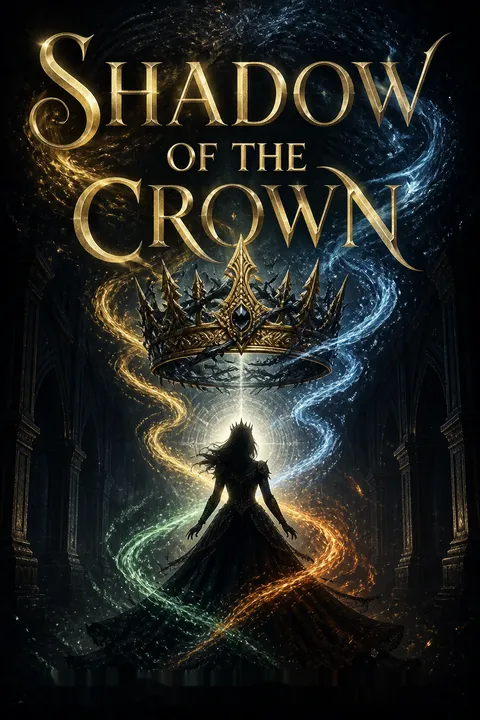
As the search for her intensifies, Cassia must choose: flee and risk everything, or embrace her role as queen and the love of four princes. The decision is not just about survival, but about identity, agency, and the possibility of happiness. The story ends on a note of uncertainty—Cassia's fate is still unwritten, but she is no longer a passive victim of circumstance. She is the shadow of the crown, poised between darkness and light, ready to claim her destiny or defy it.
Analysis
Shadow of the Crown is a deft blend of fantasy, romance, and social commentary, using the familiar tropes of the reverse harem and court intrigue to explore deeper questions of agency, class, and identity. Cassia's journey from maid to queen is both a Cinderella story and a critique of the systems that keep people in their place. The novel interrogates the costs of survival—what we are willing to sacrifice for those we love, and what it means to accept happiness after a lifetime of deprivation. The magical mishap that bonds Cassia to four princes is both a romantic fantasy and a metaphor for the burdens of leadership and the impossibility of pleasing everyone. The princes themselves are more than archetypes; their vulnerabilities and rivalries reflect the challenges of shared power and the necessity of cooperation. Ultimately, the novel suggests that true strength lies not in magic or birthright, but in resilience, honesty, and the willingness to embrace change. Cassia's story is unfinished—her fate, like the fate of the realm, remains uncertain—but her refusal to be defined by circumstance is a powerful lesson in self-determination and hope.
Review Summary
Shadow of the Crown receives mixed reviews, averaging 3.96 stars. Fans praise its humor, Cassia's witty and feisty personality, and the entertaining dynamic between her and the four fae princes. Positive reviewers highlight the world-building and addictive storytelling. Critics note the book feels incomplete, more like a serial installment than a full story, with underdeveloped characters and repetitive pacing. The female lead divides readers — some find her hilarious and strong, others find her frustrating and inconsistent. Most agree the series shows potential.
Characters
Cassia Wither
Cassia is a human maid whose life is defined by hardship, responsibility, and a biting sense of humor. Her devotion to her family drives every decision, even when it means compromising her morals or risking her life. Cassia's sharp tongue and quick wit are both her armor and her weapon in a world that sees her as disposable. Her journey from servant to queen is fraught with fear, guilt, and longing for agency. Cassia's greatest struggle is not with the fae or the court, but with herself—her capacity to trust, to love, and to accept happiness after a lifetime of deprivation.
Prince Sulien
Sulien is the Summer Court's prince, burdened by duty and haunted by his parents' tragic marriage. He proposes a marriage of convenience to Cassia, seeking power without emotional entanglement. Sulien's exterior is cold and controlled, but beneath lies vulnerability and a longing for connection. His relationship with Cassia is complicated by shared history, mutual attraction, and the unintended consequences of his spell. Sulien's arc is one of learning to balance ambition with empathy, and to see Cassia as more than a means to an end.
Prince Cobar
The Spring Court's prince is a notorious flirt, using humor and sensuality to mask the scars of a chaotic upbringing. Cobar is drawn to Cassia's authenticity and resilience, finding in her the possibility of real love and loyalty. His easygoing nature belies a deep desire for stability and fidelity, shaped by his parents' infidelities. Cobar's journey is about shedding his playboy persona and embracing vulnerability, both with Cassia and his fellow princes.
Prince Zane
Zane, prince of the Winter Court, is an enigma—cool, logical, and emotionally guarded. He is uncomfortable with courtly games and social rituals, preferring solitude and order. Cassia's fire both unsettles and fascinates him, challenging his assumptions about love and leadership. Zane's struggle is to open himself to connection, to risk pain for the possibility of joy, and to find common ground with his rivals-turned-co-husbands.
Prince Forrest
The Fall Court's prince is a hunter and warrior, more comfortable with action than words. Forrest's rough edges and lack of social grace make him an outsider even among his peers. He is drawn to Cassia's honesty and strength, but fears he has nothing to offer her beyond brute force. Forrest's arc is about learning to communicate, to trust, and to believe that he is worthy of love—not just as a prince, but as a man.
Beatrix
Cassia's best friend and fellow maid, Beatrix provides comic relief and emotional support. Her life is easier than Cassia's, but she never lets privilege blind her to her friend's struggles. Beatrix encourages Cassia to trust, to hope, and to embrace the possibility of happiness. She is a reminder of the world Cassia leaves behind, and the value of friendship in a world of shifting loyalties.
Lady Takara
A noblewoman of the House of Wealth, Takara is Cassia's chief antagonist. She frames Cassia for theft, setting off the chain of events that lead to Cassia's rise. Takara's resentment is fueled by jealousy and a sense of entitlement—she cannot accept a former maid as her queen. Her machinations are a constant threat, but also a catalyst for Cassia's growth and resilience.
Cassia's Grandmother
Once a respected tutor, Cassia's grandmother is blinded and cast aside by the fae. She is a source of strength and wisdom for Cassia, embodying the values of dignity, perseverance, and unconditional love. Her blindness is both a literal and metaphorical commentary on the court's inability to see the worth of those beneath them.
Cassia's Father
Crippled and dependent on expensive fae potions, Cassia's father is the emotional heart of her family. His optimism and pride in Cassia are a source of comfort and guilt for her. His gradual recovery mirrors Cassia's own journey toward healing and self-acceptance.
The Elders
The fae elders are the arbiters of law and custom, more concerned with stability than individual happiness. Their decisions shape the fate of the realm and force Cassia into her role as queen. They are both obstacles and protectors, embodying the tension between tradition and change.
Plot Devices
The Solstice Ball and Magical Mate Bond
The Solstice Ball is the narrative's central event, where magic determines the princes' mates. The use of a spell to fake a mate bond is a classic case of a plot device gone awry—intended to solve one problem, it creates many more. The magical mishap that bonds Cassia to all four princes is both a literal and metaphorical explosion, upending tradition and forcing characters into new roles. The ball's pageantry and the public nature of the magic heighten the stakes, making private choices into public crises.
Class and Power Dynamics
Cassia's journey is a study in the shifting sands of power and privilege. Her rise from maid to queen exposes the arbitrary nature of status and the deep-seated prejudices of the fae. The narrative uses her outsider perspective to critique the court's excesses and injustices, while also exploring the costs of assimilation and the loss of self.
Multiple Romantic Bonds
The device of one woman bonded to four men is both a romantic fantasy and a commentary on alliance, jealousy, and the challenges of shared power. The princes' rivalry and eventual cooperation mirror the political realities of the fae courts. The bonds are both magical and emotional, forcing characters to confront their desires, insecurities, and capacity for compromise.
Secrets, Lies, and Tests
The threat of exposure—through magical tests, political intrigue, and personal betrayal—drives the plot forward. Cassia's secret is a ticking time bomb, and the narrative uses foreshadowing to build tension. The test of her fae heritage is both a literal obstacle and a metaphor for the scrutiny faced by outsiders in positions of power.
Narrative Structure
The story shifts between Cassia's first-person voice and the perspectives of the princes, providing insight into their motivations and vulnerabilities. The structure allows for both intimacy and breadth, capturing the emotional complexity of the central relationships and the broader political landscape. Each chapter escalates the stakes, moving from personal survival to the fate of the realm.
Download PDF
Download EPUB
.epub digital book format is ideal for reading ebooks on phones, tablets, and e-readers.








































