
Key Takeaways
1. Our Minds Are Coloring Books, Not Blank Slates
Although human societies vary in numerous ways, those variations are not infinite and are not random, and they do not typically violate general principles that apply to all animal species.
Innate structures. The human mind is not a blank slate, passively shaped by culture, but rather a "coloring book" with pre-drawn outlines. These outlines represent evolved psychological mechanisms—innate structures that guide our thoughts and behaviors, much like a coloring book's lines suggest a giraffe rather than a zebra. While we have flexibility in how we "color" within these lines (cultural variations), the fundamental patterns are universal.
Universal patterns. This evolutionary perspective challenges the traditional social science view that human behavior is infinitely malleable. For instance, the universal preference for older men seeking younger women, and women seeking older men, persists across diverse cultures and historical periods, even before modern media. This pattern, initially attributed to American cultural norms, is better explained by fundamental biological differences:
- Men seek cues of fertility (correlated with youth).
- Women seek cues of resources and status (correlated with age).
Adaptive flexibility. The "coloring book" metaphor highlights that while our minds have built-in structures, they are not rigid. The Tiwi society, where young men marry older women, initially seems to contradict this. However, a deeper look reveals that young Tiwi men are still attracted to young women, but a patriarchal social system, driven by older men monopolizing fertile women, forces young men into strategic marriages with older widows to gain status and future access to younger mates. This demonstrates how evolved desires interact dynamically with local social ecology.
2. We Are a Confederacy of Specialized "Subselves"
Instead, it makes more sense to imagine that each of us has a loose confederacy of subselves inside our head, each controlled by a different combination of neural hardware and software.
Modular mind. The idea of a single, unified "self" is a misconception. Our brains operate more like a collection of specialized "subselves" or modules, each designed to solve a particular set of adaptive problems. These subselves are not always in agreement, leading to internal conflicts and seemingly inconsistent behaviors. This modularity is evident in how different forms of learning (e.g., food aversion vs. spatial memory) are handled by distinct brain systems, even in animals.
Functional roles. Each subself is activated by specific threats or opportunities in the environment, taking control of our attention, memory, and decision-making. The author identifies seven key subselves:
- The team player: Manages affiliation and social bonding.
- The go-getter: Focuses on status and getting ahead.
- The night watchman: Handles self-protection and danger avoidance.
- The compulsive: Concerned with avoiding disease.
- The swinging single: Drives mate acquisition.
- The good spouse: Manages mate retention.
- The parent: Oversees kin care and offspring well-being.
Dynamic control. Only one subself can be in the "driver's seat" at any given moment, but others run in the background, ready to take over if a more pressing threat or opportunity arises. This dynamic interplay explains why our priorities and behaviors can shift dramatically depending on the context, such as during a stressful European vacation where parental, spousal, and affiliative subselves might clash.
3. Our Perceptions and Memories Are Warped by Current Motives
Which details we notice and remember and which ones we distort depends on what is most functionally relevant to the subself currently in control.
Selective attention. Our brains are not passive recorders of reality; they are active filters. We selectively attend to, encode, and remember information that is most relevant to our currently active motivational "subself." This means our perceptions and memories are inherently biased, designed to prioritize information crucial for survival and reproduction. For example, men selectively stare at beautiful women in a crowd, leading to an overestimation of their prevalence and potentially undermining commitment to their partners.
Functional biases. Different subselves lead to distinct cognitive biases:
- Self-protection: Rapidly detects angry male faces, even in ambiguous expressions, because men pose a greater physical threat.
- Mate acquisition (men): Focuses attention on attractive women, but women do not remember handsome men well, reflecting their more selective mating strategy.
- Fear: Can lead to projecting anger onto outgroup members, especially in darkened environments, as a self-protective mechanism.
- Romantic regret (men): More often regrets inactions (missed opportunities) than actions.
- Romantic regret (women): More often regrets actions (bad choices) than inactions.
Adaptive distortions. These "distortions" are not flaws but adaptive mechanisms. For instance, the vivid "flashbulb memory" of a traumatic event, like a loved one's death, ensures that crucial survival-related information is deeply seared into our minds. Similarly, the inability to recall the face of a threatening individual (like the Harley rider's partner) might be an adaptive mechanism to focus on the immediate threat rather than individual identification.
4. Sex Differences in Mating Strategies Drive Diverse Behaviors
To win the attentions of selective females, male animals can do one of several things. They can display positive characteristics, as when a peacock displays his extravagant tail. They can find and control a resource-rich territory. Or they can beat out the competition directly—by fighting their way to the top of the local dominance hierarchy.
Differential investment. The fundamental principle of differential parental investment explains many sex differences. The sex that invests more in offspring (typically females) is more selective in choosing mates, while the other sex (typically males) competes more vigorously for access to mates. This leads to distinct mating strategies and associated behaviors in humans:
- Female selectivity: Women prioritize resources, status, and commitment in partners.
- Male competition: Men engage in displays of dominance, status, and attractiveness.
Aggression and status. Men are overwhelmingly more likely to commit homicides, often over "trivial altercations" that challenge their status. This aggression is a costly signal of dominance, which historically translated into greater access to mates. Men's aggression is not constant; it increases during periods of high mating competition (e.g., late teens/twenties) and decreases with marriage and fatherhood.
Conspicuous displays. Males across species, including humans, engage in costly displays to attract mates. A peacock's tail, a bighorn sheep's head-butting, or a man's conspicuous consumption (e.g., a Porsche Carrera GT) are all signals of genetic quality and resource-holding potential. These displays are often amplified when men are in a mating mindset, demonstrating that "showing off" is a deeply ingrained, evolutionarily driven behavior.
5. Prejudice and Outgroup Hatred Stem from Adaptive Threats
A strange person would have been more likely than someone from the local village to carry a disease against which our ancestors had no defense.
Functional biases. Prejudice is not a monolithic "negative feeling" but a collection of distinct biases triggered by specific adaptive threats. Our minds are wired to be wary of outgroup members, as they historically posed greater risks of disease, physical harm, or resource competition. This "functional projection" leads us to attribute specific negative emotions (like anger) or characteristics (like disease vulnerability) to outgroups, especially when we feel threatened.
Context-dependent prejudice. The strength and nature of prejudice are highly flexible and responsive to environmental cues:
- Fear of physical threat: Leads to faster and more accurate recognition of angry faces in outgroup men.
- Disease avoidance: Increases xenophobia towards unfamiliar groups, especially for individuals who feel vulnerable to disease or during periods of high vulnerability (e.g., pregnant women in their first trimester).
- Resource competition: Can trigger aggression, even in women, when economic survival is at stake.
Erasable categories. While deeply rooted, racial prejudice is not genetically deterministic. Our ancestors rarely encountered different races, so the brain's "coalitional" mechanisms are designed to categorize based on group membership, which can be surprisingly flexible. Studies show that racial distinctions can be "erased" when individuals are grouped by other salient cues, like team affiliation, suggesting that prejudice is a learned association rather than an immutable biological imperative.
6. "Higher" Human Pursuits Are Often Deeply Rooted in Reproduction
The noble and brilliantly creative things human beings accomplish are not simply sex drives gone astray; they are elaborate forms of foreplay, intimately tied to the processes by which our ancestors chose which genes were going to make it into future generations.
Beyond basic needs. Maslow's original hierarchy placed "self-actualization" (creativity, intellectual pursuits) at the pinnacle, disconnected from basic biological needs. However, an evolutionary perspective suggests that these "higher" strivings are intimately linked to fundamental biological processes, particularly reproduction. They are not separate from biology but rather sophisticated manifestations of mate attraction and status seeking.
Creative displays. Artistic genius, like Pablo Picasso's prolific output or a poet's eloquent verses, can be understood as a form of "peacock display." Men, especially when primed with romantic motives, exhibit increased creativity and a tendency to nonconform strategically (e.g., expressing unique positive opinions) to stand out and attract mates. This is a costly signal of intelligence and genetic quality.
- Picasso's creative periods often coincided with new, younger mistresses.
- Men in a romantic mindset spend more on conspicuous purchases.
- Men are more likely to act heroically when women are present.
Female creativity. Women's creativity, while also present, is less consistently linked to mate acquisition. It tends to be boosted when they are in a committed, long-term relationship, suggesting it may serve mate retention or parental investment goals rather than initial mate attraction. This highlights the nuanced, sex-specific ways in which "self-actualization" serves reproductive ends.
7. Religious Participation Can Be a Reproductive Strategy
The strongest predictors of attending church were those related to sexual and family values (opposition to infidelity, to premarital sex, to abortion, and so on).
Beyond spirituality. Religious beliefs and participation, often seen as purely spiritual or cultural, can also function as a reproductive strategy. Traditional religious groups often promote a "monogamous, high-fertility" life strategy by enforcing strict moral norms against promiscuity and supporting family-oriented lifestyles. This provides a social framework that reduces the risks associated with early marriage and high parental investment.
Strategic alignment. People's religiosity can be driven by their sexual and reproductive goals, rather than solely by indoctrination. Individuals whose life strategies align with monogamy, early marriage, and large families find support and reinforcement within religious communities. Conversely, those pursuing different strategies (e.g., delaying marriage for education, engaging in premarital sex) may drift away from traditional religious groups.
Contextual shifts. Even short-term environmental cues can influence religiosity. Studies show that both men and women express increased belief in God when exposed to a high number of attractive same-sex mating competitors. This suggests that when mating opportunities are perceived as scarce or highly competitive, individuals may gravitate towards religious frameworks that support monogamy, as a way to secure a partner and family.
8. Seemingly Irrational Economic Choices Are "Deeply Rational"
Rather than being designed to maximize immediate personal reward, many of our choices seem designed to maximize our long-term genetic success.
Beyond "Econs" and "Humans." Traditional economics assumes "Econs" make perfectly rational, utility-maximizing decisions. Behavioral economics introduced "Humans" who are "predictably irrational" due to cognitive biases like loss aversion. However, an evolutionary perspective suggests a "deep rationality" where seemingly irrational choices are actually adaptive for maximizing long-term genetic success, not just immediate personal satisfaction.
Inclusive fitness economics. Our economic decisions are profoundly influenced by inclusive fitness. Spending hundreds of thousands of dollars on children, for example, appears irrational from a purely selfish economic standpoint but is deeply rational from a gene's-eye view, as it directly promotes the replication of one's genes. The "prisoner's dilemma" disappears when players are close relatives, as their shared genes make cooperation the deeply rational choice.
Life history trade-offs. Our economic "subselves" make different trade-offs depending on our life stage and current motivational state. Resources are allocated strategically across somatic effort (body building), mating effort (finding a mate), and parental effort (raising offspring). What is a "luxury" versus a "necessity" also shifts:
- Men prioritize physical attractiveness in mates, even on a limited budget.
- Women prioritize wealth/status in mates, treating good looks as a luxury when resources are scarce.
Loss aversion flexibility. Even fundamental biases like loss aversion are not fixed. While generally true that losses feel worse than equivalent gains, this can be reversed for men when a mating motive is activated. In such a state, men become more risk-seeking, focusing on potential gains to outcompete rivals, whereas a self-protective motive makes both sexes more loss-averse.
9. Simple Individual Biases Self-Organize into Complex Societies
Tremendous complexity can result from just a few interacting variables.
Emergent order. Despite individual brains being full of simple, selfish decision rules, complex social phenomena like cultural norms, economic markets, and societal structures emerge spontaneously through self-organization. There's no "Big Brother" orchestrating society; rather, it arises from the dynamic, multidirectional interactions of individuals responding to local inputs. This is akin to how ant colonies, with tiny brains, create complex, organized societies.
Multidirectional causality. Social life is characterized by continuous, reciprocal influence. Our actions influence others, who in turn influence us and each other, creating a complex web of interactions. This dynamic interplay, even with random inputs, tends to stabilize into predictable patterns over time. For example, a neighborhood's opinion on a new school tax can quickly converge to a uniform consensus based on simple "match the majority" rules.
Individual differences matter. The specific biases and thresholds of individuals can profoundly alter emergent social patterns. A few individuals with strong, unwavering opinions (like "Agnes and Alberta" in the neighborhood simulation) can completely shift a group's consensus. This highlights that while general principles of self-organization apply, the unique, evolved decision biases of humans, and individual variations within them, are critical for understanding the specific "social geometries" that emerge.
10. The Meaning of Life Lies in Our Social Interconnectedness
Human beings are ultimately designed not to seek ecstatic happiness from dawn to dusk but to be linked into a supportive web with other human beings.
Beyond individual pleasure. The ultimate "meaning of life," from an evolutionary perspective, is not about constant personal happiness or self-actualization in isolation. Instead, it's deeply intertwined with our fundamental design for social interconnectedness and the successful propagation of our genes through kin and reciprocal relationships. Our brains are wired to derive fulfillment from contributing to this social web.
Evolutionary drivers of altruism. Our seemingly selfless behaviors, like investing heavily in children or donating to charity, are "deeply rational" from an evolutionary standpoint. They are driven by bedrock principles:
- Kin selection: Explains our profound drive to care for family, as it directly benefits our shared genes.
- Reciprocal altruism: Clarifies why we invest in friends and coworkers, expecting future benefits.
- Parental investment: Underpins the immense effort in raising children, which reliably brings fulfillment.
Fulfillment through connection. Research in positive psychology supports this evolutionary view, showing that people who spend money on others or engage in acts of kindness are happier and more fulfilled than those who focus solely on themselves. The "love you take is equal to the love you make" is not just a poetic sentiment but a reflection of our evolved social wiring. The most meaningful life is one deeply embedded in the supportive web of family and friends, where our evolved mechanisms find their most profound expression.
Review Summary
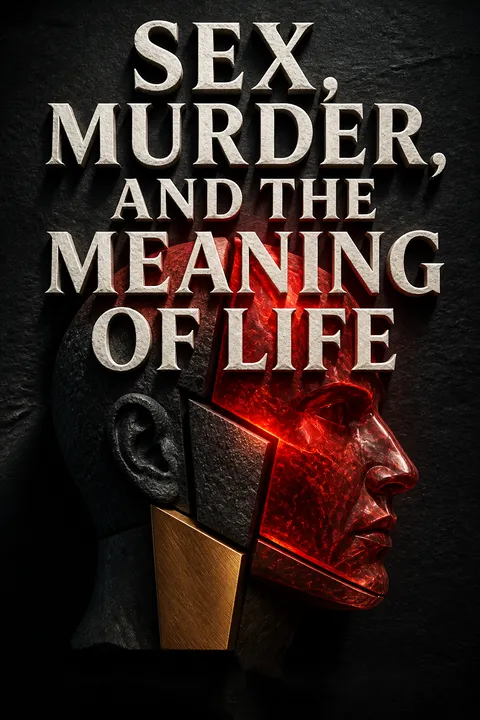
Sex, Murder, and the Meaning of Life receives mixed reviews. Some praise its accessible introduction to evolutionary psychology, engaging writing style, and interesting research findings. Others criticize it for lacking depth, being overly personal, and relying too heavily on anecdotes. The book explores how evolutionary pressures shape human behavior, covering topics like mating strategies, aggression, and decision-making. While some readers find it thought-provoking and entertaining, others feel it oversimplifies complex issues and fails to fully develop its ideas.
People Also Read







About the Author
Other books by Douglas T. Kenrick
Download PDF
Download EPUB
.epub digital book format is ideal for reading ebooks on phones, tablets, and e-readers.








































