
Plot Summary
Hollywood's Illusions Unveiled
Emma Blackstone, a scholarly Englishwoman, finds herself swept into the dazzling, chaotic world of 1920s Hollywood as companion to her glamorous sister-in-law, Kitty Flint—known to the world as Camille de la Rose. On the set of a lavish silent epic, Emma is both bemused and unsettled by the artifice and ambition swirling around her. The studio is a place where reality and illusion blur, where everyone is playing a part, and where Emma's own sense of self is challenged by the relentless pace and shifting loyalties of the film industry. Amidst the glitter, Emma receives a letter from her Aunt Estelle in England, offering her a chance to return home and reclaim a lost life. The promise of Oxford's quiet certainty stands in stark contrast to the unpredictable, seductive madness of Hollywood.
Letters from a Lost World
Emma's world is shaken by a letter from Aunt Estelle, promising a home in Oxford and a return to the life she lost after the war and influenza took her family. The letter is a bittersweet reminder of everything she's left behind: scholarship, family, and a sense of belonging. Yet, as she contemplates the possibility of going home, Emma is acutely aware of the new bonds she's formed in Hollywood—her growing affection for cameraman Zal Rokatansky, her complicated loyalty to Kitty, and the strange comfort she finds in the studio's manufactured chaos. The letter becomes a symbol of choice: between the safety of the past and the uncertain, intoxicating present.
Scandal on the Silver Screen
The studio is abuzz with rumors and rivalries as Kitty vies for the title of "Goddess of the Silver Screen." The arrival of Kitty's estranged husband, Rex Festraw, throws everything into turmoil. Rex's presence is a threat not only to Kitty's carefully constructed persona but also to the studio's reputation and financial future. Emma, caught between her duty to Kitty and her own moral compass, navigates the treacherous waters of Hollywood gossip, studio politics, and the ever-present threat of scandal. The stakes are raised as personal secrets become public currency, and the line between performance and reality grows ever thinner.
The Husband Returns
Rex Festraw, Kitty's long-lost husband, arrives on the lot, bringing with him a cloud of menace and unresolved history. His demands and threats unsettle Kitty, who fears exposure of her real age and past. Emma and Zal scramble to protect Kitty from both Rex's blackmail and the studio's wrath, while trying to keep the ever-watchful press at bay. The tension is palpable as old wounds are reopened, and the fragile equilibrium of the studio is threatened by the intrusion of real-life consequences into the world of make-believe.
Death in the Dressing Room
The drama turns deadly when Rex Festraw is found shot dead in Kitty's dressing room, with her gun lying nearby. The studio's instinct is to cover up the crime, fearing the impact on their star and the production. Emma is drawn into the ensuing chaos, forced to lie to the police and the press, and to question her own complicity in the studio's web of deception. The murder exposes the dark underbelly of Hollywood, where loyalty is transactional and truth is a commodity to be bought and sold. Emma's sense of justice is tested as she becomes both witness and participant in the cover-up.
Studio Secrets and Schemes
As the police investigation intensifies, the studio's leaders—Frank Pugh and Conrad Fishbein—work feverishly to control the narrative and protect their investment in Kitty. Evidence is destroyed, alibis are manufactured, and the truth becomes increasingly elusive. Emma, torn between her loyalty to Kitty and her own integrity, begins to suspect that someone is deliberately framing Kitty for the murder. The atmosphere is thick with suspicion, as every member of the studio becomes a potential suspect or accomplice. The machinery of Hollywood grinds on, indifferent to the human cost.
The Web of Suspects
Emma and Zal embark on their own investigation, uncovering a tangled web of motives among the studio's denizens: jealous rivals, spurned lovers, ambitious starlets, and shadowy bootleggers. The murder seems designed to implicate Kitty, but the evidence is both too convenient and too clumsy. Emma's academic training serves her well as she pieces together clues, interviews witnesses, and navigates the labyrinthine social dynamics of the studio. The deeper she delves, the more she realizes that the real story is hidden behind layers of performance and misdirection.
Dangerous Liaisons
Emma's investigation leads her into the underworld of Hollywood: bootleggers, blackmailers, and desperate extras willing to do anything for a chance at fame. She discovers that Rex was involved in shady dealings with local gangsters and that someone has gone to great lengths to forge evidence against Kitty. The lines between friend and foe blur as Emma uncovers hidden alliances and dangerous liaisons. Her own safety is threatened as she draws closer to the truth, and she must decide whom she can trust in a world built on deception.
The Bootlegger's Shadow
Emma's search for answers brings her into contact with Tony Cornero, a charismatic bootlegger whose interests intersect with those of the studio. Cornero provides crucial information about Rex's activities and the network of corruption that links Hollywood to the city's criminal elite. Emma realizes that the murder is not just a personal vendetta but part of a larger scheme involving money, power, and control over the studio's future. The shadow of organized crime looms over the investigation, complicating Emma's quest for justice.
Framed by Fame
As evidence mounts against Kitty, it becomes clear that she is being set up to take the fall for Rex's murder. The forged letters, the stolen gun, and the carefully timed phone call all point to a deliberate frame-up. Emma races against time to clear Kitty's name, even as the studio prepares to sacrifice her for the sake of its own survival. The machinery of fame, which once elevated Kitty to stardom, now threatens to destroy her. Emma's determination to uncover the truth is matched only by the forces arrayed against her.
The Goddess Contest
The competition for the title of "Goddess of the Silver Screen" intensifies, with Kitty's rivals resorting to increasingly outrageous stunts and schemes. The contest becomes a microcosm of Hollywood itself: a world where image is everything, and reality is whatever the audience believes. Emma observes the lengths to which people will go for fame, and the ways in which ambition can warp even the most genuine relationships. The contest serves as both backdrop and catalyst for the unfolding drama, highlighting the precariousness of success in a world built on illusion.
The Night of Pursuit
Emma and Zal's investigation puts them in mortal danger as they are pursued by a mysterious car on a moonlit highway. The attempt on their lives confirms that the stakes are higher than they imagined, and that someone is willing to kill to keep the truth buried. The chase is both literal and metaphorical, as Emma confronts her own fears and the limits of her courage. The night becomes a crucible in which alliances are tested and the true nature of the threat is revealed.
Truths in the Moonlight
In the aftermath of the chase, Emma uncovers the final pieces of the puzzle: the identity of the real killer, the motive behind the frame-up, and the hidden connections between the studio, the criminal underworld, and the world of high finance. The truth is both more banal and more shocking than she expected, rooted in greed, jealousy, and the relentless pursuit of power. Emma's confrontation with the villain is both a triumph and a reckoning, forcing her to confront the moral ambiguities of her own actions and the compromises she has made.
The Trap at Villa Foresta
The climax unfolds at a remote villa, where Emma and Zal race to save Kitty and Ambrose Crain from a meticulously staged murder-suicide. The villain's plan is revealed in all its cold calculation: to eliminate obstacles to a lucrative business deal and to scapegoat Kitty for the crime. In a tense and dangerous showdown, Emma's quick thinking and Zal's courage thwart the scheme, but not without cost. The violence and betrayal of the night leave lasting scars, even as justice is served.
The Final Take
With the truth exposed and the villains brought to justice, the studio returns to its relentless pursuit of spectacle and profit. Kitty is exonerated, but the experience has changed her—and Emma—forever. The machinery of Hollywood grinds on, indifferent to the fates of those caught in its gears. Emma reflects on the nature of storytelling, the power of illusion, and the price of fame. The final take is both an ending and a beginning, as the characters reckon with what they have lost and what they have gained.
Justice Behind the Scenes
The aftermath of the case reveals the true nature of Hollywood: a place where justice is often a matter of negotiation, and survival depends on one's ability to adapt and perform. Emma witnesses the compromises and bargains that allow the studio to continue, and the ways in which truth is shaped to fit the needs of those in power. The experience leaves her both wiser and more disillusioned, but also more determined to claim her own agency in a world that rewards conformity and punishes dissent.
Choosing Home
With the case resolved, Emma faces a final decision: to return to the safety and certainty of Oxford, or to remain in the unpredictable, exhilarating world of Hollywood. The arrival of Aunt Estelle and Uncle David brings the choice into sharp relief, as Emma is forced to weigh the claims of family, tradition, and belonging against the new life she has built. The decision is both personal and symbolic, reflecting the broader themes of identity, agency, and the search for meaning in a world of shifting realities.
The Road to Ithaca
Emma's journey comes full circle as she realizes that home is not a place, but a process of becoming. The lessons of Hollywood—the necessity of adaptation, the power of narrative, the importance of connection—become the foundation for a new sense of self. Emma chooses to stay, not because Hollywood is perfect, but because it is real in its own way: a place where she can shape her own story, and where the road itself is the true source of richness and meaning. The story ends with Emma embracing the uncertainty of the future, ready to face whatever comes next.
Analysis
Barbara Hambly's Scandal in Babylon is both a loving homage to the golden age of Hollywood and a sharp critique of its moral ambiguities. Through the eyes of Emma Blackstone, the novel explores the seductive power of illusion and the dangers of confusing performance with reality. The murder mystery at its heart is less about whodunit than about the ways in which truth is constructed, manipulated, and ultimately sacrificed to the demands of fame and profit. The story interrogates the costs of survival in a world where loyalty is provisional, justice is negotiable, and identity is always in flux. Emma's journey—from outsider to participant, from longing for home to embracing the uncertainty of the present—mirrors the broader human quest for meaning in a world of shifting realities. The novel's ultimate lesson is that home is not a place, but a process of becoming; that the road, with all its dangers and detours, is itself the source of richness and growth. In the end, Scandal in Babylon is a meditation on the necessity of adaptation, the power of narrative, and the enduring human need to find—and create—one's own story amidst the chaos.
Review Summary
Scandal in Babylon by Barbara Hambly is a historical mystery set in 1924 Hollywood. British widow Emma Blackstone assists her glamorous sister-in-law Kitty, a silent film star, when Kitty's ex-husband is murdered in her dressing room. Reviews praise Hambly's atmospheric writing and detailed historical research, though some note it's a reworking of her earlier fantasy novel "Bride of the Rat God" without supernatural elements. Readers appreciated the vivid characters and Hollywood setting, but opinions divided on pacing and character depth. Overall rating: 3.77/5 stars.
Characters
Emma Blackstone
Emma is the novel's anchor: a British academic, recently orphaned and widowed, who finds herself transplanted to the surreal world of 1920s Hollywood. Her role as Kitty's companion and scenario doctor places her at the intersection of artifice and reality. Emma's psychological journey is one of adaptation and self-discovery. She is torn between the safety of her past—her family, Oxford, and the world of scholarship—and the seductive chaos of Hollywood. Her relationships with Kitty and Zal force her to confront her own desires, fears, and capacity for moral compromise. Emma's development is marked by increasing agency: from passive observer to active investigator, from outsider to someone who claims her own place in the world. Her ultimate choice—to remain in Hollywood—reflects a hard-won understanding that home is not a place, but a process of becoming.
Kitty Flint / Camille de la Rose
Kitty is both a dazzling screen goddess and a deeply vulnerable woman. Her beauty and charisma mask a history of trauma, abandonment, and survival through performance. Kitty's relationships are transactional, shaped by the demands of fame and the need for protection in a predatory industry. Her marriage to Rex Festraw is a source of shame and fear, and her reliance on Emma is both practical and emotional. Kitty's psychological complexity lies in her oscillation between self-destructive impulsiveness and genuine kindness. She is both victim and agent, scapegoat and survivor. The murder and subsequent frame-up force Kitty to confront the limits of her own power and the dangers of being both idolized and disposable. Her bond with Emma is one of mutual rescue, each saving the other in different ways.
Zal Rokatansky
Zal is Emma's closest confidant and eventual romantic partner. A Jewish immigrant with a wry sense of humor and a deep sense of justice, Zal serves as both guide and anchor for Emma in the bewildering world of Hollywood. His technical skill and quiet integrity contrast with the studio's pervasive cynicism. Zal's own history of displacement and survival informs his empathy and resilience. He is both a realist and an idealist, willing to bend the rules to protect those he cares about but unwilling to lose his sense of self. Zal's relationship with Emma is marked by mutual respect, intellectual kinship, and a shared outsider status. His presence helps Emma find the courage to claim her own agency and to choose a future that is uncertain but authentically her own.
Frank Pugh
Frank is the embodiment of Hollywood's ruthless pragmatism. As studio head, he is both protector and exploiter of his stars, willing to do whatever it takes to keep the cameras rolling and the money flowing. Frank's relationship with Kitty is complex: part lover, part father figure, part jailer. His willingness to cover up crimes and manipulate the truth reflects the industry's moral ambiguity. Frank is both a product and a driver of the system, his psychological makeup shaped by ambition, insecurity, and a need for control. He is capable of genuine affection but ultimately prioritizes the studio's interests above all else.
Conrad Fishbein
Fishbein is the studio's chief spin doctor, adept at shaping narratives and managing crises. His genial exterior masks a calculating mind and a willingness to bend the truth for the greater good (as defined by the studio). Fishbein's role is to keep the machinery of illusion running smoothly, whether by bribing journalists, destroying evidence, or crafting sympathetic stories for the press. He is both ally and adversary to Emma, embodying the seductive power of narrative control. Fishbein's psychological complexity lies in his ability to rationalize his actions as necessary, even virtuous, in service of the studio's survival.
Rex Festraw
Rex is the murder victim whose death sets the plot in motion. Once a handsome actor and Kitty's husband, he has become a broken, desperate man entangled in criminal schemes. Rex's return forces Kitty to confront her past and exposes the vulnerability beneath her glamorous facade. His murder is both a personal tragedy and a symbol of Hollywood's capacity to destroy those who fall from grace. Rex is both perpetrator and victim, his actions shaped by addiction, resentment, and a longing for relevance.
Darlene Golden
Darlene is Kitty's chief competitor for the title of "Goddess of the Silver Screen." Ambitious, cunning, and willing to do whatever it takes to win, Darlene embodies the cutthroat nature of Hollywood rivalry. Her attempts to undermine Kitty—through gossip, manipulation, and possibly more—reflect the zero-sum game of fame. Darlene's psychological makeup is defined by insecurity and a desperate need for validation. She is both a mirror and a foil for Kitty, illustrating the ways in which ambition can curdle into malice.
Tony Cornero
Cornero is a charismatic gangster whose interests intersect with those of the studio. He provides Emma with crucial information about Rex's criminal activities and the broader network of corruption linking Hollywood to organized crime. Cornero is both dangerous and honorable, operating by his own code in a world where the law is for sale. His presence highlights the porous boundaries between legality and illegality in 1920s Los Angeles. Cornero's psychological complexity lies in his ability to navigate multiple worlds, balancing self-interest with a certain rough integrity.
Ambrose Crain
Crain is an older millionaire who becomes both Kitty's protector and a target in the unfolding conspiracy. His genuine affection for Kitty contrasts with the transactional relationships that dominate Hollywood. Crain's vulnerability—both emotional and physical—makes him a pawn in his son's schemes. His psychological arc is one of disillusionment and loss, as he confronts betrayal by those closest to him. Crain's presence serves as a reminder of the costs of power and the fragility of trust.
Timothy Crain
Timothy is Ambrose Crain's son and the mastermind behind the plot to frame Kitty for murder. Motivated by greed, jealousy, and a desire to control his father's fortune, Timothy orchestrates a complex scheme involving blackmail, forgery, and attempted murder. His psychological makeup is defined by entitlement, resentment, and a willingness to destroy others to achieve his goals. Timothy's actions expose the dark heart of Hollywood's power structures, where family ties are no protection against betrayal.
Plot Devices
Hollywood as Labyrinth
The novel uses the film studio as both setting and metaphor: a labyrinth where reality and illusion are indistinguishable, and where everyone is playing a role. The narrative structure mirrors the process of filmmaking, with scenes, takes, and retakes serving as both literal and figurative devices. The constant interplay between on-screen drama and off-screen intrigue blurs the boundaries between performance and authenticity, forcing characters—and readers—to question what is real.
Framing and Misdirection
The central plot device is the frame-up: the careful planting of evidence, the forging of letters, and the orchestration of events to implicate Kitty in Rex's murder. This device is mirrored in the studio's own efforts to control the narrative, both internally and in the press. Misdirection is used both by the villains and by the author, keeping readers—and characters—guessing until the final reveal. The use of doubles, stand-ins, and staged scenes reinforces the theme of deception.
Outsider's Perspective
Emma's status as an outsider—British, scholarly, and uninitiated in Hollywood's ways—provides a lens through which the reader experiences the story. Her analytical approach, shaped by her academic background, allows her to see patterns and connections that others miss. The narrative frequently references classical literature and philosophy, using Emma's internal monologue to draw parallels between ancient and modern worlds. This device deepens the psychological and thematic resonance of the story.
Foreshadowing and Symbolism
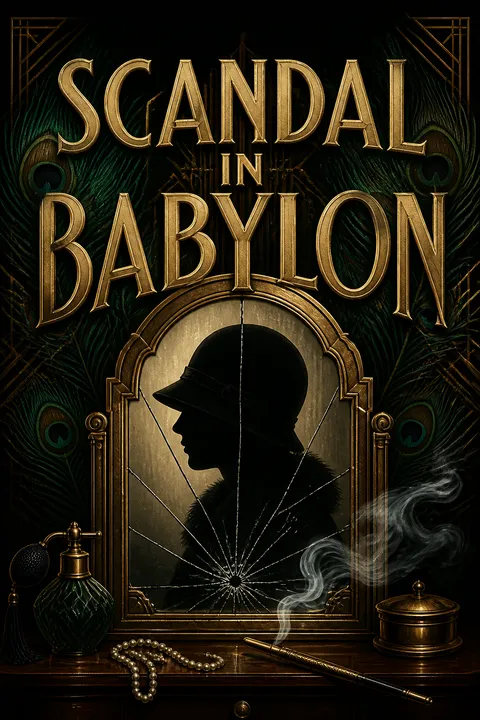
The novel is rich in foreshadowing, with early references to betrayal, illusion, and the dangers of fame presaging later events. Symbols such as letters, mirrors, and the recurring motif of "home" serve as touchstones for the characters' emotional journeys. Classical allusions—to Odysseus, Ithaca, and the Lady of Shalott—underscore the themes of exile, return, and the search for meaning.
Ensemble Cast and Interwoven Subplots
The story employs a large ensemble cast, each with their own motives, secrets, and relationships. Subplots involving rivalries, love affairs, and criminal enterprises are woven into the main narrative, creating a sense of complexity and unpredictability. The shifting alliances and overlapping agendas reflect the chaotic, competitive nature of Hollywood, where today's friend may be tomorrow's enemy.
Download PDF
Download EPUB
.epub digital book format is ideal for reading ebooks on phones, tablets, and e-readers.








































