
Key Takeaways
1. A Pope for a Fractured Age: Reforming the Church from Within
The reform movement within the Catholic Church began in fact well before Luther, and the emergence of Protestantism only served to increase it and better define it.
Moral decay. The 14th and 15th centuries saw Humanism and the Renaissance shift focus from divine to earthly happiness, leading to widespread moral decadence within the Church, including the Roman Curia and even the papacy itself. Popes lived like secular princes, patrons of the arts, seemingly more concerned with temporal power than spiritual welfare. This worldly atmosphere, exemplified by figures like Alexander VI and Leo X, left the Church vulnerable to internal and external crises.
Protestant Revolution. Martin Luther's 1517 Ninety-Five Theses, initially targeting abuses in indulgences, quickly escalated into a full-blown religious revolution. His doctrines of "faith alone" and "Scripture alone" fundamentally challenged Catholic teaching, leading to the fragmentation of Christendom across Germany, Switzerland (Zwingli, Calvin), and England (Henry VIII). This period was marked by widespread iconoclasm, violence, and the rise of numerous sects, threatening the very fabric of European religious unity.
Catholic Renewal. Amidst this turmoil, an authentic Catholic reform movement, often termed the Counter-Reformation, gained momentum. This was not merely a reaction to Protestantism but a deep spiritual renewal driven by saints and new religious orders like the Theatines, Barnabites, Ursulines, Somaschi, and Jesuits. Popes like Adrian VI and Paul IV, though facing immense challenges, laid groundwork for reform by denouncing abuses and strengthening institutions like the Inquisition, setting the stage for a more rigorous papacy.
2. The Inquisitor Pope: Uncompromising Defense of Catholic Truth
"Whoever wants to serve God in the Holy Office," Fra Ghislieri warned in 1556, "must not be afraid of threats but must have only God, the truth, and justice before his eyes."
Dominican Roots. Michele Ghislieri, a Dominican friar, embodied the spirit of his order, which traditionally championed the defense of truth against heresy. His appointment as Commissioner General and later "Summus ac Perpetuus Inquisitor" was a natural progression of his vocation. He viewed his role not merely as a scrupulous administrator but as a vital service to the Church, especially against the insidious "Nicodemism" – the secret adherence to Protestant doctrines while outwardly conforming to Catholicism.
Combating Heresy. As Pope, Pius V vigorously pursued heretics, reopening trials and confronting influential figures suspected of crypto-Protestantism. The most notable case was that of Pietro Carnesecchi, a prominent Florentine protonotary, whose extensive correspondence revealed a network of "spiritualists" who sought to undermine the Church from within. Carnesecchi's eventual execution as an "impenitent heretic" sent a clear message about the Pope's unwavering commitment to doctrinal purity.
Doctrinal Vigilance. Pius V also condemned emerging theological errors like Anti-Trinitarianism (Socinianism) and Baianism, which challenged fundamental Catholic teachings on the Trinity, Christ's divinity, and the nature of grace and free will. His bull Ex Omnibus Afflictionibus against Baius demonstrated his foresight in addressing subtle theological deviations that could pave the way for future heresies like Jansenism, ensuring the Church's doctrinal integrity.
3. Sovereign and Shepherd: Restoring Order in Rome and Beyond
"God has called me to serve the Church, not the Church to serve me."
Personal Example. Upon his unexpected election, Pius V immediately set a tone of austere piety, rejecting worldly pomp and continuing to wear his Dominican habit beneath papal vestments. He prioritized spiritual duties, dedicating long hours to prayer and personally overseeing the moral reform of Rome. His strictness extended to his own relatives, whom he forbade from using their connection for personal gain, even exiling a nephew for dissolute behavior.
Moral Regeneration. The Pope initiated a sweeping moral reform across the Papal States, targeting widespread vices. He issued edicts against:
- Blasphemy and concubinage, imposing severe penalties.
- Luxury in clothing and extravagant banquets.
- Prostitution, even attempting to expel prostitutes from Rome, declaring he would rather leave the city himself than tolerate such "shamefulness."
- Usury, leading to restrictive measures against Jews, including the establishment of ghettos and expulsion from most Papal States, while simultaneously promoting their conversion.
Tridentine Implementation. Pius V's reforms were deeply rooted in the decrees of the Council of Trent. He mandated that bishops reside in their dioceses, conduct pastoral visits, and establish seminaries for clerical education. His commitment to these reforms, often met with resistance from secular authorities and even within the Church, underscored his vision of a purified and disciplined clergy as the foundation for a renewed Catholic world.
4. The Sword of Christendom: Forging Alliances Against Heresy and Islam
"The Pope, with clear and sharp ideas, the sworn enemy of all pretense and treachery, and also profoundly penetrated by the truth of the Catholic faith, saw salvation only in the faith, and thus he kept watch with inflexible rigor over the conservation of the purity of this supreme good."
Unified Front. Pius V recognized that the fragmented Christian powers could not individually withstand the dual threats of Protestant heresy and Ottoman expansion. His strategic vision was to forge a grand alliance of Catholic sovereigns, with Philip II of Spain as his primary, albeit sometimes reluctant, partner. He tirelessly exhorted rulers to prioritize the defense of the Faith over "reasons of state," believing divine assistance would follow a truly religious war.
Confronting Philip II. Despite their shared Catholic zeal, Pius V frequently clashed with Philip II over jurisdictional issues, particularly the Spanish Inquisition's autonomy and the king's "recurso de fuerza" (royal appeal against papal decrees). The protracted Carranza case, where a Spanish archbishop was accused of heresy, became a symbol of this struggle, with Pius V insisting on Rome's ultimate authority even against the powerful Spanish crown.
Challenging European Powers. Pius V actively intervened in the religious conflicts across Europe:
- Holy Roman Empire: He sent Cardinal Commendone to counter Maximilian II's compromises with Protestants, successfully preventing doctrinal concessions at the Diet of Augsburg.
- France: He condemned Catherine de' Medici's conciliatory policies towards the Huguenots, providing military and financial aid to the Catholic League and urging Charles IX to "totally exterminate" heretics.
- England: His most audacious act was the excommunication of Elizabeth I with the bull Regnans in Excelsis, declaring her a heretic and absolving her subjects from allegiance. This fueled Catholic resistance and martyrdom, despite the failure of plots like Ridolfi's.
5. Architect of Victory: The Holy League and the Triumph of Lepanto
"Not valor, not weapons, not leaders, but Our Lady of the Rosary made us victors."
The Ottoman Threat. The Ottoman Empire, under Suleiman the Magnificent and later Selim II, posed an existential threat to Christendom, with its sights set on Rome itself. The heroic defense of Malta in 1565 by the Knights of St. John, though successful, highlighted the urgent need for a unified Christian response against Turkish naval dominance and their relentless raids on Mediterranean coasts.
Forging the League. Pius V became the driving force behind the Holy League, overcoming deep-seated rivalries between Spain and Venice, and the hesitations of Philip II. He tirelessly negotiated, sent envoys, and personally invested the papal fleet's commander, Marcantonio Colonna, with a blessed banner bearing the image of the Crucified Christ. The fall of Famagusta to the Turks, marked by the brutal martyrdom of Marcantonio Bragadin, galvanized the Christian forces for revenge.
The Battle of Lepanto. On October 7, 1571, the Holy League's fleet, under the supreme command of Don Juan of Austria, confronted the Ottoman armada in the Gulf of Patras. Despite being outnumbered, the Christian forces, animated by fervent prayer and the Pope's plenary indulgence, achieved a decisive victory. Pius V, in Rome, miraculously perceived the triumph at the very hour it occurred, attributing it to the intercession of the Blessed Virgin Mary. This pivotal battle marked the beginning of the Ottoman Empire's decline and secured the Mediterranean for Christendom.
6. The Tridentine Legacy: Codifying Faith, Liturgy, and Discipline
"The Roman Catechism, as it is often called, was compiled on the basis of the decree of session XXV, but it was not the work of the Council."
Standardizing Doctrine. Fulfilling the mandate of the Council of Trent, Pius V promulgated three foundational texts: the Roman Catechism (1566), the Roman Breviary (1568), and the Roman Missal (1570). The Catechism, a clear exposition of Christian faith and morals, served as an indispensable guide for priests in instructing the faithful, directly countering the doctrinal confusion sown by Protestantism. It emphasized the necessity of divine revelation and the Church's role in transmitting truth.
Restoring Liturgical Purity. The Pope addressed the liturgical chaos caused by humanist innovations and Protestant distortions. He reformed the Roman Breviary, restoring it to its ancient form, free from "uncertain and new things" that had crept in. This move aimed to unify the Church's official prayer, emphasizing tradition over novelty, and ensuring that the Divine Office reflected sound doctrine.
The Tridentine Mass. With the bull Quo Primum, Pius V codified the Roman Missal, which became known as the "Tridentine Mass." This was not a new creation but a restoration of the ancient Roman Rite, purging it of profane elements and reaffirming the sacrificial nature of the Mass against Protestant denials. The bull granted a perpetual indult for its use, establishing a liturgical standard that remained largely unchanged for nearly four centuries, symbolizing the Church's enduring tradition.
7. A Saint's Enduring Spirit: Asceticism, Prayer, and Missionary Zeal
"Domine adauge dolores, sed adauge etiam patientiam" (Lord, increase the sufferings if you like, but also increase my patience).
Ascetic and Combative. Pius V's spirituality was deeply ascetic and combative, rooted in his Dominican formation. He lived a life of rigorous penance, constant prayer, and unwavering commitment to God's glory. This internal struggle against self fueled his external battles against the Church's enemies, embodying the "spiritual combat" advocated by contemporary mystics. His personal suffering, particularly from chronic illness, was offered as a sacrifice, reflecting his profound conformity to Christ's will.
Public Piety. The Pope's spiritual life was not confined to private devotion but manifested in public acts of piety that inspired Rome and beyond. He frequently participated in solemn processions, often on foot and carrying the Blessed Sacrament, to invoke divine aid or give thanks for victories. This public veneration of the Eucharist directly countered Protestant denials of the Real Presence, reaffirming the centrality of the Blessed Sacrament in Catholic life.
Missionary Vision. Pius V possessed a conquering spirituality that extended to global missions. He actively supported the expansion of the Church, particularly through the Jesuits, sending missionaries to distant lands like Brazil and Japan. He saw the mission as a plantatio Ecclesiae, aiming to incorporate entire peoples into the visible Church. The martyrdom of Jesuit missionaries, like Ignazio de Azevedo, underscored the perilous but vital nature of this evangelistic zeal, which Pius V recognized as a testament to their sanctity.
Review Summary
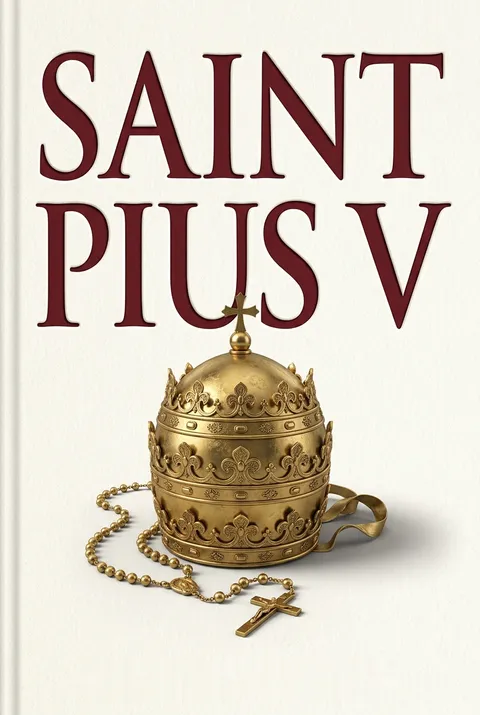
Saint Pius V by Roberto de Mattei receives strong praise (4.54/5) for its comprehensive scholarship and detailed coverage of the pope's accomplishments, including the Battle of Lepanto, liturgical reforms, and fight against heresy. Readers appreciate the extensive research and historical context, though some find the author's traditional Catholic perspective challenging and note the book focuses heavily on Pius V's papacy rather than his earlier life. The biography is valued as both inspiring hagiography and serious sixteenth-century historical work.
People Also Read



Download PDF
Download EPUB
.epub digital book format is ideal for reading ebooks on phones, tablets, and e-readers.








































