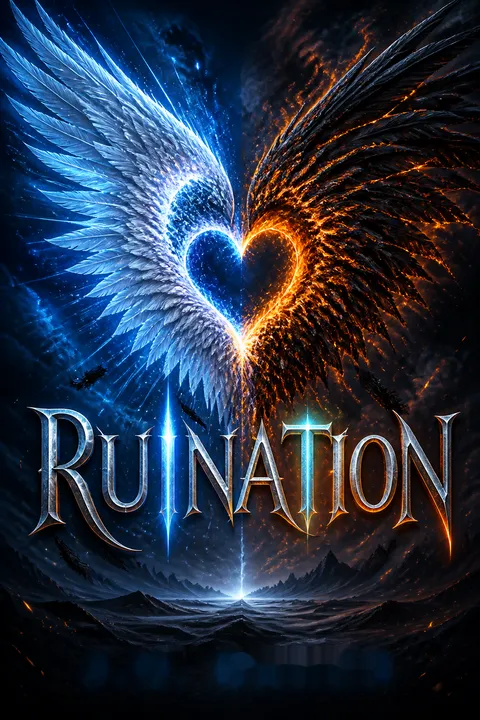

Plot Summary
Cat and Mouse in Chaos
Centuries of pursuit define the relationship between Giselle, a chaos-loving demon, and Lucas, her angelic nemesis. Their latest encounter in a bustling city is a familiar dance: Giselle revels in sowing disorder, while Lucas, ever the righteous hunter, closes in with relentless determination. Their chase is both deadly and flirtatious, filled with banter, near-misses, and a dangerous chemistry neither can fully deny. When Giselle risks her own safety to save a child from an oncoming train, Lucas intervenes, saving her life even as he's sworn to end it. This act of mercy blurs the lines between their roles, setting the stage for a story where good and evil are not so easily defined, and where the thrill of the hunt is matched only by the complexity of their connection.
Bad Luck's Human Face
Reborn as a human, Giselle's life is a string of disasters. Orphaned young, shuffled through foster homes, and plagued by accidents, she's convinced she's cursed. Her luck is so bad it's almost supernatural—cars crash, elevators trap her, and jobs slip through her fingers. Yet, she survives with a biting wit and a stubborn independence, working as a blackjack dealer in Las Vegas, where her presence ensures the house always wins. Despite her isolation, she's resilient, rolling with every punch life throws. But when she senses a mysterious stalker watching her, her world tilts from unlucky to truly dangerous. The sense of being hunted is both terrifying and strangely exhilarating, hinting at a past she can't quite remember and a destiny she can't escape.
Stalker in Sin City
Lucas, the angelic hunter, has tracked Giselle across lifetimes, but this time she seems different—unaware of her true nature. He watches her from the shadows, torn between duty and a growing sense of doubt. Giselle, meanwhile, is both repelled and attracted by her stalker's intensity. She tries to lose him in the chaos of Las Vegas, seeking help from the police, but finds little comfort. Detective Mark Jenson, a kind-hearted cop, offers protection and a hint of normalcy, but Giselle's connection to Lucas is undeniable. The city's neon lights and constant noise become the backdrop for a dangerous game of hide and seek, where every encounter with Lucas brings her closer to truths she's not ready to face.
Angel's Relentless Pursuit
Lucas's pursuit is more than a job—it's a compulsion. He's haunted by Giselle's unpredictability and the strange innocence she displays in this life. His orders are clear: send her back to Hell, no matter how many times it takes. Yet, he hesitates, disturbed by her apparent amnesia and the chaos that now seems to follow her rather than originate from her. As he observes her interactions with Mark and her only friend, Laurel, Lucas's internal conflict grows. He's drawn to Giselle's vulnerability and wit, even as he reminds himself of her demonic origins. The line between hunter and protector blurs, and Lucas begins to question not only his mission but the very nature of good and evil.
Dangerous Games Begin
Tired of running, Giselle confronts Lucas in public, demanding answers. Their encounter is electric—full of anger, attraction, and confusion. Lucas calls her a demon, threatening to send her back to Hell, but Giselle refuses to be intimidated. She's determined to reclaim control over her life, even as the supernatural elements around her intensify. Mark's protective presence offers a brief respite, but danger follows Giselle everywhere. When her home is attacked and she's forced to seek refuge with Mark, the stakes rise. The tension between Giselle and Lucas escalates, their encounters charged with both violence and longing, as the city's shadows close in around them.
Unlikely Protector Emerges
Mark becomes Giselle's anchor, providing shelter and genuine care. Yet, even in his arms, she can't escape the pull of Lucas. When Lucas breaks into Mark's home, the confrontation turns violent, revealing Lucas's supernatural resilience. Giselle is forced to flee again, this time with Mark's loyal dog as her guardian. The sense of safety is fleeting—Lucas's presence is everywhere, and Giselle's own powers begin to surface in moments of crisis. As she's moved from place to place, Giselle realizes that her fate is inextricably linked to Lucas, and that Mark, for all his goodness, can't protect her from the forces gathering against her.
Tension, Temptation, and Truth
The boundaries between hunter and hunted dissolve as Giselle and Lucas are forced into close quarters. Captured and taken to a remote desert cabin, Giselle's defiance is matched only by Lucas's conflicted restraint. Their banter turns to raw honesty, and the simmering attraction between them erupts in moments of forbidden intimacy. Lucas's angelic discipline falters as he succumbs to desire, while Giselle's memories begin to stir. Their physical connection is both a revelation and a curse, binding them together even as it threatens to destroy them. In the isolation of the desert, they confront not only each other but the truths they've long denied.
Shadows of Forgotten Lives
As Giselle's memories return, the full weight of her past crashes down. She recalls lifetimes of chaos, destruction, and the endless cycle of death and rebirth at Lucas's hands. The revelation is shattering—she is both victim and villain, shaped by forces beyond her control. Lucas, too, is forced to confront the consequences of his actions and the depth of his feelings for Giselle. Their roles as angel and demon, hunter and prey, become meaningless in the face of their shared history. The desert becomes a crucible, burning away illusions and leaving only the raw, painful truth of who they are and what they've done to each other.
Captive in the Desert
Giselle's determination to survive leads her to escape the cabin, braving the deadly desert night. Lucas, torn between duty and desire, rescues her from the brink of death, their bond deepening in the process. As they flee together, hunted by other angels led by the ambitious Zain, their relationship shifts from adversarial to protective. Forced to rely on each other, they navigate a world where every ally could be a traitor and every moment could be their last. The desert's harshness mirrors the turmoil within them, as love and hate, trust and betrayal, war within their hearts.
Fire, Flight, and Fury
Pursued by Zain and his forces, Giselle and Lucas flee across the desert and into California, seeking refuge by the ocean. Their time together is a stolen paradise, a brief respite from the relentless pursuit. In the sanctuary of a seaside bungalow, they surrender to their passion, finding solace in each other's arms. But the world will not let them rest—Lucas's wings begin to molt, a sign of his fall from grace, and the consequences of their union become unavoidable. As the net tightens around them, they must choose between love and survival, knowing that their happiness is as fragile as the dawn.
Memories Ignite, Identities Revealed
A kiss on the beach triggers the final flood of memories for Giselle. She remembers everything—her demonic nature, her crimes, and the centuries-long dance with Lucas. The pain of betrayal and the weight of guilt threaten to crush her, but Lucas's love offers a glimmer of hope. Together, they face the reality of their situation: hunted by Heaven and Hell, with no place left to hide. Their love is both their greatest strength and their greatest vulnerability, a force that could redeem or destroy them. As they cling to each other, they prepare for the inevitable reckoning.
Love and Ruin Collide
Their final night together is a desperate, beautiful act of defiance. In each other's arms, they find a fleeting sense of belonging, a taste of the life they could never have. But the world intrudes—Lucas, wracked by guilt and fear, betrays Giselle to Zain in a misguided attempt to save himself. The betrayal is devastating, shattering the fragile trust they'd built. Giselle is captured, and Lucas is forced to choose between love and duty, knowing that either choice will cost him everything. Their love, once a source of strength, becomes the instrument of their ruin.
Betrayal's Bitter Blade
In a final, wrenching confrontation, Lucas drives his sword through Giselle's heart, sending her back to Hell. The act is both a mercy and a punishment, a desperate attempt to save her from a worse fate and to redeem himself in the eyes of his kind. Giselle's last sight is of Lucas turning away, leaving her alone in death as he has so many times before. The cycle of violence and longing seems unbreakable, their love doomed by the very nature of who they are. Yet, even in betrayal, the bond between them endures, a wound that will never fully heal.
Hell's Unwanted Triumph
Giselle awakens in Hell, greeted as a hero by her demonic kin. Her mother, the legendary succubus, celebrates her victory in corrupting an angel, but Giselle feels only emptiness and loss. The adulation of Hell is hollow—she has tasted love and found it poisoned by betrayal. Her memories of Lucas are both a comfort and a torment, a reminder of what she can never have. As she navigates the politics and expectations of the underworld, Giselle resolves not to be a victim. Her pain hardens into resolve, and she vows to make Lucas pay for his betrayal, even as her heart aches for what they shared.
Demon's Wrath Awakens
No longer content to be a pawn in the games of Heaven and Hell, Giselle embraces her power and her pain. Betrayed by love, she turns her fury outward, determined to reclaim agency over her fate. The lessons of her human life linger, shaping her into something new—a demon who remembers what it is to love and to lose. As she prepares for her next return to Earth, Giselle is no longer running from her past. Instead, she is ready to confront it, to seek vengeance or redemption on her own terms. The story ends with the promise of retaliation, the cycle of ruination poised to begin anew.
Analysis
Ruination is a dark, seductive exploration of the boundaries between good and evil, love and destruction, fate and free will. At its core, the novel asks whether anyone—angel or demon, sinner or saint—can truly change, or whether we are doomed to repeat the patterns of our past. Through the intertwined journeys of Giselle and Lucas, the story dismantles simplistic notions of morality, showing that redemption and damnation are often two sides of the same coin. The romance at the heart of the novel is both intoxicating and tragic, a testament to the power of desire to both heal and harm. In a world where every act of love is shadowed by the threat of ruin, Ruination challenges readers to consider what it means to choose one's own destiny, even in the face of overwhelming odds. The lesson is both cautionary and hopeful: that agency, self-knowledge, and the courage to break cycles of violence are the only paths to true freedom, even if the cost is heartbreak and loss. In the end, Ruination is a story about the price of transformation, the pain of betrayal, and the enduring hope that even the most broken souls can find meaning—and perhaps, one day, redemption.
Review Summary
Ruination receives mostly positive reviews, averaging 4.01 out of 5 stars. Readers praise the slow-burn enemies-to-lovers dynamic between demon Giselle and angel Lucas, frequently highlighting Giselle as a refreshing, strong, and humorous protagonist. The spicy romance scenes are widely appreciated, though some find the book repetitive and surface-level. The shocking ending, where Lucas betrays Giselle, provokes strong emotional reactions, leaving readers eager for the sequel. Common critiques include pacing issues and a desire for deeper world-building and character development.
Characters
Giselle
Giselle is a demon born of a legendary succubus and Satan himself, but in her latest incarnation, she's reborn as a human with no memory of her true nature. Her life is a tapestry of bad luck, resilience, and biting humor. She's fiercely independent, shaped by abandonment and misfortune, yet she craves connection and meaning. As memories of her past lives return, Giselle is forced to confront the darkness within her and the pain she's caused. Her relationship with Lucas is both her salvation and her undoing—a love that transcends lifetimes but is poisoned by betrayal and violence. Giselle's journey is one of self-discovery, as she struggles to reconcile her demonic origins with her hard-won humanity, ultimately emerging as a force of vengeance and transformation.
Lucas
Lucas is an angel tasked with hunting and destroying high-powered demons like Giselle. For centuries, he has pursued her with unwavering resolve, seeing himself as a righteous instrument of divine will. Yet, beneath his stoic exterior lies a deep well of doubt and longing. Giselle's unpredictability and vulnerability unsettle him, awakening desires he's been taught to suppress. As he falls from grace—both literally and figuratively—Lucas is torn between love and duty, salvation and damnation. His betrayal of Giselle is both an act of desperation and self-preservation, leaving him haunted by guilt and loss. Lucas's arc is a study in the cost of obedience, the complexity of redemption, and the power of forbidden love to both elevate and destroy.
Mark Jenson
Detective Mark Jenson is the embodiment of the "good man"—steady, kind, and brave. He offers Giselle a glimpse of a normal life, free from supernatural chaos. His genuine care and willingness to believe her set him apart from others, but he is ultimately outmatched by the forces arrayed against her. Mark's presence highlights the gulf between Giselle's human desires and her demonic reality. Though he cannot save her, his role is crucial in showing what might have been, and in underscoring the tragedy of Giselle's fate.
Zain
Zain is Lucas's brother-in-arms and eventual superior, embodying the ruthless ambition and rigidity of Heaven's hierarchy. He is relentless in his pursuit of order, viewing demons as irredeemable and any deviation from duty as unforgivable. Zain's rise to power and his pursuit of Giselle and Lucas serve as a catalyst for the story's climax, forcing both protagonists to confront the consequences of their choices. He is a mirror for Lucas, showing what might have been had Lucas remained loyal to his mission, and a symbol of the unforgiving nature of divine justice.
Laurel
Laurel is Giselle's only real friend in her human life—a fellow survivor, single mother, and casino worker. Her warmth and resilience offer Giselle a rare sense of belonging and normalcy. Laurel's presence grounds the story, reminding Giselle of the value of human connection and the possibility of happiness. Though she is ultimately powerless to save Giselle, her friendship is a beacon in the darkness, a reminder of what is at stake.
Giselle's Mother (The Succubus)
Giselle's mother is a powerful succubus, revered and feared in Hell. She is both a source of strength and a cautionary tale, having seduced Satan himself and become his favored consort. Her pride in Giselle's "victory" over Lucas is genuine, but she cannot understand her daughter's pain or longing for something more. She represents the seductive allure of power and the cost of embracing one's demonic nature without question.
Chad
Chad is a reminder of Giselle's troubled past—a foster brother who offers her shelter but ultimately betrays her for money. His actions underscore Giselle's isolation and the difficulty of trusting others. Chad's presence is a microcosm of the larger betrayals that define Giselle's life, showing how even those closest to her can become adversaries.
Sasha
Sasha, Mark's loyal German shepherd, serves as a brief guardian and companion for Giselle. Her presence is a source of comfort and safety, a reminder of the simple, unconditional love that is so rare in Giselle's world. Sasha's innocence and loyalty stand in stark contrast to the duplicity and danger that surround Giselle.
The Child on the Tracks
The child Giselle saves from the train is a pivotal figure, representing the possibility of goodness even in a demon. This act of selflessness is the turning point that sets the entire story in motion, challenging the assumptions of both Heaven and Hell about the nature of evil and the capacity for change.
Lucifer
Though he never appears directly, Lucifer's presence looms over the story as Giselle's father and the ruler of Hell. His expectations and manipulations shape Giselle's destiny, and his pride in her "corruption" of Lucas is a dark echo of the story's central tragedy. Lucifer embodies the seductive power of evil and the difficulty of escaping one's origins.
Plot Devices
Duality and Role Reversal
The narrative thrives on the inversion of traditional roles—angel as hunter, demon as reluctant victim, and both as lovers. Giselle's journey from chaos-bringer to self-aware survivor, and Lucas's fall from righteous enforcer to conflicted protector, subvert expectations and force readers to question the nature of good and evil. Their shifting dynamic is mirrored in the story's structure, with alternating perspectives and memories that reveal the complexity of their bond.
Memory as Identity
Giselle's lack of memory is both a shield and a curse, allowing her to experience humanity anew but also leaving her vulnerable to manipulation. The gradual return of her memories is a source of tension and revelation, culminating in a devastating reckoning with her true self. Memory is both a plot device and a metaphor for the struggle to escape one's past and redefine one's future.
Forbidden Love and Betrayal
The central romance is built on the tension between love and obligation, pleasure and punishment. Every act of intimacy is fraught with danger, and every moment of tenderness is shadowed by the threat of betrayal. The lovers' inability to escape their roles—hunter and hunted, angel and demon—ensures that their passion is both their greatest joy and their ultimate undoing.
Cyclical Structure and Fate
The story's structure is cyclical—Giselle is killed and reborn, Lucas hunts and hesitates, and their dance repeats across centuries. This repetition creates a sense of inevitability, suggesting that some destinies cannot be escaped, only endured or transformed. The cycle is both a source of tragedy and a challenge to be overcome, as Giselle resolves to break free and claim agency over her fate.
Symbolism of Fire and Wings
Fire is both Giselle's power and her curse, a symbol of destruction and potential redemption. Lucas's wings, once a mark of divinity, become a measure of his fall, shedding feathers as he succumbs to love and doubt. These symbols are woven throughout the narrative, reinforcing the themes of transformation, loss, and the cost of desire.
Foreshadowing and Irony
From the opening chase to the final betrayal, the story is laced with foreshadowing—warnings of the consequences of forbidden love, glimpses of past lives, and the ever-present threat of retribution. Irony abounds: the demon who saves a child, the angel who falls for evil, the lovers who destroy each other in the name of salvation. These devices heighten the emotional stakes and underscore the story's central paradoxes.
Download PDF
Download EPUB
.epub digital book format is ideal for reading ebooks on phones, tablets, and e-readers.








































