
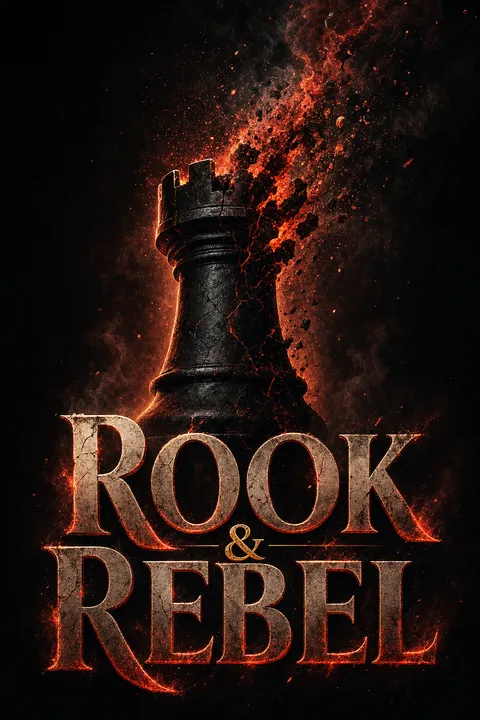


Plot Summary
The Man Who Builds Karma
Rook1 tears through the city on his murdered-out R1, exhausted from running every dangerous job for his crew. He runs Maverick Moto as a front while selling information and breaking bones for the city's powerful. Beneath the rage lies a wound: a decade earlier, a fire killed his parents and burned half his body while he saved his sister Evie.6
He believes Cameron Fletcher,3 a security tycoon who absorbed his parents' art business, set that blaze and walked away untouchable. Detouring past Fletcher's3 stone mansion, Rook1 vows to stop waiting on fate. He will become Cameron's3 karma himself, burning the man's life down brick by brick exactly as his own was reduced to ash.
The opening fuses identity and trauma: Rook is literally scarred by the inciting wound he now organizes his life around. The motorcycle, the all-black gear, the craving to topple men who escape consequences, all externalize a psyche stalled at the moment of loss. His vendetta is presented not as villainy but as moral hunger, the desire for accountability in a world where wealth buys immunity. The stone-house metaphor establishes the novel's central fantasy: that an outsider monster can deliver the justice institutions refuse. Crucially, his protectiveness toward Evie reveals the tenderness that will later complicate his revenge, seeding the tension between destruction and devotion.
Abandoned on a Dark Street
Regan Fletcher,2 a lonely heiress starved for purpose and a place in her father's empire, escapes a dull date with Elliot4 at an art exhibit. He leads her down a decaying riverside road where a blacked-out motorcycle stalks them. The rider pulls a gun and demands Elliot's4 wallet, but Elliot4 bolts, abandoning Regan2 to a man he owes money.
The masked rider, Rook,1 is genuinely offended on her behalf. Instead of robbing her, he insists on driving her home so she isn't left in danger. She makes him stop for cookies, threatens him back when he threatens to kidnap her, and refuses to give her name. Their banter crackles. He drops her near a stranger's house, intrigued by the rich girl who never flinched.
The meet-cute inverts the rescue trope: the supposed predator becomes protector while the respectable boyfriend reveals cowardice. Regan's refusal to surrender her name is her first act of self-possession, a small rebellion that arouses Rook precisely because it withholds power from him. The scene maps the book's moral inversion, where danger reads as care and safety reads as abandonment. Regan's hunger for something beyond her gilded boredom meets a man who treats her fear as evidence she might be worth knowing. The cookies, absurd amid the threats, signal that this dark romance will run on appetite, defiance, and the thrill of being truly seen.
The Halloween Name Chase
At the town's Hallows Night festival, Rook1 roars in with his crew, face painted as a bloodied skeleton. He hunts Elliot4 but fixates on Regan,2 demanding her name as a prize. He sets a game: run, and if he catches her within an hour, she tells him. He corners her in a dead-end alley, pins her, and forces out the answer: Regan Fletcher.2 The name lands like a slap.
He recoils, recognizing the daughter of the man he wants dead, and speeds off. Back at the garage, after torturing an informant, Rook1 confesses the irony to Aiden.7 His best friend reframes it: Cameron's3 only daughter is the perfect way inside Cameron's life. Rook1 decides to weaponize her, ordering the crew to track Regan's2 every move.
Naming becomes a transfer of power, and the surname detonates Rook's two obsessions, desire and revenge, into collision. The chase ritualizes courtship as predation, but the genuine shock is psychological: the woman he wants is the offspring of his enemy. Aiden's pragmatism converts heartbreak into strategy, and Rook chooses manipulation over feeling, a self-deception the narrative will steadily dismantle. This is the point of no return. Every tender act that follows is now poisoned by instrumental intent, and the reader holds dramatic irony Regan lacks. The blood paint literalizes the question haunting her: is this man courting her or marking prey?
Two Bodies on the Highway
Chasing Rook1 down, Regan2 crashes a Syndicate bike night, jealous to find another girl on his seat. A kiss escalates into a public claim before a rival crew arrives. Rook1 forces a helmet and jacket onto Regan,2 speeds her away with his pack, then stops to confront the pursuers. To protect her and Evie,6 he cuts two men's throats with brutal efficiency while Regan2 watches, the bodies and bikes dumped over a hillside to vanish.
He drives her home in silence. Horrified, she stumbles off the bike and orders him to stay away. Knowing he needs her access to Cameron,3 Rook1 climbs through her bedroom window, bares his burn scars, and the confrontation dissolves into their first heated intimacy before a knife scare sends him out again.
The honeymoon of banter shatters against literal blood. Regan confronts the gap between knowing a man is dangerous and witnessing it, a distinction the book treats as the threshold of complicity. Rook kills to keep her alive, binding violence to devotion in a way she cannot yet metabolize. His decision to follow and seduce rather than retreat exposes the manipulation still steering him, even as genuine want bleeds through. Showing his scars is calculated vulnerability, yet it works because it is also true. The chapter stages the central seduction logic of dark romance: corruption framed as choice, fear and arousal braided so tightly that rejection and surrender arrive in the same breath.
Schooling the Wolves
When Cameron3 cancels on a country club dinner, leaving Regan2 to face sneering associates alone, Rook1 appears in a tailored suit. He silences a condescending official by exposing the man's embezzlement, then tutors Regan2 in his trade: every powerful guest hides a secret, and secrets are leverage. He feeds her information and watches, riveted, as she dismisses a predatory client and corners others into deference.
The girl who wanted to hide learns to make a room fear her. Earlier he had crept into her bedroom, searched it, and pocketed a private toy, teasing her at the pool table about her dates. His fascination deepens as she discovers a taste for power he recognizes as his own, blurring his mission to ruin her father.3
This is Regan's pedagogy of dominance, and it doubles as Rook's undoing. He intends to study Cameron through her, but instead he midwifes her transformation from decorative heiress to operator. The lesson encodes the book's worldview: respectability is performance, and real authority comes from knowing what people protect. Rook's claim that he could only love a woman who can handle this becomes prophecy. Yet there is poignancy in his coaching, because each secret he gives her strengthens the very person he plans to sacrifice. The eroticized power play reframes intimacy as mutual recognition; she is not corrupted so much as released into a self her father deliberately suppressed.
Stalking Her Stalker
Tired of waiting, Regan2 tracks Rook1 to Maverick Moto, even tailing his backup bike and watching him execute a man inside a warehouse. Furious at her recklessness, he hauls her into his office, and their argument detonates into sex on his motorcycle, a scene he refuses to ever clean. The encounter cements a private dynamic: she gives commands, he obeys, then takes control, each daring the other further.
Afterward he carries her out front, openly claiming her before his crew. The reversal delights him; being hunted feels new. For Regan,2 pursuing the dangerous man she should flee becomes proof of her own appetite. She drives away in her hot-pink BMW, exhilarated, no longer a passenger waiting for life to arrive.
Regan inverts the predator-prey structure that defined their meeting, claiming the role of pursuer and thereby authoring her own desire. The garage, a space of grease and hidden violence, becomes the site of her agency. Rook's pleasure at being chased reveals his loneliness: he has spent years protecting others and trusting no one, so being wanted disarms him. The motorcycle, repeatedly figured as the thing he loves most, becomes a shared territory and a claim. Beneath the heat runs the unspoken contract he keeps deferring, the truth about her father, which makes her surrender both liberation and a trap she cannot see closing.
Logs Behind a Locked Drawer
Cameron3 erupts at Regan2 for costing him a client at the dinner, calling her a spoiled girl who must keep her mouth shut around the dangerous men who fund their lifestyle. His worldview, that secrets are threats to be feared, contradicts everything Rook1 taught her.
Wounded and rebellious, Regan2 and Harper5 pick the lock on a hidden compartment in his office desk. Inside they find logs of shipments, port names, coded vessel aliases, large unexplained sums, and a mystery name, Candy Collins.13 They photograph everything.
Meanwhile Rook's1 crew exploits a house party Regan2 throws to search the same office, where Evie6 nearly triggers the alarm and a drunken Regan2 unknowingly disables it. Rook1 ends up tending her through the night, an unplanned tenderness he cannot explain to himself.
Two infiltrations converge on one desk, and the contrast between father and lover sharpens. Cameron polices Regan with shame, treating her curiosity as betrayal, while Rook has armed her with the conviction that knowledge is power. Her break-in is an act of self-claiming dressed as snooping, the daughter refusing to remain a managed asset. The unreadable logs plant the engine of the third act. The party's accidental intimacy, Rook holding her hair instead of executing his plan, marks the slippage of strategy into feeling. He came to ransack a house and instead found a home, the manipulation curdling into something he is no longer steering.
Movie Night Among Monsters
Rook1 brings Regan2 to a decaying mansion the crew uses for gatherings, baiting another chase through the woods that ends with them together against an old dresser. Their first full encounter cements that she belongs to him and he to her. Inside, the pack has staged a horror movie night with mismatched chairs and bean bags, and Regan2 is folded into their world: Evie's6 friendship, Mason's10 teasing, Hero's9 grim humor, Aiden's7 exasperated loyalty.
Rook,1 who barely sleeps and runs himself ragged protecting everyone, finds rare peace beside her. When Mason10 mocks her, Rook1 makes her command him to stop, teaching her she now has an army. She realizes she is sleeping with the monsters and feels, strangely, safer than she ever has.
The found-family motif crystallizes here, reframing the crew from criminals into kin. Regan's acceptance by Evie matters psychologically: both women have been isolated, used, or managed by powerful men, and their bond offers each a chosen belonging. The haunted-house setting literalizes the romance's thesis that the scary place is the safe one. Rook learning to delegate his protectiveness, letting Regan wield her own authority over Mason, signals growth away from his control-everything trauma response. The chase-to-intimacy ritual recurs as their love language, consent encoded as pursuit and capture, while the movie-night domesticity quietly proves these monsters crave ordinary tenderness as much as anyone.
A Bat and a Pervert
Harper,5 secretly working a job to weather her parents' divorce, is harassed and assaulted by her creepy manager. Remembering Regan's2 stories, she goes to the crew for help. They abduct the man and Harper5 joins in, swinging a bat while Hero9 handles the grislier work and Rook1 tattoos the word pervert across the man's hands.
Regan2 walks into the garage mid-torture, sees her best friend5 and the man she is sleeping with brutalizing a stranger together, and flees in shock. The next morning Harper5 explains everything, and Regan,2 rather than recoiling, finds herself almost jealous she missed it. She demands to be let into the truths people keep hiding from her, vowing never to be the naive girl kept in the dark again.
The subplot expands the moral universe beyond the central couple, showing the crew's violence as a crude form of protective justice the law won't provide. Harper's reclamation of agency through the bat mirrors Regan's larger arc, two sheltered women discovering power in refusing victimhood. Regan's reaction is the chapter's revelation: her horror dissolves into envy, marking how far her threshold has shifted. The scene also indicts the loneliness of secrecy, as Regan realizes everyone around her has hidden their struggles. Her demand for inclusion in the dark truths foreshadows the devastating disclosures ahead, and recasts naivety not as innocence but as a cage.
Drunk Confession at Hellfire
Rook1 calls Regan2 from Hellfire Bar, drunk and about to be thrown out. She rescues him, and on the way home he slurs the truth he has been hiding: he is using her, he intends to ruin her life, and she should hate him and punish him for it. Confused, she gets him to bed, where his self-loathing turns to a plea for her to take control.
She cuffs him, rides him on her terms, and refuses to let him steer, savoring the power. By morning he remembers everything and is relieved she stayed. He insists he wants no one else, that loyalty isn't something he is interested in abandoning, even as the guilt of his unspoken plan keeps gnawing at him.
Alcohol cracks Rook's strategic mask, and the confession arrives as both warning and absolution-seeking. His desire to be punished reveals a conscience at war with his decade-long mission; he wants Regan to stop him because he can no longer stop himself. The role reversal, the feared monster surrendering control to the woman he is supposed to be exploiting, is the relationship's emotional pivot. By literally handing her dominance, he confesses dependence. Regan hears the warning but cannot decode it, a tragic dramatic irony, since she lacks the context to understand which life he means to destroy. Love and betrayal occupy the same bed.
Kidnapped to Force His Hand
On a girls' night out with Evie6 and Harper,5 Regan2 is grabbed in a club and hauled upstairs alongside her friends by men working for Cross,11 a drug lord at war with his rival Asher.8 Cross11 has been demanding Rook's1 crew investigate his stolen shipments and has snatched the women as leverage.
Evie,6 unbothered, explains the city's drug-lord politics: Rook1 and Aiden7 have spent a decade trading in the city's secrets, making them indispensable. Rook1 arrives with his pack, shoots one captor without hesitation, and refuses Cross11 outright, warning that touching his people guarantees death. He extracts the women and rides Regan2 home, where she scolds him even as she clings to him, shaken that proximity to him keeps turning lethal.
The kidnapping externalizes the criminal ecosystem that will drive the climax, introducing Asher and Cross as the stolen-shipment war already glimpsed in Cameron's hidden logs. Plot threads quietly converge: the reader senses Cameron's coded ledgers connect to this underworld, though Regan does not. Rook's instant lethal protectiveness reinforces his governing principle, that love means removing threats permanently, while Regan's mixture of fury and dependence dramatizes the cost of loving him. Evie's blasé competence reframes danger as routine for this family, normalizing a world Regan is being absorbed into. The scene escalates stakes from personal to systemic, widening the target on everyone's back.
The Cafe Ambush
Summoned to a cafe expecting at last to discuss her future, Regan2 finds her father3 seated with Elliot4 and a woman named Candy,13 Elliot's4 mother, now Cameron's3 fiancee. Cameron3 announces that Elliot4 will take over the family business, dismissing Regan's2 year of sacrifice and devotion as insufficient. Elliot4 smugly declares there's no need to confuse anyone about who's in charge.
Devastated, Regan2 recognizes Candy13 as the mystery name from the hidden logs. She texts Rook1 throughout, who urges her to find out whether they know his identity. Wounded but defiant, Regan2 warns the table about Elliot's4 gambling and demands to be left alone, then flees as Rook's1 bike pulls up outside, drawing her father's3 suspicious attention.
Cameron's betrayal completes Regan's disillusionment with the patriarchal promise she organized her life around. The gut-punch is gendered: a careless man inherits an empire she earned through obedience, exposing her father's contempt as ideological, not personal. Candy's appearance fuses the romantic subplot with the criminal one, confirming that the man who abandoned Regan and the woman laundering Cameron's secrets are now family. The cafe stages the collapse of Regan's old loyalties precisely as Rook's world offers her power and belonging. Her composed warning about Elliot shows the operator she has become. The bike's arrival outside signals the worlds colliding, the protective lover stepping into her father's sightline.
Maverick Moto in Flames
Rook1 arrives to find Maverick Moto engulfed, accelerant confirmed, every bike destroyed, his crew homeless again. The fire's deliberate echo of his past sickens him. Then his longtime informant is dumped dead in the driveway with a note promising Rook1 is next.
Suspecting Cameron,3 Rook1 rides to Asher,8 the one drug lord he trusts, who confirms the worst: someone has placed a bounty on Rook1 and the girl who rides with him, paying more if she dies first and he suffers before his own death. The buyer is Cameron Fletcher.3 Asher,8 valuing Rook's1 services, calls off his own men and offers Rook1 the kill if Cameron's3 guilt is proven. Rook1 realizes Regan2 can no longer stay unprotected in that house.
The arson collapses past and present, suggesting Cameron's method is signature, fire as erasure of inconvenient people. The murdered informant raises the cost of Rook's vendetta to innocent collateral, deepening guilt that complicates triumph. The hit's structure is psychologically vicious: pay more to make Rook watch Regan die, weaponizing his love as the instrument of his torture. That Cameron may target his own daughter, knowingly or not, transforms the antagonist from cold patriarch into something monstrous. Asher's pragmatic alliance reframes loyalty in this world as transactional yet reliable. The chapter pivots the romance into survival, forcing Rook to choose between secrecy and saving the woman his plan endangered.
One Bullet for Love
Heading to yet another solo dinner party, Regan2 is intercepted by Rook,1 and the two argue about her father's3 worth until a hired rider arrives, gun drawn, contracted to kill them both. As Rook1 steps between Regan2 and the barrel, she grabs his bike-mounted gun and shoots the assassin dead, choosing him without hesitation. Shaken, she has crossed the line from witness to killer.
Rook1 takes her home and finally tells her everything: Cameron3 murdered his parents, burned his home, torched the shop, and put the price on her head. He shows her the surviving painting from his parents. Regan2 refuses to believe her father3 could be such a monster, accuses Rook1 of having used her from the start, and orders him out.
Regan's gunshot is her ultimate self-authorship, an instinctive verdict that Rook's life outweighs a stranger's, echoing Aiden's earlier wisdom that killing comes easy when it protects what you love. Yet the same night demands she absorb that her lover schemed to exploit her and her father wants her dead, an unbearable double rupture. Her denial is psychologically true: belief would require dismantling her entire identity as a daughter. Rook's painting, the last relic of his slaughtered family, is offered as proof and as confession of why he cannot let this go. The scene fuses her empowerment with her devastation, agency and betrayal arriving in a single, blood-spattered hour.
Occupying Enemy Walls
Refusing to leave Regan2 exposed, Rook1 moves his entire pack into the Fletcher mansion and confines her to her room while the bounty stands. She rages, even attempting to flee across the roof, but he hauls her back.
To break her denial, he produces evidence: Asher8 confirms by phone that Cameron3 ordered the hit, the hidden shipment logs prove Cameron3 is robbing the city's drug lords while selling them his security, and Evie6 hacks Cameron's3 phone to surface texts joking about killing Rook's1 parents and ordering both fires. Cameron,3 it emerges, also signed the house into Regan's2 name a year ago. Confronted with undeniable proof, Regan2 finally believes. She extracts one promise: Rook1 will not kill her father3 without her permission.
The occupation literalizes the reversal of power, the dispossessed orphan claiming the oppressor's fortress, while the lockdown tests the line between protection and control that Regan repeatedly challenges. Her rooftop escape attempt insists on agency even within captivity, and her negotiated promise reasserts her authorship over the revenge plot itself. The accumulating proof functions as the romance's reconciliation mechanism: Rook chose the harder path of showing rather than demanding belief, honoring her earlier demand never to be kept naive. The forged house deed and faked paternal affection invert Cameron's image entirely. By the chapter's end, Regan stands not as victim or pawn but as the partner who will decide her father's fate.
The Empty Gun Test
Elliot4 blunders into the office and is bound; then Cameron3 arrives. Rook1 reveals his identity, and Cameron3 admits killing the Embersons, mocking their deaths. Rook1 offers a deal: kill Regan2 and keep everything, an eye for an eye. Cameron3 pulls the trigger on the gun Rook1 provided, only to find it empty, a test that proves to Regan2 her father3 would murder her for his empire.
He also confesses the terminal illness was a lie to keep her docile and ignorant. Enraged at being scapegoated, Elliot4 frees a hand and stabs Cameron3 dead. Rook,1 at Regan's2 word, cuts Elliot's4 throat. Rook1 reveals Asher8 has already dismantled Cameron's3 empire, redistributing it, and that Regan,2 now loyal to him, is his sweetest revenge.
The empty-gun gambit is the climax's masterstroke, converting Rook's revenge from murder into proof, forcing Cameron to indict himself before his daughter's eyes. The faked illness retroactively reframes the entire novel, exposing the emotional manipulation that caged Regan and absolving her of misplaced guilt. Cameron's choice answers the book's question definitively: his love was always counterfeit. Elliot's impulsive killing delivers ironic justice, the coward undone by his own self-preservation, sparing the couple the moral weight of patricide. Rook's truer vengeance, possessing Cameron's heir and fortune rather than merely his life, fulfills his decade-long hunger while the redistributed empire reframes destruction as restitution. Love and revenge, finally, become the same act.
Burning It Down Together
Rather than risk a murder investigation that could expose Rook,1 Asher,8 and Harper,5 the couple choose fire. They remove the bodies and burn Cameron's3 wing of the mansion, staging an accident that Candy,13 as next of kin, will not contest. Standing before her father's3 quarters, the very architecture built to exclude her from his secrets, Regan2 agrees with relief to set it alight.
The flame that once destroyed Rook's1 family now cleanses Regan's.2 She has lost a father3 who never loved her, but gained an army, a partner1 who consults her at every turn, and full command of a life she once only watched from the sidelines. The girl who feared crowds and waited for permission is gone, replaced by a woman who burns her own path.
Fire completes its arc from weapon of trauma to instrument of liberation, the symbol turned in the survivors' hands. Burning Cameron's deliberately partitioned wing is psychologically precise: Regan destroys the physical embodiment of her exclusion and shame. The pragmatic cover-up underscores that this couple's morality is loyalty, not law, protecting the chosen family at any cost. The resolution reframes orphanhood and disinheritance as freedom, the loss of a counterfeit father clearing space for authentic belonging. Regan's transformation from passive heiress to sovereign agent fulfills the novel's feminist undertow, while Rook's consultative protectiveness shows his trauma-driven control finally softening into partnership.
Epilogue
In the months after, Rook1 teaches Regan2 to ride her own bike so she can always escape danger, insisting her safety never again depend on anyone, including him. The crew, with Asher's8 help, opens a new Maverick Moto in a riverside warehouse, complete with an office Evie6 claims as her own.
Six months on, Rook1 surprises Regan2 at her favorite art gallery, where her paintings glow across digital screens for the city to admire, and the whole pack, Harper5 included, turns out to celebrate. He buys her the dark blue painting she admired the night they met. Broke from her vanished inheritance but rich in everything else, Regan2 claims full agency over a chaotic, bloody, joyful life she finally chose.
The time jumps convert survival into flourishing, closing every loop the novel opened. The riding lessons reframe Rook's protectiveness as empowerment rather than control: he equips Regan to save herself, the ultimate evolution of a man whose love once meant caging what he feared losing. The gallery showcase resolves her thwarted artistic dream, the passion she sacrificed for her father now publicly honored, signaling she no longer suppresses herself for anyone's approval. The returning blue painting bookends the romance, transforming the night of their predatory meeting into origin myth. Poverty paired with belonging delivers the genre's thesis: chosen family and self-determination outvalue any inheritance.
Analysis
Rook and Rebel weaponizes the dark-romance genre's central fantasy: that the truly dangerous man is the only safe one, and that corruption is not ruin but release. Kate Crew builds the novel on a sustained moral inversion, where the criminal who threatens at gunpoint1 proves more honorable than the boyfriend who flees4 and the father who lies,3 and where respectability is exposed as the most efficient cover for cruelty. The book's deepest current is female agency. Regan2 begins as a managed accessory, anxious and obedient, conditioned by a father3 who suppresses her precisely because he fears her competence. Her arc, from flinching in crowded rooms to intimidating powerful men, breaking into secrets, pulling a trigger, and finally commanding fates, traces liberation through transgression. Tellingly, her empowerment is midwifed by a man who plans to exploit her, complicating any simple reading: the relationship is both her cage and her key. Crew interrogates the line between protection and control through Rook,1 whose trauma-driven need to guard everyone curdles into confinement before maturing into partnership, symbolized by his teaching Regan2 to ride so she never depends on him again. The revenge plot reframes justice as something institutions cannot deliver, available only through loyalty and violence among chosen family. That found-family motif, the crew as kin, offers both protagonists the belonging their biological families denied. The recurring fire crystallizes the book's thesis about inheritance: harm passed down can be turned in the survivors' hands, transformed from weapon into cleansing. The faked illness and the empty-gun test land the emotional verdict, confirming that the parental love Regan2 organized her life around was always counterfeit. Ultimately the novel argues, in genre-knowing fashion, that authentic belonging and self-determination outvalue any fortune, and that being truly seen, even by a monster, beats being safely ignored.
Review Summary
Rook & Rebel received mixed reviews, with ratings ranging from 1 to 5 stars. Some readers enjoyed the dark romance and humor, praising the banter and chemistry between the main characters. Others found the plot repetitive, the characters underdeveloped, and the writing in need of editing. Common criticisms included inconsistent character behavior, predictable storylines, and a lack of depth in the revenge plot. While some appreciated the easy read and entertaining aspects, others felt it was clichéd and reminiscent of amateur writing platforms.
People Also Read


Characters
Rook
Vengeful biker crew leaderBorn Michael Emberson's son, Rook leads a motorcycle crew fronting as a shop while trading in the city's secrets and violence. Half his body is scarred from the fire that killed his parents, a wound that organizes his entire psychology: a relentless drive for power, accountability against untouchable men, and an almost compulsive need to protect his sister6 and crew. He sleeps little, works himself ragged, and trusts almost no one. Beneath the predatory swagger, the masks, and the chase games lies profound loneliness and survivor's guilt. He is drawn to Regan2 first as a weapon, then as a mirror, recognizing in her suppressed hunger for power the same fire that drives him. His arc tests whether a man defined by revenge can choose love without abandoning who he is.
Regan Fletcher
Lonely heiress seeking powerRegan is the sheltered daughter of a security tycoon3, a talented artist who abandoned her dreams to wait for a place in her father's3 empire that never comes. Isolated in a vast mansion, anxious in crowds, conditioned to obey, she aches to matter and to control her own life. Beneath the dutiful good-girl exterior lives a sharp mind and a buried appetite for risk that Rook1 awakens. Her psychological arc is liberation: from a managed accessory who flinches at confrontation into a woman who intimidates powerful men, demands inclusion in hard truths, and decides fates. She is fiercely loyal, quick-witted, and increasingly unafraid to talk back even to the dangerous man she loves1. Her hunger for agency, long mistaken for restlessness, becomes her defining strength.
Cameron Fletcher
Cold tycoon fatherCameron runs the city's largest security company and projects the polish of a future mayoral candidate. To Regan2 he is a withholding, perpetually distracted father who keeps her close yet shut out, doling out party appearances instead of trust. Controlling, calculating, and contemptuous beneath his charm, he treats people as assets and secrets as threats. His motivations and methods become the engine of the novel's darkest revelations.
Elliot
Cowardly indebted ex-boyfriendRegan's2 careless boyfriend when the story opens, Elliot is a wealthy gambler drowning in debt to Rook's1 crew. Smug, self-serving, and quick to flee danger, he abandons Regan2 at the first threat. His entitlement and cowardice repeatedly endanger her, and his ambitions entangle him ever deeper with Cameron's3 schemes, making him a catalyst for several turning points.
Harper
Regan's loyal best friendHarper is Regan's2 sharp, devoted best friend, weathering her parents' messy divorce and frozen finances. A fan of true-crime banter, she masks her own struggles behind humor and bravado. When harassed at a secret job, she proves resourceful and surprisingly willing to embrace the crew's brutal methods, discovering her own taste for reclaiming control, mirroring Regan's2 transformation.
Evie
Rook's hacker sisterRook's1 younger sister survived the same fire unscathed but carries its trauma. A gifted hacker who runs the crew's digital operations, she is playful, knife-loving, and self-described as a psycho, hiding loneliness behind bravado. Starved for genuine female friendship after being used by past friends, she bonds quickly with Regan2 and Harper5. Fiercely protected by her brother1 and by Aiden7, she chafes against being guarded.
Aiden
Rook's best friend, voice of reasonAiden has been Rook's1 best friend for a decade and serves as Evie's6 reluctant near-constant bodyguard. Confident, funny, and pragmatic, he supplies the strategic thinking that turns Rook's1 heartbreak into a plan and the dark humor that leavens the crew's grim work. His bickering chemistry with Evie6 hums beneath the surface, and his loyalty steadies Rook1 through every crisis.
Asher
Powerful allied drug lordAsher is one of the city's top drug suppliers, now operating from a sleek office tower, and as close to a friend as Rook1 has among the powerful. Transactional but reliable, he once had feelings for Evie6. He becomes a crucial ally, trading information and logistical muscle for Rook's1 services and helping reshape the city's power balance.
Hero
Crew's grisly enforcerA tall, green-eyed member of Rook's1 pack with an unsettling fixation on gouging eyes and making torture symmetrical. Abrasive and blunt, he supplies dark comedy and brutal competence in equal measure.
Mason
Teasing crew memberA dark-haired, tattooed member of Rook's1 crew who resembles him in look and brooding manner. Quick with jokes and ready backup, Mason often serves as Regan's2 escort and the crew's needling comic relief.
Cross
Rival drug lordA drug lord at war with Asher8, plagued by stolen shipments. Resentful that Rook's1 crew sided against him, he resorts to seizing the women to force their help, escalating the underworld conflict.
Jake
Reckless biker acquaintanceA crash-prone biker who agrees to take Regan2 to a Syndicate bike night in exchange for a date, and who folds instantly the moment Rook1 lays claim to her.
Candy Collins
Cameron's fiancee, Elliot's motherA mystery name in Cameron's3 hidden ledgers who proves to be his fiancee and Elliot's4 mother, her identity used to obscure his illicit dealings.
Zack and Kane
Newest crew membersThe two most recent additions to Rook's1 pack, friendlier and less hardened than the others, still kept slightly outside the inner circle but trusted with surveillance and logistics.
Plot Devices
The Run, Rebel Chase
Courtship and power ritualRook1 repeatedly turns pursuit into a game, ordering Regan2 to run so he can chase and catch her, whether through Halloween crowds, dark alleys, or the woods around an abandoned house. The ritual encodes the novel's predator-prey eroticism while paradoxically expressing devotion: capture becomes claiming, and her willingness to run signals desire rather than fear. Over the story the dynamic evolves, with Regan2 eventually hunting him, reversing the roles and asserting her own agency. The chase becomes their private language for consent, dominance, and trust, recurring at emotional milestones from their early encounters through the closing pages, where it is reframed as a promise to pursue her forever.
The Hidden Shipment Logs
Buried evidence engineLocked in a concealed compartment of Cameron's3 desk, a stack of documents records shipments, port names, coded vessel aliases, large sums, and the mystery name Candy Collins13. Regan2 and Harper5 discover them while rebelling against Cameron's3 control, photographing pages they cannot interpret. The logs gradually reveal Cameron's3 scheme to rob the city's drug lords while selling them security, connecting his respectable empire to the underworld Rook1 navigates. They become the central proof that converts Regan's2 denial into belief and supplies the leverage to dismantle her father's3 operation. The device threads the romantic and criminal plots together, transforming a daughter's snooping into the key that unlocks the entire conspiracy.
Fire and Accelerant
Trauma turned to liberationFire frames the novel from end to end. A decade-old arson killed Rook's1 parents and scarred him, defining his vendetta and his fear of repeating history. When his shop later burns with accelerant, the deliberate echo points toward his enemy3 and escalates the threat. The motif accrues meaning as both weapon and signature of erasure. By the resolution, the survivors reclaim fire as an instrument of cleansing and freedom, choosing controlled flame to close their story on their own terms. The recurring image lets the book trace a single symbol across destruction, vengeance, and finally rebirth, charting how the characters transform inherited harm into chosen power.
The Bounty on Two Heads
Survival-stakes accelerantA hired contract places a price on Rook1 and the unnamed girl who rides with him, structured so the buyer pays more if she dies first and Rook1 is left to suffer before his own death. Confirmed by Asher8, the hit escalates the romance into a survival thriller and weaponizes Rook's1 love as the very instrument of his torment. It forces him to abandon secrecy and protect Regan2 openly, justifies the crew's occupation of the mansion, and drives the assassin confrontation where Regan2 first kills. The bounty's origin becomes a devastating proof of the antagonist's3 monstrousness, fusing the personal betrayal with mortal danger.
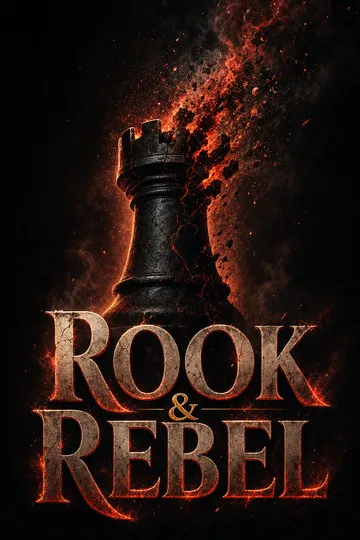
The Rook and Rebel Names
Chess metaphor for the bondThe protagonists' names carry the book's thematic code. Rook1, after the chess piece, frames himself as the one who protects the queen, unable to defeat her, existing only to clear her path and cut down anyone in her way. He christens Regan2 Rebel after she refuses to surrender her name, marking her defiance as her defining trait. The pairing turns their relationship into a strategic alliance of equals rather than a rescue, with Regan2 as sovereign and Rook1 as guardian. The metaphor recurs at key emotional beats, articulating how their love reorganizes power: she rules, he protects, and together they advance across a dangerous board.
FAQ
Synopsis & Basic Details
What is Rook & Rebel about?
-
Synopsis: Rook & Rebel centers on Rook, a man consumed by revenge against the wealthy elite, and Regan, a sheltered heiress yearning for a life beyond her father's control. Their paths collide when Rook targets Regan's boyfriend, leading to a dangerous attraction and a web of secrets that entangle them both. The story explores themes of power, betrayal, and the blurred lines between right and wrong as Rook uses Regan to get closer to his ultimate target: her father.
-
Revenge and connection: The narrative follows Rook's plan to dismantle the lives of the corrupt, intertwining with Regan's desire for independence.
-
Dangerous attraction: The story explores the complex relationship between Rook and Regan, testing their loyalties and challenging their beliefs.
-
Secrets and lies: The characters navigate a world of deception, where truth is a commodity and power comes at a cost.
Why should I read Rook & Rebel?
- Intriguing characters: Rook and Regan are complex and compelling, each grappling with their own internal conflicts and desires.
- High-stakes plot: The story is filled with suspense, danger, and unexpected twists, keeping readers on the edge of their seats.
- Exploration of dark themes: Rook & Rebel delves into the darker aspects of human nature, exploring themes of revenge, power, and morality.
What is the background of Rook & Rebel?
- Class disparity: The story highlights the stark contrast between Rook's gritty, working-class world and Regan's privileged, upper-class existence.
- Organized crime: The narrative explores the inner workings of underground operations, including debt collection, gambling, and information brokering.
- Family legacy: The importance of family, both biological and chosen, is a recurring theme, shaping the characters' motivations and actions.
What are the most memorable quotes in Rook & Rebel?
- "I would be his karma.": This quote encapsulates Rook's driving force, his determination to avenge his family and bring justice to Cameron Fletcher.
- "Then congratulations, you're about to be a rebel for what I can only imagine is the first time in your life.": This line highlights Regan's transformation and her willingness to step outside her comfort zone.
- "You are so smart, Rebel, and so pretty.": This quote reveals Rook's fascination with Regan and his appreciation for her intelligence and beauty.
What writing style, narrative choices, and literary techniques does Kate Crew use?
- Dual POV: The story is told from the alternating perspectives of Rook and Regan, providing insight into their thoughts, motivations, and emotional states.
- Fast-paced plot: The narrative moves quickly, with frequent action sequences, plot twists, and cliffhangers that keep readers engaged.
- Dark and gritty tone: The writing style reflects the story's themes, with vivid descriptions of violence, crime, and moral ambiguity.
Hidden Details & Subtle Connections
What are some minor details that add significant meaning?
- Rook's burn scars: The extent and location of Rook's burn scars are initially presented as a physical detail, but later become a symbol of his trauma and vulnerability.
- Regan's art: Regan's artistic talent and the specific themes she explores in her paintings foreshadow her internal struggles and her growing awareness of the darkness in the world around her.
- The pink lights on Rook's bike: The unexpected touch of pink on Rook's otherwise menacing motorcycle creates a subtle contrast that hints at his hidden depths and his capacity for tenderness.
What are some subtle foreshadowing and callbacks?
- Elliot's jumpiness: Elliot's increasing anxiety and paranoia in the early chapters foreshadow his involvement in illegal activities and his eventual betrayal of Regan.
- Rook's knowledge of Regan's schedule: Rook's ability to track Regan's movements and anticipate her actions foreshadows his stalking behavior and his growing obsession with her.
- The Dateline episodes: Regan and Harper's shared interest in true crime shows foreshadows the dangerous situations they will find themselves in and their growing awareness of the darkness in the world.
What are some unexpected character connections?
- Rook and Cameron Fletcher: The revelation that Rook's target is Regan's father creates a complex and morally ambiguous dynamic that drives the plot.
- Regan and Evie: The unlikely friendship between Regan and Evie, despite their different backgrounds and personalities, provides a source of support and understanding for both characters.
- Harper and Rook: Harper's surprising comfort and familiarity with Rook's world hints at a shared understanding of danger and a willingness to embrace the unconventional.
Who are the most significant supporting characters?
- Aiden: As Rook's best friend and confidant, Aiden provides a voice of reason and a source of unwavering support, helping Rook navigate his complex emotions and dangerous plans.
- Evie: Rook's sister, Evie, is a skilled hacker and a fierce protector of her brother, playing a crucial role in his operations and providing a glimpse into his softer side.
- Harper: Regan's best friend, Harper, offers a grounding presence and a source of unwavering support, helping Regan navigate the challenges of her privileged life and her growing attraction to Rook.
Psychological, Emotional, & Relational Analysis
What are some unspoken motivations of the characters?
- Rook's need for control: Beneath his desire for revenge, Rook craves control over his own life and the lives of those around him, stemming from his past trauma and his feelings of helplessness.
- Regan's desire for validation: Regan's yearning to take over her father's business is driven by a deep-seated need for validation and a desire to prove her worth beyond her privileged background.
- Cameron Fletcher's fear of losing power: Cameron Fletcher's ruthless actions are motivated by a fear of losing his power and influence, driving him to protect his secrets and eliminate any threats to his authority.
What psychological complexities do the characters exhibit?
- Rook's internal conflict: Rook struggles with the conflicting desires for revenge and connection, torn between his need to punish Cameron Fletcher and his growing feelings for Regan.
- Regan's identity crisis: Regan grapples with her identity as she tries to reconcile her privileged upbringing with her growing awareness of the darkness in the world and her desire for a more meaningful life.
- Cameron Fletcher's narcissism: Cameron Fletcher exhibits narcissistic traits, including a sense of entitlement, a lack of empathy, and a need for admiration, driving his ruthless pursuit of power and control.
What are the major emotional turning points?
- Regan's discovery of Rook's true identity: This revelation shatters Regan's trust in Rook and forces her to confront the reality of his vendetta against her father.
- Rook's realization of his feelings for Regan: This realization challenges Rook's plans for revenge and forces him to confront his own vulnerability.
- Regan's confrontation with her father: This confrontation exposes the depth of Cameron Fletcher's betrayal and forces Regan to question everything she thought she knew about her family.
How do relationship dynamics evolve?
- Rook and Regan: Their relationship evolves from a dangerous attraction to a complex bond built on trust, shared experiences, and a mutual desire for connection.
- Regan and Cameron Fletcher: Their relationship deteriorates as Regan uncovers her father's secrets, leading to a final confrontation that shatters their family dynamic.
- Rook and his crew: Rook's relationship with his crew is tested as his feelings for Regan grow, forcing him to balance his loyalty to his friends with his desire to protect her.
Interpretation & Debate
Which parts of the story remain ambiguous or open-ended?
- The extent of Cameron Fletcher's influence: While the story reveals Cameron Fletcher's involvement in illegal activities, the full scope of his power and influence remains somewhat ambiguous, leaving room for speculation about his future actions.
- The long-term consequences of Rook and Regan's relationship: The story ends with Rook and Regan together, but the long-term consequences of their relationship and their ability to navigate their dangerous world remain uncertain.
- The future of Maverick Moto: The fate of Maverick Moto after the fire is left open-ended, leaving readers to wonder whether Rook and his crew will be able to rebuild their business and their lives.
What are some debatable, controversial scenes or moments in Rook & Rebel?
- Rook's initial plan to use Regan: Rook's decision to use Regan as a pawn in his quest for revenge raises ethical questions about his character and his treatment of women.
- The violence and torture scenes: The story contains graphic depictions of violence and torture, which may be disturbing or offensive to some readers.
- Regan's attraction to Rook: Regan's attraction to Rook, despite his violent tendencies and his initial plan to use her, may be seen as problematic or unrealistic by some readers.
Rook & Rebel Ending Explained: How It Ends & What It Means
- Cameron's downfall: The story concludes with Cameron Fletcher's empire crumbling and his reputation ruined, fulfilling Rook's desire for revenge.
- Regan's empowerment: Regan emerges from the chaos as a stronger and more independent woman, having embraced her rebellious side and found her place in the world.
- Rook and Regan's uncertain future: While Rook and Regan find love and connection, their future remains uncertain, as they must navigate the challenges of their dangerous world and the consequences of their past actions.
The Mavericks Series
Download PDF
Download EPUB
.epub digital book format is ideal for reading ebooks on phones, tablets, and e-readers.








































