
Plot Summary
Funeral Promises and Vows
Jonathan King buries his mother and, moments later, his father succumbs to heartbreak. In the shadow of loss, Jonathan vows vengeance against Lord Sterling, the man he blames for his family's ruin. This moment crystallizes Jonathan's worldview: the world is a battlefield, and only the ruthless survive. Amidst the graves, a chance encounter with a mischievous little girl, Claire, and her grieving sister, Alicia, plants the seeds of future entanglements. Jonathan's resolve hardens—he will protect the King legacy at any cost, even if it means becoming the very monster his mother feared.
The Devil's Bargain
Years later, Jonathan has become a cold, calculating kingpin, ruling his empire with an iron fist. Aurora Harper, once Claire Griffin, enters his world under a contract—her company's survival in exchange for her submission. Their relationship is a collision of power and vulnerability, desire and distrust. Aurora, haunted by her father's crimes, is determined to keep her secrets buried. Jonathan, obsessed with control, finds himself drawn to her resilience and pain. Their bargain is more than business; it's a battle for dominance, healing, and the right to define their own fates.
Haunted by Bloodlines
Aurora's past is a labyrinth of trauma. Daughter of the infamous Duct Tape Killer, Maxim Griffin, she lives in constant fear of being discovered or repeating his sins. Her life is a series of reinventions—new names, new habits, new scars. The media's renewed interest in her father's crimes threatens to expose her, and the world's suspicion is a noose tightening around her neck. Aurora's struggle is not just for survival, but for the right to exist outside her father's shadow, to prove she is not her blood.
Rebirth in Shadows
When Aurora returns to the site of her childhood horrors, she is attacked and nearly killed by a masked assailant—the same one who stabbed her years ago. Jonathan's intervention saves her, but the trauma reopens old wounds. Aurora's journey is one of perpetual rebirth: each escape, each new identity, is a desperate attempt to outrun the ghosts of her past. Yet, every time she tries to disappear, Jonathan finds her, forcing her to confront not only her enemies but also her own capacity for resilience and love.
The Eighth Grave Returns
The open grave behind Aurora's childhood cottage is a chilling reminder that her past is never truly dead. The attack she survives is not random—it is a message, a continuation of unfinished business. Jonathan's investigation reveals that Aurora's scars are not just emotional but physical, and that someone is determined to finish what was started years ago. The eighth grave becomes a symbol of unresolved trauma, the space where Aurora's old self was meant to die, and where her new self must fight to live.
Unraveling the Past
As Jonathan and Aurora dig into the mysteries surrounding her family, they uncover layers of betrayal, manipulation, and madness. Alicia, Aurora's beloved sister, left behind cryptic messages suggesting she was poisoned—possibly by Jonathan himself. The lines between victim and perpetrator blur as Aurora questions everything she thought she knew. Jonathan's own history with Alicia and Lord Sterling is revealed to be a web of revenge, alliances, and unintended consequences. The past is not just a backdrop; it is an active force shaping their present.
Poisoned Trust
Aurora's discovery of Alicia's accusations shatters her fragile trust in Jonathan. Convinced he may have killed her sister, Aurora attempts to escape his grasp, only to be recaptured and locked away. Their relationship teeters on the edge of destruction, as love becomes indistinguishable from obsession and control. Jonathan's possessiveness is both a shield and a prison, and Aurora must decide whether to fight for her freedom or surrender to the only man who has ever truly seen her.
The Cage and the Escape
Aurora's repeated attempts to flee—scaling balconies, breaking windows, and even attacking Jonathan—are acts of desperation and defiance. Each failed escape deepens her sense of entrapment, but also her understanding of Jonathan's own wounds. Their confrontations are brutal, both physically and emotionally, but through them, Aurora begins to reclaim her agency. The cage is not just Jonathan's making; it is also built from her own fears and guilt. Only by facing both can she hope to break free.
The Queen's Awakening
Through pain, Aurora discovers her strength. She confronts Jonathan, demanding the truth about Alicia and her own place in his world. Their relationship transforms from captor and captive to something more equal, more dangerous. Aurora is no longer content to be a pawn in Jonathan's games or a victim of her father's legacy. She demands to be seen, to be loved on her own terms. In doing so, she awakens the queen within herself—a woman capable of ruling beside the king, not beneath him.
The Monster's Daughter
The world learns Aurora's true identity, and she is thrust into the center of a media and legal firestorm. Accused of being her father's accomplice, she must defend not only her innocence but her very humanity. The ghosts of Maxim Griffin's victims haunt her, and the families' rage is a mirror for her own self-loathing. Yet, Aurora refuses to be defined by her blood. With Jonathan's unwavering support, she stands before the world and claims her right to exist, to love, and to be more than the sum of her scars.
Ghosts and Hallucinations
Aurora is tormented by hallucinations—voices, messages, and memories that threaten her sanity. The line between reality and delusion blurs as she uncovers evidence that Alicia's descent into madness was orchestrated by someone close. The revelation that trusted household staff were complicit in poisoning Alicia and gaslighting Aurora is a devastating blow. The true enemy is not just the past, but those who have weaponized it for their own revenge. Aurora's battle is not just for justice, but for her own mind.
The Truth About Alicia
A final recording from Alicia reveals the depth of her suffering and the machinations that led to her death. The truth exonerates Jonathan and exposes the real villains—Margot and Tom, driven by their own vendettas against Maxim Griffin. The cycle of violence and revenge is laid bare, and Aurora is finally able to grieve her sister without guilt. The truth is both a wound and a balm, allowing Aurora and Jonathan to move forward, no longer shackled by lies.
The Tyrant's Heart
Jonathan's transformation from ruthless king to devoted partner is hard-won. Through Aurora, he learns vulnerability, tenderness, and the possibility of redemption. Their love is not gentle—it is forged in fire, tested by betrayal, and tempered by forgiveness. Jonathan gives Aurora the choice to stay or leave, relinquishing control for the first time. Aurora chooses him, not out of obligation or fear, but out of love. Together, they redefine what it means to rule, to heal, and to belong.
The Island of Second Chances
Fleeing the chaos of England, Jonathan whisks Aurora away to his private island—a place of beauty, isolation, and renewal. Here, they are free from the world's judgment and their own haunted histories. The island becomes a crucible for their relationship, a space where they can confront their demons and imagine a future untainted by the past. It is on this island that Aurora truly becomes Jonathan's queen, and he, her king—not by force, but by choice.
The Final Confrontation
Aurora returns to England to confront her father, Maxim Griffin, in prison. Their meeting is a reckoning—father and daughter, monster and survivor, muse and creator. Maxim's manipulations and justifications are laid bare, but Aurora refuses to be his victim any longer. She claims her agency, her right to live and love, and says a final goodbye to the man who shaped her nightmares. The confrontation is not just with Maxim, but with the part of herself that still fears she is his legacy.
The End of Running
The last threat emerges from within—the trusted staff who orchestrated Alicia's downfall and nearly killed Aurora. In a harrowing showdown, Jonathan and a mysterious ally save Aurora, ending the cycle of revenge and violence that has haunted them both. With the truth revealed and justice served, Aurora is finally free to live without fear. The kingdom is reclaimed, not through conquest, but through healing, forgiveness, and the courage to choose love over vengeance.
The Kingdom Reclaimed
Aurora and Jonathan marry, surrounded by the family they have fought so hard to protect and rebuild. Their union is not the end of struggle, but the beginning of a new era—one where the past is acknowledged but no longer dictates the future. Together, they rule not through fear, but through strength, compassion, and the hard-won knowledge that even the most broken souls can rise to become kings and queens of their own destinies.
Analysis
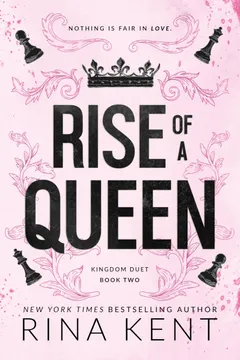
Rise of a Queen is a dark, emotionally charged exploration of trauma, power, and the possibility of redemption. At its core, the novel asks whether we are doomed to repeat the sins of our parents, or whether we can forge new identities from the ashes of our pasts. Through the intertwined journeys of Jonathan and Aurora, the story interrogates the nature of love—not as a fairy tale, but as a crucible in which both partners are transformed. The narrative's use of dual perspectives, unreliable memories, and recurring symbols creates a sense of psychological depth and suspense that elevates it above standard romance fare. The novel's greatest strength lies in its refusal to offer easy answers: love is not a cure, but a choice made in the face of pain; power is not a shield, but a responsibility. In the end, Rise of a Queen is a testament to the resilience of the human spirit—the ability to rise, again and again, from the graves dug by others, and to claim the right to rule one's own life.
Review Summary
Characters
Jonathan King
Jonathan is the embodiment of power forged in pain. Scarred by the deaths of his parents and the betrayal of those closest to him, he becomes a cold, calculating force in the business world and in his personal life. His relationships are transactional, his love language control. Yet, beneath the armor, Jonathan is driven by a desperate need to protect his legacy and those he claims as his own. Aurora's arrival disrupts his carefully ordered world, awakening vulnerability and tenderness he thought long dead. His journey is one from vengeance to redemption, from tyrant to partner, as he learns to relinquish control and embrace love as both surrender and strength.
Aurora Harper (Claire Griffin)
Aurora is a woman defined by reinvention. Daughter of a notorious serial killer, she spends her life running—from her name, her past, and the fear that she is her father's child. Her resilience is hard-won, her trust hard to earn. Aurora's relationship with Jonathan is a crucible, forcing her to confront her deepest fears and desires. She is both victim and warrior, capable of immense vulnerability and fierce defiance. Through her journey, Aurora claims her right to exist outside her father's shadow, to love and be loved, and to rule her own destiny as queen beside her king.
Alicia Sterling
Alicia is Aurora's beloved older sister, a gentle soul destroyed by forces beyond her control. Used as a pawn in the vendettas of men, Alicia's descent into madness is orchestrated by those seeking revenge against Maxim Griffin. Her cryptic messages and eventual death haunt Aurora, fueling her quest for truth and justice. Alicia represents the collateral damage of generational violence, but also the enduring power of love and forgiveness. Her final words offer Aurora the closure she needs to move forward.
Maxim Griffin
Maxim is the infamous Duct Tape Killer, a man whose charisma masks a bottomless capacity for cruelty. To Aurora, he is both the father who raised her and the monster who destroyed countless lives. Maxim's manipulations extend beyond the grave, orchestrating chaos even from his prison cell. His obsession with muses—first Bridget, then Alicia, then Aurora—drives the narrative's central conflict. Maxim is both the origin of Aurora's trauma and the catalyst for her transformation.
Margot
Margot is the trusted housekeeper whose quiet presence masks a burning desire for revenge. Driven by the unsolved murder of her sister at Maxim's hands, Margot orchestrates Alicia's downfall and nearly succeeds in killing Aurora. Her actions are a chilling reminder that the past's wounds can fester into new violence. Margot's betrayal is the final test of Aurora's resilience and Jonathan's capacity for protection.
Tom
Tom, Margot's nephew, is the masked assailant who haunts Aurora's nightmares. His attacks are calculated, his silence unnerving. Like Margot, Tom is driven by a personal vendetta against Maxim Griffin, but his violence is indiscriminate. He is both a symbol of the past's inescapable reach and the embodiment of the dangers lurking within the familiar.
Ethan Steel
Ethan is Jonathan's former best friend and greatest rival. Their relationship is a study in contrasts—Ethan is open where Jonathan is closed, forgiving where Jonathan is vengeful. Their shared history is marked by betrayal, loss, and a mutual attraction to broken women. Ethan's presence challenges Jonathan to confront his own capacity for friendship, forgiveness, and change.
Layla Hussaini
Layla is Aurora's steadfast best friend, a source of humor, support, and unwavering loyalty. Her presence grounds Aurora, reminding her of the possibility of normalcy and joy. Layla's willingness to stand by Aurora, even in the face of danger and scandal, is a testament to the power of chosen family.
Aiden King
Aiden is Jonathan's son and Alicia's child, caught between the legacies of two powerful families. His relationship with his father is fraught with misunderstanding and unspoken pain, but through Aurora, they begin to heal. Aiden represents the next generation's potential to break the cycles of violence and build something new.
Harris
Harris is Jonathan's right-hand man, a master of logistics and discretion. His loyalty is hard-earned and unwavering, providing Jonathan with the support and information needed to protect his family. Harris's presence is a reminder that even the most powerful kings need allies they can trust.
Plot Devices
Dual Narration and Shifting Perspectives
The novel alternates between Jonathan and Aurora's points of view, allowing readers to inhabit both the mind of the ruthless king and the haunted queen. This structure deepens the emotional resonance, revealing the misunderstandings, secrets, and desires that drive their actions. The shifting perspectives also create dramatic irony, as readers are privy to truths the characters themselves do not yet see.
Trauma as Inheritance and Catalyst
Both protagonists are shaped by trauma—Jonathan by loss and betrayal, Aurora by violence and guilt. Their journeys are defined by the struggle to break free from the patterns set by their parents and to forge new identities. Trauma is not just a backdrop; it is an active force, shaping choices, relationships, and the very structure of the narrative.
The Contract and the Cage
The initial bargain between Jonathan and Aurora is a classic dark romance device, but it is subverted as both characters push against the boundaries of control and submission. The physical and emotional cages they build for each other become metaphors for their internal prisons. The story interrogates the nature of consent, agency, and the possibility of true freedom within relationships marked by power imbalances.
Foreshadowing and Symbolism
Recurring symbols—the open grave, Aurora's scar and tattoo, the red lipstick—foreshadow key revelations and emotional turning points. The eighth grave, in particular, is a powerful metaphor for unfinished business, the space where the past refuses to stay buried. These symbols create a sense of inevitability, drawing the characters toward confrontation and catharsis.
The Unreliable Past
The narrative is riddled with uncertainty—hallucinations, false memories, and deliberate gaslighting. The truth about Alicia's death, Maxim's crimes, and Aurora's own sanity is obscured by layers of deception. This device keeps readers—and characters—off balance, heightening suspense and deepening the emotional stakes.
Redemption and Choice
The climax of the story is not a battle or a courtroom victory, but a moment of choice. Jonathan relinquishes control, giving Aurora the freedom to stay or leave. This act of vulnerability is the true redemption of the tyrant, and Aurora's choice to stay is the culmination of her journey from victim to queen. The story ends not with conquest, but with mutual recognition and the promise of a new legacy.