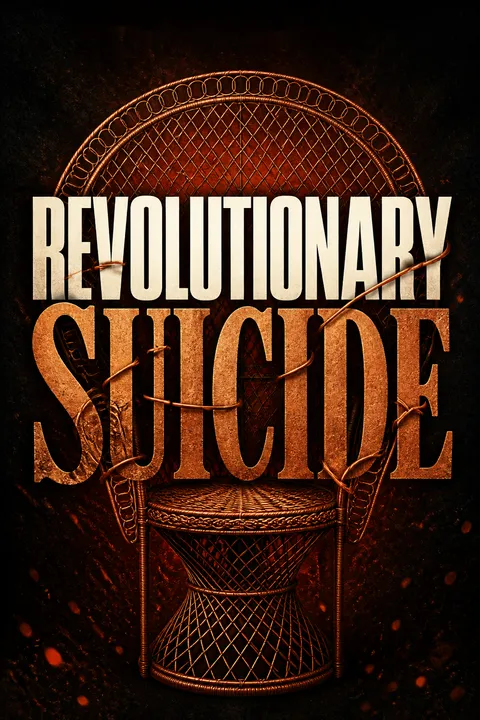

Key Takeaways
1. Early Life: Forged in Poverty and Defiance
During those long years in the Oakland public schools, I did not have one teacher who taught me anything relevant to my own life or experience.
Childhood struggles. Huey P. Newton's early life in Monroe, Louisiana, and later Oakland, California, was marked by poverty and systemic racism. Born the last of seven children, his family migrated West seeking better opportunities, only to find similar discrimination and substandard living conditions in Oakland's flatlands. His father, a proud and protective minister, instilled a strong sense of dignity and self-respect, often standing up to white men despite the dangers.
Defiance in school. Newton's school experience was largely negative, characterized by a constant feeling of shame and inferiority imposed by a system that deemed Black children "stupid." He frequently clashed with teachers, leading to suspensions, and learned to resist authority as a means of preserving his self-worth. This early defiance, born from a need to protect his dignity, became a foundational aspect of his character.
- Teachers called him "stupid" and ridiculed him.
- He learned to fight to protect his dignity.
- Group prestige was won through defiance and physical strength.
Street education. Much of Newton's real learning occurred outside the classroom, on the streets with his friends and brothers. Here, he learned to fight, to navigate complex social dynamics, and to question the injustices he observed. These experiences, though sometimes leading to petty delinquency, were crucial in shaping his understanding of systemic oppression and the need for collective resistance.
2. Self-Education: A Path to Intellectual Liberation
I was looking for myself and asking everyone except myself questions which I, and only I, could answer.
Overcoming illiteracy. Despite graduating high school as a functional illiterate, Newton was determined to prove his teachers wrong about his intelligence. Inspired by his brother Melvin's intellectual pursuits, he embarked on a rigorous self-education journey, starting with Plato's Republic and a dictionary. This painstaking process of associating sounds with words and memorizing meanings, often in secret due to shame, eventually opened up a new world of books and ideas.
- IQ test score of 74.
- Used Melvin's poetry books and Plato's Republic to teach himself.
- Spent 8-9 hours daily with a dictionary.
Philosophical awakening. College further stimulated Newton's intellectual curiosity, particularly in philosophy and law. He delved into existentialism (Camus, Sartre, Kierkegaard) and found parallels in the biblical Book of Ecclesiastes, leading him to question religious dogma and traditional comforts. His studies in law, initially to become a "better burglar," evolved into a tool for understanding and challenging the legal system.
Socialist transformation. Through independent reading, especially Mao Tse-tung, Newton's nationalist views slowly transformed into a socialist ideology. He became convinced of collectivism's benefits and recognized the deep link between racism and capitalism. This intellectual journey, driven by a desire to understand and change the oppressive conditions faced by Black people, laid the groundwork for his revolutionary path.
3. The Genesis of the Black Panther Party: Action Over Rhetoric
Our unique situation required a unique program.
Disillusionment with existing groups. Newton and Bobby Seale, his close friend and comrade, grew frustrated with the ineffectiveness of other Black organizations like the Afro-American Association and the Revolutionary Action Movement (RAM). These groups, often intellectual and bourgeois, failed to connect with or offer concrete solutions to the impoverished Black community, particularly the "brothers on the block" who were most affected by systemic exploitation.
- Afro-American Association: Focused on heritage, but leader Donald Warden was opportunistic and avoided confrontation.
- RAM: Intellectual, talked revolution but lacked action, excluded non-bourgeois members.
- Muslims: Malcolm X was influential, but their religious dogma was a barrier for Newton.
The Ten-Point Program. Recognizing the need for a practical, action-oriented approach, Newton and Seale drafted the Black Panther Party's Ten-Point Program in October 1966. This platform articulated specific demands for freedom, full employment, decent housing, education, and an end to police brutality, grounded in the belief that Black people must determine their own destiny. It was a direct response to the failures of previous movements and the urgent needs of the community.
- "What We Want" and "What We Believe" sections.
- Written in about 20 minutes, prioritizing practical application over abstract theory.
Armed self-defense. The Party's most distinctive tactic, armed self-defense, was born from the realization that traditional nonviolent protests were insufficient against police aggression. Inspired by figures like Malcolm X and Robert Williams, Newton and Seale decided to patrol the police with visible weapons, legally asserting their constitutional right to bear arms. This bold move was designed to capture the community's attention, educate them on their rights, and recruit members who sought dignity and protection.
4. Revolutionary Suicide: A Philosophy of Dignified Resistance
Revolutionary suicide does not mean that I and my comrades have a death wish; it means just the opposite. We have such a strong desire to live with hope and human dignity that existence without them is impossible.
Beyond despair. Newton coined the term "revolutionary suicide" to distinguish it from "reactionary suicide," which is born of despair and helplessness. Revolutionary suicide, in contrast, is a conscious choice to confront oppressive forces, even at the risk of death, driven by an unyielding desire for hope and human dignity. It is the price of self-respect, a refusal to endure intolerable conditions.
Acceptance of revolutionary death. Drawing inspiration from Che Guevara and Bakunin, Newton understood that a revolutionary is a "doomed man" who must accept the likelihood of premature death. This realism, however, is not fatalistic but a profound commitment to the cause. The revolutionary's death, when it comes, is imbued with meaning, serving as a catalyst for further mobilization and advancing the struggle for liberation.
- "It is better to oppose the forces that would drive me to self-murder than to endure them."
- Death with dignity is preferable to ignominy.
- The struggle is against the power imbalance of the establishment.
Immortality through the people. Newton believed that individual survival was secondary to the triumph of the revolution. True immortality lies in the ongoing life and struggle of the people. His willingness to face death, even the gas chamber, was not an act of heroism but a strategic decision to use his ordeal as a political statement, raising the consciousness of the community and inspiring them to continue the fight.
5. Armed Patrols: Challenging Police Brutality Legally
With weapons in our hands, we were no longer their subjects but their equals.
Initial success and community engagement. The Black Panther Party's armed patrols, observing police interactions in Black communities, were initially highly effective. Police, unaccustomed to such organized and legally armed resistance, often retreated. This visible assertion of rights resonated deeply with community members, who had long suffered unchecked police brutality.
- Police often left when Panthers arrived.
- Citizens were amazed and interested.
- Many citizens joined the Party directly from jail after being helped.
Legal education and recruitment. Newton, armed with knowledge of the California penal code, would publicly read relevant laws during police stops, educating both citizens and officers. This tactic, combined with distributing the Ten-Point Program, served as a powerful recruitment tool, drawing in street brothers who saw the Party as a genuine force for self-defense and dignity. The Party's adherence to legal boundaries was crucial to its early legitimacy.
Escalation and the Mulford Act. The success of the patrols provoked a swift legislative response: the Mulford Act of 1967, designed to outlaw the open carrying of loaded weapons. In response, the Panthers staged a dramatic demonstration at the California State Capitol in Sacramento, reading an "Executive Mandate" to the nation. This event, though leading to arrests, garnered national attention and solidified the Party's image as a defiant force.
- Mulford Act aimed to disarm Black Panthers.
- Sacramento demonstration: armed Panthers at the Capitol.
- Executive Mandate Number One: warned against repression and genocide.
6. The Trial: A Political Forum Against Injustice
The ideological and political significance of the trial was of primary importance.
A calculated frame-up. Newton's arrest and subsequent trial for the murder of Officer John Frey in October 1967 was seen by the Party as a deliberate frame-up by the Establishment to crush the burgeoning movement. Despite being severely wounded and facing the death penalty, Newton viewed the trial not merely as a legal battle for his life, but as a crucial political forum to expose systemic injustice and mobilize the Black community.
Challenging the legal system. Newton's defense, led by Charles Garry, meticulously exposed the flaws and biases within the judicial system. Garry challenged the racist composition of grand juries, the suppression of evidence, and the manipulation of witnesses. The trial became a platform to highlight how police brutality, unemployment, poor housing, and inferior education were interconnected forms of oppression against Black people.
- Grand jury composition was biased (white, upper-middle-class).
- Prosecutor Lowell Jensen hid key witness Henry Grier.
- Dell Ross, another witness, admitted to perjury and fear of the DA.
My testimony as a political statement. When Newton took the stand, he used the opportunity to articulate the Black Panther Party's history, ideology, and goals, explaining the realities of being a Black man in America. He directly challenged the prosecutor and judge, demonstrating his contempt for a system he believed was inherently unjust. His testimony, directed at the lone Black juror, aimed to raise consciousness and expose the political nature of the proceedings.
- Described his childhood, illiteracy, and self-education.
- Explained the Ten-Point Program and the concept of Black people as a colonized nation.
- Used the courtroom to criticize systemic racism and exploitation.
7. Incarceration: Mastering the "Soul Breaker"
After two or three days they would begin to scream and beg for someone to come and take them out, and the captain would pay a visit and say, “We don’t want to treat you this way. Just come out now and abide by the rules and don’t be so arrogant. We’ll treat you fairly. The doors here are large.”
Solitary confinement as a test. Newton's experience in the "soul breaker" – a strip cell in Alameda County Jail – was a profound test of his will. Stripped naked, in darkness, and forced to live in his own waste, the conditions were designed to break a prisoner's spirit. However, Newton refused to succumb, learning to control his thoughts and body, finding a unique form of freedom through mental discipline.
- Four-by-six-foot cell, dark, nude, no amenities.
- Limited food and water to avoid defecating.
- Mastered thought control: starting, stopping, and pacing memories.
Resistance to exploitation. Transferred to the California Penal Colony, Newton continued his defiance by refusing to participate in the prison's "rehabilitation program," which he saw as a form of economic exploitation. He demanded union-scale wages for inmate labor, arguing that anything less was slavery. This refusal led to prolonged solitary confinement, but he viewed it as liberation from servitude rather than punishment.
Political prisoner status. Newton recognized that many inmates, particularly Black individuals, were political prisoners, incarcerated not for inherent criminality but for being victims of a capitalist and racist society. He observed how prison authorities fostered racial animosity and suppressed political consciousness, fearing unity among inmates. His own incarceration, he believed, served as a symbol of the state's brutalization of the poor and Black.
8. The Power of the Word: Redefining Oppression
Words are another way of defining phenomena, and the definition of any phenomenon is the first step to controlling it or being controlled by it.
Nommo and consciousness. Drawing on Nietzsche's "Will to Power," Newton understood that language shapes perception and control. He recognized that the ruling class defines phenomena to serve its interests, as seen in the historical pejorative use of "black." The Black Panther Party sought to reclaim and redefine terms to raise Black consciousness and challenge the oppressor's narrative.
"Pig" as psychological warfare. The adoption of "pig" to describe policemen was a deliberate act of psychological warfare. This term, with its universally negative connotations, aimed to strip police of their perceived authority and expose their brutal, uncaring nature. It also served to unify victims across racial lines, as white youths experiencing police brutality during anti-war protests began to identify with the term.
- "Pig" is racially neutral, unifying victims.
- Police hated the term, but their counter-campaigns failed.
- Only a change in behavior, not slogans, would alter public opinion.
"All Power to the People." This slogan encapsulated the Party's long-range goals: complete control of community institutions, organized into co-operatives to end exploitation, and ultimately, mutual aid among all ethnic communities. Metaphysically, it asserted man as God, challenging the Judaeo-Christian concept that fostered submission and deferred justice to an afterlife. The slogan aimed to empower Black people to demand their rewards in the present and shape their own destiny.
9. Internal and External Battles: Cleaver's Defection and Comrades' Sacrifices
Eldridge misunderstood the white radical movement. He exploited their alienation and encouraged young whites to think of themselves as “bad” Blacks, thus driving them ever further away from their own community.
Cleaver's ideological divergence. Eldridge Cleaver, initially a valuable writer and speaker for the Party, gradually diverged from its core ideology. Newton observed Cleaver's tendency to prioritize sensationalism and empty rhetoric over disciplined organizing and community programs. Cleaver's embrace of white radicals and his encouragement of a "bad Black" identity for them alienated the Party from its grassroots focus and led to internal friction.
Public defection and sabotage. Cleaver's ideological differences culminated in a public defection, where he used media platforms to attack the Central Committee and David Hilliard, the Chief of Staff. This calculated act, including the release of Newton's private phone calls, was seen as an attempt to subvert the Party's work and sacrifice comrades like Bobby Seale and Ericka Huggins, who were facing murder charges.
- Cleaver attacked David Hilliard publicly.
- Released Newton's private phone calls to NBC.
- Led to the defection of several Black Panther branches.
Assassinations and enduring spirit. The Party faced relentless external attacks, including the assassinations of key comrades like Little Bobby Hutton, Bunchy Carter, John Huggins, and George Jackson. These murders, often by police or rival groups supported by authorities, were devastating but also solidified the Party's resolve. George Jackson, a "General" in the People's Revolutionary Army, became a powerful symbol of resistance, his spirit living on through his writings and the Party's continued struggle.
10. Rebuilding and Enduring: The Spirit of the Revolution Lives On
Let us go on outdoing ourselves; a revolutionary man always transcends himself or otherwise he is not a revolutionary man, so we always do what we ask of ourselves or more than what we know we can do.
Post-release challenges. Upon his release from prison in 1970, Newton faced the daunting task of re-acclimating to a world that had changed significantly and rebuilding the Party amidst internal strife and ongoing external pressures. He initially struggled with the overwhelming stimuli of everyday life and the hero-worship that distanced him from the community he sought to serve.
Focus on survival programs. Newton redirected the Party's focus from abstract constitutional conventions to concrete "survival programs pending revolution." These initiatives, such as Breakfast for Children, clothing distribution, and medical centers, were designed to meet the immediate needs of the community, building a strong base of support and demonstrating the Party's commitment to the people's well-being.
- Survival programs: Breakfast for Children, liberation schools, medical centers.
- Met immediate community needs.
- Aimed to sustain people until consciousness was raised for revolution.
Ideological development and resilience. Despite setbacks and the loss of comrades, Newton emphasized continuous ideological development through the Ideological Institute, training members in dialectical materialism. He believed that the spirit of revolution would endure, transcending individual lives and continuing through successive generations. His unwavering faith in the people and their capacity for change remained the driving force behind the Party's resilience and its fight for liberation.
Review Summary
Revolutionary Suicide receives overwhelmingly positive reviews (4.49/5) for its profound insights into Huey Newton's life and the Black Panther Party. Readers praise Newton's intellectual depth, particularly his journey from functional illiteracy to self-taught scholar through Plato's Republic. The autobiography reveals the Party's community-focused programs and legal activism rather than just violence. Common critiques include insufficient discussion of women's roles in the BPP and some dated views on gender and sexuality. Reviewers consistently recommend it alongside Malcolm X's autobiography as essential reading for understanding Black liberation movements and systemic oppression.
People Also Read







Download PDF
Download EPUB
.epub digital book format is ideal for reading ebooks on phones, tablets, and e-readers.








































