
Key Takeaways
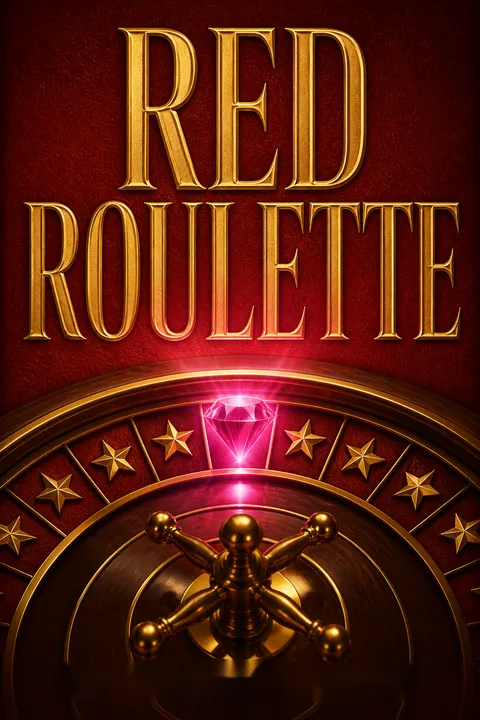
1. The Allure and Peril of China's "Red Roulette"
We’d operated at the center of power in China, cultivating premiers, high-ranking members of the Chinese Communist Party, and their families.
A wild ride. Desmond Shum and his ex-wife Whitney Duan rose from poverty to amass billions, operating at the very heart of China's political and economic power. Their journey was a testament to the "roulette-like political environment" of the New China, where immense opportunities for wealth were intertwined with profound risks. They believed they could "do good by doing well," pushing for social and political changes while building a vast business empire.
Sudden disappearance. This high-stakes game culminated dramatically on September 5, 2017, when Whitney Duan, a woman of "outsize talents in a patriarchal society," vanished from Beijing. Two senior executives and an assistant also disappeared, leaving no trace. This event underscored the arbitrary and absolute power of the Chinese Communist Party (CCP), which routinely flouts legal protections to seize individuals indefinitely, even conducting "snatch-and-grab operations overseas."
Friends abandon. In the wake of Whitney's disappearance, Desmond discovered that every relationship within the Party system was "saturated by calculations of benefit and loss." Friends and high-ranking officials, who owed their positions to Whitney, abandoned her, fearing entanglement with the Party's Central Commission for Discipline Inspection. This chilling reality forced Desmond to reflect on the years of incredible events that led to Whitney's vaporization and the true nature of power in China.
2. From Humble Beginnings to the Apex of Power
That untamed ambition, that wild desire to make something of our lives, was what drove us together and provided the underlying logic for our partnership.
Desmond's journey. Born in Shanghai in 1968 to a family persecuted as "landlords" by the Communists, Desmond experienced a childhood marked by his father's resentment and physical abuse. He found solace in reading and swimming, which instilled in him self-confidence and perseverance. Moving to Hong Kong in 1978, he faced poverty and cultural shock, learning to adapt and promising himself that "no one would look down on me." His parents' relentless hard work to climb the economic ladder profoundly influenced him.
Whitney's ascent. Whitney Duan, from rural Shandong Province, also overcame humble origins. After failing her first college exam and enduring a year in vocational school, she crammed to retake it, eventually excelling in computer science at a military university. Her early career as an assistant to a university president and later a deputy county chief taught her invaluable lessons in navigating Chinese officialdom and the pervasive corruption. This experience solidified her resolve to succeed in business, vowing to remain "above reproach" in a "dirty system."
A shared ambition. Both Desmond and Whitney were driven by an "untamed ambition" to make their mark on China. Whitney's company, Tai Hong, reflected her motto: a human life could be "as weighty as Mount Tai or as trifling as a feather." Their union, a blend of Desmond's Western education and Whitney's deep understanding of Chinese culture and connections, became a deeply personal embodiment of China's modernization story, with Desmond as "xixue" (Western learning) and Whitney as "zhongxue" (Chinese learning).
3. The Art of Guanxi: Navigating China's Opaque System
I quickly learned that in China all rules were bendable as long as you had what we Chinese called guanxi, or a connection into the system.
Connections are currency. Desmond's early career at ChinaVest, a private equity firm, quickly revealed the paramount importance of guanxi (connections) in China. He observed how foreign firms, like Tait Asia, circumvented heavy import duties on beer by leveraging connections to move goods duty-free, often through illicit means. This "don't-ask-don't-tell" model was prevalent, showing that "all rules were bendable" if you had the right relationships.
The "black box" reality. The AsiaInfo deal further illustrated this, marrying entrepreneurial talent with political connections. Feng Bo, the son of a prominent political figure, leveraged his family ties to secure investments and rise rapidly, even marrying Deng Xiaoping's granddaughter. This exposed Desmond to the "inner workings of a political system that mouthed Communist slogans while the families of senior officials gorged themselves at the trough of economic reforms," functioning like an aristocracy selling access and approvals.
Mastering the game. Whitney, with her "unparalleled skill" in playing China's political roulette, became Desmond's guide to this hidden world. She taught him how to cultivate powerful individuals, anticipating their needs and strategically building relationships. Their partnership was a "connection of the spirit and the brain," a pragmatic alliance where Desmond's financial acumen and Western ease complemented Whitney's deep understanding of China's intricate human relations, making them indispensable to those they served.
4. The Wen Family: A Gateway to Unimaginable Wealth
I turned to Whitney and only then did I learn that Auntie Zhang was Zhang Beili, the wife of one of China’s then vice-premiers, Wen Jiabao.
A pivotal connection. Desmond's introduction to "Auntie Zhang," the wife of future Premier Wen Jiabao, marked a turning point. Whitney's meticulous cultivation of Auntie Zhang, a "firecracker" with a "magnetic personality," secured their entry into the highest echelons of power. Auntie Zhang, a "trailblazer in China's jewelry industry" and known as the "Diamond Queen," sought to carve out her own sphere of influence, making her an ideal partner for Whitney's ambitions.
Family affairs. The Wen family, despite Premier Wen's "man-of-the-people" image and "aspirational" democratic views, became a conduit for immense wealth. Their children, Winston Wen and Lily Chang, leveraged their father's position to establish private equity firms and consulting businesses, attracting investments from entities like Singapore's Temasek and SBI Holdings. Whitney and Desmond observed Winston's aggressive deal-making, warning him to operate "behind the scenes" to avoid becoming a target.
The "air force" and "infantry." Whitney and Auntie Zhang formed a verbal agreement: Auntie Zhang would receive 30% of profits from joint ventures in exchange for her political influence, while Whitney and Desmond would handle the remaining 70% and the execution. This arrangement, though unwritten, was the "industry standard" for families of high-ranking Party members. Auntie Zhang provided the "air force" of political cover, while Whitney and Desmond were the "infantry," navigating the complex bureaucracy and making deals happen.
5. Conspicuous Consumption as a Business Imperative
By my logic and Whitney’s, the accoutrements of a high-end lifestyle served our business interests. If you wanted to go for the maximum deal in China, you couldn’t seem weak.
Projecting power. In China's cutthroat business environment, a high-end lifestyle was not merely about luxury; it was a strategic necessity. Desmond and Whitney's conspicuous consumption, from S600 Mercedes and Audi W12s to vanity license plates (like "Beijing A 8027" signifying ministerial rank), served to project an image of affluence and success. This was crucial because "if you wanted to go for the maximum deal in China, you couldn’t seem weak."
Fortifying against sneers. For Whitney, this consumption had a deeper psychological dimension, stemming from her humble background. Her cars, jewelry (a $15 million pink diamond, a $500,000 jade bracelet), and art collection (Zeng Fanzhi's "Praying Hands" for $5 million) were "fortifying herself against the world, standing as a rampart against other people’s sneers." It was a constant effort to prove her worth and distance herself from her origins.
The cost of doing business. Lavish spending extended to business interactions, with meals costing over a thousand dollars. This was the "cost of doing business in China," where expensive gestures conferred "face" upon guests and hosts alike. While Desmond initially found some aspects "idiotic," he understood that these displays were integral to building trust and demonstrating their belonging at the "apex of Chinese society," beyond the contempt of those with more "noble birth."
6. The Airport City: A Microcosm of China's Development
Combining the airport’s and Shunyi’s land gave us a parcel of more than two square miles. We drew up plans to build 11 million square feet of warehousing and seven miles of roads and piping.
A grand vision. The Airport City Logistics Park project, a joint venture between Whitney's firm, the Beijing Capital International Airport, and the Shunyi District government, became a capstone of their careers. It involved transforming a two-square-mile parcel of land into a massive air cargo center, complete with bonded warehouses, processing centers, and tight security. This ambitious undertaking required convincing warring government entities to collaborate, a feat only possible due to Whitney and Desmond's unique blend of "money, know-how, and political backing."
Bureaucratic labyrinth. The project was an "education in how the Chinese system operated," requiring "150 different chops" (official seals) from seven different ministries and countless layers of authorization. Desmond and his team engaged in relentless lobbying, "wining and dining" officials, offering gifts, and even sending employees to hospitals to get signatures from bedridden bureaucrats. This "dehumanizing" process highlighted how control "leaked from the top of the bureaucracy to the bottom," with section chiefs wielding immense power.
Challenges and triumphs. The project faced numerous crises, including the disappearance and execution of airport GM Li Peiying, which stalled financing. Desmond's personal intervention, such as saving the life of Shunyi official Li Yousheng in Los Angeles, generated invaluable goodwill and smoothed local relations. Despite the constant headaches and the need to inject millions of their own funds, the project's completion in 2010, redeveloping 5 million square feet, was a testament to their "muleheaded moxie" and a "priceless education" in navigating China's complex system.
7. The Illusion of China's Peaceful Evolution
We all sensed that we were heading ineluctably toward a more open, freer society.
Optimism for change. In the early 2000s, Desmond and Whitney, like many entrepreneurs, felt a profound optimism about China's trajectory. They believed the country was "ineluctably heading toward a more open, freer society," with capitalists becoming essential to its modernization. The Party's official welcome of entrepreneurs into its ranks and private conversations with officials like Wang Qishan, who predicted large-scale privatization, reinforced the idea that China was evolving towards a more pluralistic system.
Seeds of civil society. This optimism fueled their philanthropic efforts, such as the Shum Scholarship at Harvard and the Kaifeng Foundation at Tsinghua University, which aimed to promote China's non-governmental sector and civil society. Desmond joined the Chinese People's Political Consultative Conference (CPPCC), hoping it could become a relevant forum for democratic experimentation. They believed their wealth could foster social change, giving the Party a "gentle nudge" towards greater openness.
The Party's true colors. However, the global financial crisis of 2008 validated the Party's belief in its system's superiority, leading to a "retrenchment" and a reassertion of control. The Party, driven by its "animal instinct toward repression and control," began to weaken the moneyed class, uproot civil society, and bolster state-owned enterprises. Entrepreneurs, once economic saviors, were now seen as a "fifth column of Western influence." Desmond realized their "honeymoon with entrepreneurs" was a "Leninist tactic" to divide and annihilate, and that the Party would "revert to form" once it had the resources.
8. Xi Jinping's Consolidation of Power and the Purge of Rivals
We believed the allegations against Sun and Ling were manufactured by the Party security services to do the bidding of Xi Jinping to ensure that neither Hu Jintao nor Wen Jiabao would succeed in placing allies on the Politburo’s Standing Committee.
A new era of aggression. Desmond initially held optimism for Xi Jinping's leadership, partly due to Xi's close ties with Chen Xi and Wang Qishan. However, Xi's ascent in 2012 marked a dramatic shift towards aggressive authoritarianism. His massive anti-corruption campaign, which investigated millions and punished over 1.5 million officials, was perceived by Desmond as a tool to "bury potential rivals" rather than genuinely stamp out malfeasance.
Political hit jobs. The purges of high-ranking officials like Bo Xilai, Zhou Yongkang, Ling Jihua, and Sun Zhengcai, all potential successors or allies of previous leaders, were seen as "political hit jobs." Ling Jihua's son's death in a Ferrari crash, initially dismissed as an accident, was believed by Ling to be orchestrated to destroy his faction. Similarly, Sun Zhengcai, once a contender for China's top leadership, was jailed on corruption charges that Desmond believed were "concocted" to eliminate a rival.
Emperor for life. These actions dismantled the collective leadership model established by Deng Xiaoping, allowing Xi to "amass even more power." In 2018, Xi "rammed through an amendment to China’s constitution that ended term limits on the presidency," effectively making him "emperor for life." His cult of personality, reminiscent of Mao, and the Party's labeling him "the people's leader," signaled a return to one-man rule and a chilling end to any hopes for a more open China.
9. The Red Aristocracy: A Class Apart
The sons and daughters of China’s leaders were a species unto themselves. They lived by different rules and inhabited what seemed at times like a different dimension, cut off from the rest of China.
A privileged existence. Desmond's immersion in China's elite circles, facilitated by Whitney, exposed him to the "red aristocracy"—the descendants of Communist revolutionaries. These individuals lived in a "different dimension," shielded by high walls, separate supply chains for food, and exclusive access to schools and hospitals. Their wealth was generated through "political access, which they sold or rented out," obtaining permits, licenses, and lucrative contracts.
Enablers of the system. Figures like Liu Shilai, grandson of Vice-Premier Gu Mu, exemplified this class, making money by selling fire department permits or medical licenses. David Li Botan, son-in-law of Politburo member Jia Qinglin, leveraged his connections to control a third of aged Moutai production and establish the exclusive Moutai Club. These individuals, though often Western-educated, became "highly competent enablers of an increasingly toxic affliction, Chinese Communism," selling their souls for a "pot of gold."
Dual loyalties. Many red aristocrats, like Desmond's friend "Wolfgang," maintained overseas passports and invested significant wealth abroad, enjoying the "freedoms of the West and the managed duopolies of authoritarian China." Despite their Westernization, they rarely questioned the system that enriched them, instead actively sustaining it by sharing data with security services or chasing state contracts. This dual existence highlighted their self-interest, prioritizing personal gain over any push for genuine change in China.
10. The Ultimate Price of Operating Within the System
But what type of system allows for extralegal kidnappings of the type that befell Whitney Duan? What type of system gives investigators the right to disappear people and not even inform their parents or their son?
Personal betrayals. Desmond's divorce from Whitney and his legal battle with his "erstwhile best friend" Ding Yi revealed the brutal, "zero-sum, winner-take-all approach" ingrained by the Communist system. Whitney, in her divorce, sought to financially cripple Desmond, leveraging her connections to a Beijing court. Ding Yi, in turn, used Desmond's notoriety from the New York Times exposé to his advantage. These personal conflicts were deeply "infected" by the pervasive political culture, where alliances were temporary and allies expendable.
The cost of silence. Desmond's growing alienation from China's system intensified as he witnessed the Party's increasing repression and its direct meddling in Hong Kong's affairs. He participated in Party-organized counter-protests, feeling the "fear" that compelled many to "sell out the territory's future" rather than speak out. He realized that the price of dissent—loss of livelihood, freedom, or even life—was too high for most, including himself, leading to a collective silence that enabled the Party's abuses.
A final choice. Whitney's disappearance, an "extralegal kidnapping" without explanation or contact, cemented Desmond's view of Communist China. He realized that "basic dignity and human rights are life’s most precious gifts," surpassing wealth or professional success. Having once waived his right to an American green card to build China, he now chose the Western world for himself and his son, Ariston, seeking a society that shared his ideals, a stark contrast to the "coldhearted place" China had become under the Party's total control.
People Also Read



Download PDF
Download EPUB
.epub digital book format is ideal for reading ebooks on phones, tablets, and e-readers.








































