Searching...
English
EnglishEnglish
EspañolSpanish
简体中文Chinese
FrançaisFrench
DeutschGerman
日本語Japanese
PortuguêsPortuguese
ItalianoItalian
한국어Korean
РусскийRussian
NederlandsDutch
العربيةArabic
PolskiPolish
हिन्दीHindi
Tiếng ViệtVietnamese
SvenskaSwedish
ΕλληνικάGreek
TürkçeTurkish
ไทยThai
ČeštinaCzech
RomânăRomanian
MagyarHungarian
УкраїнськаUkrainian
Bahasa IndonesiaIndonesian
DanskDanish
SuomiFinnish
БългарскиBulgarian
עבריתHebrew
NorskNorwegian
HrvatskiCroatian
CatalàCatalan
SlovenčinaSlovak
LietuviųLithuanian
SlovenščinaSlovenian
СрпскиSerbian
EestiEstonian
LatviešuLatvian
فارسیPersian
മലയാളംMalayalam
தமிழ்Tamil
اردوUrdu
Try Full Access for 7 Days
Unlock listening & more!
Continue

Plot Summary

New Beginnings in England

Jack Ryan

adjusts to English life. Jack Ryan, an American intelligence analyst, relocates to England with his family. As they settle into their new life, Jack navigates the cultural differences and begins working with British intelligence. His role involves analyzing Soviet actions, particularly concerning a letter from the Pope that threatens Soviet control in Eastern Europe. The transition is both exciting and challenging, as Jack balances his personal life with the complexities of international espionage.

The Threatening Letter

A letter from the Pope alarms

The Pope sends a letter to the Polish government, threatening to resign if oppressive actions continue. This letter, known as the Warsaw Letter, is forwarded to Moscow, causing alarm among Soviet leaders. The potential return of the Pope to Poland is seen as a threat to Soviet authority, with the letter's implications challenging their control and inspiring resistance movements across the Eastern Bloc.

Moscow's Calculations and Concerns

Soviet leaders weigh their options

In Moscow, KGB Chairman Yuriy Andropov and his colleagues deliberate over the consequences of the Pope's letter. They recognize the threat it poses to political stability and consider various responses. The internal tensions and fears within the Soviet leadership are evident as they struggle to maintain control over their satellite states while avoiding global condemnation.

The Intricacies of Espionage

CIA and KGB play a dangerous game

In Moscow, CIA operatives Ed and Mary Pat Foley navigate the complexities of espionage, maintaining their cover while gathering intelligence. Meanwhile, in London, Jack Ryan collaborates with British intelligence, analyzing Soviet behavior. The world of espionage is depicted as a high-stakes game, where every move is calculated, and the consequences of failure are severe.

The Pope's Dangerous Gamble

The Pope's resolve tests Soviet nerves

The Pope's letter is a calculated risk to challenge Soviet authority. His willingness to resign and return to Poland is a testament to his commitment to his people and faith. The Soviets view this as a direct threat to their control and consider drastic measures. The Pope's actions highlight the power of moral authority and the potential for one man's courage to inspire change.

Planning an Unthinkable Act

KGB considers assassination

Within the KGB, discussions turn to the possibility of assassinating the Pope to neutralize the threat he poses. Colonel Rozhdestvenskiy is tasked with exploring the feasibility of such an operation, considering the political and logistical challenges. The moral and ethical implications of this plan weigh heavily, as the KGB grapples with the potential fallout of such an unprecedented act.

The Weight of Decisions

The burden of leadership and choice

As the Soviet leadership contemplates their next move, the weight of their decisions becomes apparent. The potential assassination of the Pope is a drastic measure that could have far-reaching consequences. The internal debates within the KGB and the Politburo reflect the complexity of maintaining power in a volatile world, underscoring the tension between political necessity and moral considerations.

A Risky Proposition

A defector's plea for escape

Rabbit, a KGB communications officer, reaches out to the CIA, offering critical information in exchange for safe passage out of the Soviet Union. His request is urgent, driven by a moral imperative to prevent a potential assassination plot against the Pope. The Foleys, Ed and Mary Pat, are tasked with evaluating the defector's credibility and the feasibility of his extraction, weighing the defector's claims against the inherent dangers of such an operation.

The Price of Betrayal

The defector's perilous journey

Rabbit's decision to defect is not without its costs. He must navigate the treacherous waters of betrayal, knowing that his actions could endanger his family and himself. The Foleys work tirelessly to ensure his safety, but the ever-present threat of discovery looms large. Rabbit's journey is a testament to the courage and desperation of those who choose to defy oppressive regimes.

A Train to Budapest

The Zaitzev family boards train

Oleg Zaitzev, a KGB communications officer, embarks on a train journey to Budapest with his wife Irina and daughter Svetlana. This trip is a cover for his defection to the West, facilitated by the CIA. As the train rolls through the Soviet landscape, Oleg reflects on his decision to betray his country to prevent an assassination plot against the Pope. The family settles into their compartments, unaware of the true purpose of their journey, except for Oleg, who is anxious yet hopeful about the future.

The Rabbit's Family Vacation

Irina and Svetlana enjoy the ride

Irina is initially surprised by the sudden vacation but is soon enticed by the prospect of shopping in Budapest. Svetlana, their young daughter, is thrilled by the adventure, her innocence shielding her from the gravity of their situation. Oleg maintains his composure, masking his inner turmoil and the weight of his secret. The train ride becomes a metaphor for their transition from the oppressive Soviet regime to the promise of freedom in the West.

A Grisly Preparation

Bodies prepared for deception

In London, the British Secret Intelligence Service (SIS) prepares for Operation BEATRIX, a plan to fake the deaths of the Zaitzev family to ensure their safe defection. This involves procuring bodies that match the Zaitzevs' descriptions, a grim task that underscores the operation's complexity and moral ambiguity. The bodies are altered to prevent identification, highlighting the lengths to which intelligence agencies will go to protect valuable assets.

The Unexpected Encounter in Rome

Ryan's mission takes unexpected turn

Jack Ryan, amidst the bustling crowd in St. Peter's Square, is on high alert for any threat to the Pope. His instincts lead him to Boris Strokov, a known Bulgarian assassin, who is poised to execute a sinister plan. Ryan's quick thinking and Marine training kick in as he confronts Strokov, preventing him from carrying out his mission. However, the situation takes a dramatic turn when another shooter, previously unnoticed, fires at the Pope, leaving Ryan and his team in shock and scrambling to understand the unfolding chaos.

The Aftermath of the Attempt

Assessing the impact of the attack

The Pope's condition is critical but stable, thanks to swift medical intervention. Ryan, grappling with the weight of the day's events, reflects on the near-miss and the implications of the attack. The international community is in turmoil, with the Vatican and global leaders condemning the act. Meanwhile, Ryan's actions are scrutinized, and he is summoned back to the United States for debriefing, where the significance of the intelligence gathered from the Rabbit becomes even more apparent.

The Weight of Responsibility

Ryan grapples with moral and professional duties

The events in Rome leave Ryan contemplating the moral complexities of his role. The responsibility of protecting lives while navigating the murky waters of international espionage weighs heavily on him. As he prepares to return to England, Ryan reflects on the delicate balance between duty and conscience, recognizing that his actions have far-reaching consequences. The experience reinforces his commitment to his work, even as he longs for the simplicity of his life before the CIA.

Characters

Jack Ryan

Determined analyst turned field operative

Jack Ryan

is an American intelligence analyst who finds himself thrust into a high-stakes operation in Rome. His quick thinking and decisive action prevent further tragedy, deepening his understanding of the complexities of intelligence work. Ryan grapples with the moral implications of his actions, and his analytical skills and ability to adapt to challenging situations make him a valuable asset to the CIA.

Cathy Ryan

Skilled surgeon and supportive wife

Cathy Ryan

is Jack's wife, a talented ophthalmic surgeon starting a new job in England. She is supportive of Jack's career and adapts to the challenges of living abroad. Cathy is practical and grounded, providing stability for her family as they adjust to their new environment. Her medical expertise and compassionate nature are central to her character.

Yuriy Andropov

KGB Chairman facing a dilemma

Yuriy Andropov

is the Chairman of the KGB, grappling with the implications of the Pope's letter. He is a calculating and pragmatic leader, aware of the potential threat to Soviet control. Andropov is tasked with maintaining stability and is willing to consider extreme measures to protect Soviet interests. His character reflects the tension between political necessity and moral considerations.

Colonel Aleksey Rozhdestvenskiy

Methodical KGB officer with a dark mission

Colonel Rozhdestvenskiy

is tasked with overseeing the potential assassination plot against the Pope. His methodical approach and willingness to consider extreme measures reflect the moral complexities faced by those in positions of power. Rozhdestvenskiy's character highlights the tension between duty and conscience within the KGB.

Ed Foley

Cautious yet decisive CIA officer

Ed Foley

is the Chief of Station in Moscow, tasked with evaluating and potentially extracting a high-value defector. His experience and instincts guide him through the complexities of espionage, balancing the need for intelligence with the safety of his operatives. Foley's cautious nature is tempered by his commitment to the mission, making him a key player in the unfolding drama.

Mary Pat Foley

Resourceful and daring CIA operative

Mary Pat Foley

, Ed's wife and fellow CIA operative, is instrumental in assessing Rabbit's credibility and planning his extraction. Her linguistic skills and ability to read people make her an invaluable asset. Mary Pat's daring nature complements Ed's caution, creating a dynamic partnership that is crucial to the mission's success.

Oleg Ivanovich Zaitzev

Conscience-driven KGB defector

Oleg Ivanovich Zaitzev

, a KGB communications officer, is driven by a moral imperative to prevent an assassination plot. His decision to defect is fraught with danger, but his commitment to doing what is right propels him forward. Zaitzev's knowledge and access to sensitive information make him a valuable asset, but his journey is perilous and uncertain.

Irina Zaitzev

Unaware wife on a journey

Irina Zaitzev

is Oleg's wife, unaware of her husband's plans to defect. She is initially surprised by the sudden vacation but is soon captivated by the prospect of shopping in Budapest. Irina's innocence and trust in her husband highlight the personal sacrifices and challenges faced by families caught in the web of espionage.

Svetlana Zaitzev

Innocent child on an adventure

Svetlana Zaitzev

is the young daughter of Oleg and Irina, blissfully unaware of the gravity of their situation. Her innocence and excitement about the train journey provide a poignant contrast to the tension and danger surrounding her family. Svetlana's character underscores the human cost of espionage and the impact on the most vulnerable.

Boris Strokov

Ruthless Bulgarian assassin

Boris Strokov

is a seasoned operative of the Bulgarian DS, known for his expertise in assassination. His mission to eliminate the Pope is thwarted by Ryan's intervention, leading to his capture by British intelligence. Strokov's presence in Rome underscores the lengths to which the Soviets are willing to go to maintain control, and his capture provides a rare opportunity to gain insights into Eastern Bloc operations.

Plot Devices

The Warsaw Letter

A catalyst for geopolitical tension

The Warsaw Letter is a pivotal plot device, serving as the catalyst for the unfolding geopolitical tension. The Pope's threat to resign and return to Poland challenges Soviet authority and forces the leadership to consider drastic measures. The letter's implications drive the narrative, highlighting the power of moral authority and the potential for one man's actions to inspire change.

Espionage and Surveillance

The constant dance of spies

Espionage and surveillance are central plot devices, illustrating the high-stakes game between the CIA and KGB. The narrative explores the intricacies of intelligence work, from maintaining cover to gathering information. The constant surveillance by the KGB adds tension and danger, emphasizing the risks faced by operatives like Ed and Mary Pat Foley.

Political Calculations

The burden of leadership decisions

Political calculations are a key plot device, reflecting the weight of leadership decisions in the Soviet Union. The narrative delves into the internal debates within the KGB and Politburo, highlighting the tension between political necessity and moral considerations. The characters' decisions are shaped by the need to maintain power and stability, underscoring the complexity of governance in a volatile world.

The Defector's Dilemma

A catalyst for high-stakes espionage

The defector's dilemma is a central plot device, driving the narrative forward and creating tension. Rabbit's decision to defect and the information he offers serve as a catalyst for the unfolding drama, highlighting the moral and ethical complexities of espionage. The defector's journey is a testament to the courage and desperation of those who choose to defy oppressive regimes.

The Extraction Plan

A delicate balance of risk and reward

The extraction plan is a key plot device, illustrating the complexities and dangers of espionage operations. The Foleys' meticulous planning and coordination are crucial to the mission's success, highlighting the high stakes and potential consequences of failure. The plan's execution is a testament to the skill and resourcefulness of the operatives involved.

The Assassination Plot

A catalyst for geopolitical tension

The assassination plot against the Pope serves as a central plot device, highlighting the desperation and ruthlessness of the Soviet Union. The attempt on the Pope's life underscores the high stakes of the Cold War and the lengths to which the Soviets will go to maintain control. The plot's failure, due in part to Ryan's intervention, has significant implications for international relations and the balance of power.

Moral Complexity

The burden of ethical decisions

The moral complexity of intelligence work is a recurring theme, as characters grapple with the ethical implications of their actions. Ryan's internal conflict and the responsibility of protecting lives while navigating the murky waters of espionage underscore the challenges faced by intelligence operatives. The narrative explores the tension between duty and conscience, highlighting the personal sacrifices and moral dilemmas inherent in the field.

Analysis

A tale of moral courage and geopolitical tension

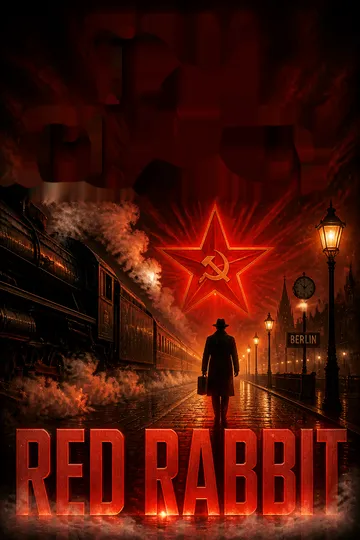
"Red Rabbit" by Tom Clancy is a gripping exploration of the moral complexities and high-stakes world of Cold War espionage. The narrative delves into the intricate dance between the CIA and KGB, highlighting the personal sacrifices and ethical dilemmas faced by intelligence operatives. The story underscores the power of individual actions to inspire change, as seen through the Pope's resolve and Oleg Zaitzev's defection. Clancy's portrayal of the geopolitical landscape during this era offers a nuanced perspective on the balance of power and the potential for moral courage to challenge oppressive regimes. The book serves as a reminder of the human cost of espionage and the importance of conscience in the pursuit of truth and justice.

Last updated:

Report Issue
Want to read the full book?

FAQ

0. Synopsis & Basic Details

What is Red Rabbit about?

  • Cold War Espionage Thriller: Red Rabbit plunges into the tense geopolitical landscape of the early 1980s, focusing on a KGB communications officer, Oleg Zaitzev, who seeks to defect to the West with critical intelligence about a Soviet plot to assassinate Pope John Paul II. The narrative follows CIA operatives Ed and Mary Pat Foley in Moscow and Jack Ryan in London as they race against time to extract Zaitzev and prevent the unthinkable.
  • Moral and Political Stakes: The story explores the profound moral and political implications of the Pope's defiance against Soviet control in Poland, which prompts the KGB to consider extreme measures. It highlights the personal courage of individuals like Zaitzev and the Pope, whose actions challenge the established order and force intelligence agencies to navigate complex ethical dilemmas.
  • Intertwined Destinies: Through a meticulously crafted plot, the novel intertwines the fates of ordinary people caught in extraordinary circumstances with the machinations of global superpowers. It showcases the intricate dance of espionage, the human cost of ideological conflict, and the subtle ways in which individual choices can alter the course of history.

Why should I read Red Rabbit?

  • Deep Dive into Cold War Intrigue: Readers seeking an authentic and detailed portrayal of Cold War espionage will find Red Rabbit compelling. Tom Clancy meticulously crafts a world where every detail, from communication protocols to bureaucratic infighting, feels real, offering a window into the high-stakes intelligence operations of the era.
  • Moral and Ethical Exploration: Beyond the thrilling plot, the novel delves into profound moral questions. It forces readers to consider the ethical boundaries of state power, the personal cost of conscience, and the complex motivations behind betrayal and loyalty, making it more than just a spy thriller.
  • Character-Driven Suspense: While known for technical detail, Clancy excels here in character development, particularly with Oleg Zaitzev's internal struggle and the Foleys' daring resourcefulness. Jack Ryan's early career experiences, grappling with the moral ambiguities of his new role, provide a relatable human element amidst the global tension.

What is the background of Red Rabbit?

  • Early 1980s Geopolitical Context: Red Rabbit is set in the early 1980s, a period of heightened Cold War tension marked by the rise of the Solidarity movement in Poland and the election of a Polish Pope, John Paul II. This historical backdrop is crucial, as the Pope's influence directly challenges Soviet hegemony in Eastern Europe, driving the central conflict of the novel.
  • Soviet Internal Dynamics: The story provides a detailed, albeit fictionalized, look into the inner workings of the KGB and the Politburo under Yuriy Andropov. It highlights the bureaucratic inertia, paranoia, and ideological rigidity within the Soviet system, contrasting it with the pragmatic, often ruthless, decision-making at the highest levels of power.
  • Espionage Tradecraft and Technology: Clancy integrates realistic details of intelligence gathering, communication methods (like one-time pads), and counter-surveillance techniques of the era. The technological limitations and human elements of espionage are central, emphasizing the ingenuity and risks involved in covert operations before the digital age.

What are the most memorable quotes in Red Rabbit?

  • "Heroes are often the most ordinary of men.": This epigraph, attributed to Henry David Thoreau, profoundly sets the tone for the novel, highlighting the unexpected courage found in characters like Oleg Zaitzev, an ordinary KGB clerk who risks everything for a moral cause. It underscores the theme that heroism isn't exclusive to the powerful or famous, but often emerges from quiet conviction.
  • "The most momentous thing in human life is the art of winning the soul to good or to evil.": Pythagoras's quote, also an epigraph, directly addresses the core moral conflict of Red Rabbit. It frames the struggle between the Soviet regime's amoral political calculations and the Pope's unwavering moral stance, emphasizing the battle for human conscience that drives Zaitzev's defection.
  • "It's a lot easier to get forgiveness than permission.": This pragmatic piece of advice, attributed to a Marine major, encapsulates the ethos of decisive action often required in high-stakes intelligence operations. It reflects Jack Ryan's own willingness to act on his instincts, even when operating outside strict protocols, and underscores the calculated risks taken by field operatives.

What writing style, narrative choices, and literary techniques does Tom Clancy use?

  • Meticulous Detail and Technical Realism: Clancy's signature style is evident in Red Rabbit through his exhaustive attention to operational and technical detail. He immerses the reader in the minutiae of intelligence tradecraft, military hardware, and bureaucratic procedures, lending a strong sense of authenticity to the fictional narrative.
  • Alternating Perspectives and Omniscient Narration: The novel employs an omniscient third-person narrator who frequently shifts perspective between key characters across different geographical locations (London, Moscow, Rome, Washington). This narrative choice provides a comprehensive, almost panoramic, view of the unfolding crisis, allowing readers to understand the motivations and actions of both protagonists and antagonists.
  • Foreshadowing and Thematic Juxtaposition: Clancy subtly uses foreshadowing, such as early discussions about Soviet vulnerabilities or Jack Ryan's recurring nightmares, to build suspense. He also employs thematic juxtaposition, contrasting the mundane routines of daily life with the extraordinary moral and political stakes of espionage, and highlighting the clash between rigid ideology and human conscience.

1. Hidden Details & Subtle Connections

What are some minor details that add significant meaning?

  • The "666" Operation Designator: The KGB's internal designation for the Pope's assassination plot is "15-8-82-666." While seemingly a routine alphanumeric code, the inclusion of "666" (the biblical "Mark of the Beast") subtly imbues the operation with a demonic, morally corrupt undertone, reinforcing Oleg Zaitzev's perception of its inherent evil and justifying his defection.
  • The Milkman's Cigarette: Jack Ryan's early morning encounter with the milkman, who offers him a cigarette, is a small but telling detail. It highlights Ryan's lingering personal vices and the subtle ways he connects with ordinary people, contrasting with the rigid, often isolated world of intelligence. It also foreshadows his later reliance on small, human connections in high-stakes situations.
  • Irina's Desire for a Piano: Oleg's wife, Irina, dreams of owning a piano, a symbol of cultural aspiration and personal fulfillment denied by the Soviet system. This seemingly minor detail underscores the pervasive impact of communism on individual lives and artistic expression, providing a poignant motivation for Oleg's defection beyond just saving the Pope.

What are some subtle foreshadowing and callbacks?

  • Ryan's Helicopter Trauma: Jack Ryan's recurring nightmares about a helicopter crash on Crete, which broke his back and ended his Marine Corps career, subtly foreshadow his deep-seated aversion to flying. This personal detail becomes a source of internal conflict and humor during his unexpected field assignments, particularly his flights to Budapest and Rome.
  • The "Canary Trap" Callback: Early in the novel, Sir Basil Charleston praises Jack Ryan's invention of the "Canary Trap" for catching security leaks. This callback to a previous success establishes Ryan's analytical prowess and unconventional thinking, justifying his rapid ascent within the intelligence community and setting the stage for his crucial role in Operation BEATRIX.
  • Stalin's "How Many Divisions" Quote: The repeated reference to Stalin's dismissive question, "How many divisions does the Pope have?", serves as a powerful thematic callback. It highlights the Soviet leadership's reliance on military power and their initial underestimation of the Pope's moral and political influence, which ultimately drives their desperate assassination plot.

What are some unexpected character connections?

  • Ryan and the Milkman's Shared Humanity: The brief, friendly interaction between Jack Ryan and his English milkman, where they share a cigarette and discuss mundane life, creates an unexpected connection. It highlights Ryan's grounded nature and ability to connect with ordinary people, a trait that contrasts with the detached world of espionage and subtly reinforces his moral compass.
  • Mary Pat Foley's Romanov Ancestry: Mary Pat's deep-seated hatred for the Soviet regime is rooted in her grandfather's past as an equerry to the Romanov family, whose murder by the Bolsheviks instilled in her a lifelong mission. This personal history provides a powerful, almost aristocratic, motivation for her dedication to dismantling communism, making her a more complex character than a mere "daring operative."
  • Andropov's Appreciation for Jazz: KGB Chairman Yuriy Andropov's private enjoyment of American jazz and Marlboro cigarettes is an unexpected detail. It reveals a hidden layer of cultural appreciation and a subtle contradiction to his rigid communist ideology, hinting at a more complex inner life than his public persona suggests, and making him a more nuanced antagonist.

Who are the most significant supporting characters?

  • Simon Harding (British Analyst): Simon Harding, Jack Ryan's British counterpart, is crucial for providing cultural and historical context to Soviet actions. His academic background in Russian literature and psychology offers a nuanced perspective on the enemy, helping Ryan "think like a Russian" and understand the ideological underpinnings of their decisions.
  • Nigel Haydock (British Commercial Attaché/SIS Officer): Haydock, initially appearing as a friendly neighbor to the Foleys, quickly reveals himself as a key SIS operative. His role in facilitating the Zaitzev family's defection and coordinating with the CIA underscores the vital Anglo-American intelligence partnership and his personal commitment to fighting communism.
  • Colonel Boris Strokov (Bulgarian DS Assassin): Strokov, the ruthless Bulgarian assassin tasked with killing the Pope, serves as a tangible representation of the Soviet bloc's "wet work" capabilities. His professional detachment and history of successful eliminations highlight the cold, brutal reality of state-sponsored murder and provide a direct antagonist for Ryan in Rome.

2. Psychological, Emotional, & Relational Analysis

What are some unspoken motivations of the characters?

  • Andropov's Quest for Legacy: Beyond merely maintaining Soviet power, Yuriy Andropov's drive to assassinate the Pope is subtly motivated by a desire to solidify his own legacy and prove his decisiveness to the Politburo. His internal monologues reveal a man acutely aware of Brezhnev's failing health and his own ambition to lead, seeing the Pope as an obstacle to be removed to clear his path to ultimate power.
  • Oleg Zaitzev's Search for Meaning: Oleg's defection is explicitly driven by conscience, but beneath that lies an unspoken yearning for a life of authenticity and purpose beyond the Soviet system's pervasive lies. His internal reflections on the "grayness" and "boredom" of Soviet life, coupled with his appreciation for Western culture (jazz, quality goods), suggest a deeper, existential motivation for seeking freedom.
  • Mary Pat Foley's Personal Vengeance: While a dedicated CIA operative, Mary Pat's fierce commitment to dismantling the Soviet Union is deeply personal, stemming from her grandfather's tragic history with the Romanovs. Her "visceral hatred for the Bolsheviks" is an unspoken, powerful undercurrent that fuels her daring and often reckless approach to espionage, making her mission a form of familial retribution.

What psychological complexities do the characters exhibit?

  • Jack Ryan's Moral Conflict: Jack Ryan, an analyst thrust into field operations, grapples with the psychological toll of his work. His aversion to violence, his nightmares from past trauma, and his Catholic conscience create a complex internal struggle when confronted with the KGB's assassination plot. He is forced to reconcile his academic ideals with the brutal realities of espionage, questioning the ethical boundaries of his actions.
  • Andropov's Ideological Blindness: Despite his intelligence and pragmatism, Andropov exhibits a profound psychological complexity rooted in his ideological commitment. He rationalizes the Pope's assassination as a political necessity, demonstrating how deeply ingrained Marxist-Leninist dogma can distort moral judgment and lead to ruthless decisions, even when he privately acknowledges the system's failures.
  • Oleg Zaitzev's Conscience and Fear: Oleg's decision to betray his country is a testament to his conscience, but it is constantly battling profound fear. His internal monologues reveal the immense psychological pressure of his actions, the terror of discovery, and the moral isolation he experiences, highlighting the immense courage required to act on one's principles in an oppressive regime.

What are the major emotional turning points?

  • Oleg's Dream of the Pope's Assassination: Oleg Zaitzev's vivid nightmare, where Politburo members including Andropov shoot children and the Pope in Red Square, is a critical emotional turning point. This dream crystallizes his moral outrage and transforms his abstract knowledge of the plot into a visceral, personal imperative to act, pushing him towards defection.
  • Cathy Ryan's Disgust at British Surgeons: Cathy's emotional outburst over the British surgeons taking a beer break during an operation is a significant moment. It highlights her unwavering professional ethics and deep concern for patient welfare, contrasting sharply with the casual attitudes she encounters. This emotional reaction underscores her moral integrity and her role as Jack's ethical anchor.
  • Ryan's Confrontation with Strokov: The moment Jack Ryan presses his pistol against Strokov's spine in St. Peter's Square is a major emotional turning point for him. It forces him to directly engage in the violence he usually analyzes from a distance, confronting his own capacity for lethal action and the stark reality of the mission, solidifying his commitment to protecting innocent lives.

How do relationship dynamics evolve?

  • Ryan and Greer's Mentor-Protégé Bond: The relationship between Jack Ryan and Admiral James Greer evolves from a professional mentorship into a deeper, almost father-son bond. Greer consistently champions Ryan, trusts his instincts, and provides guidance, while Ryan, in turn, seeks Greer's counsel and strives to prove his worth, culminating in Greer's pride in Ryan's field performance.
  • The Foleys' Partnership in Espionage: Ed and Mary Pat Foley's marriage is portrayed as a dynamic partnership, where their individual strengths complement each other in the field. Ed's caution and Mary Pat's daring create a balanced team, and their ability to communicate silently through hand signals and shared understanding deepens their bond, showcasing a unique marital synergy in a high-stress environment.
  • Oleg and Irina's Unspoken Divide: The relationship between Oleg and Irina Zaitzev is marked by a profound, unspoken divide. Oleg's decision to defect is made without his wife's knowledge, reflecting the patriarchal norms of Soviet society and his desire to protect her from the burden of his secret. While Irina's initial excitement for the "vacation" highlights her innocence, it also underscores the emotional distance created by Oleg's perilous choices.

4. Interpretation & Debate

Which parts of the story remain ambiguous or open-ended?

  • The Extent of Soviet Comms Compromise: While Oleg Zaitzev claims that some American communications systems are compromised (specifically naval comms via Agent NEPTUNE), the full extent and nature of this penetration remain somewhat ambiguous. The novel doesn't definitively confirm how deeply the Soviets have infiltrated US systems, leaving readers to ponder the ongoing vulnerability and the potential for future threats.

  • The Fate of Boris Strokov: After his capture, Boris Strokov is interrogated by British intelligence, and the novel hints at his "singing like a canary." However, his ultimate fate—whether he is imprisoned, turned, or eliminated—is left open-ended. This ambiguity allows for reader speculation about the consequences for such a ruthless assassin and the ethical choices intelligence agencies make regarding high-value prisoners.
  • The Long-Term Impact of Operation BEATRIX: While Operation BEATRIX successfully extracts the Zaitzev family and provides crucial intelligence, the long-term geopolitical impact of the Pope's survival and the exposed assassination plot is not fully detailed. The novel concludes with the immediate aftermath, leaving readers to consider how this event might reshape Cold War dynamics and the future of the Soviet Union.

What are some debatable, controversial scenes or moments in Red Rabbit?

  • The British Surgeons' Lunch Break During Surgery: Cathy Ryan's shock and disgust at the British surgeons taking a beer break during an ongoing operation is a controversial moment. It highlights a stark cultural and professional difference in medical ethics, prompting debate about acceptable professional conduct and the potential impact of such practices on patient care, even if the patient is ultimately unharmed.
  • The Use of Burned Bodies for Deception: Operation BEATRIX's use of three burned cadavers (including a child's) to fake the Zaitzev family's deaths is a morally controversial aspect of the plot. This grisly detail forces readers to confront the extreme, often unethical, measures intelligence agencies are willing to take to protect assets and achieve objectives, sparking debate about the "ends justifying the means."

  • Ryan's Decision to Intervene in Rome: Jack Ryan's impulsive decision to physically intervene and disarm Boris Strokov, rather than simply observing or alerting local authorities, is debatable. While heroic, it deviates from his analytical role and risks compromising the entire operation. This moment raises questions about the boundaries of an intelligence officer's duty and the personal risks taken when moral imperatives clash with operational protocols.

Red Rabbit Ending Explained: How It Ends & What It Means

  • The Pope Survives, Strokov Captured: The climax sees Jack Ryan, alongside British SIS operatives, thwarting the assassination attempt on Pope John Paul II in St. Peter's Square. While Ryan disarms the primary Bulgarian assassin, Boris Strokov, another, unidentified shooter manages to wound the Pope. The Pope survives, albeit critically, and Strokov is captured by British intelligence. This outcome signifies a partial victory, as the immediate threat is neutralized, but the broader conspiracy is revealed to be more complex.
  • Zaitzev's Successful Defection and Revelation: Oleg Zaitzev and his family are successfully exfiltrated from Hungary to England via Operation BEATRIX, a complex deception involving faked deaths using cadavers. Zaitzev, the "Rabbit," reveals to Western intelligence that the KGB, under Andropov's direct order, orchestrated the assassination plot. He also exposes several high-level Soviet penetration agents within Western governments, including "MINISTER" in Whitehall and "NEPTUNE" and "CASSIUS" in the US. This intelligence is a massive coup, confirming the deep reach of Soviet espionage and the vulnerability of Western communications.

  • The Dawn of a New Cold War Strategy: The novel concludes with Jack Ryan, now back in the US, briefing CIA Director Moore and Deputy Director Ritter. Ryan proposes a new strategy to exploit the Soviet Union's economic weaknesses, suggesting that the US can "take over" the USSR like a failing corporation by manipulating global oil prices. This marks a pivotal shift in US Cold War policy, moving beyond containment to active destabilization, and foreshadows the eventual collapse of the Soviet Union. The ending emphasizes the power of intelligence to shape geopolitical outcomes and the moral complexities inherent in such high-stakes decisions.

Review Summary

3.75 out of 5
Average of 33.7K ratings from Goodreads and Amazon.

Red Rabbit received mixed reviews, with many criticizing its slow pace, repetitive content, and lack of action compared to Clancy's earlier works. Some readers appreciated the historical context and espionage details, while others found the political commentary heavy-handed. The character development and writing style were often deemed subpar. A few reviewers enjoyed the book as a prequel to the Jack Ryan series, but overall, it was considered one of Clancy's weaker efforts. The audiobook version was noted as more engaging due to better editing and narration.

Your rating:
4.32
77 ratings

About the Author

Thomas Leo Clancy Jr. was an American author known for his military-political thrillers. Despite initial career setbacks, Clancy found success with "The Hunt for Red October" in 1984. His meticulous research and storytelling ability granted him access to high-ranking military officials, enhancing his novels' authenticity. Clancy's works often featured patriotic themes and heroic protagonists like Jack Ryan. He became a bestselling author, with several books adapted into successful films. Beyond writing, Clancy ventured into video games and sports team ownership. A conservative politically, he often incorporated his views into his books. Clancy passed away in 2013, leaving a lasting legacy in literature and popular culture.

Download PDF

To save this Red Rabbit summary for later, download the free PDF. You can print it out, or read offline at your convenience.
Download PDF
File size: 0.27 MB     Pages: 20

Download EPUB

To read this Red Rabbit summary on your e-reader device or app, download the free EPUB. The .epub digital book format is ideal for reading ebooks on phones, tablets, and e-readers.
Download EPUB
File size: 2.96 MB     Pages: 16
Listen
Now playing
Red Rabbit
0:00
-0:00
Now playing
Red Rabbit
0:00
-0:00
1x
Voice
Speed
Dan
Andrew
Michelle
Lauren
1.0×
+
200 words per minute
Queue
Home
Swipe
Library
Get App
Try Full Access for 7 Days
Listen, bookmark, and more
Compare Features Free Pro
📖 Read Summaries
Read unlimited summaries. Free users get 3 per month
🎧 Listen to Summaries
Listen to unlimited summaries in 40 languages
❤️ Unlimited Bookmarks
Free users are limited to 4
📜 Unlimited History
Free users are limited to 4
📥 Unlimited Downloads
Free users are limited to 1
Risk-Free Timeline
Today: Get Instant Access
Listen to full summaries of 73,530 books. That's 12,000+ hours of audio!
Day 4: Trial Reminder
We'll send you a notification that your trial is ending soon.
Day 7: Your subscription begins
You'll be charged on Dec 18,
cancel anytime before.
Consume 2.8× More Books
2.8× more books Listening Reading
Our users love us
250,000+ readers
Trustpilot Rating
TrustPilot
4.6 Excellent
This site is a total game-changer. I've been flying through book summaries like never before. Highly, highly recommend.
— Dave G
Worth my money and time, and really well made. I've never seen this quality of summaries on other websites. Very helpful!
— Em
Highly recommended!! Fantastic service. Perfect for those that want a little more than a teaser but not all the intricate details of a full audio book.
— Greg M
Save 62%
Yearly
$119.88 $44.99/year/yr
$3.75/mo
Monthly
$9.99/mo
Start a 7-Day Free Trial
7 days free, then $44.99/year. Cancel anytime.
Scanner
Find a barcode to scan

We have a special gift for you
Open
38% OFF
DISCOUNT FOR YOU
$79.99
$49.99/year
only $4.16 per month
Continue
2 taps to start, super easy to cancel
Settings
General
Widget
Loading...
We have a special gift for you
Open
38% OFF
DISCOUNT FOR YOU
$79.99
$49.99/year
only $4.16 per month
Continue
2 taps to start, super easy to cancel