
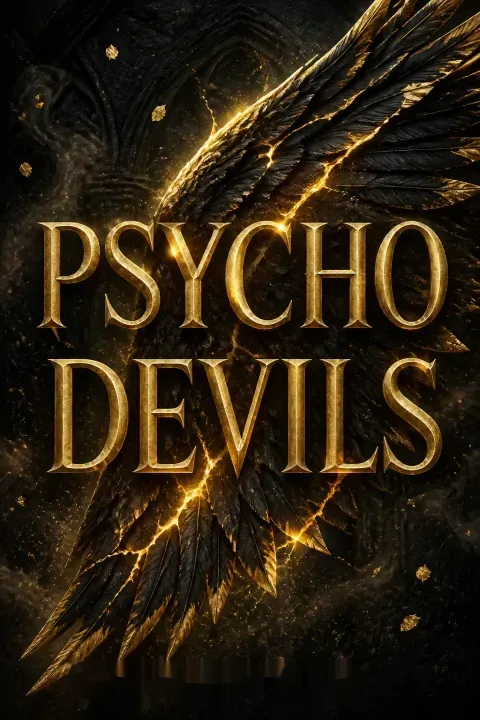


Plot Summary
Branded by Blood
Corvus,2 Scorpius,3 and Orion4 return to Elite Academy with enchanted tattoos now linking their lives to Aran,1 the weak fae recruit they have bullied for months. When Lothaire7's daughter Arabella1 drops her male disguise, the kings realize they have been deceived: Aran1 is actually a woman, the fae queen1 who ate her mother's heart.
Enraged, Corvus2 pins her to the wall and threatens to burn her on a stake. But when Lothaire7 drags Arabella1 away, all three kings collapse in agony. The tattoo will not let her leave their presence. They stalk into the hall, retrieve her, and discover the horrifying truth: she is their slave, and they are trapped with her just as she is trapped with them.
This opening crystallizes the novel's central paradox: captivity as the foundation for intimacy. The kings' violence and Arabella's defiance establish a dynamic where cruelty and vulnerability coexist. Corvus's fire, Scorpius's sadism, and Orion's unnerving stillness each represent distinct forms of control that Arabella will systematically dismantle. The slave tattoo literalizes what the mate bond will later confirm: these four are inextricably connected, and the suffering they inflict on one another is both the wound and the wound's eventual undoing.
The Legionnaire Games Begin
Lothaire7 gathers his recruits and drops two revelations: the High Court has ordered the Legionnaire Games to test the strongest warriors in preparation for war against the ungodly, and Arabella1 must compete as part of the academy legion.
Six legions arrive at the island academy: angels with crystal wings and ice swords, devils from the House of Dar, leviathan shape-shifters, wraith-like assassins, and Sadie,8 Arabella1's best friend, leading the shifter legion. A thirteen-year-old girl named Jinx9 appears as the shifters' substitute. Lothaire7 explains the games are psychological, not just physical, and the losers of each challenge will be punished by the gods themselves.
The games function as a crucible designed to strip away pretense. Lothaire's betrayal of his daughter (forcing her to compete after binding her for 'protection') establishes the novel's thesis: paternalistic systems claim to shelter women while systematically exposing them to harm. The six legions represent competing models of power: angelic purity, devilish brutality, shifter loyalty, and assassin invisibility. Jinx's presence as a child substitute foreshadows the novel's preoccupation with hidden identities and the exploitation of the young.
Freefall into Fire
The first competition demands each competitor climb a towering post and then jump back to the ground. Arabella1 climbs with ice claws, Corvus2 and Orion4 with their devil talons. At the top, Sadie8 shifts into a saber-toothed tiger and playfully cheers. When the judges order everyone to jump, Arabella1 spreads her arms and tips backward headfirst with her pipe between her lips.
She slams into the lawn. The impact shatters her body. For three days she lies unconscious while John5 stitches her mangled flesh back together. The room becomes a blood-soaked infirmary with no outside healing permitted. When Arabella1 finally wakes, her first words are a demand for her pipe.
Arabella's headfirst leap is both suicidal and transcendent. She flirts with death as the ultimate escape from her enslavement, yet survives through sheer immortal resilience. John's role as her caretaker (stitching her wounds, washing her hair) marks him as the only man who consistently offers care without demanding submission. The image of Arabella smiling with a pipe between her lips as she plummets encapsulates her coping strategy: meet annihilation with aesthetic defiance.
Sound of Breaking
The second competition weaponizes sound. An illegal enchantment breaks the sound barrier inside the arena, causing competitors to bleed from their ears and collapse. Scorpius,3 whose blindness makes his hearing hypersensitive, passes out immediately. Arabella,1 John,5 and others drag themselves across the field through agony.
Arabella1 hauls Scorpius's3 dead weight even as her own body fails. John5 ultimately throws Scorpius3 across the finish line, then grabs Arabella1 at the last second. They survive, but Arabella1 finishes last. The angel competitor who was left behind by his legion explodes on the field. An angel captain convulses as if being punished by an unseen force.
Arabella's decision to save Scorpius, the man who has tormented her most viciously, represents the first crack in the cycle of retribution. Her instinct to protect overpowers her hatred, suggesting a moral framework deeper than grievance. The angel captain's convulsions introduce the Angel Consciousness as a punitive entity, imposing accountability from within. This externalized conscience foreshadows the novel's revelation that Arabella herself has been monitored and guided by such a force.
Punishment by Penetration
Because Arabella1 finished last, the gods decree her punishment: she must have penetrative intercourse with John5 on the arena field until completion, witnessed by the entire academy. Corvus,2 enraged, surrounds them with a wall of fire for privacy. John5 cradles Arabella,1 asks for her consent, and promises nothing will change between them.
When he enters her, she bleeds; it is her first time. He whispers endearments, calls her precious and perfect. Afterward, on the blood-soaked lawn, he carries her back to the room. Scorpius,3 who could hear everything, reports to Corvus2 and Orion4 that she was a virgin. Corvus's2 flames intensify uncontrollably.
The punishment transforms John from best friend to lover through state-sanctioned violation that he reframes as consensual care. The spectacle of public sex as punishment perversely mirrors how trauma bonds can mimic intimacy. Corvus's protective fire-wall and subsequent rage reveal that the kings' possessiveness, though expressed through violence, contains the seeds of genuine attachment. Arabella's virginity becomes a symbolic commodity: her innocence was stolen not by John but by the gods who orchestrated this theater of humiliation.
A Twin Emerges
After the punishment, John5 grows distant and brooding. When Arabella1 apologizes for what she did to him, he throws her into the sea. Orion4 rescues her from drowning. Then the truth emerges: this is not John5 but Luka,6 his identical twin. For years the brothers have been switching places, concealing their dual identity.
John5 had to RJE away to fulfill obligations. Luka6 is the Mr. Hyde to John's5 Dr. Jekyll: silent, intense, and covered in tattoos and piercings that John's5 body lacks. Lothaire7 reveals the academy legion's substitute has always been the other twin. John5 returns days later, casually explaining he had to handle family duties.
The twin revelation destabilizes Arabella's understanding of her closest friendship. Every tender moment with 'John' must now be reassigned to either brother. This doubling literalizes the novel's theme of fractured identity: Arabella herself is both fae queen and angel, slave and mate, victim and survivor. Luka's piercings and tattoos (skulls, wings, serpents) visually encode his difference from John's boyish charm, yet both twins orbit Arabella with the same gravitational pull, suggesting their bond to her transcends individual personality.
Drawing First Blood
The third competition allows only power-manifested weapons. Luka6 can summon darkness but no blade. Arabella1 devises a defensive formation: she and the demons form a wall in front of Luka,6 accepting their own injuries to protect him. Angels stab Arabella's1 stomach and thigh. A leviathan's talons rake her arm.
She throws her ice dagger like a star, wounding him. Sadie8 uses her blood powers to mind-control an assassin into attacking her own teammate. The academy legion wins. Back in the room, Luka6 stitches Arabella's1 wounds while straddling her. She accidentally rubs against his erection and calls it a weapon. He calls her 'Your Highness' with quiet intensity.
Arabella's tactical self-sacrifice demonstrates the leadership qualities the gods claim to be testing. She transforms Luka's vulnerability (no weapon) into a strategic asset by making him the protected center. The demons' compliance with her plan signals growing respect. Sadie's blood-control reveals her terrifying potential as a weapon, foreshadowing her role in the coming war. The intimate stitching scene between Luka and Arabella offers the first sustained moment of gentleness between them, his gruff exterior softening as he tends her wounds.
The Party's Bloody End
Corvus2 orders a party for the legion. Arabella,1 intoxicated on demon brew, lets three blue-haired fae worshippers kiss her and grope her in a dark corner. Luka6 alerts Corvus.2 The kings drag the men into the crowd and systematically brutalize them. They snap two men's necks and incinerate the bodies with Corvus's2 flames.
The third man they beat savagely, leaving him alive as a message. Scorpius3 smiles while stomping on bones. Later, Arabella1 drunkenly stumbles into the kings' shower. Corvus2 washes her hair while Orion4 kneels before her, staring at her exposed body. They put her to bed between them, the best sleep any of them has had.
The kings' violence at the party is simultaneously protective and monstrous, raising uncomfortable questions about when defense becomes predation. They punish men for doing what they themselves have done: touching Arabella without meaningful consent. The shower scene introduces startling domesticity: three killers tenderly bathing a drunk woman they once burned. This dissonance is the novel's central psychological tension. Can monsters learn to love without destroying what they claim to protect?
Malum's Betrayal
Lothaire7 delivers the gods' cruelest mandate: for the fourth competition, Corvus2 must select either his precious Revered Orion4 or Arabella1 to compete. Without hesitation, Corvus2 chooses Orion.4 Arabella's1 face goes blank. She walks past him without a word. John5 punches Corvus.2 At the arena, Lothaire7 announces the rules: competitors must survive until 5 a.m. in whatever conditions the realm unleashes.
A glass storm descends. Shards rain from the sky like daggers. The temperature plummets. Competitors die. Arabella1 and Xerxes13 huddle together for shelter, but Xerxes13 is being shredded. She orders him to shift into his tiny omega kitten form, then crouches over him on all fours, using her own back as a shield.
Corvus's choice is structurally inevitable but emotionally devastating. He selects the mate he has known and loved for years over the woman he is only beginning to recognize as equally essential. This decision proves to Arabella what she has always believed: she is expendable. Yet her subsequent protection of Xerxes, a man complicit in her kidnapping, demonstrates the righteousness Jinx has been urging. She shields her mother's former assassin with her own body, reenacting but inverting her childhood trauma.
What the Storm Revealed
After hours under glass bombardment, Arabella's1 clothes are torn to ribbons. When the storm ends, she hobbles off the field half-naked, her back exposed. In the bedroom, her teammates see it: 'WHORE' carved in enchanted letters across Arabella's1 spine. Arabella,1 delirious with pain, confesses: her mother lit her on fire for years.
The night before Arabella1 killed her, the queen carved the slur into her daughter's flesh. Corvus2 rips the bathroom door off its hinges and burns it to ashes. He vows to massacre everyone in the fae palace. Orion4 screams aloud for the first time, his lyrical voice shattering glass. The kings finally understand they have been torturing a woman who has known nothing but abuse.
The scar revelation recontextualizes every previous interaction. When the kings called her 'whore' and 'slut,' they were unknowingly repeating her mother's words. This moment transforms them from bullies into unwitting abusers perpetuating a cycle they did not create but participated in. Corvus's vow of vengeance, though extreme, represents his first genuine protective impulse toward Arabella. The scar is the novel's central symbol: a wound inflicted by the person who should have loved her most, which every subsequent relationship either picks at or attempts to heal.
Judgment at the Summit
For the showcase round, all legions climb the posts again. Lyla orders the kings to reveal their powers. The metal crowns detach from their ears. Orion4 sings, his voice impossibly beautiful and lethal. Scorpius's3 three eyes glow, judging every soul present. White flames appear above each person's head, then shift colors based on their sins.
Jinx's9 flame turns pure black. The kings declare her soul irredeemable and prepare to execute her. Corvus2 pulls a silver dagger from his throat tattoo and aims it at the thirteen-year-old girl. None of the shifters can move; they are frozen by the kings' power. Only Arabella1 remains free, because no flame appears above her head at all.
The soul-judging sequence exposes the terrifying scope of the kings' abilities: they are not merely powerful warriors but divinely appointed executioners with the capacity to see and punish moral failing. Jinx's pure-black flame is a devastating indictment that will only make sense in retrospect. Arabella's lack of any soul-flame marks her as fundamentally different, outside the kings' jurisdiction. The shifters' paralysis while their child-sister faces death represents the limits of even the most devoted family bonds against institutionalized divine violence.
Wings Over the Abyss
Corvus2 hurls the silver dagger at Jinx.9 Arabella1 sprints and leaps from her post, tackling the girl midair just as the blade grazes her hair. They plummet together. Arabella1 wraps her body around Jinx,9 bracing for death. She prays desperately, offering her own life in exchange for the child's.
In that moment, an angelic voice welcomes her to the Consciousness. Her back erupts in agony. Massive blue crystal wings, composed of thousands of ice feathers identical to her daggers, burst from her spine.
She banks hard, slamming into a post. Jinx9 falls but survives. On the ground, Corvus2 sets Jinx's9 leg on fire. Arabella1 hurls herself atop the girl and extinguishes the flames with her own body. The kings regain control for the first time in their lives. Then they collapse.
The wing manifestation fulfills Lyla's prophecy ('One must die, and rise with wings') through literal self-sacrifice. Arabella earns her angel heritage not through lineage but through the willingness to die for another. Her mother, the disgraced angel who hid her wings and tortured her daughter, represents corrupted power. Arabella's wings are earned through righteousness, the quality Jinx has been desperately urging. The kings' involuntary loss of their killing state when Arabella intervenes is the first proof of the mate bond's regulatory function: she is the Revered who controls their fire.
The Missing Mate Found
Lothaire7 shows the legion a recording of the showcase. As they watch Arabella1 save Jinx,9 the pieces fall into place. Their mating song changed to silence when Arabella1 dropped her male disguise. The bond sickness they experienced was not from the slave tattoo but from failing to protect their true mate.
Orion4 was never the Revered; he is the second Protector. Arabella1 is the Revered, the center of the mate bond, the person who gives the Ignis control over his soul fire. Corvus2 vomits. Scorpius3 presses his face to the desk. Orion4 whispers that he always wanted to protect her, never to be protected. Everything they believed about themselves was wrong.
The mate-bond revelation forces a complete restructuring of the kings' identities. Orion's lifelong performance of the 'gentle Revered' was a misidentification that cost him authentic self-expression. Corvus's instability, blamed on the missing mate, was actually caused by having found her and then failing her repeatedly. The realization is not triumphant but devastating: they have spent months torturing, degrading, and endangering the very person they were biologically and spiritually designed to cherish.
A Queen's Refusal
The kings corner Arabella,1 desperate to claim her. She reminds them of every cruelty: calling her a hole, a slave, a whore. Corvus2 once threatened to stake her in front of his manor. He chose Orion4 over her in the fourth trial. She will never be their Revered.
That same day, John5 and Luka6 kneel before her in the arena and offer betrothal jewelry: the Necklace of Death and the Bracelet of Power, ancient heirlooms of the Princes of Darkness. Arabella1 accepts, tears streaming down her face. The twins have been her only consistent source of kindness. Corvus2 burns a chair to ashes as John5 and Luka6 kiss their new fiancee, a wall of shimmering darkness shielding them from the kings' view.
Arabella's rejection of the kings despite the mate bond constitutes an assertion of agency over biology. Fated mates, in this universe, are not a moral imperative but a spiritual fact she can choose to ignore. Her acceptance of the twins' proposal prioritizes demonstrated care over destined connection. The kings must now earn what fate handed them, a narrative reversal that transforms them from entitled pursuers to penitent supplicants. The betrothal jewels mark Arabella's body with a claim she has chosen rather than one imposed by her mother's knife or Lothaire's tattoo.
Betrothed and Bound
At the party celebrating the games 'end, John5 summons a wall of darkness over the bed, creating one-way privacy. Luka6 kneels and tastes Arabella1 while John5 holds her thighs open. Passersby can hear everything but see nothing. Then John5 lifts her onto his lap and sinks her slowly onto his length while Luka6 watches, stroking his pierced cock.
She takes both of them, lost in subspace. Afterward, John5 stays inside her, whispering that she is perfect. Later, in the war room at 4 a.m., the champions read classified documents detailing the ungodly's infestation of an entire planet. The coming war will require genocide. Arabella1 excuses herself to the bathroom, where the kings ambush her again, enraged by her betrothal.
The betrothal consummation offers Arabella her first experience of sex as freely chosen pleasure rather than punishment or performance. John's playful intimacy and Luka's dominant care create a container where she can safely dissociate into bliss. The juxtaposition with the war briefing underscores the novel's central question: what is worth protecting when civilization itself demands atrocity? The kings' bathroom ambush demonstrates they have learned nothing from their revelations, still using physical intimidation to express their desperate longing.
The Sickness Remains
Trapped in the bathroom by the three kings, Arabella1 grabs a shard of broken mirror. She saws into her hip, cutting away the skin bearing the slave tattoo. The branded flesh falls to the floor. But the agony of separation does not stop. Corvus2 explains, his voice shaking: this is not the tattoo. This is bond sickness.
Their incomplete soul bond became corrupted when they failed to protect their Revered. The universe itself will not allow them to separate until the wrong is righted. Arabella1 cannot run from them any more than they can stop needing her. She sprints away down the hall anyway, Corvus's2 flaming hand reaching for her throat. War is here, and so is the reckoning.
The bond sickness functions as a cosmic enforcement of relational accountability. Arabella's self-mutilation, echoing her mother's carving, represents her desperate attempt to seize control of her body's connections. But some bonds transcend flesh. The kings must earn her trust through sustained change, not supernatural compulsion. This ending refuses easy resolution: Arabella is still running, the kings are still pursuing, and the war against the ungodly demands they somehow function as a unit. The novel closes on the tension between destiny and choice.
Epilogue
Jinx9 lies in bed, invisible cuffs electrocuting her body. She is not thirteen but twenty-four, a rare species from a distant galaxy, enslaved by the High Court. Dick,11 the angel representative, controls her. She is Arabella's1 guardian, tasked by the Angel Consciousness with guiding her to earn her wings. Years ago, Jinx9 committed an atrocity against Arabella1 that left her uniquely bonded to the fae queen.1
Every night she sends mental encouragement down their broken connection: do the right thing, be righteous. If Arabella1 fails, both of them die. Jinx9 has wiped her adoptive family's memories countless times to hide her suffering. She knows they will never forgive her if they learn the full truth of what she has done.
Jinx's confession recontextualizes the entire narrative. Every sarcastic comment she made was a desperate attempt to push Arabella toward righteousness. Her apparent callousness masked the terror of a woman whose life depends on another's moral choices. The revelation that she is twenty-four, not thirteen, retroactively explains her preternatural intelligence while making her situation more horrifying: a decade of enslavement disguised as childhood. Dick's role as her jailer ties the personal cruelty of the Legionnaire Games to a larger system of exploitation. Jinx is the novel's true tragic figure, a guardian who can guide but never save herself.
Analysis
At its core, Psycho Devils is a study in the difference between possession and devotion, and how institutions weaponize both. The Legionnaire Games, ostensibly a test of martial leadership, function as a sustained exercise in breaking people down to see what rises from the rubble. Arabella1 is systematically stripped of dignity, bodily autonomy, privacy, and finally her most guarded secret (the scar ), and each violation is sanctioned by gods who claim to serve the greater good. The novel asks whether any 'greater good' can justify what is done to her, and its answer is a quiet, persistent no: the righteous choice is always the one that protects the vulnerable, not the one that serves institutional power.
Corvus,2 Scorpius,3 and Orion4 embody the toxic endpoint of a culture that valorizes strength above all. Corvus2 cannot control his fire; Scorpius3 copes through inflicting pain; Orion's4 voice is so destructive he cannot speak. Each is a weapon first and a person second, and their cruelty toward Arabella1 is the logical extension of a system that taught them dominance is love. When they begin to unlearn this, the process is ugly and incomplete. They do not transform into gentle men overnight; they stumble, relapse, and often make things worse. The novel refuses easy redemption arcs, insisting that those who have caused harm must demonstrate sustained change before forgiveness can be considered.
John5 and Luka6 provide the counterpoint: two men who chose Arabella1 before knowing her true identity, who offered friendship without conditions and care without dominance. Their betrothal proposal is not a claim but an invitation, and the distinction matters. Against the kings' fated mate bond — a destiny they did not earn — the twins' bond is built on months of showing up, stitching wounds, and holding her in freezing water. The novel suggests that love proved through action is more valid than love decreed by fate.
Jinx's9 epilogue revelation transforms the entire narrative into a tragedy of hidden suffering. She is the mechanism by which Arabella1 earns her wings, yet her own life is a prison of pain and secrets. The Angel Consciousness, like the High Court, uses people as tools. No one in this universe is free; everyone is playing a role assigned by gods who cannot or will not intervene directly. The coming war against the ungodly looms as both literal threat and metaphor: the infection spreading through the realms is not so different from the cruelty that has already infected the systems meant to protect civilization.
Review Summary
Psycho Devils receives mostly positive reviews, with readers praising its dark humor, complex characters, and intense plot. Many enjoy the development of Aran's relationships and the Legionnaire Games. Critics appreciate the author's writing style and quick release schedule. Some readers express concerns about the kings' behavior and redemption arc. The book is noted for its angst, spice, and unexpected twists. Most reviewers eagerly anticipate the next installment, while a few find the series problematic or poorly written.
People Also Read
Characters
Arabella Aran Alis Egan
Fae Queen and Hidden AngelThe ruling queen of the fae realm who disguised herself as a male recruit named Aran to escape assassination. She ate her mother's heart to claim the throne after years of abuse: her mother lit her on fire nightly and carved 'WHORE' into her back with dark enchantment. Arabella is caustically sarcastic, clinically depressed, and perpetually dissociating behind a haze of enchanted pipe smoke. She has killed many people and grieves every death despite claiming to feel nothing. Her ice daggers are actually feathers, a clue to her hidden angel heritage. She craves belonging and family but has been betrayed by everyone who should have protected her. Her loyalty to Sadie8 and her eventual bond with John5 and Luka6 represent the first relationships she has freely chosen.
Corvus Malum
Ignis of House MalumThe hot-tempered leader of the devil kings and heir to the infamous House of Malum. He wields soul fire, an uncontrollable power that gives him fevers and constant pain. As an infant, his flames killed his biological father and all his mates. His missing mate bond means he cannot complete his soul tie with Scorpius3 and Orion4, leaving all three in perpetual frustrated longing. He copes through dominance: he needs to control every situation and person, and when he cannot, he explodes. Underneath his cruelty is terror: terror of his own power, terror of failing his mates, terror that his missing mate rejected him. Arabella1 simultaneously infuriates and captivates him, and his inability to control either reaction drives him to increasingly unhinged behavior.
Scorpius
Blind Protector and SadistCorvus's2 Protector, blind since birth, with supernatural hearing that allows him to track every breath Arabella1 takes. Bullied viciously as a child for his disability, he developed sadomasochism as both defense and genuine preference: he hurts people before they can hurt him and derives pleasure from both giving and receiving pain. His words are surgical weapons. The eye tattoo on his neck opens when he judges souls, a power he can only access alongside his mates. He becomes obsessively fixated on Arabella's1 sounds: her uneven breathing, her counting, her pipe clattering against her teeth. His cruelty masks a profound capacity for devotion once trust is established, but he has never trusted anyone outside his mate bond.
Orion
Silent Singer, Hidden ProtectorThe beautiful golden devil long believed to be Corvus's2 Revered. He cannot speak above a whisper because his true voice is lethally enthralling: when he sings, he can freeze or command anyone who hears him. This enforced silence has driven him near madness, leaving him obsessive and stalker-like. He watches Arabella1 without blinking, kissed her aggressively, then chased her down a hall like prey. Cherry blossom petals drift across his tattooed neck when he loses control. He is revealed to actually be the second Protector, not the Revered, which explains his lifelong discomfort with being coddled and his fierce desire to protect rather than be protected.
John
Sunny Twin, Prince of DarknessArabella's1 best friend and self-appointed protector. Bisexual, easygoing, and perpetually grinning, John befriended Aran1 immediately upon his arrival at the academy and has been her constant support through every ordeal. He held her up for hours in the freezing ocean during training, stitched her wounds, and offered to defy the gods rather than force the public punishment. He and his twin Luka6 are the Princes of Darkness, a title from another realm. John was raised in the human foster system alongside Luka6, and their adoptive father once beat him and threw him into a ravine. Lothaire7 rescued them. John's dimpled smile conceals a ruthless devotion: he will kill anyone who threatens Arabella1.
Luka
Silent Twin, Dominant LoverJohn's5 identical twin, the Mr. Hyde to his Dr. Jekyll. Where John5 is warm, Luka is glacial. He speaks rarely, scowls constantly, and his body is covered in tattoos and piercings that distinguish him from his brother (nipple piercings connected by chains, black wings across his chest, a serpent on his abs). For years, the twins switched places without anyone detecting the substitution. Luka's darkness powers manifest as shimmering black doorways. He calls Arabella1 'little dictator' with grudging fondness. In bed, he is the dominant counterpart to John's5 playful tenderness. He spent months beside Arabella1 in silence as 'Mr. Hyde,' and his eventual proposal of betrothal is the most vulnerable act of his life.
Lothaire
Vampyre Father and TrainerArabella's1 biological father and the brutal trainer of Elite Academy's assassin recruits. A one-eyed vampyre with a jagged scar, he left Arabella1 with her mad mother and spent decades serving the High Court's shadow operations. He bound his daughter to the devil kings through a slave tattoo, believing it was merely a life-binding protection. His belated attempts at fatherhood are rejected by Arabella1, who sees him as another man who failed to protect her. Despite his genuine remorse, he continues to serve the systems that exploit her, unable or unwilling to defy the gods.
Sadie
Shifter Champion, Best FriendArabella's1 ride-or-die best friend from the shifter realm. A white-haired alpha with ruby eyes and saber-toothed tiger shifting, Sadie survived childhood torture by Dick11 that left her covered in scars. She possesses blood-control powers that can enslave minds. Despite her own trauma, she radiates sunshine, constantly cracking jokes and planning shopping trips. Her four fated mates (Jax10, Cobra12, Ascher, Xerxes13) would raze realms for her. When she learns Arabella1 has been enslaved by the kings, she immediately tries to mind-control them into submission. Her loyalty is absolute and violent.
Jinx
Secret Guardian, False ChildA small, pale, black-haired girl who appears to be thirteen but is actually twenty-four years old. She is Arabella's1 assigned guardian through the Angel Consciousness, tasked with mentally guiding her toward earning her wings. Jinx can make people forget things by meeting their eyes, a power she has used extensively on her adoptive family to hide her nightly torture: invisible cuffs that electrocute her. Years ago, Dick11 forced her to commit an atrocity against Arabella1 that created their unique mental bond. She masks her desperation behind sarcasm and Nietzsche quotes, but her entire existence is a cage of exploitation and secrets.
Jax
Bear Alpha, Jinx's BrotherSadie's8 primary mate and Jinx's9 fiercely protective adoptive brother. A black bear shifter with gold-adorned braids and a commanding alpha bark that compels obedience. He nearly attacked Lothaire7 when he learned Jinx9 would serve as the shifters' substitute. His love for Jinx9 is absolute, which makes the revelation of her memory manipulation a devastating betrayal he struggles to process. He is the moral anchor of the shifter legion.
Dick
Angel Representative, ManipulatorA barrel-chested angel with blue crystal wings and ice-blue flames. He serves as the High Court's representative and the gods' mouthpiece during the Legionnaire Games. He engineered both Sadie's8 childhood torture and Jinx's9 enslavement, justifying everything as serving 'the greater good.' He bound Jinx9 with enchanted cuffs, turned up the voltage when she displeased him, and holds both her life and Arabella's1 as leverage. His genial office manner masks complete amorality.
Cobra
Snake Shifter, Fae-HaterOne of Sadie's8 mates, a snake shifter with jewels embedded in his skin that transform into venomous shadow snakes. He despises women as a result of trauma inflicted by Arabella's1 mother, making his forced proximity to the fae queen deeply uncomfortable. His one exception is Sadie8. Despite his hostility, he protects Arabella1 when it matters, sicking a shadow snake on a student who harassed her.
Xerxes
Omega Cat, Former AssassinSadie's8 omega mate who once served Arabella's1 mother as her personal assassin. He participated in kidnapping Arabella1 and Sadie8, though under coercion. When Arabella1 shields his kitten form during the glass storm, he is overwhelmed with guilt and gratitude, vowing eternal debt. His purple eyes and princely bearing contrast with his small, fluffy shifted form.
Zenith and Vegar
Demon Legion MatesTwo demons in the academy legion, mated to each other. Zenith constantly tells Arabella1 not to speak to him while secretly growing fond of her. Black inky lines expand under their eyes when they use their nightmare powers. They fight with ink-forged broadswords and share a quietly romantic bond, sleeping tangled together every night.
Plot Devices
The Slave Tattoo
Binds lives, simulates mate bondAn enchanted brand on Arabella's1 hip depicting a snake eating its tail wrapped in chains, matched by identical tattoos on the three kings. Lothaire7 commissioned it from Dick11, believing it would merely link Arabella's1 life force to the kings for protection. In reality, it functions as a slave brand, causing excruciating pain if she leaves their presence. The tattoo cannot be removed simply; cutting it off leaves the underlying bond sickness intact. Its true horror is that it parodies the mate bond, forcing proximity and possessiveness before any genuine emotional connection exists. The kings initially use it to justify cruelty, calling her their property.
The Legionnaire Games
Psychological warfare tournamentA multi-round competition designed by the gods to test the strongest warriors across all realms for leadership in the coming war against the ungodly. Six legions compete in challenges that emphasize psychological endurance over combat skill: jumping from impossible heights, surviving sonic enchantments, bleeding in combat, and enduring elemental storms. Losers are punished brutally, from public execution to forced sexual acts. The games also serve the Angel Consciousness's hidden agenda: repeatedly selecting Arabella1 for trials to push her toward the self-sacrifice required to earn her wings. The showcase round reveals the kings' full powers as soul-judging executioners.
The Enchanted WHORE Scar
Symbol of maternal abuse and controlCarved into Arabella's1 back by her mother the night before Arabella1 killed her. The scar is a dark enchantment that causes physical pain when Arabella1 experiences sexual pleasure, effectively ensuring she can never enjoy intimacy without suffering. It remained hidden throughout her male disguise because she never undressed in front of others. The kings' discovery of the scar shatters their perception of her as a spoiled princess and recontextualizes their own verbal abuse (they had called her a whore, echoing her mother's words). The scar represents how trauma inscribes itself on the body and how abusers mark their victims permanently.
The Angel Heritage and Wings
Hidden lineage and earned transformationArabella1 is secretly an angel, daughter of a disgraced angel mother who hid her wings and passed herself off as a powerful but abnormal ice fae. The Angel Consciousness inhibited Arabella's angel genes, requiring her to prove herself righteous before earning her wings. Her ice daggers were actually individual wing feathers. The prophecy ('One must die, and rise with wings') is fulfilled when Arabella1 sacrifices herself to save Jinx9 mid-plummet. Her wings are massive, blue crystal structures that can retract into her spine. Earning them admits her to the Angel Consciousness, a mental network connecting all angels and their guardians.
The Betrothal Jewels
Chosen bond versus fated bondAncient heirlooms of the Princes of Darkness: the Necklace of Death (a palm-sized black teardrop diamond on a glittering chain) and the Bracelet of Power (diamonds dripping with black jewels). John5 placed the necklace on Arabella1 while she slept; Luka6 later offered the bracelet during their formal proposal. The jewels initiate an enchantment that begins bonding the three together, creating a chosen connection that stands in direct opposition to the fated mate bond with the kings. They represent Arabella's1 agency: she can accept love freely given rather than destiny imposed.
FAQ
Synopsis & Basic Details
What is Psycho Devils about?
- A Fae Queen's Unveiling: Psycho Devils thrusts readers into the brutal world of Elite Academy, where Arabella, a fae queen in disguise, is exposed as Arabella, a woman. This revelation immediately binds her to three powerful devil kings—Corvus Malum, Scorpius, and Orion—through a magical slave tattoo, igniting a volatile dynamic of rage, possessiveness, and reluctant connection.
- Survival in a War-Forging Crucible: The story centers on Arabella's struggle for survival and self-determination as she is forced to compete in the sadistic Legionnaire Games, a series of psychological and physical challenges designed by the High Court to forge leaders for an impending inter-realm war against the monstrous Ungodly.
- Unraveling Identity and Destiny: Amidst escalating violence and emotional torment, Arabella grapples with her traumatic past, her true angelic heritage, and the complex, often contradictory, relationships with her devil captors and her loyal friends, John and Luka, as she navigates a path between predetermined fate and personal choice.
Why should I read Psycho Devils?
- Deep Psychological Exploration: Dive into a narrative rich with psychological complexity, exploring themes of trauma, dissociation, and the human (and supernatural) capacity for both cruelty and profound loyalty. Arabella's internal struggles and coping mechanisms offer a raw, unflinching look at survival.
- Unique Reverse Harem Dynamics: Experience a dark romance where the lines between captor and protector, love and obsession, are constantly blurred. The evolving relationships between Arabella and the devil kings, contrasted with her bond with the twins, John and Luka, offer a fresh, intense take on the reverse harem genre.
- Intriguing World-Building and Lore: Immerse yourself in a richly imagined universe of interconnected realms, ancient prophecies, and powerful species. The High Court's manipulative politics and the looming threat of the Ungodly provide a compelling backdrop for a story that subverts traditional fantasy tropes.
What is the background of Psycho Devils?
- Cosmic Political Landscape: The narrative unfolds within a vast "Shifterverse" where different planets, or realms, are connected by black holes (portals). A secret High Court, enforced by powerful "monsters," maintains "Realm-Wide Peace," but their methods are often ruthless and manipulative, setting the stage for macro-level deceptions and power struggles.
- Ancient Prophecies and Power Dynamics: The story is steeped in ancient texts and prophecies, particularly concerning mate bonds and the roles of powerful individuals. Devils, angels, fae, shifters, and other species exist within a rigid hierarchy, with "Ignises" (soul-fire wielders) and "Revereds" (creatures of extreme beauty and inherent goodness) holding pivotal roles in maintaining balance or unleashing chaos.
- The Looming Threat of the Ungodly: A critical background element is the impending inter-realm war against the "ungodly," a sentient species that has infested multiple realms. This existential threat drives the High Court's desperate measures, including the Legionnaire Games, to identify and train champions, highlighting the high stakes and moral ambiguities of the conflict.
What are the most memorable quotes in Psycho Devils?
- "I must get my soul back from you; I am killing my flesh without it.": This Sylvia Plath quote, featured in the Foreword, profoundly foreshadows Arabella's journey of self-discovery and her struggle to reclaim her identity and agency from the various forces (her mother, the devils, the High Court) that seek to control her soul and body.
- "Good does not balance evil in the realms; devil kings do.": Spoken by the sun god's representative, this quote defines the brutal, utilitarian philosophy of the devil kings and the High Court. It highlights their role as merciless enforcers of a harsh cosmic order, justifying their violence as a necessary evil for "Realm-Wide Peace."
- "The games douse legions in kerosene, And set their relationships on fire; The loyal few emerge stronger, Most die on the pyre.": This chilling quote from Lyla the Witch encapsulates the true nature of the Legionnaire Games. It emphasizes the psychological and relational destruction inherent in the competition, revealing it as a crucible designed to test and forge bonds through extreme suffering, rather than just physical prowess.
What writing style, narrative choices, and literary techniques does Jasmine Mas use?
- Visceral and Sensory Prose: Mas employs a highly descriptive and visceral writing style, immersing the reader in Arabella's subjective experience of pain, fear, and dissociation. Sensory details, especially those related to smell (sulfur, sandalwood, copper), touch (burning, cold, pressure), and sound (screams, silence, ringing), heighten the emotional intensity and psychological realism.
- Unreliable Narration and Fragmented Perception: The narrative frequently utilizes Arabella's "haze" and dissociation as a form of unreliable narration, blurring the lines between reality and hallucination. This technique mirrors her trauma response, creating a disorienting experience for the reader and emphasizing her struggle to maintain a coherent sense of self amidst chaos.
- Symbolism and Motif-Driven Storytelling: Mas weaves rich symbolism throughout the text, using recurring motifs like fire (Corvus's power, Arabella's torture), ice (Arabella's fae/angelic nature, emotional numbness), chains/shackles (the slave tattoo, destiny), and specific colors (red for blood/eclipse, black for darkness/void) to deepen thematic resonance and foreshadow character arcs.
Hidden Details & Subtle Connections
What are some minor details that add significant meaning?
- The House of Malum's Dragon Crest: Corvus mentions, "the crest of the House of Malum was a dragon—we incinerated anyone who hurt our mates." This seemingly minor detail foreshadows Corvus's extreme possessiveness and destructive power, especially when Arabella is revealed as their Revered, and his rage becomes a protective inferno. It also subtly links his uncontrolled fire to a mythical beast, emphasizing his monstrous yet protective nature.
- Orion's Obsessive Gaze and Silence: Early in the story, Corvus notes Orion's "obsessive" nature and how he "stalked" them even before they realized they were mates. Orion's constant, unblinking stare at Arabella, and his preference for whispering or mouthing words, are subtle clues to his true nature as a Protector whose enthralling voice is a dangerous power he must suppress, foreshadowing his later role and the intensity of his fixation.
- Jinx's "Frig" and Swearing Aversion: Jinx's peculiar use of "frig" instead of stronger expletives, and her statement that "Swearing is the sign of a weak mind," are subtle hints at her true age and sophisticated intellect. This detail, combined with her later revelation about being much older and forced to masquerade as a child, underscores her forced innocence and the immense control she exerts over her persona.
What are some subtle foreshadowing and callbacks?
- Arabella's Constant Coldness: Arabella frequently mentions feeling cold, shivering, and seeking warmth, even when surrounded by fire or in warm embraces. This subtly foreshadows her true angelic, ice-wielding nature, as angels are associated with ice and cold. It also hints at her emotional numbness and dissociation, a "coldness" of the soul.
- The "WHORE" Tattoo's Lingering Pain: Arabella's recurring back pain and unconscious scratching are early, subtle hints at the enchanted "WHORE" tattoo carved by her mother. This detail is a constant, physical manifestation of her past trauma, foreshadowing its eventual revelation and the profound impact it has on the devils' perception of her and their subsequent rage.
- The Twins' Dual Personalities and Names: John's "Dr. Jekyll and Mr. Hyde" personality shifts, from cheerful to brooding, are initially attributed to mood swings. The revelation that he and Luka are twins, and that Luka is the "Mr. Hyde" persona, is foreshadowed by these distinct shifts and John's later apology for "deceiving" everyone, hinting at a deeper, shared secret and identity.
What are some unexpected character connections?
- Jinx as Arabella's Guardian: The most unexpected connection is Jinx's role as Arabella's guardian within the Angel Consciousness. This reveals a hidden layer of manipulation by the High Court, as Jinx, despite her apparent youth and antagonism, is secretly tasked with guiding Arabella to earn her wings, highlighting a complex, forced bond of protection and sacrifice.
- Orion's True Role as Protector: The narrative initially positions Orion as the Revered, the gentle heart of the devil mate bond. The shocking revelation that Arabella is the true Revered and Orion is the other Protector completely recontextualizes his character, explaining his underlying possessiveness, capacity for violence, and deep-seated need to protect, which were previously masked by his "gentle" persona.
- Lothaire's Manipulated Paternity: Lothaire's desperate attempts to protect Arabella, despite his cruelty, are revealed to be part of a larger manipulation by Dick and the High Court. His "love" for Arabella is genuine but twisted by external forces, making him a tragic figure caught in a web of deceit, rather than a purely villainous father.
Who are the most significant supporting characters?
- Jinx, the Tragic Prodigy: Jinx's role as Arabella's secret guardian and her own immense suffering (tortured nightly, forced to manipulate) makes her far more significant than a mere supporting character. Her cryptic advice and actions are crucial to Arabella's angelic awakening, and her internal monologue reveals the High Court's deeper machinations and the heavy cost of their "greater good."
- Zenith and Vegar, the Loyal Demons: Initially presented as aggressive and aloof, the demons prove to be fiercely loyal and surprisingly rational teammates. Their unwavering support for Arabella, even when the devils are at their worst, and their quiet acts of care (like stitching wounds) highlight the theme of chosen family and provide a moral compass within the chaotic legion.
- Xerxes, the Patient Protector: Xerxes, one of Sadie's mates, emerges as a significant figure during the glass storm challenge. His patient, selfless protection of Arabella, despite their limited prior interaction, showcases a different model of masculinity and loyalty compared to the devils' possessiveness, emphasizing the diverse forms of care and sacrifice in the story.
Psychological, Emotional, & Relational Analysis
What are some unspoken motivations of the characters?
- Corvus's Fear of Uncontrolled Power: Beneath Corvus's aggressive exterior and need for control lies a deep-seated fear of his own destructive soul fire, stemming from his past trauma of accidentally killing his biological family. His constant struggle for control and his initial hatred of Arabella's "chaos" are unspoken attempts to prevent himself from repeating his past, making his eventual protectiveness a desperate fight against his own nature.
- Orion's Craving for Purpose Beyond His Voice: Orion's quiet demeanor and reliance on non-verbal communication mask a profound frustration with his enthralling voice, which he perceives as a curse that makes people "want him for his voice" rather than seeing him. His obsessive fixation on Arabella is an unspoken quest for a purpose and connection that transcends his power, seeking someone who truly "sees" him beyond his abilities.
- Arabella's Self-Sabotage as a Coping Mechanism: Arabella's defiance, sarcasm, and seemingly reckless self-harm (picking at her lip, seeking pain, provoking the devils) are unspoken manifestations of her deep-seated trauma and self-loathing. These actions are a desperate attempt to exert control in a world where she feels powerless, and to externalize the internal pain she constantly endures, making her "whore" identity a shield.
What psychological complexities do the characters exhibit?
- Arabella's Dissociation and Trauma Response: Arabella frequently experiences "the haze," a state of dissociation where time blurs and reality becomes muted. This is a complex psychological response to her chronic trauma (mother's abuse, "WHORE" tattoo, constant pain), allowing her to mentally detach from overwhelming suffering but also hindering her ability to connect with others and process her experiences.
- The Devils' Bond Sickness and Codependency: The "bond sickness" experienced by the devils when their Revered is in pain or absent highlights their extreme codependency and the psychological toll of their incomplete mate bond. This isn't just a magical ailment but a manifestation of their inability to function as individuals, driving their obsessive need to find and protect their Revered, even through violent means.
- John and Luka's Shared Identity and Trauma: The twins' dual identity, with John embodying a "Dr. Jekyll" persona and Luka a "Mr. Hyde," reveals a complex coping mechanism for their shared traumatic past in the human foster care system. Their ability to switch roles and maintain secrecy showcases a profound psychological adaptation to abuse and a deep, almost symbiotic, connection that allows them to navigate a dangerous world.
What are the major emotional turning points?
- Arabella's Sacrifice for Scorpius: When Arabella, despite her hatred for Scorpius, drags his unconscious body across the sound-barrier-breaking field, risking her own life and enduring immense pain, it marks a pivotal emotional shift. This act of selfless courage begins to dismantle the devils' perception of her as merely a "slave" and sparks a nascent respect and protectiveness in them.
- The Public Punishment with John: The forced sexual act between Arabella and John in the arena, while traumatic, becomes an emotional turning point for both. John's unwavering support, his willingness to defy the gods for her, and his tender care afterward, solidify their bond and force Arabella to confront her feelings of unworthiness, leading to her first genuine tears in years.
- Revelation of the "WHORE" Tattoo: The discovery of the enchanted "WHORE" carved into Arabella's back is a cataclysmic emotional turning point for the entire legion. It shatters the devils' preconceived notions of her as a "pampered despot" and transforms their rage into a fierce, protective fury, uniting them in a shared desire for vengeance against her abusers.
How do relationship dynamics evolve?
- Devils: From Tormentors to Obsessive Protectors: The devils' relationship with Arabella undergoes a dramatic evolution. Initially, they are her cruel tormentors, viewing her as a "lying, weak fae" and a "slave." Through the trials, her resilience and sacrifices gradually earn their respect. The revelation of her trauma and her true identity as their Revered transforms their possessiveness into a fierce, almost deranged, protectiveness, driven by bond sickness and a desperate need to atone.
- Arabella and the Twins: From Friendship to Betrothal: Arabella's relationship with John, initially a lifeline of platonic friendship and humor, deepens into a profound emotional and romantic connection. The revelation of John's twin, Luka, and their shared identity as "Princes of Darkness" expands this dynamic into a polyamorous betrothal, offering Arabella a chosen family built on mutual love, respect, and a shared understanding of trauma, contrasting sharply with the devils' possessive claims.
- Lothaire and Arabella: A Father's Twisted Love: Lothaire's relationship with Arabella is a complex dance of manipulation and misguided protection. Despite his role in her enslavement and his complicity in the High Court's schemes, he genuinely cares for her, albeit in a twisted, controlling way. His desperate attempts to "atone" and his pride in her strength highlight the tragic nature of their bond, where love is expressed through suffering and control.
Interpretation & Debate
Which parts of the story remain ambiguous or open-ended?
- The Full Extent of the Angel Consciousness's Plan: While Jinx reveals her role as Arabella's guardian and the Consciousness's desire for Arabella to earn her wings, the ultimate goals and moral alignment of this collective entity remain ambiguous. Their methods, including manipulating Jinx and allowing Arabella's suffering, raise questions about whether their "righteousness" truly serves the individual or just a larger, potentially ruthless, agenda.
- The Future of the Devil Mate Bond vs. Twin Betrothal: The story concludes with Arabella accepting the twins' betrothal, explicitly rejecting the devils' claim as her mates. However, the devils' bond sickness and their unwavering belief that she is their Revered create an open-ended conflict. It's unclear how this dual claim will resolve, and whether Arabella can truly escape the metaphysical pull of the mate bond or if it will force a reconciliation.
- The Nature of the Ungodly and the War's True Stakes: While the Ungodly are presented as a monstrous threat, the High Court's willingness to "cleanse" planets of "primitive inhabitants" and their manipulation of the champions suggest a more complex, potentially morally ambiguous conflict. The full nature of the Ungodly and whether they are truly irredeemable remains open to interpretation, hinting at deeper political and ethical dilemmas in the coming war.
What are some debatable, controversial scenes or moments in Psycho Devils?
- The Public Sexual Punishment of Arabella and John: This scene is highly controversial due to its non-consensual nature (forced by the gods) and its public humiliation. While John offers Arabella agency within the act, the underlying coercion by the High Court raises questions about true consent under duress and the ethical implications of using sexual acts as a form of punishment in a narrative.
- The Devils' Brutal "Justice" at the Party: The devils' violent assault and incineration of the blue-haired men who propositioned Arabella, culminating in one man being left to suffer indefinitely, is a debatable act of "justice." While framed as protection, their extreme cruelty and lack of mercy raise questions about whether their actions are truly righteous or simply a manifestation of their inherent sadism and possessiveness, blurring the lines of morality.
- Arabella's Decision to Accept the Twins' Betrothal: Arabella's impulsive acceptance of John and Luka's marriage proposal, immediately after rejecting the devils, can be debated. Given her recent trauma and her admission of being "delusional" and "confused," readers might question the true agency and emotional clarity behind this decision, especially in the context of her ongoing psychological suffering.
Psycho Devils Ending Explained: How It Ends & What It Means
- Arabella's Angelic Rebirth and Dual Identity: The climax reveals Arabella is not fae but an angel, her powers suppressed by the High Court. Her act of self-sacrifice to save Jinx triggers her angelic awakening, manifesting wings and connecting her to the Angel Consciousness. This signifies her embrace of a powerful, yet burdened, destiny, fulfilling the prophecy "Other must die, and rise with wings." This transformation is central to understanding Psycho Devils' ending explained.
- The Devils' Mate Bond Revelation and Bond Sickness: The devils realize Arabella is their true Revered, and Orion is the other Protector. Their previous cruelty and the slave tattoo corrupted their incomplete soul bond, causing "bond sickness"—an agonizing, inescapable connection that forces them to protect and cherish her to heal. This explains their irrational possessiveness and their desperate attempts to atone, highlighting the unbreakable nature of their fated connection, a key element in Psycho Devils' themes.
- Betrothal to the Princes of Darkness and Impending War: Arabella rejects the devils' mate bond, choosing instead to accept a betrothal to John and Luka, the "Princes of Darkness." This choice represents her assertion of free will and her desire for a family built on love and mutual respect, rather than destiny or obligation. The story concludes with both legions designated as champions for the imminent war against the Ungodly, setting the stage for a complex future where Arabella, now an angel and betrothed to the Princes of Darkness, must lead while navigating her conflicting bonds and newfound power. This open ending leaves readers pondering Psycho Devils' meaning and the future of these intertwined destinies.
About the Author
Other books by Jasmine Mas


Download PDF
Download EPUB
.epub digital book format is ideal for reading ebooks on phones, tablets, and e-readers.








































