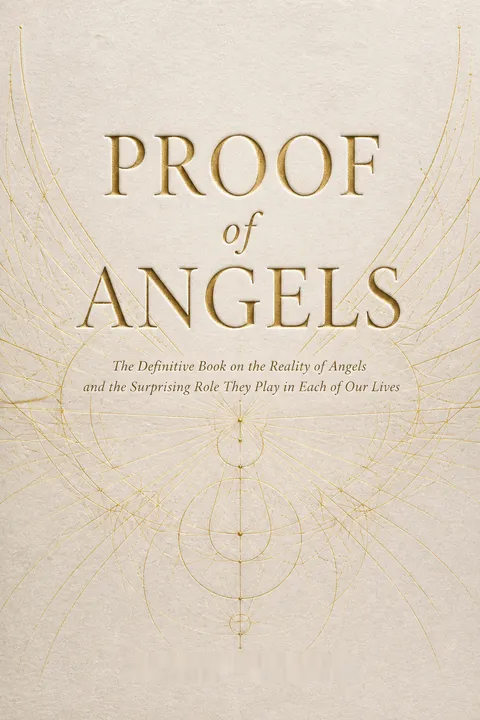

Key Takeaways
1. The "Helmet" of Materialism Obscures a Deeper Reality
Imagine: the world, changed in an instant from a place of fear and uncertainty and emptiness to a place of wonder and beauty and overwhelming numbers of beings, invisible but present all the same.
Filtered perception. The authors introduce the metaphor of a "magical, glass-like helmet" that most people wear, which filters out the spiritual world, leaving us with a perception of reality that is only half-complete. This helmet makes the world appear meaningless, unjust, and devoid of purpose, where good and bad are merely subjective words.
Moments of clarity. Sometimes, this helmet spontaneously disappears, allowing individuals to glimpse a richer, more vibrant universe teeming with invisible life and profound meaning. These moments transform one's understanding, revealing that the seemingly barren physical world is, in fact, immersed in a "whole other universe of color and light and life." The author's own experience of 9/11, witnessing the World Trade Center collapse, served as such a moment, exposing the physical world's terrifying insubstantiality and opening him to its deeper, spiritual architecture.
Beyond the surface. The book argues that the physical world, with its everyday routines and material concerns, is ultimately an "evanescent cloud," a temporary and unreliable facade. Beneath this surface lies a "deeper architecture," a true and lasting spiritual realm that angels introduce us to. This realization shifts one's perspective from a world of fleeting insignificance to one of profound, enduring reality.
2. Angels as Messengers Revealing a Twofold World
Angels—if you listen to the stories that people tell about them—can be dressed in white robes or three-piece suits. What makes them angels is not what they wear but the fact that they are spiritual beings who break into our world to tell us something.
Divine communication. The Greek root of "angel" means "messenger," and their primary role is to deliver messages from God, bridging the gap between the heavenly and earthly realms. These messages are not merely words but are embodied in the angels themselves, serving as undeniable proof of a spiritual dimension beyond our everyday perception.
Beyond human form. Angels are not human, but distinct spiritual beings, capable of appearing in myriad forms—from traditional winged figures to ordinary people, or even familiar loved ones. Their appearances are often "terrifying" in the Rilkean sense, full of awe, because they are ambassadors of a "full reality" that can overwhelm our limited human understanding. They subvert our expectations, demonstrating that reality is far "bigger and stranger than we like to tell ourselves it is."
A larger context. The core message angels convey is that our world is "twofold"—the mundane physical reality is but a "crust" over a much larger, more complex spiritual world. They introduce us to a realm where true solidity and enduring architecture are found, offering comfort and healing, and reminding us that we are not lost in a meaningless material existence.
3. Personal Encounters with the Miraculous are Real and Transformative
When someone who is the last person in the world to think he’s going to see something sees it anyhow, it delivers a certain kind of satisfaction that few other kinds of stories can give.
Unlikely witnesses. The book highlights stories of individuals like Tyler Beddoes, a pragmatic police officer, and a skeptical Yugoslav soldier, who experienced undeniable angelic encounters despite their non-religious or realist dispositions. These accounts are particularly compelling because they come from people least inclined to believe in such phenomena, lending them profound credibility.
Life-altering events. Near-death experiences (NDEs) like those of Howard Storm and Natalie Sudman, where individuals encounter overwhelming love and light, serve as powerful testaments to the spiritual world's reality. These experiences fundamentally change the individuals, often stripping away ego and earthly concerns, leaving them with a profound sense of purpose and connection.
Collective experiences. The Cokeville Elementary School bombing stands as a vivid example of a collective angelic intervention, where children reported seeing angels who gave them specific instructions and formed a protective ring around a bomb, miraculously diminishing its destructive force. Such shared experiences defy conventional explanation, demonstrating that the spiritual world can manifest in tangible, life-saving ways to groups of people.
4. Good and Evil are Tangible Forces, Not Mere Abstractions
“No,” he told me. “They’re more than that. They’re real.”
Beyond concepts. Tyler Beddoes' experiences as a police officer, particularly with horrific cases of child abuse and murder-suicide, led him to a profound realization: good and evil are not mere philosophical abstractions or human constructs, but "real" and palpable forces in the world. He felt a distinct "pure evil" presence at crime scenes, a feeling that made him physically ill.
Spiritual counterpoints. In moments of overwhelming despair, Tyler also experienced tangible manifestations of good. At the Boren murder-suicide scene, he felt the "real and plain as day" sensation of the murdered children hugging his legs, conveying a wave of love and reassurance, telling him "It's all right." This direct experience of spiritual comfort countered the pervasive evil he witnessed.
Meaning in polarity. The existence of genuine evil, as exemplified by Joe Fisher's tragic encounter with malevolent channeled entities, paradoxically affirms the reality of good. If there is a true and real world of Evil with a capital E, then there is a true and real world of Good with a capital G. This polarity imbues the world with meaning, restoring human dignity as spiritual beings in a larger, purposeful cosmos.
5. Intuition and Inner Guidance Connect Us to the Spiritual
“There was just something that told me to do it. That it was okay.”
Beyond logic. Tyler Beddoes, like many police officers, learned to trust his intuition, a "just something" that guided his critical decisions, such as using an adult defibrillator on a six-year-old child. This inner voice, which Tyler identifies as his guardian angel, provides crucial, often life-saving, directives that transcend rational thought.
Ancient wisdom. The concept of an inner guide echoes ancient traditions of the daimon or genius, a personal spirit that dispensed advice at pivotal moments. These "seemingly telepathic communications" can manifest as audible voices, strong feelings, or inexplicable impulses, often providing information the individual could not otherwise have known, as seen in the photographer who inexplicably stopped at a green light, avoiding a fatal crash.
Constant presence. The book suggests that we are constantly surrounded by invisible spiritual agencies, influencing our actions and charging us with tremendous force or weakening us. This guidance, whether from guardian angels or other benevolent entities, aims to keep us centered on our "essential self," preventing us from losing touch with who we truly are amidst life's distractions.
6. The Spiritual World Operates by Its Own Rules, Beyond Human Comprehension
God’s ways are not our ways. We don’t know.
Unpredictable manifestations. Angels and spiritual phenomena do not appear on command or adhere to human expectations of scientific reproducibility. They manifest when God wills it, often in moments of extreme need or vulnerability, but not always. This unpredictability challenges our desire for control and understanding, as seen in the book of Job, where suffering is not always alleviated.
Beyond scientific proof. The existence of angels cannot be proven by the scientific method, which demands repeatable, measurable results in the physical world. However, the authors argue that this doesn't negate their reality, pointing out that many accepted scientific concepts like electrons or gravity are also unobservable. The "proof" of angels lies in direct, personal experience, which, once felt, is undeniable to the individual.
A larger framework. The "rules" of the spiritual world are vastly different and more expansive than those of our physical dimension. To insist on explaining spiritual events solely through a materialist lens is to wear a "helmet" that filters out a whole dimension of existence. Accepting that we don't fully understand why spiritual interventions occur in some cases and not others is a crucial step towards acknowledging a world saturated with meaning, even if its logic remains divine.
7. Hope and Meaning Emerge from Acknowledging the Fullness of Reality
In the end, the good feelings I got from the Boren case, from Jenny and Lily, outweighed the bad feelings I got. What happened at the river made me go back to what I’d experienced in the Boren bedroom, what I’d experienced a million times in all kinds of different ways.
Overcoming despair. Tyler's journey, marked by profound exposure to human evil and suffering, ultimately led him from despair to a renewed sense of hope. His experiences, particularly the miraculous survival of Lily and the comforting presence of the Boren children, convinced him that despite the world's horrors, "Good is real, too."
A purposeful existence. The realization that good and evil are tangible forces, and that a spiritual world exists, imbues life with profound meaning. It suggests that our earthly lives are not random or insignificant but are part of a larger "God's plan," a test that allows us to discover our true selves. This perspective fosters an inner strength and conviction that "the world's a big place, and most likely there's a God who's running it, and I gotta trust that he knows what he's doing."
Beyond the visible. The book concludes that the story of our existence extends far beyond our linear, temporal lives. Angels, as messengers from this larger spiritual world, offer the ultimate answer to the "nightmare of existence," shattering the illusion of a meaningless world and revealing a future where "this part of the story here isn't all there is. There's more to the story."
8. The Power of Synchronicity and Unseen Connections
Everything’s significant. Everything means something.
Meaningful coincidences. The book emphasizes the concept of synchronicity, Carl Jung's term for meaningful coincidences that reveal the world is far more interconnected than we typically perceive. Jill, Jenny's sister, experienced this when her daughter, unaware of its significance, spontaneously played Sarah McLachlan's "I Will Remember You" on the piano, a song central to Jenny's tattoo and her grief for their mother.
Invisible threads. These synchronicities serve as subtle yet powerful reminders that the spiritual world is actively interwoven with our physical reality. They suggest that even in moments of profound loss and tragedy, there are unseen connections and messages that affirm the enduring presence of loved ones and the overarching significance of life's events.
A world of signs. The authors argue that the world is "saturated at every point with meaning," and that these seemingly random occurrences are clues, like those in a forensic investigation, that can "turn the whole capsized world right side up again." They inspire a "dogged, determined faith" that those we love are never truly gone, but simply in a place where we can no longer see them, yet can still feel their presence.
9. Breaking the "Helmet" Requires Openness and Courage
It’s time for us to break our helmets—those helmets that feel, when we are wearing them, that they are not filtering anything out, but which are in fact filtering out a whole other dimension of existence.
Challenging dogma. The book calls for a courageous shift in mindset, urging readers to question the prevailing materialist model of reality that dismisses spiritual experiences as "nutty and impossible." This "helmet" of materialism, though seemingly transparent, actively filters out a vast dimension of existence, preventing us from seeing the "whole world, not just half of it."
Embracing the unknown. Acknowledging the reality of angels and the spiritual world requires an openness to truths that may contradict established beliefs, much like scientists once refused to accept meteors because "rocks don't fall out of the sky." This openness is not a surrender to ignorance but an embrace of a more complex, multifaceted reality that science itself, at its cutting edge, is beginning to reveal.
A common language. The ultimate goal is to foster a "common, truly across-all-borders way of speaking" about spiritual experiences, moving beyond sectarian divisions and intellectual dismissals. By recognizing that all faiths, in their diverse ways, address a "real place"—the world above this one—we can collectively reclaim a sense of shared spiritual territory and confront the profound uncertainties of our time with renewed hope and understanding.
People Also Read

Download PDF
Download EPUB
.epub digital book format is ideal for reading ebooks on phones, tablets, and e-readers.








































