
Key Takeaways
1. Geography is the Master Architect of Nations
The land on which we live has always shaped us.
Fundamental influence. Geography is not merely a backdrop; it is an active force that has profoundly influenced the course of history, wars, politics, and societies across the globe. From ancient tribes seeking high ground for defense to modern governments making strategic decisions, the physical landscape—including mountains, rivers, deserts, and oceans—often dictates the choices available to nations. This enduring truth means that understanding a country's geography is key to understanding its past, present, and future.
Bound by location. Nations are, in essence, prisoners of their geography, constrained by their physical location and the natural features surrounding them. These geographical realities determine:
- Defensibility: How easily a country can be attacked or protected.
- Trade routes: Access to navigable rivers or open seas.
- Resource availability: Presence of oil, gas, minerals, or fertile land.
- Climate: Conditions for farming, population density, and daily life.
Even with technological advancements, these foundational geographical elements remain critical to a nation's development and international relations.
Enduring impact. While technology like the internet and air travel helps overcome some barriers, the core influence of geography persists. For instance, Russia's desire for warm-water ports or China's need for natural buffers like the Himalayas are timeless geographical imperatives. Understanding these deep-seated geographical influences provides a crucial lens through which to interpret global events and the complex interactions between countries.
2. Natural Defenses and Resources Dictate Power
Understand the earth’s geography, and you’re well on the way to understanding the events taking place in the world around us.
Strategic advantages. Natural defenses like mountain ranges, vast deserts, and expansive oceans provide inherent protection, allowing nations to develop with greater security. China, for example, is historically protected by the Gobi Desert to the north and the mighty Himalayas to the west, which helped it build a unified nation. Conversely, flat, open plains, like Russia's North European Plain, represent vulnerable points that leaders have historically sought to control or defend through expansion.
Wealth from the land. Beyond defense, geography determines a nation's access to vital natural resources, which are often the bedrock of economic power and political influence.
- Russia: Rich in oil and gas, particularly in Siberia, making it a major energy supplier to Europe.
- USA: Abundant in oil, gas, and fertile land, contributing to its self-sufficiency and economic strength.
- Africa: A treasure trove of gemstones, gold, silver, and precious metals, though often exploited by foreign powers.
These resources provide wealth, but also create competition and conflict, as nations vie for control over valuable deposits.
Shaping national character. The presence or absence of these geographical features not only dictates a nation's power but also shapes its strategic outlook and historical trajectory. Countries with strong natural defenses can focus inward or project power outward, while those with vulnerabilities often prioritize territorial expansion or alliances for security. The distribution of resources, meanwhile, fuels trade, industrialization, and geopolitical rivalries, making geography a constant factor in the global balance of power.
3. The Quest for Water Access Fuels Conflict and Trade
To be a global power, Russia needs to be able to move its navy freely.
Lifeline for trade. Access to open, unfrozen waterways is paramount for international trade and naval power, making it a constant driver of geopolitical strategy. Water transportation is significantly cheaper than land or air, enabling efficient movement of goods and fostering economic growth. Nations with numerous natural harbors and navigable rivers, like many in Europe, gained a head start in trade and industrialization, while those with few, like Africa, faced early limitations.
Strategic choke points. Control over key maritime passages and warm-water ports is a critical national interest, often leading to disputes and conflicts.
- Russia's desire: Its northern ports freeze for months, driving its historical quest for warm-water access, exemplified by its actions in Crimea to secure Sevastopol on the Black Sea.
- China's naval expansion: To protect its global trade routes and territorial claims, China is rapidly building its navy and asserting control over the South China Sea, a vital shipping lane.
- Panama Canal: A human-made marvel that drastically cuts travel time between the Atlantic and Pacific, highlighting the economic value of efficient water routes.
These examples underscore how crucial water access is for both economic prosperity and military projection.
Rivers as arteries. Inland river systems also play a vital role, connecting regions, facilitating internal trade, and sometimes becoming sources of tension. The Mississippi basin in the USA, with its vast network of navigable rivers, was crucial for the country's unification and economic development. Conversely, rivers with numerous waterfalls, like many in Africa, hinder transportation and trade between communities. Disputes over shared rivers, such as the Nile between Ethiopia and Egypt, demonstrate how water resources can become flashpoints for conflict.
4. Artificial Borders Create Lasting Instability
Many of the borders across the Middle East are not very old.
Colonial legacy. Many of the world's most volatile regions today bear the scars of artificial borders drawn by external powers, often with little regard for existing geographical, ethnic, or religious realities. European colonial powers, in their scramble for resources and territory, carved up continents like Africa and the Middle East, imposing arbitrary lines on maps. This practice ignored established communities, traditional trade routes, and natural divisions, forcing disparate groups to coexist within newly invented nations.
Seeds of conflict. These imposed borders frequently grouped hostile communities together or split cohesive ethnic groups, laying the groundwork for future instability, civil wars, and ongoing disputes.
- Middle East: The Sykes-Picot Agreement after WWI divided the Ottoman Empire, creating countries like Iraq, Syria, and Jordan, which forced diverse populations (Kurds, Sunnis, Shias) into single states, leading to persistent conflict.
- Africa: European powers drew straight lines across the continent, separating communities and creating nations like Libya and Sudan with deep internal divisions that continue to fuel unrest and violence.
The lack of organic development for these national identities meant that loyalty to the state often remained weak, overshadowed by tribal or sectarian allegiances.
Enduring challenges. Even after colonial powers withdrew, these artificial borders largely remained, leaving newly independent nations to grapple with the complex legacy of imposed geography. The struggle to forge a unified national identity among diverse, often antagonistic, groups continues to plague many countries in Africa and the Middle East. This historical meddling with maps highlights how geographical decisions, even those made far from the land itself, can have profound and long-lasting consequences for peace and stability.
5. Climate and Terrain Govern Human Settlement and Prosperity
The climate in Russia is very cold during winter.
Environmental constraints. Climate and terrain are fundamental determinants of where human populations settle and how societies develop economically. Regions with harsh climates, like Russia's freezing winters or Australia's scorching deserts, limit population density and make farming difficult, concentrating people in more hospitable areas. Conversely, mild climates with ample rainfall and fertile land, such as Western Europe's coastal plains, have historically supported large populations and agricultural surpluses, fostering early development.
Impact on development. The suitability of land for farming directly influences a society's ability to feed itself and generate wealth, impacting its trajectory towards industrialization and modernization.
- Northwest Europe: Blessed with the Gulf Stream, fertile coastal plains, and navigable rivers, it had abundant food and resources, fueling the Industrial Revolution.
- Africa: Many regions suffer from poor soil, drought, and challenging climates, making farming difficult and hindering economic progress.
- Japan: Limited arable land due to mountains forced it to become a seafaring nation, relying on the sea for food and trade.
These geographical factors create significant disparities in prosperity and development across continents.
Population distribution. The interplay of climate and terrain also dictates where people choose to live, often leading to concentrated populations in specific "hotspots." In Canada, the vast, inhospitable Canadian Shield pushes most of its population close to the US border. Similarly, Australia's interior desert drives most people to live on the eastern and southeastern coasts. This uneven distribution of population can create challenges for internal connectivity, infrastructure development, and equitable resource allocation within a country.
6. Resource Scarcity and Abundance Drive Global Rivalries
The Middle East is rich in natural resources—oil and gas—which are a source of huge wealth.
Engines of wealth. The uneven distribution of natural resources across the globe is a primary driver of national wealth, economic power, and international competition. Countries blessed with abundant resources like oil, gas, and minerals gain significant economic leverage, allowing them to fund development, build infrastructure, and exert influence on the world stage. Russia's vast oil and gas reserves, for example, provide it with immense wealth and a tool for geopolitical influence over European energy markets.
Sources of conflict. While resources bring wealth, they also frequently become flashpoints for rivalry, disputes, and even warfare, both internally and internationally.
- Middle East: Its immense oil and gas reserves have made it a region of strategic importance, attracting foreign intervention and fueling rivalries between regional powers like Saudi Arabia and Iran. Disputes over how to share oil wealth can also cause internal strife, as seen in Iraq.
- Africa: Rich in minerals and oil, its resources have historically been plundered by foreign powers and continue to be a source of competition and conflict among various groups.
The value of these resources often outweighs the cost of conflict for those seeking control.
Strategic dependencies. Nations lacking critical resources often become dependent on others, shaping their foreign policy and alliances. Japan, with few natural resources, is one of the world's largest importers of natural gas and oil, making the security of sea lanes vital to its economy. This dependency can create vulnerabilities, prompting countries to seek alternative suppliers or invest in new technologies, such as Europe's push for LNG imports to reduce reliance on Russian gas. The global scramble for resources remains a constant feature of international relations.
7. Technology Challenges, But Doesn't Conquer, Geography
Today, technology does help us overcome some of the barriers of geography.
Mitigating barriers. Technology has undeniably advanced humanity's ability to overcome many geographical obstacles that once seemed insurmountable. Modern innovations allow us to connect across vast distances, traverse difficult terrain, and access previously unreachable resources.
- Transportation: Air travel allows us to fly over mountains, and modern ports can be built on smooth coastlines that once hindered trade.
- Communication: The internet connects people globally, reducing the isolation caused by physical separation.
- Resource extraction: Advanced drilling techniques enable the extraction of oil and gas from challenging environments like the Arctic or deep offshore reserves.
These advancements have reshaped trade, communication, and military logistics, making the world feel smaller and more interconnected.
Enduring constraints. Despite these breakthroughs, technology does not entirely conquer geography; rather, it alters the nature of its influence. Fundamental geographical realities, such as climate, natural defenses, and the distribution of resources, continue to exert significant power. Russia's ports still freeze, and the North European Plain remains a strategic vulnerability, regardless of modern weaponry. The cost and effort required to overcome geographical challenges, even with advanced technology, can be immense.
New challenges. In some cases, technology even creates new geographical challenges or exacerbates existing ones. Climate change, driven partly by industrial technology, is altering global geography, leading to rising sea levels, extreme weather, and melting Arctic ice, which in turn opens new shipping routes and resource competition. While technology offers solutions, it also introduces complexities, reminding us that our relationship with the planet's physical landscape is a dynamic and ongoing negotiation, not a definitive conquest.
8. Global Superpowers Leverage Geography for Dominance
Today the USA is a global superpower.
Strategic positioning. Global superpowers achieve and maintain their dominance by effectively leveraging their geographical advantages and projecting power across the world. The USA, for instance, is uniquely blessed by its geography: protected by oceans, deserts, and the Canadian Shield, it could focus on internal development and then outward expansion. This secure homeland allowed it to build a powerful economy and military without constant threats to its borders.
Global reach. A key aspect of superpower status is the ability to project military and economic influence far beyond national borders, often through a network of strategic bases and control over vital sea lanes.
- USA's global network: After WWII, the USA established military bases across the Pacific, North Atlantic, and Mediterranean, enabling it to dominate sea lanes and participate in alliances like NATO, where it provides the greatest firepower.
- China's rising navy: As China's manufacturing power grows, it is rapidly building its navy to protect its global trade interests and territorial claims, particularly in the South China Sea, aspiring to rival the USA's naval reach.
These capabilities allow superpowers to intervene in disputes, protect allies, and secure resources worldwide.
Economic and military might. The combination of a secure homeland, abundant resources, and the ability to project power globally forms the bedrock of superpower status. The USA's control of its vast territory from coast to coast, facilitated by the Mississippi River network, allowed for rapid economic growth and unification. This economic strength, coupled with strategic military deployment, enables superpowers to shape international relations and maintain their influence, constantly adapting to new geopolitical landscapes and emerging rivals.
9. The Arctic and Space: New Frontiers of Geopolitical Contest
Humans have always been fascinated by space—it calls out to our imagination—and now we are able to explore it in a way our ancestors could only dream of.
Melting frontiers. The Arctic, once an impenetrable icy wilderness, is rapidly becoming a new frontier for geopolitical competition due to climate change. As sea ice melts, new shipping routes like the Northwest Passage open up, offering shorter trade routes between Europe and Asia. More importantly, vast, untapped natural resources—including oil, gas, gold, and other minerals—are becoming accessible, sparking a "rush for riches" among Arctic nations.
Claims and rivalries. The potential wealth and strategic importance of the Arctic have intensified territorial claims and military buildup among the eight Arctic Council nations.
- Russia's assertiveness: It is building an Arctic army, new military bases, and has a large fleet of icebreakers, asserting its claim over areas like the Lomonosov Ridge, which it considers an extension of its continental shelf.
- Other nations: Canada, the USA, Norway, and Denmark also have competing claims and are increasing their presence, leading to growing tensions over who owns what in this resource-rich region.
The future of the Arctic is a complex mix of environmental concerns and geopolitical maneuvering.
The ultimate frontier. Beyond Earth, space represents the ultimate new frontier, attracting the attention of global powers for its strategic and economic potential. Countries like the USA, Russia, and China are leading the race for space, deploying satellites, establishing space stations, and exploring celestial bodies. This expansion into space, much like the historical scramble for earthly territories, raises questions of ownership, resource control, and military advantage, suggesting that geopolitical contests may soon extend far beyond our planet.
10. Shared Geographical Challenges Demand Global Cooperation
But this is the only planet we have, and we all have to live on it together.
Interconnected fate. Despite national rivalries and geographical advantages, many of the most pressing challenges facing humanity are global in nature, transcending borders and demanding collective action. Issues like climate change, pandemics, and resource scarcity affect all nations, regardless of their individual geographical blessings or curses. The melting Arctic ice, for example, is not just a regional issue but has global consequences for sea levels, weather patterns, and ecosystems, impacting the entire planet.
Necessity of collaboration. To effectively address these shared geographical and environmental challenges, international cooperation is not merely desirable but essential. The Arctic nations, despite their competing claims, will need to collaborate on issues like search and rescue, environmental protection, and managing new shipping lanes to prevent disasters. Similarly, the European Union, born from centuries of conflict, represents an experiment in cooperation to achieve peace and economic stability, demonstrating the potential for nations to overcome historical divisions.
Future outlook. The future will bring new and intensified geographical challenges, from rising sea levels threatening coastal cities to increased droughts and floods altering landscapes and displacing populations. These changes will likely lead to greater competition for diminishing resources. However, the recognition that "this is the only planet we have" underscores the fundamental need for nations to work together, sharing knowledge, resources, and responsibilities, to ensure a sustainable and peaceful future for all.
Review Summary
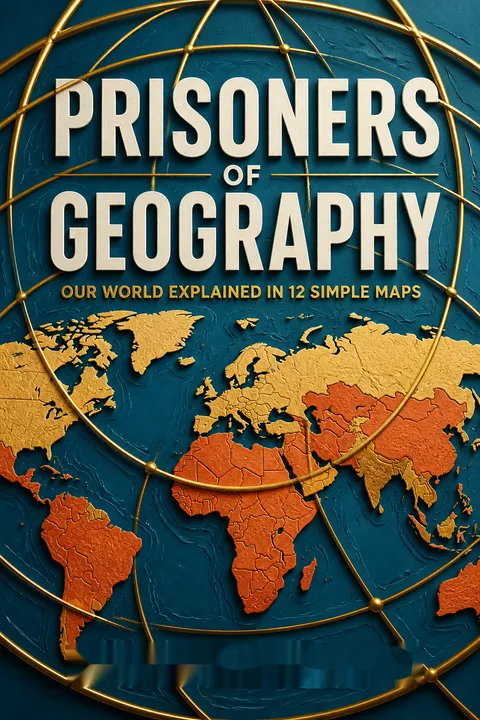
Prisoners of Geography, Children's Ed. receives overwhelmingly positive reviews (4.41/5), praised for making complex geopolitical concepts accessible through beautiful illustrations and narrative storytelling. Readers appreciate how it explains geography's influence on history, politics, and conflicts for all ages, not just children. The colorful maps and infographics engage middle-grade readers (ages 9-13), though some note it contains dense information. Critics mention Western bias and oversimplification of colonial history. Many adults enjoyed learning alongside children, with several planning to read the original adult version.
People Also Read





About the Author
Other books by Tim Marshall



Download PDF
Download EPUB
.epub digital book format is ideal for reading ebooks on phones, tablets, and e-readers.








































