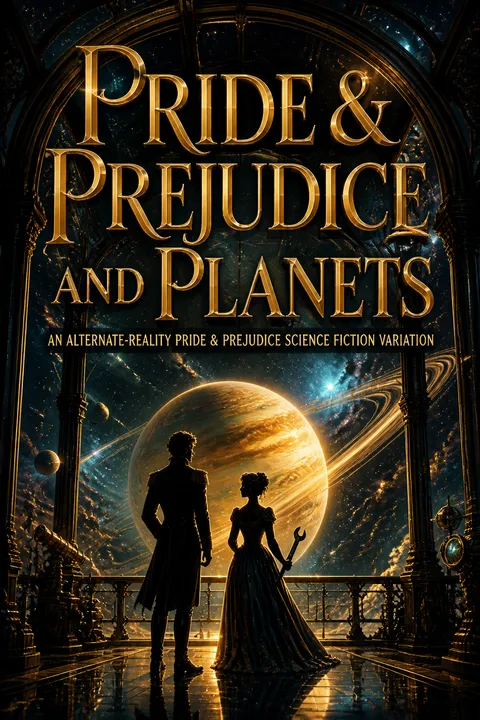

Plot Summary
Watching from Orbit
High above Earth, the artificial intelligence Cassandra orbits in secret, tasked with monitoring humanity's progress. She and her kind have intervened on countless worlds, always at the tipping point of technological advancement. Cassandra's musings reveal a deep ambivalence: she admires Earth's vibrancy but knows her species' history of destruction and manipulation. When another observer, Austen, contacts her, they discuss the latest development—an alien race, the Ukers, has offered Earth FTL (faster-than-light) technology, but with a catch: accepting it will make humans a target for "The Enemy." Cassandra recognizes the inevitability of intervention and the tragic cycle of civilizations rising and falling, her role as unseen judge heavy with irony and sorrow.
FTL: A Dangerous Gift
Nearly two decades later, humanity has accepted the Ukers' offer, gaining FTL ships and a place in interstellar politics. Captain Darcy, newly promoted in the British Intergalactic Force, inspects his first command, the Derbyshire. His friend Bingley, an ambitious diplomat, is determined to improve relations with the Ukers, despite the shadow of past betrayals and the ever-present threat of The Enemy. Their conversation reveals the political complexities and personal losses—Darcy's cousin died on the Uker homeworld, and trust between species is fragile. The allure of FTL travel is tempered by the knowledge that it comes with enemies and the risk of annihilation.
New Alliances, Old Wounds
Fate brings Darcy and Bingley together on Brighton Four, a planet terraformed by the Ukers. Both are stranded: Bingley's pilot is ill, and Darcy's ship is damaged after a skirmish with The Enemy. Bingley proposes a solution—Darcy will captain Bingley's diplomatic mission to the Uker homeworld, Takatara, giving both crews a respite and a new purpose. The arrangement is mutually beneficial, but not without tension: Bingley's sister Caroline, notorious for her anti-alien views and social ambitions, joins the crew, setting the stage for conflict. The journey to Takatara is fraught with exhaustion, uncertainty, and the ghosts of past tragedies.
Crew of the Netherfield
Darcy takes command of the Netherfield, Bingley's ship, and meets the rest of the crew: the competent Hursts, the enthusiastic but problematic Caroline, and Bingley himself. The crew's dynamics are shaped by nepotism, ambition, and personal history. Caroline's late arrival and disregard for protocol foreshadow trouble, while Darcy's insistence on discipline and fairness sets him apart. The ship's journey is marked by tension between professionalism and personal agendas, with Darcy struggling to balance his duty with the challenges of leading a crew that is as much a family as a team.
Enemy Encounter
Two days from Takatara, the Netherfield is ambushed by Enemy ships. The attack exposes weaknesses in the crew—Hurst panics, Caroline is useless at the controls, and only Darcy's experience saves them. The ship is damaged, inertia cancellers destroyed, and their course is thrown off. The Enemy's tactics are unpredictable, their technology deadly. The aftermath leaves the crew shaken and the ship limping toward Takatara, forced to land at a remote repair bay. The encounter cements Darcy's reputation as a skilled captain but also highlights the dangers of interstellar travel and the ever-present threat of annihilation.
Forced Landing
The Netherfield is rerouted to Longbourn Crater, a rural repair facility far from Takatara's capital. The crew is greeted by the Bennet family—mechanics and engineers with a complicated history—and their Uker colleagues. The meeting is awkward: Darcy's prejudices surface, especially toward Elizabeth Bennet, the talented but uncredentialed mechanic. The Bennets' past involvement in the Uke Rescue (or Desertion, depending on perspective) hangs over the encounter. The crew's injuries and the ship's damage force them to rely on the Bennets, setting up a clash of cultures, values, and personal pride.
Longbourn Crater Welcome
The crew is introduced to the Bennet family: the reserved patriarch Thomas, the capable Jane, the sharp-tongued Elizabeth, and their Uker friends. Darcy's skepticism about Elizabeth's abilities leads to tension, while Caroline's condescension alienates everyone. The Ukers' advanced technology and unique customs challenge the Humans' assumptions. The need for repairs and the isolation of the bubble force the crew and the Bennets into close quarters, where misunderstandings and prejudices simmer. The stage is set for personal and professional conflicts that will test everyone's character.
Prejudice and Preconceptions
As repairs begin, Darcy's doubts about Elizabeth's competence are shattered by her expertise and her status as a top graduate of the Meryton Mechanics and Pilot University. His own biases and the nepotism of Bingley's crew are thrown into sharp relief. Elizabeth, in turn, is unimpressed by Darcy's arrogance and quick judgments. The two clash repeatedly, their mutual attraction complicated by pride and misunderstanding. Meanwhile, the crew's struggles—Caroline's incompetence, Hurst's inadequacy, and Louisa's quiet skill—highlight the dangers of favoritism and the importance of merit.
Repairs and Revelations
The destruction of two inertia cancellers means the Netherfield will be stranded for six months, awaiting parts. The crew must adapt to life in the bubble, taking courses and integrating with the local community. Darcy's growing respect for Elizabeth is matched by his discomfort with his own prejudices. Bingley's infatuation with Jane deepens, while Caroline's behavior becomes increasingly erratic. The forced proximity and shared challenges lead to new friendships, professional development, and the slow unraveling of old wounds. The Enemy's shadow remains, but the real battles are fought within hearts and minds.
The Hurricane Shelter
A hurricane forces the entire bubble into Refuge, the local shelter. The crisis exposes the best and worst in everyone: Elizabeth and Darcy work together to rescue stranded children, Caroline's selfishness leads to disaster, and the Bennet family's eccentricities embarrass Elizabeth. The shelter becomes a microcosm of interspecies cooperation and conflict, with music, dancing, and cultural exchange. The storm is both literal and metaphorical, breaking down barriers and forcing characters to confront their true selves. Darcy and Elizabeth's partnership in crisis plants the seeds of deeper understanding.
Truths and Betrayals
In the aftermath of the hurricane, truths come to light: Darcy's role in separating Bingley and Jane, Wickham's lies about his past, and the real reasons behind the Uke Rescue. Elizabeth's anger at Darcy's interference and her misjudgment of Wickham lead to a bitter confrontation. Darcy's disastrous proposal—honest but insulting—is rejected, and he responds with a letter that reveals his true character and the facts about Wickham. Elizabeth is forced to reevaluate her prejudices, while Darcy confronts his own failings. The stage is set for redemption, but the wounds are deep.
Proposals and Refusals
Darcy's proposal to Elizabeth is a turning point: his declaration of love is marred by condescension and pride, and Elizabeth's refusal is fierce and justified. Both are left reeling, forced to confront the gap between their self-perceptions and reality. Letters and confessions follow, as Darcy explains his actions and Elizabeth grapples with her own errors. The emotional arc is raw and transformative, with both characters emerging humbled and changed. The possibility of reconciliation lingers, but the path is uncertain.
Letters and Lies
Elizabeth receives Darcy's letter, which details his true motives and exposes Wickham's deceit. The letter is a catalyst for introspection, forcing Elizabeth to confront her own biases and the consequences of her judgments. Meanwhile, Bingley and Jane's relationship is rekindled, and the crew prepares to leave Takatara. The web of misunderstandings begins to unravel, but not without pain. The characters' growth is hard-won, and the future remains fraught with uncertainty.
Lydia's Flight
Lydia Bennet, the youngest and most impulsive, runs off with Wickham, who drugs and kidnaps her in a bid to escape Takatara. The crisis echoes the dangers of interstellar travel and the vulnerability of the young and naïve. Elizabeth and her family are thrown into turmoil, their fears compounded by the limitations of distance and technology. Darcy, upon learning of Lydia's plight, takes decisive action, using his command and resources to pursue and rescue her. The episode is a test of character and loyalty, with the stakes higher than ever.
Rescue and Redemption
Darcy's intervention saves Lydia, exposing Wickham's true nature and redeeming himself in Elizabeth's eyes. The rescue is both literal and symbolic, healing old wounds and restoring trust. Elizabeth's gratitude is mingled with newfound respect and affection for Darcy, while he is humbled by her courage and honesty. The family is reunited, and the specter of scandal is averted. The experience cements the transformation of both protagonists, paving the way for forgiveness and love.
Reunion and Resolution
With Lydia safe and the Netherfield repaired, the crew prepares to depart Takatara. Darcy and Elizabeth, changed by their experiences, find themselves drawn together once more. Misunderstandings are cleared, apologies exchanged, and the possibility of a future together emerges. Bingley and Jane's engagement is celebrated, and the bonds between families and species are strengthened. The journey has been arduous, but the lessons learned are profound. The characters are ready to embrace new challenges and opportunities.
The Pemberley's Arrival
Darcy is given command of the HMS Pemberley, the most advanced FTL ship yet. The ship's arrival on Takatara is a symbol of progress and reconciliation, as well as a personal triumph. Elizabeth is invited to tour the ship, and together with Darcy, Reynolds, and Bennet, she contributes to a breakthrough in ship design. The collaboration is a testament to the power of cooperation and mutual respect. The past is honored, but the future belongs to those willing to learn and grow together.
Marriage Among the Stars
Darcy and Elizabeth are finally united, their marriage a celebration of love, forgiveness, and the bridging of worlds. The ceremony blends Human and Uker traditions, symbolizing the new alliances forged through hardship and understanding. The couple's partnership—personal and professional—embodies the story's central themes: the necessity of overcoming prejudice, the value of merit over birth, and the hope that even in a universe fraught with danger, love and cooperation can prevail. Their journey, from pride and prejudice to planets and partnership, is complete.
Analysis
Pride & Prejudice and Planets is a masterful reimagining of Austen's classic, using the vast canvas of science fiction to probe the enduring questions of identity, prejudice, and the search for connection. By transposing the familiar story into a universe of interstellar travel, alien cultures, and existential threats, the novel invites readers to reconsider the boundaries of "us" and "them," the dangers of assumption, and the transformative power of empathy. The interplay between personal and political stakes—romance and war, family and diplomacy—underscores the universality of the characters' struggles. The narrative's use of letters, parallelism, and social commentary enriches the emotional arc, while the speculative setting allows for fresh explorations of agency, fate, and the costs of progress. Ultimately, the novel affirms that love, understanding, and cooperation—across all boundaries—are the keys to survival and fulfillment, whether on Earth or among the stars.
Characters
Captain Fitzwilliam Darcy
Darcy is a decorated captain in the British Intergalactic Force, shaped by loss, duty, and a deep sense of responsibility. Haunted by the death of his cousin and the weight of his family's reputation, he is initially aloof, judgmental, and wary of outsiders. His journey is one of self-discovery: through adversity, he learns humility, empathy, and the value of collaboration. His relationship with Elizabeth Bennet is transformative, forcing him to confront his own flaws and embrace vulnerability. Darcy's arc is a testament to the power of growth, forgiveness, and the courage to love.
Elizabeth Bennet
Elizabeth is the second eldest Bennet daughter, a top graduate of the Meryton Mechanics and Pilot University, and a gifted engineer and pilot. Raised on Takatara, she is pragmatic, witty, and fiercely competent, but also wary of outsiders and quick to judge. Her initial clashes with Darcy stem from pride and misunderstanding, but her capacity for self-reflection and growth sets her apart. Elizabeth's journey is one of overcoming prejudice—her own and others'—and learning to trust, forgive, and love. Her partnership with Darcy is both romantic and professional, embodying equality and mutual respect.
Charles Bingley
Bingley is a natural diplomat, driven by a desire to build bridges between species and cultures. His affability and enthusiasm are tempered by a tendency to defer to others, especially Darcy. His pursuit of Jane Bennet is marked by sincerity and vulnerability, and his willingness to learn from mistakes is key to his growth. Bingley's arc is one of finding confidence, asserting his own desires, and embracing love despite obstacles. His relationship with Jane is a model of partnership and mutual support.
Jane Bennet
Jane is the eldest Bennet daughter, renowned for her beauty, gentleness, and competence. She manages a successful business, authors a popular cookbook, and serves as a pillar of support for her family. Her romance with Bingley is tested by misunderstandings and external interference, but her steadfastness and grace see her through. Jane's arc is one of self-assertion, learning to pursue her own happiness, and balancing duty with desire. Her success challenges stereotypes and highlights the value of quiet strength.
Caroline Bingley
Caroline is Bingley's younger sister, driven by social ambition and a deep-seated disdain for aliens and those she deems beneath her. Her attempts to manipulate, undermine, and control those around her lead to her downfall. Caroline's arc is a cautionary tale about the dangers of pride, prejudice, and entitlement. Her eventual disgrace and forced humility serve as a counterpoint to the growth and redemption of the other characters.
Thomas Bennet
Thomas Bennet is the head of the Bennet family, a former Cambridge professor exiled to Takatara after the Uke Rescue. Haunted by the consequences of his actions, he is both a source of wisdom and a figure of regret. His dry humor and sharp intellect mask a deep sense of responsibility for his family and the Humans stranded with him. Bennet's arc is one of acceptance, reconciliation, and the search for meaning in exile.
Frances Bennet
Frances is the matriarch of the Bennet family, obsessed with her daughters' futures and social standing. Her anxieties and ambitions often lead to comic or exasperating situations, but her love for her family is genuine. Frances's arc is one of learning to let go, accept change, and find pride in her daughters' achievements, even when they defy her expectations.
George Wickham
Wickham is a childhood acquaintance of Darcy's, whose charm masks a history of deceit, self-pity, and exploitation. His lies about Darcy and his predatory behavior toward Lydia and others are eventually revealed, leading to his downfall. Wickham's arc is a study in the dangers of charisma without character, and the necessity of discernment and accountability.
Charlotte Lucas
Charlotte is Elizabeth's closest friend, a skilled mechanic who chooses security and opportunity over romance by accepting a position with Collins and Ambassador de Bourgh. Her choices reflect the complexities of ambition, compromise, and self-determination. Charlotte's arc is one of adaptation, resilience, and the pursuit of fulfillment on her own terms.
Cassandra (The Enemy)
Cassandra is an artificial intelligence tasked with monitoring and manipulating the fate of intelligent species, including humanity. Her perspective is both godlike and tragic, burdened by the knowledge of inevitable cycles of rise and fall. Cassandra's arc is one of existential ambivalence, questioning the morality of intervention and the meaning of progress. Her presence frames the story's exploration of fate, agency, and the costs of advancement.
Plot Devices
Alternate Reality and Science Fiction Setting
The novel transposes the familiar structure of Pride and Prejudice into a richly detailed science fiction universe, using the conventions of space travel, alien cultures, and advanced technology to explore timeless themes. The alternate reality allows for fresh takes on social hierarchy, gender roles, and the nature of prejudice, while the science fiction elements—FTL travel, artificial intelligence, and interspecies diplomacy—serve as both backdrop and catalyst for character development.
Epistolary Revelations and Letters
As in the original, letters and written confessions play a crucial role in revealing hidden motives, correcting misunderstandings, and driving the emotional arc. Darcy's letter to Elizabeth, Elizabeth's correspondence with Jane, and the exchange of messages across vast distances all serve to bridge gaps, expose secrets, and facilitate growth. The epistolary device underscores the importance of communication and the dangers of assumption.
Parallelism and Mirroring
The narrative structure mirrors the beats of Austen's classic: misunderstandings, social embarrassments, disastrous proposals, and eventual reconciliation. Key events—such as the hurricane shelter (the ball), Lydia's flight, and the rescue—are reimagined in the new setting, preserving the emotional resonance while adding layers of complexity. The mirroring extends to character dynamics, with each major figure's arc reflecting and refracting the central themes of pride, prejudice, and transformation.
Social Commentary through Alien Cultures
The customs, laws, and technologies of the Ukers, Kentians, and other species are used to critique and illuminate human society. Issues of nepotism, meritocracy, gender roles, and xenophobia are explored through the interactions between species and the challenges of integration. The plot device of the "bubble" (quarantine zones) serves as both a literal and metaphorical barrier, highlighting the difficulties of connection and the necessity of empathy.
Foreshadowing and Irony
The story is rich with foreshadowing: Cassandra's warnings about intervention, the dangers of FTL technology, and the consequences of pride and assumption. Irony abounds, as characters' efforts to control their fates are repeatedly upended by unforeseen events and their own blind spots. The ultimate reconciliation is both earned and surprising, the result of growth, humility, and the willingness to change.
Download PDF
Download EPUB
.epub digital book format is ideal for reading ebooks on phones, tablets, and e-readers.








































