
Plot Summary
Dolls and Darkness Return
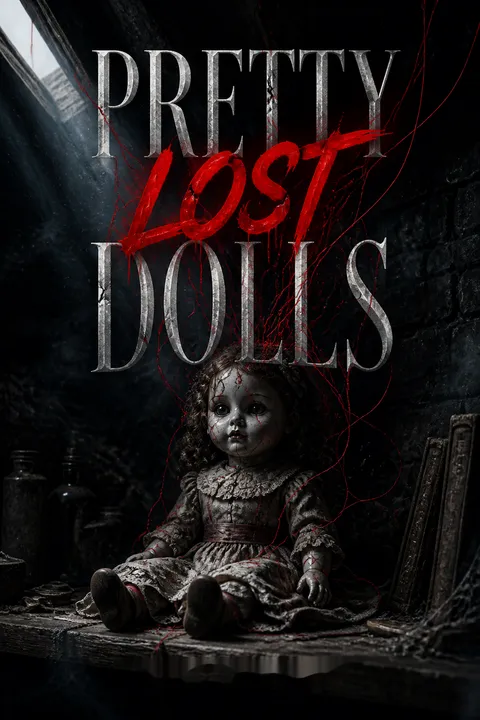
Jade Phillips, now a hardened detective, is dragged back into the nightmare she once escaped. Benny, her childhood captor and tormentor, has recaptured her, determined to reclaim his "dirty little doll." The story opens with Jade awakening in a cell, the familiar terror and claustrophobia flooding back. Benny's obsession is undiminished, his madness sharpened by years of longing and loss. The cell is both a physical and psychological prison, and Jade's return signals the start of a new, more dangerous game. The emotional weight of her past, the guilt over her sister Macy, and the horror of Benny's love set the stage for a harrowing journey through trauma, survival, and the twisted bonds that bind captor and captive.
Benny's Broken Childhood
Benny's psyche is shaped by a childhood steeped in abuse and perversion. His mother, a dollmaker obsessed with perfection, and his father, a violent, predatory police officer, create a home where pain and love are indistinguishable. Benny witnesses his sister Bethany's suffering and eventual death at the hands of their parents, internalizing the lesson that love is control and punishment. The trauma warps his sense of self and others, fueling his later crimes. These flashbacks provide insight into Benny's compulsions, his fixation on dolls, and his inability to distinguish affection from possession. The past is not just backstory—it's the engine of the present horror, and every act of violence is a twisted echo of Benny's own victimization.
Jade's Nightmare Revisited
Jade, no longer the helpless girl Benny once controlled, fights to maintain her composure and agency. She profiles Benny, using her detective skills to analyze his weaknesses and manipulate his emotions. The cell is a battleground of wills, with Jade determined to protect her sister Macy and herself. Memories of her previous captivity haunt her, but so does the guilt of leaving Macy behind. Jade's internal struggle is as fierce as her external one—she must balance fear, anger, and the need to outsmart Benny. Her transformation from victim to survivor is central, and her resolve to escape, save Macy, and end Benny's reign of terror drives the narrative forward.
Sisterhood in Chains
Macy, Jade's younger sister, is both victim and accomplice. Left behind when Jade first escaped, Macy has been warped by years under Benny's control. She oscillates between childlike innocence and chilling cruelty, her mind fractured by trauma and manipulation. The sisters' relationship is fraught with guilt, longing, and the desperate hope for redemption. Jade's mission is not just to escape, but to rescue Macy from Benny's psychological grip. The emotional stakes are heightened by the realization that Macy may be too far gone, her identity subsumed by the roles Benny has forced upon her. Their bond is a lifeline and a liability, complicating every attempt at freedom.
The Monster's Obsession
Benny's fixation on Jade is both romantic and monstrous. He sees her as the perfect doll—beautiful, obedient, and his alone. His "love" manifests as control, sexual violence, and psychological torment. Benny's internal monologue reveals a man at war with himself, desperate for connection but capable only of domination. His attempts to recreate the family he lost with Bethany are doomed by his inability to see others as anything but extensions of his own need. The narrative delves into the mind of a predator, exposing the thin line between longing and destruction. Benny's obsession is the story's dark heart, propelling every act of cruelty and every desperate bid for escape.
Detective and the Damaged
Dillon, Jade's partner and lover, is relentless in his search for her. His love is fierce, protective, and at times, blinding. The investigation into Jade's disappearance becomes personal, with Dillon defying orders and risking everything to bring her home. His own trauma—losing a previous partner to violence—fuels his determination. Dillon's chapters provide a counterpoint to the darkness of Benny's world, offering hope, loyalty, and the possibility of healing. His relationship with Jade is tested by distance, danger, and the scars of her captivity, but it also becomes a source of strength for them both.
Bo's Fate and Betrayal
Bo, Jade's ex-fiancé, is another casualty of Benny's twisted games. Captured and brutalized, Bo is forced into humiliating and violent scenarios, often at Macy's hands. His presence is a reminder of the life Jade lost and the people hurt by her entanglement with Benny. Bo's suffering is both physical and psychological, and his eventual death at Macy's hands is a devastating turning point. The scene is a crucible for Jade, forcing her to confront the limits of her ability to save others and the depth of Macy's corruption. Bo's fate underscores the story's central theme: survival often comes at a terrible cost.
Macy's Madness Unleashed
Macy's transformation from victim to perpetrator is one of the novel's most disturbing arcs. Under Benny's tutelage, she becomes a mirror of his madness—enacting violence, sexual abuse, and manipulation on others. Her "tea parties" and games are grotesque parodies of childhood, blending innocence with horror. Macy's actions force Jade to confront the possibility that some wounds cannot be healed, and that love is not always enough to save the lost. The tragedy of Macy is that she is both a product and a perpetuator of abuse, her identity shattered and rebuilt in Benny's image.
Escape and Bloodshed
Jade, Bo, and Macy attempt a harrowing escape from Benny's lair. The bid for freedom is fraught with danger, betrayal, and violence. Macy, unable to break free from her programming, turns on Bo, killing him in a frenzy of madness. The escape is both a physical and emotional ordeal, with Jade forced to choose between saving herself and saving her sister. The aftermath is a landscape of loss—Bo dead, Macy irretrievably broken, and Jade scarred by the knowledge that survival sometimes means leaving others behind. The escape sequence is a crucible, burning away any illusions of rescue without sacrifice.
Dillon's Desperate Hunt
Dillon's investigation intensifies as he follows the trail of clues left by Benny and Macy. The police procedural elements are interwoven with personal stakes—Dillon's love for Jade, his guilt over past failures, and his determination to bring her home. The search is hampered by corruption, missing evidence, and the cunning of Benny's father, a former cop who has shielded his son for years. Dillon's journey is as much about proving himself to Jade as it is about justice. His eventual confrontation with Benny is a collision of rage, love, and the need for closure.
The Dollmaker's Legacy
The revelation of Benny's family history exposes a web of abuse, denial, and complicity. Benny's father, a respected police officer, is unmasked as a predator who enabled and covered up his son's crimes. The legacy of the dollmaker mother—her obsession with perfection and control—haunts every character. The investigation uncovers a pattern of missing girls, human hair used for doll wigs, and a community complicit in looking the other way. The sins of the parents are visited upon the children, and the cycle of violence is laid bare. The legacy is not just Benny's—it is a societal failure to protect the vulnerable.
Family Secrets Exposed
As the investigation deepens, secrets come to light that redefine every relationship. Jade learns the full extent of her family's involvement, the truth about Macy's descent, and the complicity of those meant to protect her. The exposure of Benny's father as a serial abuser is both a victory and a tragedy, forcing the community to reckon with its failures. Jade's own pregnancy—initially a source of terror—becomes a symbol of hope and the possibility of breaking the cycle. The truth is both a weapon and a wound, cutting through denial and offering the first steps toward healing.
The Final Game Begins
With Macy's mind unraveling and Benny growing desperate, the final confrontation is set in motion. Macy, now fully unhinged, kidnaps Dillon's niece, luring Jade and Benny back to the burned-out house that was once their prison. The stage is set for a showdown that will determine who survives and who is lost forever. The tension is unbearable, with every character pushed to their breaking point. The final game is not just about escape—it is about ending the legacy of violence, reclaiming agency, and choosing who to save and who to let go.
Death of the Broken Doll
Macy's death is both a mercy and a tragedy. Benny, recognizing that his "broken doll" is beyond saving and a threat to Jade and the child, kills her in a moment of sorrow and rage. The act is both an admission of failure and a final, twisted act of love. Macy's death frees Jade from the burden of trying to save her, but it also marks the end of any hope for redemption. The scene is a requiem for innocence lost, a final severing of the ties that bound the sisters in suffering.
Showdown in the Attic
Jade confronts Benny in the attic, the site of so much pain and memory. Armed and determined, she outmaneuvers him, using both her training and her understanding of his psychology. The confrontation is brutal, emotional, and cathartic. Jade reveals her pregnancy, using it as both shield and sword. She wounds Benny, cuffs him, and leaves him to die in the cell that was once her prison. The power dynamic is finally reversed—Jade is no longer the doll, but the master of her own fate. The cycle of abuse is broken, not with forgiveness, but with justice.
Love, Loss, and Survival
The survivors emerge from the wreckage, battered but alive. Dillon and Jade reunite, their love tempered by loss and strengthened by survival. Jasmine is rescued, but the scars of her ordeal linger. The community begins to reckon with the truth, and the bodies of the lost are finally given rest. Jade mourns Macy, Bo, and the childhood stolen from her, but she also embraces the possibility of a future free from fear. The cost of survival is high, but it is not paid in vain.
Healing and New Beginnings
Time passes, and Jade and Dillon build a new life together. The wounds of the past are not forgotten, but they are no longer the defining force. Jade's pregnancy, once a source of dread, becomes a symbol of hope and renewal. The couple marries, starts a family, and creates a home filled with love rather than fear. The legacy of violence is not erased, but it is transformed—Jade is determined to protect her child from the darkness that shaped her own life. Healing is slow, imperfect, but real.
The Cycle Threatens Again
Even as Jade finds peace, the specter of the past remains. A new generation plays with dolls, sings the old songs, and the possibility of evil returning is never far away. The story ends with a note of ambiguity—monsters can be defeated, but vigilance is always required. Jade's journey is a testament to resilience, the power of love, and the necessity of confronting darkness rather than hiding from it. The cycle may threaten, but it does not define the future.
Analysis
A harrowing exploration of trauma, complicity, and the fight for agencyPretty Lost Dolls is a dark, unflinching examination of the ways in which abuse, obsession, and generational trauma shape lives and destinies. Through its shifting perspectives and psychological depth, the novel refuses easy answers or redemptions. Instead, it insists on the complexity of survival—the ways in which victims can become perpetrators, and love can be indistinguishable from violence. The symbolism of dolls, the motif of locked rooms, and the cyclical structure all reinforce the central message: evil is not an aberration, but a legacy, perpetuated by silence, denial, and the failure of those meant to protect. Yet, the story is not without hope. Jade's journey from victim to survivor, her reclamation of agency, and her determination to break the cycle for her own child offer a vision of healing that is hard-won but real. The novel's modern relevance lies in its refusal to look away from the darkness, its insistence on confronting the roots of harm, and its belief in the possibility of building something new from the ashes of the past.
Review Summary
People Also Read



Characters
Jade Phillips
Jade is the emotional and moral center of the story—a woman forged in trauma, determined to reclaim her agency and protect those she loves. Her relationship with her sister Macy is fraught with guilt and longing, and her love for Dillon is both a source of strength and vulnerability. Jade's psychological journey is one of transformation: from victim to survivor, from captive to rescuer, from haunted to hopeful. Her detective skills are both weapon and shield, allowing her to outthink her captor and ultimately turn the tables. Jade's greatest struggle is with herself—her guilt, her fear, and her capacity for violence in the name of justice. Her arc is one of hard-won empowerment, tempered by the knowledge that healing is a lifelong process.
Benny
Benny is both villain and victim—a man whose monstrous acts are rooted in his own brutalization. His obsession with dolls, perfection, and control is a direct inheritance from his mother and father, both of whom abused and warped him. Benny's love is indistinguishable from violence, and his need for connection is expressed through domination and cruelty. He is intelligent, manipulative, and deeply damaged, capable of moments of vulnerability that make his evil all the more chilling. Benny's relationship with Jade is the story's dark heart—a twisted love story that is ultimately about power, possession, and the impossibility of redemption. His end is both a punishment and a release.
Macy
Macy is the most tragic figure—a child left behind, warped into a mirror of her abuser. Her mind is fractured, her identity subsumed by the roles forced upon her. Macy's actions are both horrifying and pitiable; she is a victim who becomes a perpetrator, unable to break free from the cycle of abuse. Her relationship with Jade is a lifeline she cannot grasp, and her death is both a mercy and a tragedy. Macy embodies the story's central question: can the lost ever be found, or are some wounds too deep to heal?
Dillon Scott
Dillon is the embodiment of steadfast love and determination. His devotion to Jade is unwavering, and his willingness to defy authority and risk everything for her is both his greatest strength and his greatest flaw. Dillon's own trauma—losing a previous partner—fuels his need to save Jade, and his journey is one of learning to balance love with respect for her autonomy. He is both protector and partner, and his presence offers hope in a world otherwise defined by darkness. Dillon's arc is about learning to trust, to heal, and to build a future from the ruins of the past.
Bo Adams
Bo is Jade's ex-fiancé, a man caught in the crossfire of Benny's obsession. His love for Jade is genuine, but he is ultimately powerless to save her or himself. Bo's suffering and death are a stark reminder of the collateral damage wrought by abuse and obsession. His presence in the story is both a link to Jade's past and a symbol of the life she might have had. Bo's fate is a crucible for Jade, forcing her to confront the limits of her power and the cost of survival.
Benny's Father (Stanton)
A respected police officer and secret predator, Benny's father is the architect of much of the story's horror. His abuse of Bethany, his complicity in Benny's crimes, and his manipulation of the justice system make him a symbol of institutional failure. Stanton's eventual exposure and downfall are both a victory and a tragedy, forcing the community to reckon with the evil hidden in plain sight. His relationship with Benny is one of twisted mentorship, and his legacy is a cycle of violence that only Jade can break.
Bethany
Bethany is Benny's sister and first victim, her death the catalyst for his later crimes. She is both a symbol of innocence lost and a haunting presence in Benny's psyche. Bethany's suffering and death are the template for Benny's obsession with dolls, perfection, and control. Her memory is both a wound and a warning, a reminder of the cost of silence and complicity.
Jade's Mother
Jade's mother is a background figure, her inability to protect her daughters a source of guilt and sorrow. Her death is both a loss and a liberation, forcing Jade to confront the world on her own terms. The absence of maternal protection is a recurring theme, and Jade's journey is in part about learning to mother herself and, eventually, her own child.
Jasmine
Dillon's niece, Jasmine, becomes the final pawn in Benny and Macy's deadly game. Her kidnapping is a catalyst for the story's climax, and her rescue is a symbol of hope and the possibility of breaking the cycle. Jasmine's innocence is both a vulnerability and a source of strength, reminding the survivors of what is at stake.
Marcus
Marcus is Dillon's colleague and friend, a voice of reason and support throughout the investigation. His loyalty and competence provide a counterbalance to the chaos and corruption elsewhere in the police force. Marcus's role is to facilitate justice, support the survivors, and ensure that the truth is not buried. He represents the possibility of good within flawed institutions.
Plot Devices
Dual Narratives and Shifting Perspectives
The novel alternates between Jade, Benny, Dillon, and occasionally Macy, providing a multifaceted view of trauma, obsession, and survival. This structure allows readers to inhabit the minds of both victim and villain, deepening the psychological complexity and emotional impact. The shifting perspectives also create suspense, as information is revealed piecemeal, and the reader is often one step ahead—or behind—the characters.
Flashbacks and Recovered Memories
Frequent flashbacks to Benny's childhood, Jade's first captivity, and the sisters' early lives provide context for the present action. These memories are not just exposition—they are active forces, shaping motivations, fears, and choices. The interplay between past and present blurs the line between memory and reality, reinforcing the theme that trauma is never truly left behind.
Symbolism of Dolls and Dollmaking
Dolls are a recurring motif, symbolizing innocence, beauty, and the desire for control. Benny's mother's dollmaking, Macy's tea parties, and the use of human hair for doll wigs all underscore the story's central concern with the objectification and destruction of the self. The motif is both literal and metaphorical, representing the ways in which people are shaped, broken, and remade by those who claim to love them.
Foreshadowing and Red Herrings
The narrative is laced with foreshadowing—songs, dreams, and repeated phrases hint at future events and the cyclical nature of violence. Red herrings and misdirections keep both characters and readers off-balance, heightening the sense of danger and unpredictability. The use of children's songs and games as harbingers of horror is particularly effective, turning the familiar into the uncanny.
The Locked Room and Escape
The cell is both a literal and symbolic space, representing the characters' entrapment by their pasts, their captors, and their own minds. The repeated attempts to escape—both successful and failed—mirror the struggle to break free from trauma and reclaim agency. The locked room is a crucible, forging survivors and exposing the limits of endurance.
Generational Cycles and Institutional Failure
The story is deeply concerned with the ways in which violence and abuse are perpetuated across generations and protected by institutions. The complicity of Benny's father, the failures of the police, and the silence of the community all contribute to the cycle of harm. The plot device of uncovering family secrets and institutional corruption is central to the narrative's critique of power and denial.
Pretty Little Dolls Series



Download PDF
Download EPUB
.epub digital book format is ideal for reading ebooks on phones, tablets, and e-readers.








































