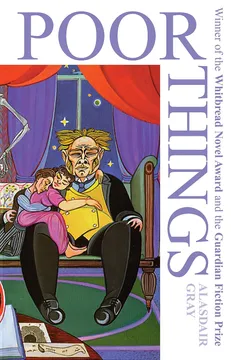

Plot Summary
Origins: Bodies and Minds
Young Archibald McCandless, the illegitimate son of a tenant farmer, struggles in Glasgow to rise above his humble roots through medicine. Distant, awkward, and determined, he meets Godwin Baxter, an eccentric medical genius, the son of legendary (and possibly infamous) surgeon Sir Colin Baxter. Godwin's upbringing was one of isolation, rationalist education, and scientific experimentation, devoid of maternal affection. These two solitary figures, each marked by loss and striving, become friends out of mutual respect for intellect and outsider status. Their bond is shaped by a sense that they are fundamentally different—both are "poor things" searching for meaning and connection in a rapidly changing, industrial Scotland. This friendship sets the stage for the story's future ethical and emotional quandaries.
The Dream of Resuscitation
Godwin Baxter's private dream is to overcome the boundaries that keep the dead from the living, to combine the best of bodies and brains into a new, improved person. He refines resuscitative techniques pioneered by his father, aiming not just to save lives but to reassemble them. A chance arises when an unidentified young woman drowns herself in the Clyde. Unclaimed and dead but still physiologically viable, she becomes the canvas for Godwin's most radical experiment: her body is preserved, and into it he transplants the brain of her unborn child, creating a living, breathing adult who knows nothing of her previous identity—a woman who will later be named Bella. For Godwin, Bella embodies the possibility of reinvention in the face of society's cruelties.
Baxter's Monstrous Miracles
Godwin's experiments reflect both brilliance and hubris—his rabbits with split, recombined bodies are living metaphors for his art. McCandless, on witnessing these rabbits, is both horrified and awestruck, realizing the limits of contemporary surgical science and the moral abyss it risks. Godwin's philosophy is unconventional, bordering on the anarchist: he despises the medical establishment for its profit motives and lack of true healing. Yet he stops short of exploiting his power for fame; his own experiment—Bella—is motivated as much by loneliness and desire as by science. This chapter probes whether the ability to create life gives the right to do so, and what is owed to those who are "made," not born.
Awakening Bella
Bella awakens in Godwin's home, a beautiful adult with a child's mind and speech. She embodies innocence, joy, and an appetite for sensory experience, quickly absorbing language, manners, and knowledge from those around her. Her presence transforms the household, enthralling both Godwin and McCandless, who becomes increasingly infatuated. Bella's awakening is a race between mind and body: her memory is blank, but her desires and intuitions are vivid. For Godwin, she is both a companion and an ideal project; for McCandless, she is an object of love and a symbol of possibility. Bella, unconcerned with the past, seeks connection, joy, and knowledge in the present.
Glasgow Society, Reinvented
As Bella adapts to Godwin's vibrant, unconventional household, she stands at the periphery of Glasgow society—an outsider welcomed and surveilled. Her ambiguous status (a niece, an experimental creation, a woman with no past) stirs suspicion and fascination. The era's evolving politics—women's rights, class reform, scientific progress—are mirrored in Bella's journey. Her childish, candid observations expose the hypocrisies of those around her, making her an unwitting commentator on Victorian mores. Meanwhile, both Godwin and McCandless begin to see her less as a dependent and more as a peer, further complicating the web of desire, control, and respect that binds them.
Love, Jealousy, and Rivalry
McCandless and Godwin both fall for Bella, each driven by incompatible yearnings: protection, ownership, admiration, desire. Bella's emotional maturation stirs possessiveness in Godwin and longing in McCandless. A fateful, passionate encounter in the park with McCandless ignites jealousy and anxiety. Godwin, both paternal and possessive, withdraws into illness; McCandless is left bewildered by Bella's impulsivity and openness about love and sex. Bella, eager for new experience, veers between childish devotion and adult sensuality, refusing to conform to the expectations of either man. The trio's relationships grow more tangled, as Bella is neither entirely child nor fully adult, and both men must confront their own motives.
Escape and Experience
Discontent with being a prize fought over, Bella elopes with the rakish Duncan Wedderburn, spurred by curiosity and restless energy. Her new life is a whirlwind of impulsive travel, sexual experimentation, and headlong immersion in the world, from European hotels to Mediterranean ports. Wedderburn, dazzled and eventually broken by Bella's insatiable joie de vivre, undergoes a nervous collapse, unable to match her pace or emotional candor. Bella's escapade is an education—glamorous, dangerous, and liberating—that fortifies her independence and exposes her to both the pleasures and heartbreaks of autonomy.
Wedderburn's Temptation
Wedderburn, who once fancied himself a seducer, finds himself overmatched by Bella, "the White Daemon." Their relationship quickly turns, with Wedderburn left penniless, drained, and deranged, unable to control or possess Bella in the ways he expects. As they cross Europe, his sense of agency dwindles; he spirals into confessional, quasi-religious mania about his own fallen status. The power dynamics invert: Bella is the force of energy; Wedderburn is reduced to dependence, then discarded with a combination of pity and honest pragmatism. His rambling letter becomes a cautionary tale of male presumption exposed by a truly modern woman.
Lessons on Power and Freedom
Bella's travels confront her with the world's inequities, from the glittering salons of the West to the abject poverty of Alexandria. Exposure to riches and beggars, to predatory missionaries and cynical diplomats, compels Bella to reflect on power, gender, and the nature of progress. Through philosophical debates and tragic encounters (a beggar girl, a sick baby she tries in vain to save), Bella's sense of justice and her commitment to do "something good" are solidified. This awakening to suffering transforms innocence into social conscience, planting the seeds of her eventual life's work.
Bella Abroad: Awakening Conscience
The intellectuals Bella meets – Dr. Hooker and Harry Astley – argue about the limits of improvement and the inevitability of suffering. Bella's responses, alternately naïve and incisive, challenge the fatalism of her male interlocutors. She samples work, sex, and revolution in Paris, experiencing the commodification of bodies and the precarious status of women. The repeated collision between idealism and cynicism, between feeling and reason, compels Bella to find her own synthesis—a steadfast commitment to practical kindness, agency, and the empowerment of others through education and medicine.
Return and Reckoning
After Wedderburn's collapse, Bella returns to Glasgow, keen to shape her life's direction. She chooses nursing and medical studies, determined to address the social and sexual issues that have haunted her journey. The triangular relationship with Baxter and McCandless reasserts itself, but Bella now directs its terms. Her expanded world-view, sharpened sense of injustice, and new-found sense of purpose redefine her role: not as an object circulated among men, but as a maker of her own path—one focused on healing, advocacy, and progress for the marginalized.
The Truth Unraveled
On the verge of marrying McCandless, Bella is confronted by men claiming to be her husband (General Blessington), her father, and their retinue—each asserting rights over her. The truth of her past, concealed and invented by Godwin for her protection, is threatened with exposé. Legal, medical, and personal testimonies clash: is she Victoria Blessington, plagued by "erotomania," the mad wife and runaway mother, or is she truly, as the evidence seems to insist, an independent, self-made woman named Bella Baxter? In a dramatic confrontation, Bella asserts her right to self-determination, definitively breaking from her "true" origins and choosing her future.
Bella's Defiance, Blessington's Fall
As the competing claims over Bella come to a head—legal, medical, paternal, marital—she refuses to accede to any but her own sense of self. When General Blessington seeks to kidnap, or even kill, her rather than lose, Bella takes direct action, displaying courage and wit, ultimately repelling him. The patriarchal forces that once governed her are symbolically and literally disarmed. Blessington, unmoored and disgraced, takes his own life—a recognition that the world he represented is yielding to something new: women's self-possession, equality, and dignity.
Becoming Doctors, Becoming Whole
Bella and McCandless—now joined in partnership and eventually marriage—embrace medicine as their calling, inspired by their experiences of suffering, injustice, and love. Bella trains as a doctor and midwife; McCandless becomes a public health pioneer. Their work is rooted in compassion and a conviction that systems must change if individuals are truly to flourish. The narrative recedes from melodrama toward realism, framing their lives not just as personal fulfillment, but as part of the modern movement for civic improvement, women's rights, and health reform. Baxter's death marks the closure of one emotional triangle, but his legacy endures in their work.
Marriage, Separation, and Survival
Bella and McCandless's union is marked by joyous partnership, sexual candor, and a shared mission, but the past continually presses: Bella's memories, the ghosts of her origins, the specter of Victorian gender roles. Overcoming these, they establish a household (and a clinic) where gender, class, and biology do not predetermine status or happiness. Their marriage refutes the "horizontalism" of Victorian norms: partnership, not hierarchy, is the ideal. Their children are raised with imaginative play, emotional warmth, and a sense of social responsibility, a direct antidote to the psychic wounds of the 19th century.
Social Progress and Personal Loss
Bella rises to national and international prominence for her work in medicine, birth control, and women's suffrage. Yet her personal life is marked by bereavement—the deaths of friends, children, and eventually her husband. The First World War shatters her hopes for a peaceful, rational society; the deaths of her sons in battle seem a bitter culmination of all she strived against. Still, she continues her advocacy, her teaching, and her healing, refusing to retreat into despair. The story's final chapters dwell on the tension between public achievement and private heartbreak, and on the limits and possibilities of reform.
A Modern Woman's Legacy
In her old age, Bella (now Victoria McCandless) reflects dryly and honestly on her journey, correcting the fictions of those—like McCandless—who tried to mythologize, contain, or idealize her life. She credits her survival and progress to resilience, self-knowledge, and solidarity with other women. Her last years are spent continuing her work among the poor, the sick, and the marginalized, bearing witness to the ways societies perpetually reproduce both greatness and cruelty. She is self-critical, sardonic, and ever hopeful. Her story concludes as both a monument to personal and collective agency, and a sober acknowledgment of unfinished work.
Analysis
Poor Things is a dazzling, layered reworking of Frankenstein that acts as both a love letter and a rebuke to the Victorian era and its legacies
Through its interwoven narratives and self-aware pastiche, the novel examines patterns of power: who gets to create, who is made, who writes history, and who is written over. Bella's journey from engineered blank slate to self-fashioned, outspoken reformer embodies the struggle for female autonomy and intellectual agency, echoing (and subverting) the very myths men have used to contain women and the poor. Gray mercilessly lampoons the self-importance of Victorian science, the sentimental hypocrisies of class and gender, and the delusions of "improvement," whether imperial, medical, or personal. Yet, the novel refuses nihilism: out of trauma and miscreation arise new forms of solidarity, humor, and self-consciousness. By splitting the narrative authority among conflicting documents and unreliable voices, Poor Things reveals that human flourishing requires not just progress, but humility, satire, and—most of all—a willingness to let those once described as "poor things" write themselves into the future.
Review Summary
People Also Read






Characters
Archibald McCandless
McCandless is the main voice of the narrative: a poor, intelligent, and sensitive man who rises from rural obscurity to become a doctor in Glasgow. His psychological makeup is marked by feelings of inferiority, envy, and a desperate need for belonging. His relationships—admiring, then competitive with Godwin; infatuated, then bewildered by Bella—are driven by both desire and insecurity. Through Bella, McCandless seeks transformation, stability, and a purpose larger than himself. Though he frequently positions himself as the steady "ballast" to Bella's "sail," he remains haunted by anxieties about masculinity, class, and adequacy. His narrative is self-deprecating, earnest, and frequently at odds with Bella's experience.
Godwin Baxter
Baxter is at once a parody of Frankenstein and a genuine visionary: a physically imposing, socially awkward surgeon with a childlike need for admiration and love. Baxter's formative years are marked by a lack of maternal affection, meticulous scientific training, and chronic illness. His large, malformed body and cubical hands are both literal and symbolic manifestations of his outsider status. He brings Bella to life (literally and metaphorically), but his protection quickly tips into possessiveness. Godwin represents the double-edged sword of Victorian progress—capable of great good but beset by moral blindness and a longing for control. His demise, marked by both dignity and farce, is among the novel's ironies.
Bella Baxter / Victoria McCandless
Bella is the center of the book: a woman created from the body of one and the mind of another, initially amnesiac but insatiably curious. She quickly moves from childlike candor to mature autonomy, challenging every system—sexual, social, political—that tries to define or limit her. Bella is frank about her desires and appetites, bewildering and liberating to the men around her. Her character is forged in adversity: elopement, social exclusion, labor, loss, and love. Later, as Victoria, she becomes a doctor, reformer, mother, and survivor. Psychoanalytically, Bella embodies the struggle to integrate body and mind, past and present, desire and duty. Her development is astounding: from object to agent, she becomes Glasgow's "Doctor Vic"—a model for feminist individualism and social action.
Duncan Wedderburn
Wedderburn is introduced as a wealthy, cynical lawyer who seduces servant girls and is unprepared for the likes of Bella. His confidence crumbles as Bella's strength and appetite expose his emotional and physical limitations. Wedderburn's descent into mania is both comic and poignant—a caricature of male victimhood, but also a genuine casualty of social and personal upheaval. His rambling, self-pitying letter is a counter-narrative to Bella's growth, revealing how traditional masculinity can be upended by women's emancipation.
General Sir Aubrey de la Pole Blessington
Blessington is Bella's "husband" from her first life: a war hero, brittle and rigid, obsessed with order and control. He cannot bear Bella's independence and sexuality, seeing them as madness rather than autonomy. His world—the Victorian order of Empire, hierarchy, and virtue—is crumbling, and his confrontation with Bella (and her new allies) is both threatening and fatal. His suicide marks the end of an epoch and the ascendancy of new values.
Mrs. Dinwiddie
Baxter's housekeeper (and possibly biological mother) is a vital, nurturing figure who quietly anchors the chaotic household at Park Circus. She provides emotional and practical support, wisdom, and moral guidance to Bella and others. Her working-class background and common sense subtly challenge the pretensions of the men—and later, Bella acknowledges her enduring influence and example.
Harry Astley
Astley is a "sophisticated" foil for Bella's optimism—a wealthy, world-weary Englishman who lectures Bella on the limits of progress, the brutality behind empire, and the futility of utopian dreams. Though attracted to Bella, he ultimately pushes her toward tragic knowledge, offering comfort in realism but failing to move her from hope to resignation. His philosophical pessimism forces Bella to define her own position—a search for a "fourth way" beyond innocence, cynicism, or complacency.
Dr. Hooker
Hooker is an American Christian doctor whose interaction with Bella abroad reveals the contradictions of Anglo-Saxon benevolence and colonial arrogance. His insistence on the natural hierarchy of races and civilizations is both a parody and critique of triumphant imperial sentiment. To Bella, he exposes the naiveté and blind spots of missionary zeal—a vital part of her worldly education.
Blaydon Hattersley
Hattersley is introduced as Victoria's (Bella's) actual father: a self-made, brutal Manchester industrialist. His values—work, competition, social climbing—are at odds with any genuine affection or nurture. His hardness is both protection and wound; he sees only survival as virtue. Victoria/Bella's relationship with him is an extended reckoning with the costs of economic and domestic violence.
Millie Cronquebil
The Paris madam who takes in Bella after her split from Wedderburn is a figure of both exploitation and maternal care. Practical, shrewd, and world-weary, she explains men, money, and sex in terms that redefine Bella's understanding. While her world is transactional, she models adaptability and self-preservation, traits Bella adapts without succumbing to defeatism.
Plot Devices
Framed Narrative and Competing Testimonies
Poor Things uses a series of documents: McCandless's autobiography, Bella's letters, and Victoria's postscript, alongside editorial notes and historical digressions. This structure creates ambiguity about truth, authenticity, and perspective. Each narrator is unreliable; claims to authority are repeatedly undercut by alternative interpretations and corrections. The reader is invited to discern truth through contradiction—a method that forces ongoing reevaluation of science, memory, and identity.
Body as Metaphor for Social Change
The "creation" of Bella by combining a woman's body and an infant's brain serves as a central metaphor for 19th-century attempts to refashion the self, society, and gender roles. Her development from infantile tabula rasa to articulate crusader restages Victorian debates about evolution, feminism, sexuality, medicine, and morality. Her very body becomes the site of contest—something to be possessed, liberated, or disciplined according to the era's competing ideologies.
Parody and Pastiche
The novel borrows and mocks the conventions of Victorian and Gothic fiction (Frankenstein, Jekyll and Hyde, confessional memoirs, travelogues), exaggerating their styles, narrative voices, and scientific hubris. By doing so, Gray invites readers to recognize the artificiality of all stories about progress, science, and gender. The shifting, self-aware tone resists any single interpretation or sentimentalism.
Letters, Diaries, and Meta-Commentary
The inclusion of Bella's and Victoria's letters disrupts the supposed authority of McCandless's narrative, bringing in the female perspective and exposing the limitations, biases, and motivations behind male-authored "truth." The letters allow Bella/Victoria to reclaim her history, contradicting or dismissing the men's attempts to define or contain her.
Satirical Exposition and Social Critique
The novel incorporates long philosophical exchanges that debate socialism, medicine, class, feminism, colonialism, and the nature of evil—both reflecting and mocking the earnest conversations of the Victorian intelligentsia. Gray plays with the limits of reason, the tyranny of experts, and the appeal of radical change or resignation, always through vivid character interaction rather than didactic exegesis.
Unreliable Narrators and Narrative Doubt
In the end, nothing is accepted as finally true—not Bella's origins, Godwin's science, McCandless's heroism, or history itself. The novel foregrounds the constructed nature of identity and memory, and the problem of whose story becomes public record. The shifting points of view instead highlight the need for pluralism, doubt, and self-criticism in all narratives.
Download PDF
Download EPUB
.epub digital book format is ideal for reading ebooks on phones, tablets, and e-readers.








































