

Key Takeaways
1. Philosophy is an unavoidable human endeavor, driven by fundamental questions.
Philosophy, thought of as a subject that you can study, be ignorant of, get better at, even be an expert on, simply means being rather more reflective about some of these questions and their interrelations, learning what has already been said about them and why.
Inherent curiosity. Nearly all of us are philosophers to some extent, possessing values by which we live and a general picture of the world. We instinctively grapple with three core questions: "What should I do?", "What is there?", and "How do we know?". Even those who reject philosophy often do so from a philosophical stance, becoming a skeptical voice within it.
Beyond facts. Good philosophy doesn't just add new facts or maxims; it embodies a worldview and a set of values that can expand our imagination. It challenges our preconceived notions, making familiar ideas seem peculiar until understood. This journey from the familiar to the alien reflects the intellectual diversity of humanity.
Humanity's recovery. Think of philosophy as humanity's attempt to recover from the profound shock of acquiring self-awareness and the capacity to ask "why." This crisis, which some argue made us human, launched us into investigating nature and belief in the supernatural. Philosophy, in this light, is a continuous, open-ended adventure to understand our place and purpose.
2. Moral decisions navigate complex trade-offs between principles, consequences, and personal integrity.
Moral problems are notoriously hard to settle, not just when several people are trying to reach agreement, but even when they are trying to make up their own minds as individuals.
Socrates' dilemma. Plato's Crito illustrates the complexity of moral choice through Socrates' decision to accept his death sentence rather than escape. He weighs consequences for his friends and children against his duty to the State and his own principles. Socrates argues that doing wrong is always wrong, even in retaliation, and that breaking a fair agreement or harming the State is unacceptable.
Consequentialism vs. duty. Ethical consequentialism judges actions by their outcomes, requiring a definition of what is "good in itself." John Stuart Mill's utilitarianism, for instance, defines good as happiness for everyone. However, this can conflict with the virtue of integrity, which emphasizes steadfast adherence to principles and consistent pursuit of life's purpose, regardless of immediate consequences.
The weight of integrity. Socrates' refusal to "throw away his previous arguments" highlights integrity as a central value: living a life of wholeness and consistency. Critics of pure consequentialism argue that past commitments and personal identity should matter, not just future outcomes. Moral decisions often involve a subjective balance between these differing factors, making them inherently difficult.
3. Our beliefs about reality and knowledge are shaped by evidence, but also by inherent biases and the limits of reason.
For I own that otherwise [i.e. when it is not a question of being the foundation of a system of religion] there may possibly be miracles, or violations of the usual course of nature, of such a kind as to admit of proof from human testimony …
Hume on miracles. David Hume's Of Miracles challenges the rational basis for believing in miraculous events based on testimony. He argues that a miracle, by definition, violates a law of nature, which is supported by uniform human experience. Therefore, the evidence against a miracle (our vast experience of natural laws) is always stronger than or equal to any testimony for it, making belief in miracles irrational.
The role of reason. Rationality involves proportioning belief to evidence, seeking truth to guide successful actions. However, the idea that human belief can be entirely rationally transparent faces formidable obstacles.
- The infinite regress of reasons: Every reason needs a reason, leading to beliefs without ultimate justification.
- Problem of induction: Our confidence that the future will resemble the past lacks a rational basis beyond past experience itself.
Skepticism's purpose. Ancient Greek Pyrrhonists, for example, cataloged "tropes" to argue that we lack sufficient grounds for conviction about reality, only appearances. Their goal was ataraxia, or tranquillity of mind, by freeing individuals from the endless intellectual brawl of asserting absolute truths. This suggests that acknowledging the limits of knowledge can be a path to peace.
4. The concept of "self" is not a simple, enduring entity but a complex, often culturally constructed, idea with profound ethical implications.
Just as when the parts are rightly set / The word ‘chariot’ is spoken, / So when there are the aggregates / It is the convention to say ‘a being’.
The "no-self" doctrine. In The Questions of King Milinda, the Buddhist monk Nagasena asserts that "there is no person as such that is found," challenging the notion of a permanent, independent self. He uses the chariot analogy: a chariot is merely a designation for a collection of parts (axle, wheels, etc.), not a separate entity. Similarly, a person is a designation for the "five aggregates" (material form, feeling, perception, mental formations, consciousness).
Wholes and parts. This doctrine suggests that "wholes" are less real and more conventional than their constituent "parts." The parts can exist independently, but the whole cannot exist without its parts. What constitutes a "whole" often depends on human purposes and conventions, rather than inherent natural divisions.
Ethical implications. For Buddhists, this "no-self" theory has a profound ethical purpose: to alleviate suffering. Overestimating the importance of the self ("clinging to self") is seen as a major cause of suffering. By understanding the self as an unstable composite, individuals can reduce attachment and move towards liberation (nirvana), thereby living better and avoiding "defilements."
5. Major philosophical "isms" offer distinct frameworks for understanding reality and knowledge, each with its own strengths and challenges.
Most philosophical ‘ism’ words are (like ‘consequentialism’) quite broad terms designating a certain general type of doctrine.
Mapping reality. Philosophical "isms" provide broad categories for understanding fundamental questions.
- Dualism (e.g., Descartes) posits two ultimate kinds of stuff: mind and matter. Its challenge lies in explaining how they interact.
- Materialism (e.g., Democritus, Marx) asserts that only matter exists or is fundamentally important.
- Idealism (e.g., Berkeley, Hegel) claims that only mind/spirit exists or is primary, facing the task of explaining the apparent physical world.
Sources of knowledge. Other "isms" address how we acquire knowledge:
- Empiricism favors perception, arguing that all knowledge ultimately derives from sensory experience.
- Rationalism (e.g., Plato, Kant, Hegel) emphasizes thought and reason as primary sources of knowledge, often positing innate ideas or mental structures.
Questioning certainty. Scepticism (e.g., Pyrrho, Descartes) challenges the possibility of certain knowledge, often aiming for intellectual humility or peace of mind. Relativism suggests that truth or value is dependent on individual, societal, or cultural perspectives, raising questions about universal standards in ethics or rationality.
6. Philosophical thought is deeply intertwined with historical context, responding to societal crises and scientific revolutions.
The literature of philosophy may be intimidatingly vast, but the number of genuinely distinct philosophical themes is not.
Crisis and change. Major philosophical shifts often emerge from periods of profound societal or intellectual upheaval. René Descartes, for instance, developed his radical doubt and foundationalist project (Discourse on the Method) in response to the intellectual chaos of the Scientific Revolution and the rise of skepticism. He sought to rebuild knowledge from an unshakeable foundation, like his famous "Cogito ergo sum" ("I think, therefore I am").
Enduring themes, new interpretations. While specific questions and answers are "situated" in their time, many philosophical themes are perennial, rooted in stable aspects of human nature. Thinkers across millennia, like Epicurus and Mill on pleasure, or Plato and Hobbes on the State, revisit similar ideas, but reinterpret them through their own cultural lenses and for their own purposes.
Cumulative understanding. Recognizing these recurring themes allows for a cumulative understanding of philosophy. By appreciating the historical context—the motivations, concerns, and circumstances that shaped a philosopher's work—we gain deeper insight into their words and the enduring relevance of their ideas, even if we don't fully agree with their conclusions.
7. Darwin's theory of evolution fundamentally reshaped our understanding of human nature and challenged anthropocentric views.
The framework of bones being the same in the hand of a man, wing of a bat, fin of the porpoise, and leg of the horse – the same number of vertebrae forming the neck of the giraffe and of the elephant … at once explain themselves on the theory of descent with slow and slight successive modifications.
A scientific revolution. Charles Darwin's The Origin of Species (1859), though primarily a work of biology, had immense philosophical impact by proposing natural selection as the mechanism for species development. It provided a meticulously evidenced case for the mutability of species, including humanity, challenging the prevailing view of divine creation and fixed forms.
Challenging human exceptionalism. Darwin's theory implicitly placed humans within the natural order, subject to the same evolutionary forces as other animals. This contradicted the long-held belief that humans were uniquely created in God's image, endowed with guaranteed reason. It suggested that human faculties, including reason, developed for survival advantage, not necessarily for metaphysical truth.
Misinterpretations and insights. The theory was often misinterpreted, leading to "Social Darwinism," which wrongly equated "fittest" with moral or intellectual superiority. Darwin's actual concept of "fittest" simply meant best adapted to prevailing conditions. His work, however, offered profound insights into human behavior, such as understanding sexual drives as natural evolutionary products rather than "perversions."
8. Nietzsche challenges conventional morality by tracing its "genealogy" to resentment and power dynamics.
‘A philosopher is a terrible explosive from which nothing is safe’ – that is the only comment we have heard so far (p. 2) from the German philosopher Friedrich Nietzsche (1844–1900).
Questioning values. Friedrich Nietzsche, in The Genealogy of Morals, sought to understand the "value of our values," particularly the moral values of nineteenth-century Christianity. He argued that understanding the historical origins ("genealogy") of these values could reveal their true worth, challenging the notion that they were self-evident or divinely ordained.
The slave revolt in morality. Nietzsche proposed a radical origin for "good" and "bad." He contended that early distinctions were made by the aristocracy, who called themselves "good" (noble, strong) and the masses "bad." However, the "slave revolt in morality" occurred when the weak, out of resentment, inverted these values. They declared the qualities of their oppressors (strength, pride) to be "evil" and their own contrasting qualities (charity, compassion, humility) to be "good."
Life-denying ethics. This "herd morality," born of resentment, was, for Nietzsche, fundamentally "life-denying." It arose not from an affirmation of life but from a negation of the strong, leading to psychological sickness and inner division among those who adopted it. The ascetic priest, embodying extreme self-denial, then channeled this resentment, providing suffering with meaning and directing blame inward, further disempowering the masses.
9. Powerful philosophies often serve specific constituencies, aiming to transform individuals, states, or social structures.
Most philosophy attempts, then, to do something for somebody.
Individual flourishing. Philosophies like Epicureanism offer individuals a recipe for a happy life, emphasizing inner tranquility and freedom from fear. John Stuart Mill's On Liberty champions individual freedom through the "Harm Principle," arguing that protecting unconventional opinions and lifestyles benefits all of society by fostering progress and preventing the "tyranny of the majority."
State and social order. Other philosophies focus on the collective. Thomas Hobbes's Leviathan advocates for an absolute sovereign to prevent the "war of all against all" in the state of nature, ensuring peace and order at the cost of individual liberties. Ancient Hindu texts, like the Bŗhadāranyaka Upanishad, legitimize the power and privileges of the priestly class (Brahmins) by emphasizing their unique knowledge and role in maintaining cosmic and social order.
Challenging existing structures. Karl Marx's philosophy, driven by Hegelian ideas of historical progression and conflict, championed the working classes. He critiqued capitalism for exploiting workers and causing "alienation" from their labor, aiming to transform economic and social structures. Simone de Beauvoir's The Second Sex exposed the subjugation of women as "man's Other," advocating for perfect equality and recognizing the reciprocal damage done to both sexes by existing patriarchal systems.
Review Summary
Philosophy receives mixed reviews as an introduction to the subject. Some praise its accessible writing and broad overview of key thinkers and concepts, while others find it disjointed or overly simplistic. Readers appreciate the author's engaging style and inclusion of both Western and Eastern philosophy. However, some criticize the lack of women philosophers mentioned and the book's Euro-centric focus. Overall, it's considered a decent starting point for beginners, though more experienced readers may find it lacking depth. The book seems to succeed in piquing interest in further philosophical exploration.
People Also Read

FAQ
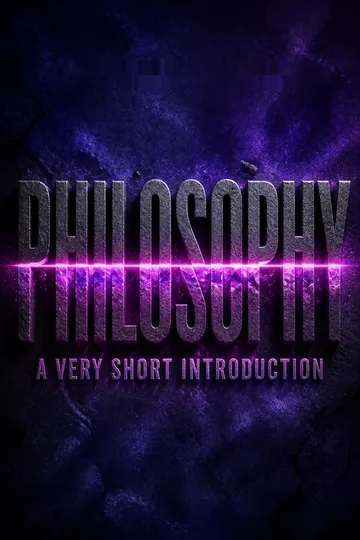
What is "Philosophy: A Very Short Introduction" by Edward Craig about?
- Broad introduction to philosophy: The book provides a concise yet comprehensive overview of philosophy, its central questions, and its historical development.
- Accessible for beginners: Written for readers new to philosophy, it aims to demystify the subject and show its relevance to everyday life.
- Explores key philosophical questions: Craig focuses on three fundamental questions: What should I do? What is there? How do we know?
- Uses classic texts as examples: The book analyzes works by Plato, Hume, and Buddhist philosophy to illustrate philosophical thinking across cultures and eras.
Why should I read "Philosophy: A Very Short Introduction" by Edward Craig?
- Engaging and clear style: Craig writes in an accessible, lively manner, making complex ideas understandable without oversimplifying.
- Foundational understanding: The book equips readers with the tools to think philosophically and critically about fundamental issues.
- Historical and cultural breadth: It introduces philosophical ideas from both Western and Eastern traditions, showing their universality and diversity.
- Encourages active participation: Craig emphasizes that everyone is already a philosopher to some extent and encourages readers to join the philosophical conversation.
What are the key takeaways from "Philosophy: A Very Short Introduction"?
- Philosophy is unavoidable: Everyone holds philosophical beliefs, even if unconsciously, about values, reality, and knowledge.
- Philosophy’s practical impact: Philosophical ideas shape societies, politics, and personal lives, sometimes in profound ways.
- Critical examination is essential: The book stresses the importance of questioning assumptions and not accepting opinions uncritically.
- Philosophy’s diversity: There is no single definition or method in philosophy; it is a broad, evolving field with many approaches and traditions.
How does Edward Craig define philosophy in "Philosophy: A Very Short Introduction"?
- Reflective inquiry: Philosophy is described as being more reflective about fundamental questions and their interrelations.
- Historical and cultural context: Craig avoids a rigid definition, instead showing how philosophy’s scope has changed over time and across cultures.
- Universal human activity: He suggests philosophy is humanity’s attempt to recover from the “crisis” of self-awareness and questioning.
- Not just academic: Philosophy is not limited to universities or specialists; it is a part of everyday human thought and experience.
What are the three central philosophical questions explored in "Philosophy: A Very Short Introduction"?
- What should I do? This is the ethical question, explored through Plato’s "Crito" and the dilemmas of moral decision-making.
- What is there? The metaphysical question, considering what exists, including the self, the soul, and the nature of reality.
- How do we know? The epistemological question, focusing on the sources and limits of human knowledge, illustrated by Hume’s "Of Miracles."
- Interconnectedness: Craig shows how these questions are deeply interrelated and recur throughout philosophical history.
How does Edward Craig use classic texts to illustrate philosophical thinking?
- Plato’s "Crito": Examines moral obligation, justice, and the individual’s relationship to the state.
- Hume’s "Of Miracles": Investigates the nature of evidence, belief, and the rationality of religious claims.
- Buddhist "Questions of King Milinda": Explores the concept of the self and challenges Western assumptions about personal identity.
- Comparative approach: By analyzing texts from different cultures and eras, Craig demonstrates philosophy’s universality and adaptability.
What is ethical consequentialism, and how is it discussed in "Philosophy: A Very Short Introduction"?
- Definition: Consequentialism is the view that the morality of actions depends solely on their outcomes or consequences.
- Epicurus and Mill: The book discusses Epicurean hedonism (pleasure as the highest good) and Mill’s utilitarianism (happiness for all).
- Complexity of values: Craig notes that consequentialism must specify which consequences matter (pleasure, happiness, knowledge, etc.), and that conflicts between values complicate moral decisions.
- Critique: The book explores challenges to consequentialism, such as the value of integrity and the difficulty of reducing morality to a single principle.
How does "Philosophy: A Very Short Introduction" address the concept of the self?
- Buddhist no-self doctrine: The book presents the Buddhist view that the self is a composite of changing elements, not a permanent entity.
- Western bundle theory: Hume’s idea that the self is a bundle of perceptions, not a simple, enduring substance.
- Contrast with other traditions: Craig compares these views to Platonic and Hindu ideas of the soul, highlighting cultural differences.
- Practical implications: The discussion connects metaphysical beliefs about the self to ethical attitudes and the alleviation of suffering.
What are some of the major "isms" explained in "Philosophy: A Very Short Introduction"?
- Dualism: The belief in two kinds of substance—mind and matter—exemplified by Descartes.
- Materialism and Idealism: Materialism holds that only matter exists; idealism claims that reality is fundamentally mental or spiritual.
- Empiricism and Rationalism: Empiricism emphasizes knowledge through sensory experience; rationalism prioritizes reason and innate ideas.
- Scepticism and Relativism: Scepticism questions the possibility of knowledge; relativism holds that truth or value is relative to individuals or cultures.
How does Edward Craig discuss the relationship between philosophy and historical context?
- Philosophy as situated: Craig acknowledges that philosophical ideas arise from specific historical, social, and cultural circumstances.
- Timeless themes, changing contexts: While certain questions recur, their meaning and urgency shift with context.
- Value of historical understanding: Appreciating the background of philosophical works deepens understanding and prevents misinterpretation.
- Cumulative understanding: Despite differences, philosophical themes connect thinkers across centuries, allowing for cumulative insight.
What are some key philosophical figures and works highlighted in "Philosophy: A Very Short Introduction"?
- Plato: "Crito" and "Republic" for ethics and political philosophy.
- David Hume: "Of Miracles" for epistemology and scepticism.
- Epicurus and Mill: For consequentialist ethics.
- Descartes, Hegel, Darwin, Nietzsche, Marx, Beauvoir: Each is discussed for their contributions to metaphysics, epistemology, ethics, political philosophy, and feminism.
- Eastern philosophy: Buddhist and Hindu texts are included to broaden the philosophical landscape.
What are the best quotes from "Philosophy: A Very Short Introduction" by Edward Craig, and what do they mean?
- "Anyone reading this book is to some extent a philosopher already." — Emphasizes that philosophical thinking is a universal human activity, not just for specialists.
- "Good philosophy expands your imagination." — Suggests that philosophy challenges and broadens our ways of seeing the world.
- "Few men think, yet all will have opinions." (George Berkeley) — Highlights the importance of critical thinking over unexamined opinion.
- "A philosopher is a terrible explosive from which nothing is safe." (Nietzsche) — Underlines the disruptive, transformative power of philosophical inquiry.
- "Philosophy is as wide as life, and in its huge literature are exemplified most intellectual vices as well as most intellectual virtues." — Reminds readers of philosophy’s diversity and its reflection of the full range of human thought.
Very Short Introductions Series Series











Download PDF
Download EPUB
.epub digital book format is ideal for reading ebooks on phones, tablets, and e-readers.








































