Plot Summary
Inverted Realities, Inverted Selves
The artist G's decision to paint the world upside down becomes a radical act of perception, challenging the boundaries between representation and reality. His wife, struck by the unsettling familiarity of this inversion, recognizes in it the condition of her own sex—a world that appears right but is fundamentally wrong. G's paintings, initially portraits of local people, evolve into dreamlike landscapes where nature's innocence is preserved through inversion, detaching meaning from representation. The critical world celebrates G's innovation, but the question of whether he truly paints upside down or simply inverts the canvas remains unspoken, symbolizing the tacit silences that veil deeper truths. For G's wife, the upside-down world is both a revelation and a wound, exposing the hidden unhappiness and marginalization that define her experience as a woman.
Exile and the Gilded Mirror
After being abruptly asked to leave a borrowed apartment in a foreign city, the narrator and her family drift through temporary lodgings, each more alienating than the last. The loss of the apartment's ornate mirror—a device that once provided a sense of proportion and belonging—leaves them unmoored, their identities blurred. The city's cherry tree, blossoming prematurely, becomes a symbol of fragile hope amid instability. An unprovoked attack by a deranged woman in the street shatters the narrator's sense of safety, leaving her with a persistent trauma that cannot be assimilated. This violence, both random and deeply personal, exposes the vulnerability of female subjectivity and the inadequacy of representation to contain real suffering. The narrator's sense of self fractures, and she becomes haunted by the image of her attacker—a dark twin, a stuntman who absorbs the blows meant for her.
Violence, Representation, and the Stuntman
The aftermath of the street attack lingers, manifesting as a desire to pass on the violence received. The narrator visits an exhibition by a female sculptor, whose genderless, suspended forms evoke a tragic innocence and the possibility of escaping the violence of gender. The sculptures—spiders, dolls, and women with babies—embody the insanity and utility of the female body, commemorating its cycles and denials. The narrator's trauma becomes a lens through which she re-examines childbirth, motherhood, and the stuntman self that absorbs pain. The crowd's reaction to her assault—waiting for her to represent the violence—underscores the failure of art and language to fully capture the reality of suffering. The attacker, repeating her blows on the same pavement, becomes an artist of violence, her actions both senseless and comprehensible.
Marriage, Art, and Objectification
G's attempt to paint his wife as a classical nude exposes the brutality and objectification inherent in their marriage. The act of representation fails to free him from subjectivity, instead revealing a crystallized hatred that obliterates his wife's individuality. Visits to G's aging father, once a dominating force, highlight the inheritance of violence and the difficulty of disentangling personal and historical guilt. G's wife, moving quietly in the background, embodies a malformed freedom—neither pure object nor equal rival, but a companion situated in the terrain of weakness and need. The double portrait, with husband and wife side by side, becomes a tableau of insufficient self-realization and crippled courage, marking the discovery of inversion as a means of perceiving truth beyond representation.
The Burden of History
G's relationship with his father is fraught with unresolved darkness—personal wounds intertwined with public evils. The father's lack of self-reproach torments G, who finds himself increasingly inclined to forgive, yet unable to separate memory from history. The oppressive atmosphere of the father's retirement home, with its geometric sunlight and bare willow, mirrors the stifling legacy of the past. G's wife, preparing coffee in the shadows, is both present and inaccessible, her partial freedom a source of pain for G. The couple's image, side by side on the sofa, exposes the limitations of their coexistence and the futility of seeking wholeness through representation. The relief G feels at the prospect of a new painting is tinged with the knowledge that reality will always surpass its depiction.
Madness, Femininity, and Creation
The narrator's physical ailments and the passage of time mark the retreat of her femininity into itself, no longer dangerous or visible. Her history with G is one of evasion and longing for possession, complicated by the inability to be fully seen or described. The nude paintings become a battleground for recognition and rejection, her separateness blackening the space between them. The double portrait, drenched in morning sun, captures the couple as a two-headed monster—creased, bleached, and imprisoned in the upside-down world of G's late work. The public's enthusiasm for these honest depictions of aging and bondage underscores the irony of her entrapment as the mark of G's originality. The inversion of reality becomes both a surrender and a new beginning.
The Double Portrait: Love and Power
G's proposal of a double portrait, and later a nude double portrait, forces his wife to confront the terms of their relationship—her duty to his talent, her relinquished ambitions, and the shared claim to his success. The sequence of portraits becomes a spectacle of her unrealized life, her body a shield against time and a confession of his limitations. The abstraction and disintegration of their images reflect the dissolution of individuality within the couple, their coexistence a pedestrian offspring of history. The public's appetite for honesty in the face of death is satisfied by the spectacle of her imprisonment, while G appears to surrender his masculinity in a final act of originality.
Motherhood's Invisible Wounds
The cries of children in the city evoke the narrator's own history of motherhood, now distant and inaccessible. The story of a nineteenth-century woman painter, dead of childbirth, becomes a meditation on the impossibility of representing the eternal in femininity. The painter's self-portraits, her attempts to see herself from the outside, and her quiet mockery of male entitlement highlight the radical implications of female art. The cost of experience, the sacrifice of the body, and the absence of an inviolable self render female creativity a form of self-immolation. The narrator's dreams of being entrusted with a baby, her anxiety and dread, underscore the inescapable reality of domesticity and the veteran's outrage at being attacked. The transition toward self-being is marked by wonder, loneliness, and the proximity of madness.
The Artist's Wild Years
G's early years are characterized by wildness, poverty, and a struggle for autonomy against parental authority. Her art, initially a means of self-erasure, becomes a vehicle for confronting shame and the body's products. The transition from chaos to success is marked by the intervention of a gallerist who legitimizes her persona, turning unacceptability into objectivity. The arrival of marriage, motherhood, and domesticity brings new constraints, as G's husband's disapproval and control reshape her relationships and her work. The birth of a daughter, initially seen as a failure, becomes a revelation—a secret shared between mother and child, a doubling of perspective that exposes the illusions of love and the limitations of male freedom.
Domesticity, Shame, and the Gaze
G's life becomes a negotiation between artistic ambition and domestic obligation. The presence of a nanny, the husband's increasing control, and the daughter's growing distance create an atmosphere of female laxity and displacement. The removal of the husband's photographs, the return to drawing, and the open studio door signal a tentative reclamation of self. The question of why men are needed, posed by the daughter, exposes G's internalized desire for superiority and her identification of mothers and children with mediocrity. The painter friend, a rival in success, embodies a contentment and femininity that G finds both suffocating and enviable. The crisis of the husband's absence and return reveals the fragility of female solidarity and the persistence of patriarchal authority.
The Farm: Ruins and Resistance
The visits to Mann's farm, a once-mythical place now in decline, serve as a backdrop for reflections on community, ownership, and the passage of time. Mann's wife, a figure of resilience and practicality, contrasts with Mann's idealism and eventual decay. The landscape, marked by abandoned houses, impenetrable vegetation, and the ever-present mountain, becomes a symbol of endurance and the inscrutability of nature. The myth of the midwife of death, the carved hammers, and the tradition of assisting with dying blur the boundaries between birth and death, creation and disposal. The farm's gradual disintegration mirrors the erosion of ideals and the persistence of female strength amid betrayal and loss.
The Midwife of Death
Mann's wife recounts the tradition of the midwife who assists with both birth and death, a figure who knows when to intervene and when to let go. Her own journey—caring for her dying mother in Germany, confronting the absence of love, and witnessing the arrival of a young girl to perform the final act—underscores the ambiguity of agency and the inevitability of endings. The move to the caravan, the exposure to the elements, and the confrontation with Mann's betrayal reveal the limits of endurance and the necessity of hatred as a source of strength. The wind, the weather, and the landscape become participants in the drama of survival and change.
Estrangement, Authority, and Betrayal
The police investigation into G's husband's photographs, the ensuing rage, and the threat of legal and financial ruin expose the precariousness of female autonomy within marriage. The husband's charm and authority mask a deep-seated fear and capacity for violence. G's thoughts of escape are thwarted by the reality of her daughter's body, shared between parents and subject to the law. The studio becomes a place of refuge and paralysis, a space where the possibility of action is suspended. The cycle of betrayal, control, and resignation repeats, echoing the larger patterns of history and gendered power.
The Parade's Aftermath
After a city parade, a group of artists, curators, and critics gather in a hidden restaurant to process the day's events, including a suicide at the museum. Their conversation ranges from the consequences of freedom to the commodification of art, the sanctity of museums, and the fragility of meaning. The director's decision to leave her prestigious position for a simpler life on an island reflects a desire to escape the violence and bureaucracy of public life. The discussion of motherhood, creativity, and the struggle for self-expression reveals the persistent tensions between personal ambition and social expectation. The stories shared around the table—of locked doors, failed relationships, and the impossibility of understanding—underscore the limits of empathy and the endurance of mystery.
Art, Violence, and the Body
The director's account of witnessing the museum suicide, her association of the act with her ex-husband's hatred, and her reflections on the mind of the body highlight the disturbing power of art to unsettle reality. The conversation turns to courage, pain, and the instinct for self-preservation, exposing the vulnerabilities and contradictions of gendered experience. The reversal of roles in Thomas's marriage, the struggle for financial and emotional autonomy, and the emergence of a third sex in G's work all point to the instability of identity and the permeability of boundaries. The dreams, nightmares, and confessions that surface reveal the persistence of trauma and the impossibility of resolution.
The Spy: Anonymity and Truth
The story of the filmmaker G, who adopts an alias to shield his work from his mother's disapproval, explores the tension between identity and creation. His films, marked by naturalism and a refusal to direct or interfere, are both poetic and unsettling, challenging the conventions of storytelling and authority. G's upbringing in a strict, religious household, his brother's open confrontation with the past, and his own preference for invisibility shape his approach to art and life. The spy, free from need and ego, sees more clearly but is consigned to oblivion. The struggle to create without identity, the rejection of causation, and the embrace of humility become acts of resistance against the violence of authorship.
The Mother's Death and Inheritance
The death of the mother, her long decline, and the family's ambivalent response expose the emptiness at the heart of inheritance. The absence of grief, the feeling of freedom, and the unease that follows reveal the double loss of what was never possessed. The mother's formlessness, her use of debility as power, and her ultimate failure to confront reality leave her children with a legacy of non-feeling and disconnection. The stories she invents, the rewriting of history, and the suppression of nature and love create a gap that cannot be bridged. The children's eventual discovery of love through their own offspring marks a tentative beginning, but the mother's death remains unresolved—a tragedy of fabrication and the impossibility of truth.
Broken Glass, New Beginnings
In the aftermath of the mother's death, the narrator visits a museum and is struck by paintings that capture the rarity of love and the indifference of being seen. The recognition that the mother now exists within the self, the breaking of the glass between inside and outside, and the acceptance of the ugliness of change signal a new beginning. The world, littered and grey, becomes the site of truth—a reality that must be embraced, however painful or incomplete. The cycle of inheritance, loss, and renewal continues, marked by the persistence of memory and the possibility of transformation.
Characters
G (the Artist)
G is a celebrated artist whose career is defined by his radical decision to paint the world upside down, a gesture that becomes both a technical challenge and a philosophical statement. His early experiences of brutal criticism leave him deeply wounded, shaping his art as a slow crucifixion that absorbs and transforms pain. G's relationship with his wife is complex—he relies on her loyalty and presence, yet his artistic gaze objectifies and sometimes obliterates her. He believes women cannot be artists, a conviction rooted in his dependence on her for the conditions of creation. G's work evolves from naive portraits to dreamlike landscapes, and finally to abstract double portraits that capture the dissolution of individuality within marriage. His struggle with subjectivity, history, and the limits of representation reflects a broader inquiry into the nature of reality and the power of perception.
G's Wife (the Narrator)
G's wife is both muse and critic, deeply affected by the inversion in G's art and the marginalization it symbolizes. Her experience of femininity is marked by a sense of being fundamentally wrong, an unhappiness that is both personal and universal. She is loyal to G, yet struggles with the objectification and erasure inherent in their marriage. Her own artistic ambitions are subsumed by her role as wife and mother, and she finds herself imprisoned in G's late work. The trauma of violence, the burden of motherhood, and the search for recognition shape her psychological landscape. She is acutely aware of the silences and omissions that define her existence, and her journey is one of tentative reclamation and acceptance of reality's limitations.
Mann's Wife
Mann's wife is a figure of strength and endurance, managing the chaos of the farm and the decay of her marriage with stoic resolve. Her German heritage and outsider status inform her perspective on community, tradition, and the passage of time. She is both caretaker and survivor, navigating the betrayals of her husband and the demands of motherhood. Her encounter with the midwife of death, her care for her dying mother, and her eventual move to the caravan on the hill reflect her capacity for adaptation and resistance. She embodies the persistence of female strength amid loss, betrayal, and the erosion of ideals.
The Stuntman (Alter Ego)
The stuntman is a psychological double, an alternate self who absorbs the risks and violence that the narrator cannot integrate. She is nameless, invisible, and essential to the manufacture of identity, taking the blows that would otherwise shatter the self. The stuntman's emergence after the street attack signals a crisis of representation and the defeat of language by violence. She becomes both a shield and a reminder of the artificiality of character, embodying the tension between exposure and concealment, agency and passivity.
G's Father
G's father is a figure of authority whose domination once seemed indistinguishable from fate. His lack of self-reproach and participation in historical evils torment G, who struggles to disentangle personal memory from public guilt. The father's decline and eventual death expose the limitations of redemption and the persistence of unresolved darkness. His relationship with G is marked by estrangement, blame, and the inheritance of violence, serving as a microcosm of the broader burdens of history.
The Female Sculptor (G)
The female sculptor's work, characterized by suspended, genderless forms and emblematic spiders, challenges the violence and insanity of the female body. Her art commemorates the cycles and denials of femininity, offering a vision of innocence and tragedy that transcends gender. The exhibition becomes a site of reflection for the narrator, who sees in the sculptures a possibility of absolution and a confrontation with the limits of representation. The sculptor's ability to "unsex" the human form and memorialize the unlasting elements of femininity positions her as a radical force within the narrative.
Mann
Mann is the founder of the farm, once a visionary seeking to create a self-sufficient community, now a figure of decay and betrayal. His inability to manage money, his secret sales of land, and his eventual decline into madness and irrelevance mirror the erosion of ideals and the persistence of patriarchal authority. Mann's relationship with his wife and daughter is marked by neglect, selfishness, and the ultimate failure to protect what he once valued. He embodies the limits of male creativity and the consequences of unchecked power.
The Director (Museum)
The museum director is a figure of authority and vulnerability, orchestrating public events while grappling with personal trauma and the violence of reality. Her decision to leave her prestigious position for a simpler life reflects a desire to escape bureaucracy and embrace authenticity. Her reflections on art, violence, and the body reveal a deep engagement with the limits of representation and the persistence of suffering. The director's story intersects with themes of motherhood, ambition, and the search for meaning amid chaos.
The Spy (Filmmaker G)
The filmmaker G adopts an alias to shield his work from familial disapproval, embracing anonymity as a means of seeing more clearly. His films, marked by naturalism and a refusal to direct, challenge conventions of storytelling and authority. G's upbringing in a strict, religious household, his brother's open confrontation with the past, and his own preference for invisibility shape his approach to art and life. The spy's discipline of concealment yields a rare power of observation but consigns him to oblivion, highlighting the costs and freedoms of anonymity.
The Mother
The mother's life is characterized by a pursuit of attention, the use of debility as power, and a refusal to confront reality. Her stories, inventions, and suppression of nature and love create a legacy of non-feeling and disconnection for her children. Her death, marked by the absence of grief and the persistence of unease, exposes the emptiness at the heart of inheritance. The mother's inability to love or be loved, her fabrication of history, and her ultimate failure to resolve the gap between self and other render her both a victim and perpetrator of emotional violence.
Plot Devices
Inversion as Metaphor
The central device of inversion—both literal (in G's paintings) and metaphorical—serves as a means of exposing the instability of reality, the marginalization of women, and the inadequacy of representation. The upside-down world becomes a space where innocence and violence coexist, where the familiar is rendered strange, and where the constraints of gender and history are momentarily suspended. Inversion allows for the possibility of seeing anew, but also underscores the persistence of underlying wounds and silences.
The Stuntman/Double Self
The figure of the stuntman, an alter ego who takes the risks and absorbs the violence that the self cannot integrate, functions as a device for exploring the limits of identity and the artificiality of character. The stuntman's emergence in moments of crisis highlights the tension between exposure and concealment, agency and passivity, and the failure of language to contain real suffering.
Fragmented Narrative Structure
The novel employs a fragmented, episodic structure, moving between different characters, timelines, and locations. This narrative device mirrors the instability of identity, the persistence of trauma, and the difficulty of achieving coherence or resolution. The interweaving of personal and historical narratives, the use of art and memory as organizing principles, and the recurrence of motifs (mirrors, windows, violence) create a tapestry of interconnected experiences.
Art as Reflection and Distortion
Paintings, sculptures, photographs, and films serve as both reflections and distortions of reality, offering insight into the characters' inner lives while also exposing the limitations of representation. The recurring motif of the mirror—lost, broken, or inverted—symbolizes the search for orientation and the impossibility of fully knowing oneself or others. Art becomes a site of both sanctuary and exposure, a means of commemorating what is denied and suppressed.
Foreshadowing and Recurrence
The novel employs foreshadowing through the recurrence of motifs—attacks, betrayals, deaths, and artistic failures—that signal the persistence of unresolved wounds. The repetition of certain events (the street attack, the removal of photographs, the abandonment of homes) underscores the cyclical nature of trauma and the difficulty of achieving closure. The open-endedness of many narratives reflects the ongoing struggle for meaning and the acceptance of ambiguity.
Analysis
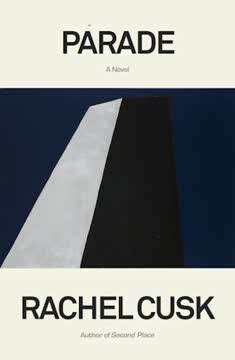
Rachel Cusk's Parade is a profound meditation on the instability of identity, the violence of representation, and the persistent wounds of gender, history, and family. Through a series of interlinked narratives, Cusk interrogates the limits of art, the inadequacy of language, and the impossibility of fully knowing oneself or others. The device of inversion—turning the world upside down—serves as both a metaphor for marginalization and a strategy for survival, allowing characters to glimpse truths that are otherwise suppressed or denied. The novel's fragmented structure, shifting perspectives, and recurring motifs create a tapestry of experience that resists resolution, embracing ambiguity and the reality of loss. At its core, Parade is a study of the costs and possibilities of seeing—of being seen and unseen, of witnessing and being witnessed. It challenges readers to confront the silences and omissions that shape our lives, to recognize the persistence of trauma, and to accept the necessity of change, however painful or incomplete. The lessons of the book are both personal and universal: that freedom is always provisional, that love is both a wound and a gift, and that the search for meaning is inseparable from the acceptance of reality's limitations.
Last updated:
Review Summary
Parade by Rachel Cusk is an experimental novel divided into four sections exploring art, motherhood, gender, violence, and identity through fragmented narratives. Multiple artists called "G" (based on real figures like Louise Bourgeois and Georg Baselitz) appear throughout. Reviews are polarized: admirers praise Cusk's innovative structure, brilliant prose, and philosophical depth, with some calling it her best work. Critics find it pretentious, cryptic, and overly abstract. "The Diver" section, echoing her Outline trilogy style, receives particular acclaim. The book won the 2024 Goldsmiths Prize.