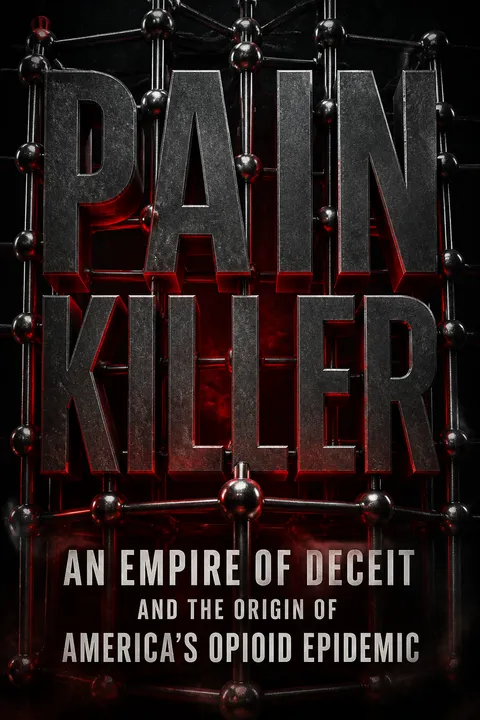

Key Takeaways
1. OxyContin was the catalyst for America's deadliest modern public-health disaster
OxyContin was not a "wonder" drug. It was the gateway drug to the most devastating public-health disaster of the twenty-first century.
The opioid epidemic began as a quiet, corporate-driven phenomenon before morphing into a national emergency that claimed hundreds of thousands of lives. What was initially heralded as a medical breakthrough for pain management quickly transformed into a highly addictive street drug that decimated entire communities.
The human toll of this crisis is staggering, with overdose statistics rivaling the populations of entire American cities. The rapid accumulation of bodies overwhelmed local infrastructure, forcing medical examiners to make difficult compromises:
- Morgues filled to capacity, requiring refrigerated trailers for temporary storage.
- Accreditation limits prevented coroners from performing standard autopsies on all victims.
- Life expectancy among white men in the United States began falling for the first time in decades.
A preventable catastrophe was allowed to expand because regulatory agencies, politicians, and medical organizations repeatedly downplayed the mounting body count. By the time synthetic opioids like fentanyl entered the black market, the structural pathways of addiction had already been deeply carved by prescription pills.
2. The "War Against Pain" was built on a foundation of flawed and manipulated science
Years later Purdue Pharma and its medical allies would point to these same studies and Portenoy’s portrayal of them as the basis for the company’s claim that powerful narcotics such as OxyContin posed an addiction risk to patients of "less than one percent."
A scientific myth was manufactured by pain-management advocates to convince the medical community that opioids were safe for long-term, non-cancer pain. Prominent specialists like Dr. Russell Portenoy championed the aggressive use of narcotics, arguing that traditional medical caution was merely an irrational fear called "opiophobia."
The core evidence supporting this massive shift in medical practice relied on a "scientific holy trinity" of studies that were systematically misrepresented. When examined closely, these highly cited sources revealed shocking limitations:
- The Porter and Jick "study" was actually just a five-sentence letter to the editor about short-term hospital patients.
- A headache clinic study actually warned of dependency and showed a five percent addiction rate.
- A burn unit study evaluated patients undergoing temporary, acute procedures rather than chronic care.
This distorted narrative was aggressively disseminated through medical journals, continuing-education seminars, and industry-funded patient advocacy groups. Doctors nationwide were taught that physical dependence was easily managed and that true addiction was an exceedingly rare side effect.
3. The Sackler family pioneered aggressive pharmaceutical marketing long before OxyContin
The combined resources of the three Sackler brothers for this type of integrated drug marketing were not exhausted in the promotion of l-Glutavite. The brothers cover every aspect of prescription medicine.
The marketing empire created by Arthur, Mortimer, and Raymond Sackler laid the groundwork for modern pharmaceutical promotion. Long before OxyContin, Arthur Sackler revolutionized the industry by advertising directly to physicians and establishing financial entanglements between drugmakers and medical journals.
This promotional blueprint was famously used to turn the tranquilizers Librium and Valium into household staples during the 1960s. Arthur Sackler successfully expanded the definition of treatable illness to encompass the routine anxieties of daily life:
- Positioning identical chemical compounds for different psychiatric indications to maximize sales.
- Sponsoring continuing medical education (CME) courses that functioned as disguised product pitches.
- Utilizing a vast network of medical publications and public relations firms to shape clinical opinions.
A legacy of secrecy characterized the family's business dealings, allowing them to amass an enormous fortune while shielding their names from controversy. This wealth was subsequently used to buy social prestige, plastering the Sackler name across prestigious museums and universities worldwide.
4. The FDA approved a highly promotional, untested safety claim that became Purdue's primary weapon
Delayed absorption, as provided by OxyContin tablets, is believed to reduce the abuse liability of a drug.
An unprecedented regulatory decision by the Food and Drug Administration gave Purdue Pharma a massive commercial advantage. In 1995, the FDA permitted Purdue to include a highly promotional, unproven claim on OxyContin's official package insert.
This approved language suggested that the drug's patented time-release mechanism made it inherently safer and less attractive to drug abusers than traditional painkillers. However, this theory was never subjected to rigorous clinical testing before the drug was unleashed on the public:
- The FDA examiner who approved the claim, Curtis Wright, later joined Purdue with a lucrative executive salary.
- Regulators ignored internal warnings that the time-release mechanism could be easily defeated.
- Purdue executives immediately recognized the FDA-approved label as their most powerful marketing tool.
The tragic irony was that the very design intended to make the drug safe actually made it a highly concentrated target for abuse. Users quickly discovered that scraping off the outer coating and crushing the tablet released a massive, potentially lethal dose of pure oxycodone all at once.
5. Purdue used sophisticated data tracking and lucrative bonuses to target high-prescribing doctors
Purdue sales reps had a financial incentive to encourage doctors to prescribe higher dosages of OxyContin: The higher the dose per pill, the more it cost.
A hyper-aggressive sales campaign was launched by Purdue, deploying hundreds of representatives armed with sophisticated data-tracking tools. Using databases like IMS Health, the company identified and targeted physicians who were already high-volume prescribers of weaker painkillers.
The compensation structure for Purdue's sales force was uniquely designed to maximize the volume and strength of the drug being prescribed. Representatives were heavily incentivized to push higher, more expensive dosages of OxyContin:
- Bonuses were calculated based on the dollar value of the drug sold, rather than the number of prescriptions.
- Sales reps targeted family practitioners and general practitioners who lacked specialized training in pain management.
- The company distributed free trial coupons to doctors, initiating patients on highly addictive regimens.
This commercial strategy successfully expanded the market for strong narcotics far beyond cancer wards and into mainstream medicine. Doctors were systematically convinced to prescribe OxyContin for common, moderate ailments like back pain, arthritis, and sports injuries.
6. Appalachia became the tragic testing ground for OxyContin's devastating street appeal
The real life experience for the liberal use of opioids has proven to be a medical and social disaster for our region, and as I fear, may be a glimpse of what will happen nationally over the next few years.
Rural coal-mining communities in southwestern Virginia and Kentucky were among the first to be devastated by the rapid spread of OxyContin abuse. Poorer areas with high rates of occupational injuries became prime targets for both aggressive marketing and subsequent black-market diversion.
The social fabric of these close-knit communities quickly unraveled as addiction, crime, and economic ruin took hold. Local leaders, doctors, and law enforcement officials watched in horror as the drug's impact escalated:
- The emergence of "pill mills" where corrupt doctors traded prescriptions for cash.
- A dramatic surge in pharmacy robberies, forged checks, and property crimes to fund habits.
- An unprecedented strain on local foster care systems due to parental neglect and addiction.
Local advocates like Dr. Art Van Zee and Sister Beth Davies sounded early alarms, pleading with Purdue and federal regulators to intervene. Their warnings were largely dismissed by the company as isolated incidents confined to regional "hot spots."
7. Purdue ignored early, explicit warnings of widespread abuse to protect its blockbuster profits
Even as the conspirators marketed OxyContin as less addictive, less abusable and less divertable than other opioids, as early as 1997 they began receiving reports from health care providers and the news media indicative of widespread abuse and diversion of OxyContin.
Internal company records reveal that Purdue Pharma was well aware of OxyContin's widespread abuse years before they publicly admitted it. While executives testified under oath that they only learned of the crisis in 2000, prosecutors uncovered a trail of internal warnings dating back to 1997.
The company received numerous explicit reports from sales representatives, law enforcement, and international medical journals detailing how easily the drug's safety features were being bypassed. Despite this mounting evidence, Purdue chose to protect its commercial interests:
- A 1998 Canadian study explicitly warned that drug abusers were coveting and injecting time-release formulations.
- Sales reps documented that patients were chewing the tablets to bypass the time-release mechanism.
- Internal legal staff monitored internet chat rooms where abusers openly discussed snorting the drug.
Rather than warning the medical community or modifying the drug's formulation, Purdue executives chose to maintain their aggressive sales push. They actively coached sales representatives to downplay abuse reports and blame the crisis entirely on "bad apple" doctors and criminal abusers.
8. The DEA's efforts to contain the crisis were paralyzed by bureaucratic conflicts and political maneuvering
The mission of the FDA—which approves the use of beneficial drugs—and that of the DEA—which makes sure such medications don’t fall into the wrong hands—are meant to complement each other. But in trying to wrestle with OxyContin, those separate mandates came into conflict and set off a decade of governmental paralysis...
A deep division between federal regulatory agencies severely hampered the government's ability to mount an effective response to the rising death toll. While the DEA's diversion control unit, led by Laura Nagel, sought to restrict OxyContin's availability, the FDA remained protective of the drug's medical access.
Purdue successfully exploited these bureaucratic divisions and deployed high-powered political allies to neutralize regulatory threats. The company's defensive strategy effectively shielded its highly profitable business model from meaningful federal intervention:
- Hiring former New York City Mayor Rudy Giuliani to lobby top Justice Department and DEA officials.
- Funding professional organizations and state regulators to promote the industry's perspective on pain management.
- Challenging the scientific validity of the DEA's overdose data to prevent regulatory changes.
The resulting paralysis allowed OxyContin sales to continue growing exponentially while the death toll mounted. A critical opportunity to contain the epidemic before it spread across the entire nation was lost to political influence and administrative inertia.
9. The 2007 federal plea deal allowed Purdue's top executives to escape prison and keep their fortunes
The evidence in this case was reviewed by career prosecutors and investigators, and it was their judgment—and I agree with them—that under the evidence in this case, that the charging decisions, the felony for the company and the strict liability misdemeanors for the executives, were the appropriate charging decisions.
A landmark investigation by federal prosecutors in Abingdon, Virginia, uncovered extensive evidence of criminal misbranding and corporate deception by Purdue Pharma. Prosecutors Rick Mountcastle and Randy Ramseyer spent years building a case that recommended felony indictments for top executives.
The final resolution of the case, however, was heavily criticized as a lenient compromise that failed to hold individual wrongdoers fully accountable. Under pressure from senior Justice Department officials, a plea agreement was struck that shielded the executives from prison:
- Purdue Pharma pleaded guilty to a single felony count of misbranding and paid a $600 million fine.
- Three top executives pleaded guilty to misdemeanor charges, receiving probation and community service.
- No members of the Sackler family, who received billions in profits, were charged with any wrongdoing.
The sealed evidence and lack of a public trial prevented a full, transparent accounting of the company's deceptive practices from reaching the public. This outcome sent a troubling message to the pharmaceutical industry, demonstrating that corporate profits could easily absorb the cost of regulatory fines.
10. The medical establishment's aggressive embrace of opioids has left a legacy of systemic dependency
The lesson of the past two decades is a clear one. Change is not optional. It is essential if we are to alter the cascade of death, addiction, and despair that is now a fundamental part of American life.
A profound shift in clinical practice is currently underway as the medical community re-evaluates the long-term efficacy and safety of prescription opioids. Decades of aggressive prescribing have left millions of patients physically dependent on drugs that often fail to improve their overall quality of life.
Recent scientific research has thoroughly debunked the industry-sponsored claims that fueled the "war on pain," revealing that long-term opioid use carries severe, systemic risks. Modern pain management is increasingly returning to safer, multidisciplinary approaches:
- Evidence showing that high-dose opioid therapy can actually increase a patient's sensitivity to pain.
- Studies demonstrating that non-drug therapies, such as physical therapy and exercise, yield superior long-term outcomes.
- New state and federal guidelines restricting initial opioid prescriptions to limit the risk of dependency.
The tragic legacy of the OxyContin era remains deeply embedded in American society, serving as a stark warning about the dangers of corporate-driven medicine. Reversing this public-health disaster requires a fundamental rejection of the quick-fix pill culture in favor of comprehensive, patient-centered care.
Review Summary
Download PDF
Download EPUB
.epub digital book format is ideal for reading ebooks on phones, tablets, and e-readers.








































