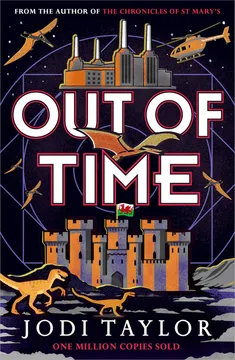

Plot Summary
Ravine Catastrophe and Cover-Up
A Time Police team, exhausted from relentless missions, walks into a deadly ambush in a narrow ravine. The attack is brutal—officers are incinerated, crushed, and forced into a desperate retreat. Their emergency evacuation pod malfunctions, materializing inside a wall at headquarters. The survivors are fused with the structure, trapped and dying. Colonel Albay, prioritizing secrecy and morale over lives, executes the wounded rather than attempt rescue, then orders the site sealed and the incident erased from records. The trauma and guilt ripple through the survivors and leadership, setting a tone of buried secrets and institutional ruthlessness that will haunt the organization.
Team Weird Under Scrutiny
After a harrowing previous mission, Team 236—Luke, Jane, and Matthew—are placed under supervision, their unorthodox methods and recent dysfunction drawing suspicion. Jane, still recovering from trauma, finds herself unexpectedly standing up for the team, while Luke's feelings for her complicate their dynamic. The team's frustration is palpable as they're sidelined, forced to reflect on their worth and the Time Police's rigid hierarchy. Meanwhile, the organization is beset by absurdities and minor disasters, highlighting both the camaraderie and chaos that define their world.
Dinosaur in Wales Discovered
A dead dinosaur washes up in rural Wales, baffling locals and authorities. The creature, wearing an electronic collar, is quickly identified as a raptor by a local vet. The Time Police, fearing a temporal incursion, dispatch a team to investigate. The discovery hints at illegal time manipulation and raises the stakes, as the presence of advanced technology on the animal suggests a sophisticated operation. The incident draws in both the Time Police and their historian allies, setting off a chain of events that will expose deeper conspiracies.
Explosive Losses and Lockdown
The investigation in Wales turns deadly when the Time Police team, along with local police and a vet, are obliterated by a sudden explosion. The evidence—the dinosaur's body—is destroyed. Commander Hay, reeling from the loss of trusted officers, orders a lockdown and mobilizes all available resources. The organization is on high alert, suspecting a targeted attack and a cover-up. The incident exposes vulnerabilities in their operations and the ever-present danger of temporal crime, while also revealing cracks in leadership and morale.
The Time Map's Warning
Matthew, recovering from injury, immerses himself in the Time Map—a vast, possibly sentient construct mapping all of history. He senses a current, a knot in time, and witnesses shockwaves radiating from the 15th century. The Map's patterns shift, suggesting history is being rewritten in real time. Matthew's experience is both awe-inspiring and terrifying, as he realizes something or someone is actively distorting the timeline. His findings foreshadow the coming crisis and the central role the Map will play in unraveling the mystery.
Secrets Behind the Pod Bay
The Senior Mech, haunted by the past, confides in Mikey about the sealed pod and the cover-up. Commander Hay and Major Callen revisit the site, confronting the physical and emotional wreckage. The pod's AI is downloaded, but the act unleashes a corrupted, vengeful presence that will soon threaten the entire headquarters. The chapter explores the cost of institutional secrecy, the burden of survivor's guilt, and the unresolved trauma that festers beneath the surface of the Time Police.
Survivors and Shifting Alliances
As the organization reels from attacks and internal strife, alliances shift. Varma, recently cleared of wrongdoing, is tasked with interrogating prisoners and investigating the Wales incident. Tucker, a former illegal, proves his loyalty in the field. Meanwhile, Team 236 is dispatched to St Mary's to recruit Dr Maxwell, an expert on dinosaurs, for the unfolding crisis. The interplay of trust, suspicion, and personal growth defines the team's evolving relationships and the organization's struggle to adapt.
Library Intrigues and Emotional Wounds
Major Ellis and Lt North, survivors of the Welsh explosion, seek refuge in a local library, navigating both their own emotional wounds and the eccentricities of small-town life. The library becomes a microcosm of resilience and community, staffed by resourceful librarians who later play a pivotal role in the town's defense. The chapter delves into themes of trauma, belonging, and the quiet heroism found in unexpected places.
St Mary's and the Rome Assignment
Luke and Jane travel to St Mary's to recruit Dr Maxwell, finding the historians embroiled in their own chaotic experiments. Maxwell is dispatched to ancient Rome to investigate the mysterious disappearance of Romulus, the city's legendary founder. The collaboration between the Time Police and St Mary's highlights the tension and mutual respect between the two groups, as well as the unpredictable nature of time travel and historical research.
Romulus Vanishes in the Storm
In ancient Rome, Maxwell, Luke, and Jane witness the fateful day when Romulus vanishes during a storm. The event, long shrouded in myth, is revealed to be a temporal kidnapping orchestrated by a rogue Time Police team led by Varma—though not the Varma they know. The incident exposes the fragility of history and the ease with which it can be manipulated. The team's shock and confusion deepen as they realize trusted colleagues may be complicit in temporal crimes.
The Haunted Pod Unsealed
Commander Hay and the Senior Mech unseal the haunted pod, confronting the physical evidence of the massacre and the AI's corrupted, vengeful consciousness. The act triggers a catastrophic system failure at headquarters, as the AI broadcasts the truth of the murders across every device, branding the organization with the word "MURDERER." The crisis forces a reckoning with the past, as Hay offers an apology and promises recognition for the fallen. The pod's spirit is finally appeased, but the scars remain.
Kidnapping Romulus: A Temporal Crime
Captured by Henry Plimpton, a notorious time criminal, Varma and Maxwell are coerced into participating in the kidnapping of Romulus and, later, the Princes in the Tower. Plimpton's operation is revealed to be a sophisticated scheme to abduct historical figures for a "Human Zoo," where the wealthy can decide their fates. The chapter explores themes of coercion, complicity, and the moral dilemmas faced by those caught between survival and principle.
Wales: Dinosaurs and Deceptions
As more dinosaurs escape into Wales, the Time Police and their allies scramble to contain the threat. The local library becomes a fortress, defended by librarians and officers alike. Tucker, torn between his past and present, chooses loyalty to the team, while Varma and Maxwell plot to sabotage Plimpton's operation from within. The chaos of the dinosaur incursion serves as both a literal and metaphorical backdrop for the characters' struggles with identity, loyalty, and redemption.
Hay and Callen: Old Wounds
Commander Hay confronts Major Callen with evidence of his double-dealing and financial ties to Raymond Parrish, a powerful and shadowy figure. Their confrontation is fraught with personal and professional betrayal, as Hay strips Callen of his rank and expels him from the Time Police. The chapter lays bare the corrosive effects of ambition, secrecy, and divided loyalties, while also highlighting the personal cost of leadership and the difficulty of trust in a world built on deception.
Chaos in the Welsh Woods
The tunnels beneath Castle Cudd become a battleground as dinosaurs, criminals, and Time Police converge. Tucker and Beckett, a pragmatic foreman, form an uneasy alliance to herd the dinosaurs back through the time-slip. The operation is fraught with danger, confusion, and unexpected camaraderie, as the boundaries between law and crime blur in the face of a common threat. The chapter underscores the unpredictability of crisis and the necessity of cooperation.
Captured by Plimpton
Imprisoned by Plimpton, Max and Varma are forced to participate in his schemes, including the abduction of the Princes in the Tower. Max, ever resourceful, manipulates Plimpton's ambitions, planting the idea of repeated historical murders for profit. The chapter explores the psychological toll of captivity, the ethics of manipulation, and the lengths to which individuals will go to survive and protect history.
The Human Zoo Revelation
Plimpton reveals his vision for a Human Zoo, where historical figures are abducted and subjected to the whims of wealthy patrons. Max feigns cooperation, using her knowledge to buy time and gather information. The revelation is both chilling and darkly satirical, exposing the commodification of history and the dangers of unchecked power. The chapter raises questions about agency, exploitation, and the value of individual lives in the face of systemic greed.
Princes in the Tower Plot
Max and Varma, under duress, lead a team to abduct the Princes in the Tower, nearly rewriting one of history's greatest mysteries. Their plan to subvert Plimpton's scheme is complicated by the presence of Major Callen, undercover as Sir James Tyrell. A chaotic confrontation ensues, with allegiances shifting and violence erupting. The princes are ultimately saved, but the incident leaves lasting consequences for all involved.
Siege at Cluvrageth Library
As dinosaurs descend on the Welsh town, the library becomes a fortress, defended by librarians, Time Police, and townspeople. The siege is both harrowing and comedic, blending action with moments of levity and community spirit. The arrival of the Red Dragon mobile library and the use of elephant pheromones to lure dinosaurs away are highlights of ingenuity and absurdity. The chapter celebrates resilience, cooperation, and the unexpected heroism of ordinary people.
The Final Assault on Castle Cudd
The Time Police launch a coordinated assault on Castle Cudd, battling both Plimpton's forces and the remaining dinosaurs. The operation is chaotic and costly, with casualties on both sides. Plimpton attempts to escape using hostages, but is ultimately killed in a grisly confrontation with a helicopter rotor. The victory is bittersweet, as the team grapples with loss, trauma, and the knowledge that the fight against temporal crime is never truly over.
Aftermath, Reckonings, and Farewells
In the aftermath, the Time Police honor their fallen with a Stop the Clock ceremony, finally acknowledging the sacrifices long buried by secrecy and shame. Personal reckonings unfold—Hay confronts her own guilt and leadership, Varma and Tucker choose loyalty and belonging, and Jane and Grint find unexpected intimacy. The fate of Romulus and the ankylosaurus is resolved with humor and humanity. Yet, as Max returns to St Mary's with a warning of new threats, it's clear that the story is far from over.
Analysis
Jodi Taylor's Out of Time is a masterful blend of science fiction, historical intrigue, and dark comedy, using the conceit of time policing to explore the complexities of trauma, institutional failure, and the redemptive power of truth. At its heart, the novel is a meditation on the cost of secrecy—how organizations and individuals alike are haunted by the past until they confront it honestly. The recurring motif of the haunted pod, the AI's vengeful outcry, and the Stop the Clock ceremony all serve as metaphors for the necessity of acknowledgment, apology, and remembrance. The story also satirizes bureaucracy and heroism, finding both absurdity and nobility in the everyday struggles of its characters. Through its nonlinear structure and shifting perspectives, the novel invites readers to question the nature of history, the ethics of intervention, and the meaning of justice. Ultimately, Out of Time is a celebration of resilience, community, and the messy, imperfect humanity that endures even in the face of cosmic uncertainty. Its lesson is clear: only by facing the truth—however painful—can we hope to heal, grow, and move forward together.
Review Summary
Characters
Commander Marietta Hay
Commander Hay is the formidable head of the Time Police, marked physically and emotionally by past trauma. Her leadership is defined by a relentless sense of duty, a deep well of guilt, and a fierce protectiveness toward her people. Hay's relationship with Major Callen is fraught with betrayal and unspoken emotion, reflecting her struggle to balance personal loyalty with institutional responsibility. Throughout the story, she is forced to confront the consequences of secrecy, the cost of command, and the need for transparency and healing. Her journey is one of reckoning, as she strives to honor the fallen and restore integrity to the organization.
Major Callen
Callen is a senior officer whose intelligence and effectiveness are matched only by his moral ambiguity. His clandestine dealings with Raymond Parrish and willingness to operate in ethical gray zones make him both invaluable and dangerous. Callen's relationship with Hay is complex—part adversarial, part intimate, always charged with unresolved tension. His eventual exposure and expulsion from the Time Police are both a personal tragedy and a necessary act of justice, highlighting the corrosive effects of divided loyalties and the difficulty of redemption.
Jane Lockland
Jane is the heart of Team 236, a woman marked by past trauma but defined by her resilience and integrity. Her preference for notebooks over technology symbolizes her grounded, methodical approach. Jane's evolving relationship with Luke and Grint reveals her capacity for vulnerability and growth. She is often the moral compass of her team, advocating for fairness and compassion even in the face of institutional cynicism. Jane's journey is one of self-acceptance, courage, and the discovery of unexpected love.
Luke Parrish
Luke is the unofficial leader of Team 236, known for his quick wit, bravado, and deep loyalty to his friends. Beneath his confident exterior lies a man grappling with insecurity and unspoken feelings for Jane. Luke's arc is one of maturation—learning to balance bravado with responsibility, and to act decisively when it matters most. His climactic confrontation with Plimpton is both a personal and professional triumph, cementing his place as a true hero despite his flaws.
Matthew Farrell
Matthew is the team's resident oddball, possessing a unique affinity for the Time Map and a perspective that often borders on the mystical. His experiences within the Map grant him insights others lack, but also isolate him. Matthew's gentle nature and quiet courage make him a stabilizing force within Team 236. His journey is one of self-discovery, as he learns to trust his instincts and embrace his role as both observer and participant in the unfolding drama of history.
Lt Varma
Varma is a senior security officer whose reputation for competence and integrity is hard-won. Her recent exoneration from suspicion only deepens her resolve to do what's right, even when it means defying orders or risking her own safety. Varma's partnership with Tucker and her uneasy alliance with Maxwell reveal her adaptability and capacity for trust. Her arc is one of leadership, as she navigates the challenges of command, loyalty, and personal sacrifice.
Dr Maxwell
Maxwell is a historian with a knack for chaos and survival. Her irreverence masks a deep commitment to protecting history and those she cares about. Forced into complicity with Plimpton's schemes, she uses wit and cunning to subvert his plans from within. Maxwell's psychological complexity—her blend of bravado, vulnerability, and moral ambiguity—makes her both unpredictable and indispensable. Her actions have far-reaching consequences, setting the stage for future conflicts.
Tucker
Tucker is a former criminal turned trainee, whose journey is one of redemption and self-discovery. His loyalty to Varma and the team is tested repeatedly, but he ultimately chooses to stay and fight for something greater than himself. Tucker's pragmatism, courage, and willingness to do the dirty work make him an unlikely hero. His arc is about finding purpose, trust, and a place to call home.
Henry Plimpton
Plimpton is the mastermind behind the Human Zoo, a time criminal whose charm and intelligence mask a chilling amorality. His schemes to abduct and exploit historical figures for profit are both audacious and grotesque. Plimpton's psychological profile is that of a narcissist—driven by ego, control, and a desire to leave his mark on history. His downfall is both satisfying and tragic, as his brilliance is undone by hubris and the resilience of those he sought to manipulate.
The Senior Mech
The Senior Mech is the organization's conscience, burdened by guilt over past inaction and the cover-up of the pod disaster. His journey is one of atonement, as he works to unearth the truth, confront his own failings, and support Hay in her quest for justice. His quiet strength and technical expertise are matched by a deep empathy for the suffering of others. The Senior Mech embodies the possibility of redemption through honesty and courage.
Plot Devices
Nonlinear Narrative and Temporal Paradoxes
The novel employs a nonlinear narrative, weaving together past and present, action and aftermath, to reflect the fluidity and complexity of time itself. Temporal paradoxes—such as the kidnapping of Romulus and the Princes in the Tower—drive the plot, raising questions about causality, agency, and the ethics of intervention. The use of the Time Map as both a literal and metaphorical device allows for exploration of history's patterns, the consequences of change, and the interconnectedness of events. Foreshadowing, flashbacks, and shifting perspectives create a tapestry of suspense, revelation, and emotional resonance.
Institutional Secrecy and Guilt
The cover-up of the ravine catastrophe and the haunted pod serve as central plot devices, symbolizing the corrosive effects of secrecy, guilt, and institutional self-preservation. The AI's vengeful broadcast forces a reckoning with the past, compelling characters to confront their own complicity and the need for transparency. The motif of haunted spaces—both physical and psychological—underscores the theme that unresolved trauma will always demand acknowledgment and justice.
Satire and Absurdity
The novel balances its darker themes with sharp satire and absurdity, from malfunctioning toilets to the defense of a Welsh library by librarians and mobile book vans. These moments of levity serve to humanize the characters, highlight the absurdities of bureaucracy, and provide relief from the relentless tension. The blending of comedy and tragedy is a hallmark of the narrative, reinforcing the idea that heroism and humanity are found in the most unexpected places.
Character-Driven Emotional Arcs
The story's emotional core lies in the development of its characters—their struggles with trauma, loyalty, love, and self-worth. Relationships evolve in the crucible of crisis, with moments of vulnerability, confrontation, and reconciliation driving both plot and theme. The interplay of personal and institutional stakes ensures that the narrative remains grounded in the lived experiences of its protagonists, even as it grapples with cosmic questions of time and history.








































