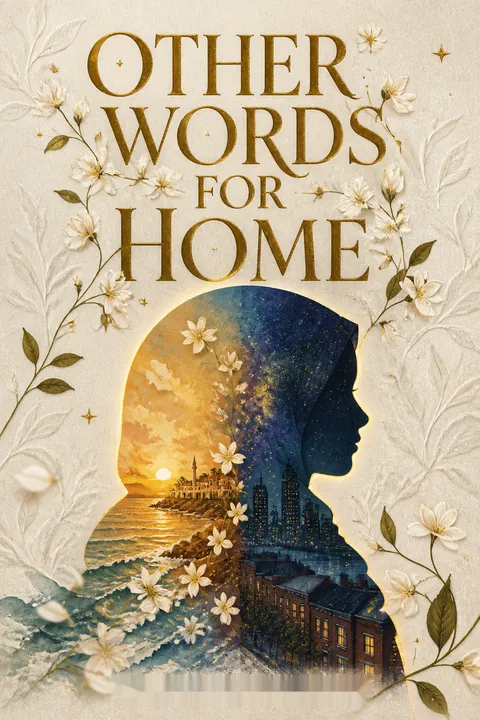

Plot Summary
Jasmine and Salt Air
Jude's days begin by the sea, breathing in scents of jasmine and salt, living with her loving family in a coastal town. Her world is shaped by the boundaries her Baba sets, and by the blossoming of girlhood alongside her best friend Fatima. They watch swirling tourists and dream of becoming movie stars. Jude adores her brother, Issa, who once sang Madonna with her, but now talks of politics and change as Syria darkens. The regularity of asroneyeh—shared snacks and laughter—anchors their childhood, but the careless joy of summer feels threatened by a political storm they can't yet control.
Shadows Over Home
The city's mood shifts—streets bristle with whispers, and news of violence and missing people in Aleppo trickle in. Jude feels the city's breath tighten, as Fatima, her mother, and even the once-lively shops now move with caution. Once, Jude felt proud to see Syria on TV; now, the images are of destruction, not belonging. Fatima growing into coverings marks a growing apart, and Issa's activism becomes a wedge within the family. Arguments between Baba and Issa over freedom and safety become the soundtrack of home, drowning out laughter.
Fatima Drifts Away
Jude and Fatima's closeness is complicated as Fatima matures, both physically and spiritually, while Jude lingers on the threshold of change. Their friendships with Sammy, a posh Damascene girl, briefly bridge worlds—showing Jude a different kind of confidence, and underlining Jude's own out-of-place feelings. With every moment of growing up, Jude feels the gap widen—not only with Fatima but, heartbreakingly, with Issa and her fantasy of a united, simple family life.
Issa's Revolution
Political unrest explodes. Issa is swept up in revolutionary zeal; marches, risk, and passionate fights with Baba reshape the family's sense of safety. Jude is forced to stay isolated during protests, stifled by her mother's new fear, sensing danger through every whisper and armed patrol. Symbolically, the heavy newspaper her father hands her contains stories of distant violence, but also presses the weight of choices, fear, and voicelessness into Jude's hands. The simple pleasures of family life are drowned by uncertainty.
Goodbyes and Birthdays
Danger closes in, and after a terrifying police raid and Issa's escape, Mama quietly announces they will leave to visit her brother in America—for safety, for an unborn sibling. Jude must say hurried, unsatisfying goodbyes to Fatima, Baba, and Issa, each farewell suffused with longing and incomplete closure. Packing up a life into a single suitcase, Jude senses her childhood—her dreams and her sense of home—slipping away, even as she tries to bring pieces of it with her.
Crossing Oceans
The long flight, hushed and uncertain, carries Jude and Mama from everything familiar to Cincinnati and a new family—Uncle Mazin, American Aunt Michelle, and cousin Sarah. Entry is marked by the anxiety of borders and the insecurity of language. Uncle Mazin's abundance and kindness clash with Jude's pride. Sarah, distant and cutting at first, represents both possibility and alienation. Everything—from the size of houses to the taste of bread—forces Jude to find her place between admiration and the ache of loss.
American Strangeness
Life in America is equal parts luxury and loneliness. Jude marvels at supermarkets, malls, endless choices, constant noise, and the privileged casualness with which her cousin treats things sacred or unattainable back home. Sarah's rejection burns, but moments of connection—music with Aunt Michelle, white pillows, and old wooden floors—offer glimpses of belonging. At school, Jude is invisible and terrified, an outsider who knows English in theory but not in lived experience. Calls home bring more longing than comfort, as war reshapes the fate of loved ones left behind.
Language Barriers
Jude flounders in her new school, her bright mind muffled by slow, sticky English. ESL class, meant for "kids like her," is humbling and isolating—yet it's also a shelter, where classmates from China, Korea, Somalia share her confusion and hope for acceptance. The awkward camaraderie of mispronounced "knights" and "nights" becomes shared ground. Jude's desire for recognition grows, especially as Sarah and her friends refuse to acknowledge her, except to covet the Arabic she tries so hard not to forget.
Finding New Belonging
Facing microaggressions, isolation, and moments of outright hostility, Jude also starts to build a community: bonds are forged with Layla, another Middle Eastern American, and kindhearted Miles, whose cosmic t-shirts and gentle questions spark friendship—and even a flutter of first crushes. On stage, in play practice, Jude glimpses the thrill of being truly seen. The local Middle Eastern restaurant becomes a haven, both a memory of home and a place to claim new space. Through rituals, resilience, and new friends, Jude's sense of self deepens.
Letters Never Sent
Jude writes countless letters to Fatima, seeking hope and home, but receives none. Her mother secretly withholds Fatima's responses, fearing Jude's heart can't handle another loss. Layers of silence shroud the family, from the fate of Fatima to Issa's now-dangerous absence. These silences threaten to harden Jude, but also teach her the weight and limitations of words, the necessity of hope, and the importance of chosen family and loyalty—even across continents and divides.
First Blood and New Scarves
Jude experiences her first period—alone and afraid, but eased by Mama's care. As she marks physical and spiritual womanhood by choosing to cover her hair, reactions swirl around her: celebration from some, suspicion or concern from others, especially Aunt Michelle who fears for Jude's autonomy. Facing these cross-currents, Jude stands firm: the scarf is her choice, her pride, a badge of her identity, not her oppression. She begins to see herself not as a visitor, but as a bridge between cultures.
Spotlight and Stage Fright
Despite doubts—her accent, the belief that certain roles are "not for girls like us," and the pressure to hide—Jude auditions for the school play, drawing on her deep love of music and memories with Issa. Her bold choice surprises others and herself. The theater, once a symbol of her outsider status, becomes the ground for her self-expression and confidence. On stage she finds not only illumination, but the freedom to speak, perform, and claim a place in her new world.
Hurtful Words, Kind Hands
As global headlines ignite local fear, Jude and Layla confront Islamophobia firsthand: Layla's family restaurant is vandalized, Jude is accosted in the street, and misunderstanding chills friendships. These acts sting deeply, leaving both girls wounded and questioning their place in America. Yet these trials forge resilience. With gentle support from family, teachers, and unexpectedly compassionate friends like Miles, Jude perseveres—holding fast to the knowledge that being noticed can be a blessing or a curse, but dignity is always hers to claim.
Hate on Ludlow Avenue
The violence against their community—and the world's indifference or selective empathy—leave Jude reeling. She tries to comfort Layla amid her isolation and pain, realizing that in-between identities can be the loneliest place. Jude wrestles with how others see her, but refuses to surrender to hate or victimhood. Through adversity, she internalizes her mother's advice: "it's not about you," and learns that remaining open-hearted and connected is the most radical act of survival.
Foundations of Friendship
As the dust settles after tragedy and misunderstanding, friendships revive: Layla and Jude reconcile, building each other up through shared vulnerabilities. Sarah, once aloof, begins to open up, seeking to help and apologizing for her own failings. Jude learns that forgiveness can be as transformative as anger, and that solidarity—even from the least expected places—can heal, empower, and make a foreign land feel a bit more like a home.
Seeing Stars, Missing Brothers
Jude's grief over Issa's absence and possible danger simmers beneath every accomplishment. Cosmic conversations with Miles about the stars invoke hope and awe, even as events in Syria remain dire. Birth brings new hope as Jude's baby sister, Amal, is born—her name meaning "hope." The fragile, tiny girl unites the family in love, and a postcard from Fatima means lost friendships may survive after all. Every small act of caring—showing off baby photos, sharing cookies, holding a hand—becomes resistance against despair.
Hope in the Kitchen
As Jude and her family organize a fundraiser for Layla's family, the local mosque is transformed with food, laughter, and the affirmation of community. Former barriers between relatives and in-laws begin to fall away, and Mama's pride in Jude's and Amal's growth is palpable. Jude witnesses the gentle, gradual transformation of the family—from refugees and strangers to participants and leaders. She learns that hope is not just an abstract word but a garden grown by many loving hands.
The Curtain Rises
Opening night arrives. Jude, swathed in her costume and scarf, steps onto the stage and into her full self—Syrian, American, Muslim, actor, daughter, sister, friend. Her family beams in the audience, new friends cheer, and she is, at last, seen and heard. Issa, safe for now, calls to see the new baby and new Jude, their love transmitted across oceans. The curtain rises not just on a single performance, but on a new chapter—one in which hope, love, and chosen belonging prevail.
Analysis
"Other Words for Home" radiates with gentle but fierce insistence on the necessity of belonging—on one's own terms—amid the violence of displacement and the challenge of becoming. Through Jude's voice, the novel probes the realities of forced migration, prejudice, and resilience with unsparing honesty, yet balances each wound with equal measures of sweetness and hope. In a modern world marked by xenophobia, war, and political apathy, the book becomes a call to empathy, urging readers to see the battered but undimmed dreams, ordinary courage, and joys in those who are displaced. Warga's verse, concise but piercing, encourages a reimagining of "otherness"—inviting us to recognize the multiplicity within ourselves and others, and to reconsider the boundaries of "home." Ultimately, the story argues that belonging is created—one act of courage, kindness, and hope at a time; that we are tasked with not only letting others in, but letting ourselves be transformed by their presence. The lesson, threaded throughout: generosity—of love, of self, of compassion—is the font of survival and joy.
Review Summary
Other Words for Home receives overwhelmingly positive reviews, averaging 4.4 out of 5 stars. Readers praise its poetic verse format, emotional depth, and authentic portrayal of a young Syrian refugee navigating life in America. Many highlight its thoughtful exploration of Islamophobia, immigration, identity, and belonging. Reviewers frequently recommend it as required school reading, noting its accessibility for younger audiences while resonating with adults. Jude is celebrated as a compelling, brave protagonist, and Jasmine Warga's writing is consistently described as beautiful, raw, and deeply moving.
People Also Read




Characters
Jude
Jude is the twelve-year-old Syrian protagonist whose point of view shapes the story's emotional heart. Gifted, thoughtful, and emotionally vibrant, she treasures family, friendship, and dreams of stardom. The eruption of war forces her into exile, thrusting her into the role of caretaker (for her pregnant mother and herself) and cultural translator. Through language struggles and social isolation, Jude emerges as a resilient young woman, forging an identity that balances pride in her Muslim heritage with fierce independence. Her internal shifts—from voicelessness, confusion, and longing to courage, agency, and self-acceptance—mirror the upheavals and reconciliations of her inner and outer worlds.
Mama (Sahar)
Jude's mother, heavily pregnant and steadfast, makes impossible choices out of love. She embodies resilience, anchoring her children through loss and displacement. Though she hides painful truths (about Fatima's move, about the gravity of war), she is ultimately a source of comfort, wisdom, and hope. Her own journey—struggling with homesickness, fiercely maintaining tradition, adapting in foreign lands—parallels her daughter's, culminating in her eventual pride when Jude asserts her independence and agency.
Issa
Jude's older brother, Issa, once her playmate, evolves into a passionate revolutionary. His political activism shatters the family's peaceful routine, exposing Jude to the costs of conviction and the pain of separation. Though physically and emotionally distant for much of the narrative, he remains a model of courage—his choices echo in Jude's own quest for voice and self-assertion. His brief reappearance (safe, if only momentarily) is a bittersweet salve for Jude's longing.
Baba
Jude's father is both loving and strict, favoring stability and tradition even as the world around them fractures. His opposition to Issa's activism and fear for his family's safety drive much of the early conflict. Left behind in Syria, he symbolizes all that Jude and Mama have lost—and yearn to return to. He ultimately becomes a remote, beloved figure—a reminder of "before" who supports Jude's growth from afar.
Fatima
Fatima, vivacious and bold, shares Jude's childhood until adolescent changes and the onset of war create distance between them. Her early adoption of religious dress and her own family's displacement sharpen Jude's sense of loss and transition. Through letters, unspoken words, and their eventual reconnection by postcard, Fatima remains Jude's emotional touchstone, symbolizing the possibility of preserving love and identity across time and space.
Sarah
Sarah, Jude's American cousin, embodies the privileges and challenges of the in-between—never quite "enough" of either heritage. Originally aloof, perhaps jealous, she gradually becomes first an obstacle, then an ally, reflecting Jude's own journey toward acceptance and self-love. Her growth—apologizing, forging bonds, and acknowledging shared roots—echoes the story's larger arc of intergenerational healing and new belonging.
Layla
Layla, Lebanese-American and the only other hijabi at school, becomes Jude's confidante and, at times, antagonist. She, too, feels the ache of not belonging—never "enough" for America, nor quite at home in the "old country." Their dynamic lays bare the tensions of diaspora identity: the impulse to defend, the risk of division, the power of solidarity. Layla's own pain after her family's restaurant is vandalized catalyzes some of the book's most honest reckonings with racism, faith, and friendship.
Aunt Michelle
Married to Uncle Mazin, Aunt Michelle is American through and through, with a flair for hospitality and a deep desire to help—to the point of overstepping. Her love for Jude (and growing admiration for Jude's heritage) represents the possibility of cross-cultural respect. Through music, kitchen rituals, and small acts of advocacy, she embodies curiosity, growth, and the awkward but essential work of allyship.
Uncle Mazin
Mama's brother, a successful doctor in America, is both resource and symbol of what is possible in a new country. He offers comfort, stability, and some measure of privilege, but also occasional emotional distance as he negotiates his own identity and the burdens of being a model immigrant. His eventual participation in family and community events signals a growing comfort with duality—belonging both "here" and "there."
Miles
Miles, the classmate with galaxy shirts, is Jude's first genuine American friend. Quiet, thoughtful, and himself an outsider, he models a kind of friendship built on curiosity and kindness rather than superficial affinity. His empathy helps Jude feel less alone, while their stargazing conversations provide metaphors for hope. Miles' presence is proof that "the whole world" can live together, and that difference is not only tolerable but valuable.
Plot Devices
Fragmented Verse Structure
Jasmine Warga's choice of written-in-verse plunges the reader straight into Jude's heart and mind, mirroring her halting, searching, and imaginative English. The free verse fragments—simultaneously sparse and evocative—create space for ambiguity, letting emotion thrums between lines. Readers experience every longing, shock, and small joy as it happens, with the poetic form echoing the struggle and beauty of building a new self from broken pieces.
Juxtaposition and Mirrors
Nearly every scene draws contrasts—between home and exile, old and new, memory and aspiration, "us" and "them." Jude's relationships (with Fatima, Sarah, Layla, even her own mother) serve as mirrors: each character is a possible "other self," a possible path. These juxtapositions keep the reader always aware of what is gained and lost, and how new belonging is continuous negotiation between multiple truths.
Letters, Missing and Found
Jude's letters to Fatima, sometimes unsent or undelivered, encapsulate her hopes, fears, and need for affirmation. Their absence (when answers don't come) is more painful than outright loss, but the eventual return of connection brings catharsis. Letters serve as both plot device and metaphor for the challenges of communication across languages, cultures, and hearts.
Symbolism of Food, Dress, and Language
Food—especially shared tea, olives, bread, and baklava—symbolizes both continuity and adaptation. The act of wearing a hijab marks agency and signals maturity, while language (such as benedictions, Arab proverbs, American slang) both creates and bridges barriers. These symbols allow Jude—and readers—to feel the stakes of assimilation and resistance in everyday life.
Performance and the Stage
The school play functions as the literal and symbolic stage for Jude's growth, providing a space where she can decide who to be, and how to be seen. The tension between backstage, supporting roles, and the spotlight echoes the story's central questions: Who writes the script, and who gets to speak? Success is not just applause, but the act of being fully present, recognized, and proud.


Download PDF
Download EPUB
.epub digital book format is ideal for reading ebooks on phones, tablets, and e-readers.








































