
Plot Summary
Doppelgänger in Jerusalem
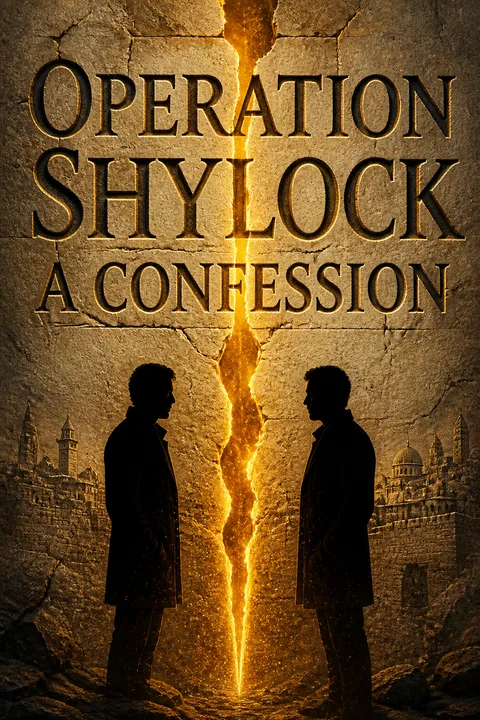
Philip Roth, the acclaimed American novelist, is startled to learn that someone impersonating him is giving lectures in Jerusalem, advocating radical ideas about Jewish identity and Diaspora. As reports from friends and the media accumulate, Roth is drawn into a surreal mystery: his double is not only using his name but also his biography, and is being taken seriously by the Israeli public. The confusion is compounded by Roth's own recent struggles with mental health, making him question the boundaries between reality and delusion. The stage is set for a confrontation between the "real" Roth and his uncanny impostor, as the lines between self and other, fact and fiction, begin to blur in the charged atmosphere of late-1980s Israel.
Halcion and Identity Crisis
Roth recounts his harrowing descent into madness following a reaction to the sleeping pill Halcion. His sense of self disintegrates, leaving him vulnerable, paranoid, and obsessed with the possibility of being replaced or erased. This psychological fragility colors his response to the news of the impostor in Jerusalem. The trauma of his breakdown lingers, making him hyper-aware of the instability of identity and the ease with which it can be appropriated or lost. Roth's struggle to reclaim his sense of self becomes intertwined with the external drama of the double, setting up a narrative where personal crisis and public spectacle mirror each other.
The Impostor's Manifesto
Roth's impostor, soon dubbed "Moishe Pipik," is not merely a prankster but a man with a mission: he advocates "Diasporism," a movement to resettle Israeli Jews of European descent back in Europe, arguing that Zionism has outlived its usefulness and now endangers Jewish survival. Pipik's rhetoric is passionate, apocalyptic, and deeply critical of Israeli society. He claims to be the true Philip Roth, using the author's fame to gain audiences with political figures and the media. The real Roth, both fascinated and appalled, is drawn into a cat-and-mouse game with his double, who seems to embody all the anxieties and contradictions of Jewish identity in the modern world.
Diasporism Unleashed
Pipik's Diasporism is presented as both a parody and a serious critique of Zionism. He imagines a mass return of Jews to the cities of Europe, a reversal of the historical narrative of exile and return. His arguments are laced with historical references, paranoia about a second Holocaust, and a messianic fervor that borders on the absurd. Roth, interviewing Pipik in disguise, is both repelled and seduced by the audacity of the vision. The impostor's ideas force Roth—and the reader—to confront uncomfortable questions about Jewish history, trauma, and the politics of memory.
Shadows at the Demjanjuk Trial
The trial of John Demjanjuk, accused of being the notorious Treblinka guard "Ivan the Terrible," unfolds in Jerusalem, providing a grim counterpoint to the farcical drama of the doubles. Roth attends the trial, observing the spectacle of justice, memory, and denial. The courtroom becomes a theater where questions of identity, guilt, and historical truth are played out with excruciating ambiguity. The presence of the impostor at the trial blurs the boundaries between witness and actor, victim and perpetrator, reality and performance.
Encounters with Appelfeld
Roth seeks solace and perspective in conversations with Aharon Appelfeld, an Israeli novelist and Holocaust survivor. Their dialogues explore the limits of memory, the dangers of mythologizing trauma, and the responsibilities of the writer. Appelfeld's reticence and focus on the victim's perspective contrast sharply with Pipik's grandstanding and Roth's own anxieties. Through Appelfeld, Roth is reminded of the power—and the limitations—of storytelling in the face of historical catastrophe.
The Nurse's Confession
Wanda Jane "Jinx" Possesski, Pipik's lover and nurse, emerges as a complex figure: a recovering anti-Semite whose relationship with Pipik is both redemptive and destructive. Her confessional monologue reveals the psychological toll of working with the dying, the allure of charismatic men, and the persistence of prejudice. Jinx's story is one of transformation, but also of dependency and self-abasement. Her presence complicates the drama of the doubles, introducing themes of gender, sexuality, and the possibility (or impossibility) of genuine change.
The Double's Seduction
The rivalry between Roth and Pipik escalates, moving from public spectacle to private confrontation. Pipik invades Roth's hotel room, demanding the return of a million-dollar check intended for Diasporism. The encounter is charged with aggression, pathos, and a bizarre eroticism, as the boundaries between self and other, original and copy, are tested to their limits. Roth's own sense of reality is destabilized, and the narrative teeters on the edge of farce and tragedy.
Paranoia and Pursuit
As Roth tries to disentangle himself from Pipik's schemes, he is drawn into a web of surveillance, abduction, and psychological manipulation. The Mossad, Israeli police, and Palestinian activists all seem to have a stake in his movements. Roth's paranoia intensifies, fueled by the duplicity of those around him and his own inability to distinguish friend from foe. The narrative becomes a hall of mirrors, where every action is shadowed by suspicion and every encounter is potentially a trap.
The Mossad's Game
Roth is abducted by Israeli intelligence, who see in him—and in his double—a potential asset for their own operations. He is pressured to participate in a covert mission, blurring the line between literary invention and real-world intrigue. The Mossad's methods are both ruthless and absurd, echoing the themes of impersonation and performance that run through the novel. Roth's sense of agency is eroded, and he is forced to confront the ethical ambiguities of collaboration, loyalty, and betrayal.
Truth, Lies, and Loshon Hora
In a climactic encounter with Smilesburger, a Mossad handler, Roth is lectured on the dangers of "loshon hora"—evil speech—and the destructive power of words. The conversation spirals into a meditation on Jewish self-hatred, the ethics of storytelling, and the futility of seeking truth in a world saturated with lies and disinformation. Roth is offered money to suppress his account of the operation, and is warned of the consequences of publishing the truth. The chapter is a tour de force of irony, self-doubt, and philosophical skepticism.
The Vanishing Act
Pipik and Jinx vanish from Jerusalem, leaving Roth with only traces: a broken pair of glasses, a cloth Star of David, and a cassette tape of anti-Semitic ranting. The impostor's absence is as unsettling as his presence, and Roth is left to ponder the meaning of the encounter. The boundaries between fiction and reality, self and other, remain porous and unstable. The narrative circles back on itself, refusing closure or resolution.
The Unreliable Narrator
Roth reflects on the impossibility of telling the whole truth, acknowledging the distortions, omissions, and inventions that shape his account. The confession is revealed as both an act of self-exposure and a performance, a way of both revealing and concealing the self. The reader is left to question the reliability of the narrator, the authenticity of the events described, and the very nature of identity.
The Impossible Confession
Roth contemplates the ethical and existential stakes of his narrative: the dangers of loshon hora, the responsibilities of the writer, and the allure of self-invention. The confession becomes an impossible task, haunted by the specter of the double and the threat of retribution. The novel ends with a gesture of refusal—a decision to withhold the final chapter, to leave the story incomplete, and to embrace the uncertainty that has defined the entire journey.
The End of the Double
In the aftermath, Roth is left with the knowledge that the double can never be fully exorcised, that the boundaries between self and other, truth and fiction, are always provisional. The novel closes with a meditation on the necessity of ambiguity, the endurance of the comic spirit, and the acceptance of the self as a site of perpetual contradiction and reinvention.
Analysis
Operation Shylock is a dazzling, disorienting meditation on identity, truth, and the power of fiction to both reveal and obscure reality. Roth uses the device of the doppelgänger to probe the anxieties of Jewish existence in the late twentieth century: the legacy of the Holocaust, the dilemmas of Zionism and Diaspora, and the persistent threat of anti-Semitism. The novel is both a political satire and a psychological thriller, a confession that continually undermines its own authority. Roth's narrator is unreliable, self-lacerating, and perpetually caught between competing loyalties—to self, to community, to truth, and to art. The book's central lesson is the necessity of ambiguity: the recognition that identity is always provisional, that truth is always contested, and that the boundaries between self and other, fiction and reality, are never fixed. Operation Shylock is a comic masterpiece and a profound exploration of the dangers and possibilities of self-invention, a work that challenges readers to embrace uncertainty and to find meaning in the very act of questioning.
Review Summary
People Also Read




Characters
Philip Roth
The protagonist and narrator, Roth is both a character and the author, blurring the line between fiction and autobiography. He is a man in crisis, recovering from a psychological breakdown and beset by doubts about his identity, his art, and his place in Jewish history. Roth's journey through Jerusalem is both an external adventure and an internal reckoning, as he confronts his double, his past, and the ethical dilemmas of storytelling. His voice is ironic, self-lacerating, and deeply skeptical, yet also capable of tenderness and insight. Roth's relationships—with his double, with Appelfeld, with Jinx—reveal his longing for connection and his fear of dissolution. Over the course of the novel, he moves from paranoia and self-absorption toward a hard-won acceptance of ambiguity and imperfection.
Moishe Pipik (The Impostor)
Pipik is Roth's double, a man who appropriates his name, biography, and public persona to advance a radical agenda. He is both a comic figure and a sinister presence, at once pathetic and menacing. Pipik's advocacy of Diasporism is a parody of Zionist messianism, but also a serious critique of Jewish history and identity. Psychologically, he is a bundle of contradictions: needy, grandiose, self-loathing, and desperate for recognition. His relationship with Roth is both adversarial and symbiotic, as each man sees in the other a distorted reflection of himself. Pipik's ultimate disappearance leaves Roth—and the reader—uncertain whether he was ever fully real, or merely a projection of Roth's own fears and desires.
Wanda Jane "Jinx" Possesski
Jinx is Pipik's lover and nurse, a Gentile woman whose journey from hatred to love is fraught with ambivalence and self-doubt. Her confessional narrative exposes the psychological roots of prejudice, the trauma of caregiving, and the allure of charismatic men. Jinx is both a victim and an agent, complicit in Pipik's schemes yet also seeking redemption through her relationship with him—and, briefly, with Roth. Her sexuality is both a source of power and vulnerability, and her presence complicates the novel's exploration of identity, otherness, and the possibility of transformation.
Aharon Appelfeld
An Israeli novelist and Holocaust survivor, Appelfeld serves as Roth's confidant and intellectual foil. His reticence, humility, and focus on the victim's perspective provide a counterpoint to the grandiosity and self-absorption of Roth and Pipik. Appelfeld's wisdom lies in his acceptance of the limits of memory and the dangers of mythologizing trauma. He represents the possibility of dignity and meaning in the aftermath of catastrophe, and his friendship offers Roth a measure of solace and perspective.
Louis B. Smilesburger
Smilesburger is a Mossad operative who recruits Roth for a covert mission. He is both avuncular and manipulative, blending warmth with ruthlessness. Smilesburger's lectures on loshon hora, Jewish self-hatred, and the ethics of speech are both comic and profound, exposing the contradictions at the heart of Jewish identity. He is a master of disinformation, a trickster figure who both guides and deceives Roth. Psychologically, he represents the voice of tradition, authority, and communal responsibility, but also the dangers of conformity and repression.
George Ziad
George is a Palestinian academic and former friend of Roth's from graduate school. His life has been shattered by exile, occupation, and the loss of his homeland. George's rhetoric is passionate, embittered, and laced with both insight and paranoia. He seeks in Roth a sympathetic ear, but also a potential ally in the struggle against Israeli oppression. His psychological state is one of perpetual agitation, oscillating between hope and despair, lucidity and madness. George's fate is a tragic reminder of the human cost of political conflict.
John Demjanjuk, Jr.
The son of the accused war criminal, Demjanjuk Jr. is a figure of pathos and ambiguity. His presence at the trial raises questions about the transmission of guilt, the possibility of justice, and the limits of empathy. He is both a victim and a potential target, caught in the crossfire of history and memory. His relationship with his father, and with the Jewish survivors who accuse him, embodies the novel's central themes of identity, responsibility, and the impossibility of closure.
Uri
Uri is Smilesburger's muscle, a man of few words but great physical presence. He represents the coercive power of the state, the threat of violence that underlies all political and personal interactions in the novel. Uri's presence is both reassuring and menacing, a reminder of the limits of reason and the ever-present possibility of force.
Supposnik
Supposnik is a rare book dealer who enlists Roth's help in publishing the diaries of Leon Klinghoffer, a Jewish victim of terrorism. He is both a custodian of the past and a manipulator of the present, blending erudition with opportunism. Supposnik's obsession with Shylock and the legacy of anti-Semitism provides a meta-commentary on the novel's themes of representation, stereotype, and the uses of history.
Jinx's Letter
The letter from Jinx, whether real or imagined, serves as a coda to the novel's exploration of identity, desire, and the impossibility of closure. It is both a confession and a threat, a plea for understanding and a warning against further exposure. The letter encapsulates the novel's central insight: that the boundaries between truth and fiction, self and other, are always provisional, and that the search for certainty is both necessary and doomed.
Plot Devices
Doppelgänger and Identity Confusion
The central plot device is the appearance of a doppelgänger who appropriates Roth's identity, forcing the protagonist—and the reader—to question the stability of selfhood. The double is both a literal impostor and a metaphor for the divided self, the shadow side of the protagonist's psyche. This device allows Roth to explore themes of authenticity, performance, and the porous boundaries between fiction and reality.
Unreliable Narration and Metafiction
The novel is structured as a confession, but one that continually calls its own truthfulness into question. Roth's narration is self-reflexive, ironic, and riddled with doubts and contradictions. The reader is repeatedly reminded of the artificiality of the narrative, the impossibility of full disclosure, and the dangers of loshon hora—evil speech. This metafictional approach destabilizes the reader's expectations and foregrounds the ethical and epistemological dilemmas of storytelling.
Paranoia, Surveillance, and Espionage
The plot is driven by a pervasive sense of paranoia: Roth is watched, followed, abducted, and manipulated by a variety of actors—Mossad agents, Palestinian activists, his own double. The boundaries between reality and performance, friend and foe, are constantly shifting. The espionage elements serve both as a satire of Cold War thrillers and as a metaphor for the psychological and political complexities of Jewish identity.
Historical and Political Backdrop
The novel is set against the backdrop of real historical events: the trial of John Demjanjuk, the Palestinian intifada, and the ongoing debates about Zionism and Diaspora. These events provide both a context and a counterpoint to the personal dramas of the characters, highlighting the ways in which individual identity is shaped by collective history and trauma.
Intertextuality and Self-Referentiality
Roth's narrative is saturated with references to his own previous works, to Jewish history and literature, and to the conventions of the confessional genre. The novel is both a continuation and a parody of Roth's earlier explorations of identity, authorship, and the boundaries between life and art. This self-referentiality creates a sense of vertigo, as the reader is continually reminded of the constructedness of the narrative.
Irony, Satire, and Comic Incongruity
The novel's tone oscillates between high seriousness and absurdist comedy. The impostor's grandiose schemes, the Mossad's manipulations, and Roth's own self-doubt are all treated with a mixture of irony and pathos. The result is a narrative that is both deeply unsettling and darkly funny, a satire of Jewish neurosis and a meditation on the impossibility of certainty.
About the Author




Download PDF
Download EPUB
.epub digital book format is ideal for reading ebooks on phones, tablets, and e-readers.








































