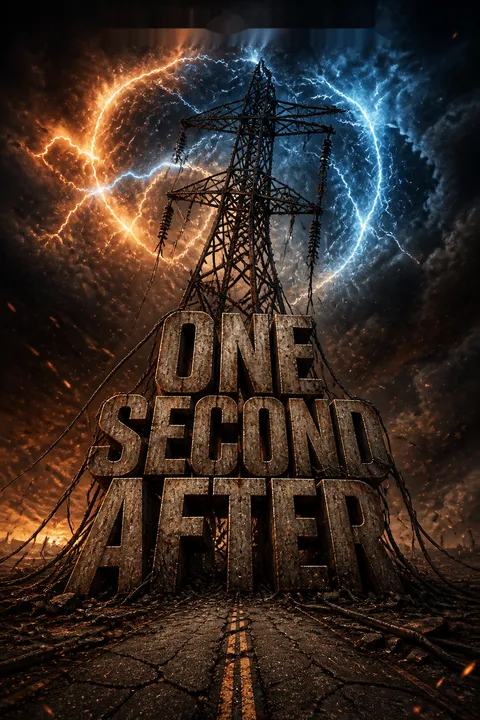

Plot Summary
Ordinary Day, Unseen Threat
John Matherson, a widowed history professor in Black Mountain, North Carolina, tries to preserve a sense of normalcy for his daughters, Elizabeth and Jennifer. The day is filled with small-town routines, birthday celebrations, and the warmth of family and community. Yet, beneath the surface, John is haunted by the memory of his late wife and the fragility of happiness. The world feels safe, insulated from chaos, but John's military past and his daughter's diabetes remind him that life is always one step from disaster. The chapter's gentle pace and nostalgia are pierced by a sense of foreboding, as if the world is holding its breath before a storm.
The Lights Go Out
Without warning, every electronic device dies. Cars stall, phones go dead, and the power grid collapses. At first, the townspeople believe it's a simple outage, but the silence is too complete, the stillness too deep. John's military instincts sense something far worse—a coordinated attack, perhaps an EMP. The town's isolation becomes palpable as the outside world vanishes. The first night is filled with uncertainty, as families huddle together, clinging to routines that no longer make sense. The loss of technology is more than inconvenience; it is the unraveling of the world they knew.
First Night, New Fears
As darkness falls, the community's sense of safety erodes. John's protective instincts intensify, especially for Jennifer, whose diabetes now poses a deadly risk without refrigeration for her insulin. The town's leaders gather, struggling to understand the scope of the disaster. Rumors swirl—terrorism, war, or a freak solar event. The lack of information is paralyzing. John arms himself, haunted by the knowledge that civilization is only ever a few meals away from chaos. The night is restless, filled with the distant sounds of confusion and the first hints of desperation.
Realization and Panic
By morning, the scale of the catastrophe becomes clear. John and the town's officials deduce that an EMP has struck, frying electronics nationwide. The implications are staggering: no food deliveries, no medicine, no communication. Panic spreads as people realize help isn't coming. The stores are looted, and the first deaths occur—those dependent on modern medicine, the elderly, and the vulnerable. The town's social fabric begins to fray as fear and hunger take hold. John's military background makes him a reluctant leader, forced to make impossible choices for the sake of survival.
The Town Fractures
As resources dwindle, the town's unity dissolves. Refugees from the highways flood in, seeking shelter and food, but are met with suspicion and hostility. The town council imposes martial law, rationing food and medicine. Tensions rise between locals and outsiders, and between those with power and those without. John is torn between compassion and pragmatism, knowing that every act of charity could mean death for his own family. The town's moral compass wavers as survival instincts take precedence over empathy.
Desperate Measures Begin
With starvation looming, the town resorts to desperate measures. Food is confiscated, homes are searched, and ration cards become the currency of life and death. The sick and elderly are triaged off, denied scarce medicine to save those with a better chance of survival. Law and order are enforced with increasing brutality. John is forced to execute looters and thieves, a burden that scars him deeply. The town's transformation from a haven to a fortress is complete, and the cost is measured in lost innocence and mounting graves.
The Dying Time
The summer brings no relief. Disease and malnutrition sweep through the population, claiming the weak and the unlucky. The nursing home becomes a charnel house, its patients abandoned and dying in filth. Children and parents starve together, and suicide becomes a common escape. The town's graveyards overflow, and the living are haunted by the faces of the dead. John's family is not spared—his father-in-law succumbs, and Jennifer's health deteriorates as her insulin supply dwindles. The emotional toll is crushing, and the survivors are left numb and hollow.
Law, Order, and Execution
The town's leaders are forced to confront the limits of law and morality. When two men are caught stealing vital medicine, John is chosen to carry out their execution. The public hanging is both a warning and a trauma, marking the point of no return. The community's sense of justice is warped by necessity, and the line between right and wrong blurs. John is changed by the act, haunted by guilt and the fear that he is becoming as ruthless as the enemies outside. The town's soul is at stake, and every decision is a test of what it means to be human.
The Struggle for Survival
As autumn approaches, the survivors adapt to their new reality. Gardens are planted, wild game is hunted to near extinction, and every scrap of food is hoarded. The college becomes a training ground for a militia, with students and townspeople drilling for the inevitable attack. The town forms alliances with neighboring communities, but trust is scarce. John's leadership is both a burden and a lifeline, as he balances the needs of his family with the demands of the town. The struggle for survival is relentless, and every day is a battle against despair.
The Enemy Approaches
Rumors of a marauding gang—the Posse—reach Black Mountain. Survivors from other towns tell of atrocities, cannibalism, and utter savagery. The town braces for attack, fortifying defenses and preparing for a siege. John and his militia devise a plan to lure the enemy into a trap, knowing that defeat means annihilation. The emotional stakes are heightened as Elizabeth reveals her pregnancy, and John is forced to accept that the future will be built on the ashes of the old world. The night before battle is filled with fear, hope, and the weight of all that has been lost.
Battle for Black Mountain
The Posse attacks at dawn, and the battle is brutal and chaotic. The town's defenses hold, but at a terrible cost. Friends and loved ones fall, including John's closest allies. The enemy is annihilated, but the victory is hollow—hundreds are dead, and the survivors are forever changed. The aftermath is a scene of horror, with the wounded triaged and the dead left unburied. John is forced to confront the darkness within himself and his community, as the line between justice and revenge is crossed. The battle marks the end of the old world and the birth of something new and uncertain.
Aftermath and Plague
The battle's survivors are ravaged by disease, as the wounds of war and the filth of starvation breed a deadly epidemic. The town's population is decimated, and the graveyards overflow. John's family is struck by tragedy as Jennifer's insulin runs out, and her slow, painful death becomes a symbol of all that has been lost. The community is reduced to a shadow of itself, and the survivors are left to pick up the pieces. The promise of rescue is a distant hope, and the cost of survival is measured in broken hearts and haunted memories.
The Last Losses
Jennifer's death devastates John and his family. The loss is both intimate and universal, a microcosm of the suffering endured by millions. The burial is simple, marked by love and the memory of better days. The family's grief is compounded by the knowledge that the world will never be the same. The survivors cling to each other, finding solace in small acts of kindness and the hope that the next generation might know peace. The chapter is a meditation on loss, resilience, and the enduring power of love.
The Starving Winter
The winter is a time of attrition, as hunger and cold claim the weakest. The town's population dwindles to a fraction of its former size. The survivors are gaunt, hollow-eyed, and traumatized. The rituals of civilization—burials, marriages, even education—are maintained out of habit and hope. John's family endures, but every day is a struggle. The arrival of spring brings a fragile sense of renewal, but the scars of the past year are indelible. The community is forever changed, and the future is uncertain.
The Return of America?
A year after the disaster, a column of U.S. Army vehicles arrives, bringing food, medicine, and the promise of order. The survivors are overjoyed, but the reunion is bittersweet. The general in charge reveals the true scale of the catastrophe—hundreds of millions dead, the nation fractured, and foreign powers occupying parts of the country. The survivors are no longer citizens of the America they once knew. The return of authority brings relief, but also the realization that the world has changed forever. The chapter ends with a sense of ambiguous hope and the question of what it means to rebuild.
Lessons in the Ashes
In the aftermath, John reflects on the lessons of the past year. The fragility of civilization, the dangers of complacency, and the importance of community are etched into his soul. The survivors are both broken and resilient, having endured the unthinkable. The story ends with a warning—that the comforts of modern life are not guaranteed, and that vigilance is the price of freedom. The ashes of Black Mountain hold both sorrow and the seeds of renewal, and the question remains: will the world remember, or will it forget?
Analysis
One Second After is a harrowing exploration of the fragility of modern civilization and the moral costs of survival. Through the lens of a small town stripped of technology by an EMP attack, the novel examines how quickly the comforts and certainties of contemporary life can vanish, leaving only the raw struggle for existence. The story is both a warning and a meditation: it warns of the dangers of complacency, technological dependency, and the failure to prepare for unlikely but catastrophic events; it meditates on the enduring power of love, community, and sacrifice in the face of overwhelming loss. The narrative's emotional arc is relentless, moving from denial and hope to despair and, finally, a hard-won, ambiguous resilience. The lessons are stark: civilization is a delicate construct, and its preservation requires vigilance, empathy, and the willingness to make impossible choices. The novel's ultimate message is both sobering and redemptive—survival is possible, but only at great cost, and the true test of a society is not how it thrives in comfort, but how it endures in the ashes.
Review Summary
One Second After receives mixed reviews on Goodreads with a 3.98 rating. Critics cite poor writing, grammatical errors (especially "of" vs "have"), one-dimensional characters, and excessive exposition through meetings rather than action. Many find the conservative, military-focused perspective and treatment of women problematic. However, supporters praise the realistic, terrifying portrayal of post-EMP America, appreciating it as thought-provoking despite literary flaws. The plausible collapse scenario resonates strongly, making readers consider modern dependency on technology and infrastructure vulnerability, even when the execution disappoints.
People Also Read
Characters
John Matherson
John is a widowed history professor and former Army colonel, thrust into leadership by disaster. His love for his daughters, Elizabeth and Jennifer, is the core of his existence, and his military background makes him both a source of strength and a figure of tragic burden. John's psychological arc is one of increasing isolation and moral compromise; he is forced to make decisions that violate his conscience for the sake of survival. His relationship with his family, especially the loss of Jennifer, is the emotional heart of the story. John's journey is a meditation on duty, sacrifice, and the cost of leadership in a world where every choice is a matter of life and death.
Jennifer Matherson
Jennifer, John's youngest daughter, is a sweet, intelligent twelve-year-old whose type 1 diabetes makes her especially vulnerable. Her illness is a constant source of anxiety for John, and her gradual decline as insulin runs out is a microcosm of the larger tragedy. Jennifer's courage and acceptance in the face of death are both heartbreaking and inspiring. She represents the innocence destroyed by catastrophe, and her death is the story's most devastating loss, forcing John and the community to confront the limits of their power and the meaning of love.
Elizabeth Matherson
Elizabeth, John's teenage daughter, is forced to grow up quickly as the world collapses. Her relationship with Ben, her pregnancy, and her struggle to survive in a world without safety or certainty are central to her arc. Elizabeth's resilience is tested by loss, hunger, and the demands of adulthood thrust upon her. Her eventual motherhood is both a symbol of hope and a reminder of all that has been lost. Elizabeth's journey is one of transformation, as she moves from adolescence to the responsibilities of a new, harsher world.
Makala Turner
Makala is a nurse stranded in Black Mountain by the disaster. Initially an outsider, she becomes indispensable to the community through her medical skill and emotional strength. Her relationship with John is complex, marked by mutual respect, shared trauma, and the possibility of new love. Makala's psychological resilience and willingness to make hard choices—such as triaging the dying and comforting the bereaved—make her a pillar of the new society. She bridges the gap between the old world and the new, embodying both loss and the hope of renewal.
Jen Dobson
Jen, John's mother-in-law, is a formidable Southern matriarch who provides emotional stability and practical wisdom. Her relationship with John is marked by mutual respect and occasional tension, especially as she navigates the loss of her husband and the challenges of survival. Jen's strength is both a comfort and a challenge to those around her, as she insists on maintaining dignity and tradition even as the world falls apart. Her gradual physical decline mirrors the fading of the old order, but her spirit endures.
Ben Johnson
Ben is Elizabeth's boyfriend, a decent and brave young man who becomes part of the Matherson family. His relationship with Elizabeth is a source of hope and vulnerability, and his willingness to fight and ultimately die for the community marks him as a tragic hero. Ben's arc is one of youthful idealism confronted by the brutality of survival. His death is a turning point for Elizabeth and a symbol of the cost of defending what remains of civilization.
Charlie Fuller
Charlie is the town's director of public safety, a man forced to become both judge and executioner. His transformation from a community leader to a wartime authority is marked by increasing exhaustion and moral compromise. Charlie's decisions—rationing, executions, and the defense of the town—are necessary but soul-destroying. His eventual death in battle is both a release and a symbol of the toll leadership exacts in a world without mercy.
Washington Parker
Washington is a retired Marine sergeant who becomes the militia's drillmaster and moral center. His experience and toughness are invaluable, but his compassion for the young soldiers under his command is his defining trait. Washington's death in battle is a profound loss, marking the end of innocence for the militia and the community. He represents the best of the old world's values—discipline, honor, and self-sacrifice—transplanted into a world that desperately needs them.
Doc Kellor
Doc Kellor is the town's doctor, a man of science and compassion forced to become a grim triage officer. His role is to confront the community with the realities of disease, starvation, and the limits of medicine. Kellor's psychological burden is immense, as he must decide who lives and who dies. His death during the plague is both a personal tragedy and a symbol of the collapse of the old order of care and healing.
The Posse Leader
The unnamed leader of the Posse is a charismatic, ruthless figure who brings terror, cannibalism, and destruction to Black Mountain. His psychological profile is that of a cult leader, using fear and violence to command loyalty. He is the antithesis of John and the community's values, representing the darkness that emerges when civilization collapses. His execution is both justice and a warning, a necessary act that threatens to drag the survivors into the same moral abyss.
Plot Devices
EMP Catastrophe
The story's inciting incident is a high-altitude electromagnetic pulse (EMP) attack that instantly destroys all modern electronics in the United States. This device is both literal and symbolic—the sudden loss of technology is the unraveling of civilization, exposing the fragility of modern life. The EMP is used to explore themes of dependency, vulnerability, and the thin veneer of order that separates society from chaos. It also serves as a narrative device to isolate the characters, forcing them to confront survival without outside help.
Moral Dilemmas and Triage
The narrative is structured around a series of escalating moral dilemmas: who gets food, who receives medicine, who is allowed to stay, and who must die. The concept of triage—borrowed from battlefield medicine—becomes the organizing principle of the community. This device is used to explore the erosion of ethical boundaries and the psychological toll of leadership. The repeated use of public executions, rationing, and the denial of care to the weak are plot mechanisms that force characters and readers alike to question the meaning of justice and humanity.
Outsiders vs. Insiders
The influx of refugees and the division between locals and outsiders is a recurring plot device that tests the limits of empathy and solidarity. The tension between self-preservation and compassion is dramatized through conflicts over resources, trust, and belonging. This device is used to examine the construction of community and the ease with which fear can turn neighbors into enemies.
Battle and Siege
The arrival of the Posse and the ensuing battle are the narrative's climax, using the siege as a device to bring all the story's themes to a head. The battle is both a literal fight for survival and a metaphorical struggle for the soul of the community. The use of fire, traps, and guerrilla tactics highlights the regression to primal forms of warfare, while the aftermath forces characters to confront the consequences of violence and the temptation of vengeance.
Foreshadowing and Flashbacks
The narrative is laced with foreshadowing—John's military background, Jennifer's illness, the town's complacency—all hint at the disaster to come. Flashbacks to John's life before the EMP, his memories of Mary, and references to historical events serve to contextualize the present crisis and deepen the emotional resonance. These devices are used to create a sense of inevitability and to draw parallels between personal and collective loss.
Symbolism and Ritual
Objects like Rabs the rabbit, the American flag, and ration cards become symbols of innocence, identity, and survival. Rituals—burials, prayers, the Pledge of Allegiance—are used to maintain a sense of continuity and meaning in a world turned upside down. These devices ground the narrative in the emotional reality of the characters and provide moments of grace amid the horror.
After Series
Download PDF
Download EPUB
.epub digital book format is ideal for reading ebooks on phones, tablets, and e-readers.








































