
Plot Summary
Birth and Promises Broken
Bea's journey into motherhood is fraught with fear and exhaustion, her son Simon born in a hospital bathroom, the world already poised to judge him. She promises to protect him from a society that tests boys for the so-called "M gene," believed to predict violent tendencies. Yet, from the start, Bea feels inadequate, haunted by her own choices and the shadow of a test that could define her child's fate. The early years are marked by struggle, poverty, and a sense of being out of step with her more successful sister, Antonia. Bea's refusal to have Simon tested is both an act of defiance and a desperate hope that love and nurture can overcome genetic destiny. But the seeds of doubt and division are sown, and the cost of her choices will echo for years.
The M Gene Divide
The discovery of the M gene transforms society, dividing boys into those deemed safe and those marked as threats. Antonia, meticulous and ambitious, embraces the test for her son Jack, relishing the relief of a negative result and the social status it brings. She and her husband Owen build a clinic to treat M+ boys, profiting from parents' fears. Meanwhile, Bea's resistance isolates her, as schools and daycares begin to demand test results. The sisters' relationship frays, their sons' destinies diverging. The test becomes a symbol of hope, fear, and control—a tool wielded by mothers desperate to protect, but also to prove themselves right. The divide is not just genetic, but emotional and moral, shaping every choice they make.
Sisters at War
Bea and Antonia's bond is tested by motherhood and the M gene. Antonia's life is polished, her son's negative status a badge of honor. Bea, struggling, feels judged and excluded, her refusal to test Simon seen as reckless. Their interactions are laced with old resentments and new wounds—Antonia's offers of help feel like condescension, Bea's independence like rejection. The sisters' sons, Jack and Simon, are caught in the crossfire, their friendship both a bridge and a battleground. As the years pass, the sisters' choices harden into ideology, each convinced of her own righteousness, each blind to the damage done. Their war is not just with each other, but with the world's expectations and their own fears.
Testing and Denial
Bea's refusal to test Simon becomes a defining act, one that shapes his childhood and her own sense of self. She faces increasing pressure from schools, other parents, and even her partner, but holds firm, convinced that labeling a child at birth is cruel. Yet the world grows less tolerant, and opportunities for Simon shrink. Antonia, meanwhile, becomes ever more invested in the clinic, her identity bound up in the promise of science and order. The sisters' sons grow up under different rules—Jack coddled and celebrated, Simon scrutinized and excluded. The test, or lack thereof, becomes a wedge, driving the families further apart and setting the stage for tragedy.
Boys Become Men
As Simon and Jack enter their teens, the pressures of their upbringing and the expectations placed upon them come to a head. Simon, denied opportunities and burdened by suspicion, grows restless and angry. Jack, privileged but sheltered, struggles with his own identity and the weight of his mother's ambitions. Their friendship is tested by jealousy, secrets, and the allure of rebellion. The world outside is no kinder—M+ boys are funneled into menial jobs or "farms," their futures circumscribed by a single genetic marker. The boys' choices, shaped by their mothers' fears and society's rules, spiral toward violence and betrayal.
The Clinic's Rise
Antonia and Owen's clinic flourishes, offering hope—and medication—to families desperate to manage their M+ sons. The business becomes a status symbol, a way to assert control over chaos. But beneath the surface, cracks appear: the treatments are imperfect, the side effects real, and the line between help and harm blurs. Antonia's need to be indispensable, to be the savior, blinds her to the consequences of her actions. The clinic's success is built on the suffering of others, and the moral cost grows heavier with each passing year. The sisters' rivalry is mirrored in the clinic's competition with public services, and the stakes are nothing less than their children's futures.
The Birthday Fracture
A childhood birthday party becomes a microcosm of the larger conflict. When an M+ boy lashes out, the response is swift and merciless—exclusion, judgment, and fear. Antonia's social circle closes ranks, and Bea is left to defend her choices alone. The incident marks a turning point: Simon is seen as a potential threat, Jack as a victim. The sisters' relationship is further strained, and the boys' paths begin to diverge in earnest. The party is a harbinger of the tragedies to come, a moment when innocence is lost and the cost of difference becomes painfully clear.
The Farm and the Fight
Simon, now a young man, is forced by circumstance and stigma into work at a recycling "farm" for M+ men. The conditions are brutal, the work dehumanizing, and the only escape is through underground fights that offer both danger and a chance at extra money. Simon's participation in these fights is both a symptom and a cause of his alienation. When a fight with another boy, Malcolm, ends in tragedy, Simon's fate is sealed. The farm is a symbol of society's failure—a place where boys are discarded, their potential wasted, their violence both punished and exploited. The consequences of Bea's choices, and of the world's, come home to roost.
Cousins Reunited
After years apart, Simon and Jack are reunited under tense circumstances. Simon, battered and desperate, seeks refuge with his aunt and cousin. Jack, eager to help but naive, becomes complicit in Simon's plan to finally take the M gene test—hoping for a negative result that will offer a way out. Their reunion is fraught with unspoken history, jealousy, and the shadow of past violence. The boys' mothers, too, are forced to confront the consequences of their choices, as old wounds are reopened and new alliances are formed. The cousins' bond is both a source of hope and a catalyst for disaster.
Secrets, Lies, and Results
The test that was meant to save Simon becomes a web of lies. Jack, in an act of misguided loyalty or self-preservation, takes the test in Simon's place, hoping to ensure a negative result. But the deception is discovered, and the consequences are catastrophic. The truth about paternity, about the sisters' past, and about the boys' real natures comes to light. The families are torn apart by betrayal, guilt, and the realization that no one is innocent. The test, once a symbol of certainty, is revealed as just another tool for control and denial.
The Cornwall Tragedy
Years earlier, a family vacation in Cornwall ended in tragedy when a girl drowned in a rock pool. The event, long suppressed, resurfaces as the boys' lives unravel. The truth about what happened—who was responsible, who covered it up, and why—becomes central to understanding the present crisis. The sisters' willingness to protect their sons at any cost, even to the point of enabling or concealing violence, is laid bare. The tragedy is both a literal and metaphorical drowning, a moment when innocence is lost and the cycle of secrecy and sacrifice is set in motion.
The Test That Wasn't
The revelation that Jack, long believed to be M-, is in fact M+, upends everything. Antonia's manipulation of his test results, her secret administration of medication, and her willingness to do anything to protect her son are exposed. The illusion of safety, of certainty, is shattered. The test, far from being a solution, is revealed as a source of new dangers—enabling some to escape justice, condemning others without cause. The limits of science, and the dangers of placing too much faith in it, are starkly revealed.
Violence and Consequence
Simon is arrested for Malcolm's death, his fate determined as much by his supposed genetic status as by his actions. The legal system, the clinic, and the families are all complicit in a system that punishes some and protects others based on a flawed understanding of nature and nurture. The mothers, once so certain of their choices, are forced to confront the reality that love and fear can be equally destructive. The boys, now men, must face the consequences of their actions—and of the lies told to protect them.
Mothers on Trial
Bea and Antonia, once united by blood, are now adversaries in the court of public opinion and in their own hearts. Each is forced to reckon with the cost of her choices—the sacrifices made, the lies told, the children harmed. The world judges them harshly, but their harshest critics are themselves. The trial is not just Simon's, but theirs—a test of what it means to be a mother in a world that demands perfection and punishes failure. The sisters' final confrontation is raw, honest, and devastating.
The Truth Unravels
The web of secrets finally unravels. Antonia's crimes—her theft of drugs, her manipulation of tests, her role in Ginny's death—are exposed. Bea's failures as a mother, her complicity in Simon's downfall, are laid bare. The families are left in ruins, the children marked by the sins of their parents. Yet in the wreckage, there is a glimmer of hope: the possibility of honesty, of facing the truth, of breaking the cycle. The cost is high, but the alternative—endless denial and destruction—is higher still.
Sacrifice and Survival
In the aftermath, the characters are left to pick up the pieces. Antonia faces prison, Bea faces life without her son, and Jack and Simon must forge new identities in the shadow of their mothers' choices. The question of what it means to protect a child—when protection becomes harm, when sacrifice becomes selfishness—haunts them all. The story ends not with easy answers, but with the recognition that survival sometimes requires letting go, that love can be both a shield and a weapon, and that the line between victim and perpetrator is never as clear as we wish.
The Price of Protection
The final reckoning is both personal and societal. The M gene, once a promise of safety, is revealed as a curse—dividing families, justifying cruelty, and perpetuating cycles of violence. The mothers, once so certain, are left questioning everything. The sons, once so innocent, are marked by the choices made for them. The price of protection is high, and the debt is paid in suffering, loss, and regret. Yet there is also the possibility of change, of learning from the past, of choosing a different path.
Epilogue: What We Inherit
In the end, the story is not just about genes or tests, but about what we inherit from those who came before us—love, fear, hope, and the capacity for both harm and healing. The characters are left to make sense of their lives, to find meaning in the wreckage, and to hope that the next generation might do better. The final message is one of humility: that we are all shaped by forces beyond our control, but also by the choices we make, and that the greatest gift we can give our children is the courage to face the truth.
Analysis
A chilling parable of genetic determinism, maternal fear, and the cost of controlOne of the Boys is a provocative exploration of what happens when society's anxieties about male violence are channeled into science, policy, and parenting. By imagining a world where a single gene can determine a boy's fate, Jayne Cowie exposes the dangers of genetic determinism and the seductive appeal of certainty in an uncertain world. The novel is as much about mothers as it is about sons—about the impossible expectations placed on women to protect, perfect, and redeem their children, and the ways in which love can become a weapon. Through its complex characters and intricate plot, the book interrogates the boundaries between nature and nurture, guilt and innocence, victim and perpetrator. It warns against the temptation to seek easy answers to hard problems, and against the belief that we can control the future by controlling our children. Ultimately, the story is a plea for humility, compassion, and the courage to face the truth—even when it is painful, and even when it means letting go.
Review Summary
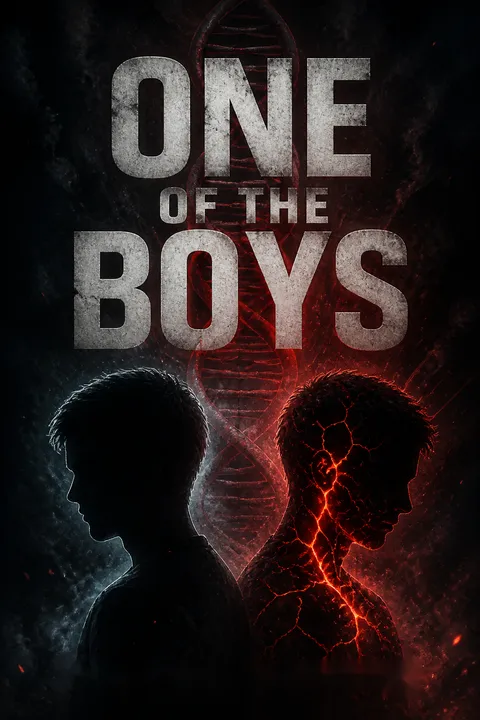
One of the Boys explores a dystopian future where male children can be tested for the "M gene" linked to violent behavior. Sisters Antonia and Bea make opposite choices: Antonia tests her son Jack (result: negative), while Bea refuses to test Simon. The premise examines nature versus nurture, social discrimination, and maternal sacrifice. Most reviewers praised the thought-provoking concept and fast pacing, though many found the twists predictable. Readers appreciated the multiple perspectives and timelines spanning eighteen years. The book sparked discussions about genetic testing ethics, with mothers of sons finding it particularly compelling and chilling.
Characters
Bea Mitchell
Bea is a fiercely independent woman whose refusal to have her son Simon tested for the M gene is both an act of rebellion and a desperate hope that nurture can overcome nature. Her relationship with her sister Antonia is fraught with envy, resentment, and love. Bea's life is marked by struggle—financial hardship, single motherhood, and the constant judgment of others. She is both victim and perpetrator, her choices shaped by fear and pride. As Simon grows, Bea's determination to protect him becomes a double-edged sword, blinding her to his pain and her own complicity. Her journey is one of painful self-discovery, as she is forced to confront the limits of love and the cost of denial.
Antonia Talbot
Antonia is Bea's older sister, a woman who has built her identity on success, order, and the appearance of perfection. Her embrace of the M gene test is both pragmatic and self-serving, allowing her to claim moral superiority and social status. Antonia's relationship with her son Jack is intense, bordering on suffocating—she will do anything to protect him, including manipulating test results and medicating him in secret. Her marriage to Owen is a partnership of ambition, but also of secrets and betrayals. Antonia's need to be right, to be the savior, blinds her to the harm she causes. Her downfall is both tragic and inevitable, the result of a lifetime spent running from the truth.
Simon Mitchell
Simon grows up under the shadow of suspicion, denied opportunities and burdened by his mother's refusal to have him tested. He is intelligent, resourceful, and deeply wounded by exclusion and poverty. As he matures, Simon's anger and desperation lead him into dangerous situations—work at the farm, underground fights, and ultimately, a fatal confrontation. His relationship with Jack is complex—part brotherhood, part rivalry, part longing for acceptance. Simon is both a victim of circumstance and an agent of his own fate, his choices shaped by the world's expectations and his mother's fears. His story is a meditation on the cost of being "one of the boys" in a world that fears and rejects them.
Jack Talbot
Jack is raised in privilege, his negative M gene status a source of pride for his mother and a shield against the world's dangers. Yet beneath the surface, Jack is insecure, jealous, and increasingly aware of the cracks in his perfect life. His friendship with Simon is both a lifeline and a source of guilt—he envies Simon's resilience but fears his darkness. Jack's complicity in the test deception, his role in past tragedies, and his own hidden violence reveal the dangers of unchecked privilege and denial. Jack is both innocent and culpable, his journey a cautionary tale about the limits of protection and the dangers of believing oneself above consequence.
Owen Talbot
Owen is Antonia's husband and the co-founder of the clinic for M+ boys. He is rational, ambitious, and often emotionally distant, more comfortable with data than with feelings. Owen's role as a father is complicated by secrets—his paternity of Simon, his complicity in Antonia's schemes, and his willingness to look the other way. He is both a product and a perpetuator of the system, profiting from the very fears he claims to alleviate. Owen's journey is one of gradual awakening, as he is forced to confront the consequences of his choices and the limits of his control.
Zara
Zara is the mother of Malcolm, an M+ boy whose life is defined by exclusion, medication, and eventual tragedy. Once wealthy and confident, Zara is gradually stripped of everything—her marriage, her home, her social standing—by the stigma attached to her son. She is both blamed and abandoned, her love for Malcolm both her strength and her undoing. Zara's friendship with Bea is a lifeline, a reminder that solidarity is possible even in the darkest times. Her story is a testament to the resilience of mothers, but also a warning about the dangers of a society that punishes women for their children's perceived flaws.
Malcolm
Malcolm is the embodiment of society's fears—a boy born with the M gene, medicated, excluded, and ultimately destroyed by the system meant to save him. His life is a series of losses—friends, family, freedom—culminating in violence and death. Malcolm is both a victim and a warning, his fate a mirror for what happens when fear overrides compassion. His story is a challenge to the idea that destiny is written in our genes, and a plea for understanding and mercy.
Ginny Sloan
Ginny is a bright, athletic girl whose life intersects with the boys' in adolescence. She becomes the object of both Jack and Simon's attention, her agency gradually eroded by their rivalry and the adults' machinations. Ginny's fate—hospitalization, trauma, and eventual suicide—is a devastating indictment of a world that values boys' futures over girls' safety. Her story is a reminder that the consequences of fear and denial are not limited to those who are tested, but ripple outward, harming the most vulnerable.
Alfie
Alfie is Simon's presumed father, a man whose good intentions are undermined by passivity and avoidance. He is supportive in small ways but ultimately unable to stand up to Bea or to the pressures of the world. Alfie's departure is both a relief and a loss, leaving Simon without a male role model and Bea without support. His character is a commentary on the failures of men in a society obsessed with controlling boys, and the ways in which absence can be as damaging as violence.
Paul
Paul is Owen's business partner and Malcolm's father, a man who profits from the M gene industry while failing to care for his own son. He is quick to judge, slow to help, and ultimately abandons both Malcolm and Zara. Paul's story is a critique of the ways in which systems meant to help can become tools of exclusion and self-interest. His fate is a warning about the dangers of moral blindness and the cost of putting reputation above responsibility.
Plot Devices
The M Gene Test
The M gene test is the central plot device, a fictional genetic marker used to predict violent tendencies in boys. Its introduction transforms society, dividing children and families, justifying exclusion, and fueling an industry of clinics and treatments. The test serves as both a literal and metaphorical tool—measuring not just DNA, but the anxieties, prejudices, and ambitions of parents. It drives the plot by creating stakes for every character: the fear of a positive result, the relief of a negative, the temptation to cheat or manipulate the system. The test's unreliability and the ease with which it can be gamed expose the dangers of placing too much faith in science as a means of social control.
Dual Narration and Shifting Perspectives
The novel employs a shifting third-person perspective, alternating between Bea, Antonia, Simon, Jack, and others. This structure allows the reader to see events from multiple angles, exposing the biases, blind spots, and self-justifications of each character. The use of flashbacks and time jumps deepens the sense of inevitability and tragedy, as past choices are revealed to have shaped the present in ways the characters cannot escape. The narrative structure mirrors the themes of uncertainty and the limits of knowledge—no one has the whole truth, and everyone is unreliable in their own way.
Foreshadowing and Irony
From the opening pages, the novel is laced with foreshadowing—news reports about the M gene, ominous warnings, and the sense that tragedy is inevitable. The use of irony is pervasive: the test meant to protect ends up causing harm; the mothers' attempts to save their sons lead to their downfall; the boys most feared are not always the most dangerous. The narrative is structured to reveal secrets gradually, building tension and inviting the reader to question what they believe about nature, nurture, and the possibility of redemption.
Symbolism and Motifs
Recurring motifs—cheek swabs, pills, locked doors, and family photographs—underscore the themes of surveillance, control, and the desire to fix what cannot be fixed. The act of testing becomes a symbol for the ways in which society seeks to categorize and contain, while medication represents both hope and the dangers of overreach. The motif of inheritance—genetic, emotional, and material—runs throughout, asking what we pass on to our children and what we are willing to sacrifice for them.
Download PDF
Download EPUB
.epub digital book format is ideal for reading ebooks on phones, tablets, and e-readers.








































