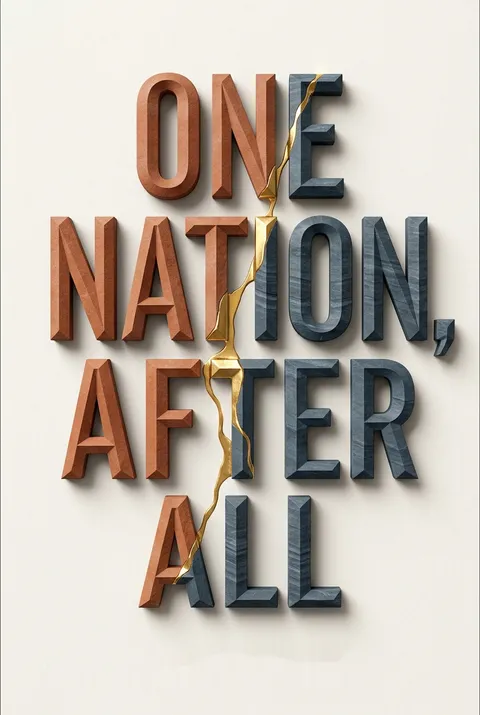

Key Takeaways
1. The "Culture War" is an Intellectual Construct, Not a Popular Reality.
My answer is yes—but it is one that is being fought primarily by intellectuals, not by most Americans themselves.
Challenging polarization. Despite widespread claims by intellectuals and media of a deep "culture war" dividing America, extensive interviews with middle-class Americans reveal a different reality. While surveys might suggest sharp divisions, these are often artifacts of question phrasing designed to elicit extreme responses. Most ordinary people do not perceive themselves as engaged in bitter cultural conflict.
Distrust of extremes. Middle-class Americans express a strong distaste for ideological extremes, whether from the conservative right or the liberal left. They prefer consensus, civility, and practical solutions over fervent, uncompromising positions. This aversion to conflict means they often tune out the loud, divisive rhetoric that characterizes much of the intellectual and political debate.
Seeking the middle ground. The majority of Americans, as exemplified by figures like Jeremy Toole, actively seek a middle ground on contentious issues. They believe that reasonable people, given calm circumstances, can arrive at sensible conclusions. This inherent moderation and desire for unity fundamentally undermines the premise of a society locked in an irreconcilable culture war.
2. Middle-Class Americans Share a "Modest Morality" of Pragmatism and Balance.
Above all moderate in their outlook on the world, they believe in the importance of leading a virtuous life but are reluctant to impose values they understand as virtuous for themselves on others; strong believers in morality, they do not want to be considered moralists.
Core moral outlook. Middle-class Americans are united by a "modest morality" that prioritizes pragmatism, balance, and non-judgmentalism. They believe in leading a virtuous life but are wary of imposing their personal moral standards on others. This approach contrasts sharply with the rigid moral frameworks often advocated by intellectuals.
Reconciling opposites. Rather than choosing between "traditional" and "modern" values, most middle-class individuals embody elements of both. They are "modern traditionalists" or "traditional modernists," integrating new freedoms and social changes with enduring principles. This internal reconciliation means the "culture war" often plays out within individuals, not between distinct camps.
Distrust of moral grandstanding. There is a strong aversion to moral absolutism and public pontification. People are suspicious of those who preach virtue too loudly, often viewing it as a cover for personal failings or an attempt to impose an agenda. This preference for humility and personal example shapes their approach to nearly all moral issues.
3. "Quiet Faith" Dominates: Personal Piety Without Public Judgment.
People who adhere to such a creed think the best way to fulfill our obligations to others is not by lecturing them about right and wrong, but rather by personal example.
Personalized spirituality. For most middle-class Americans, religious belief is a deeply personal matter, a "quiet faith" that guides individual conduct rather than dictating public morality. They are religious but distrust organized religion when it becomes too structured, political, or judgmental.
Tolerance for diversity. Despite their own faith, Americans overwhelmingly believe in religious diversity and tolerance. They are reluctant to condemn those of other faiths or even non-believers, emphasizing that "most religions share the same basic values." This inclusive stance is a powerful moral force, preventing sectarian conflict.
Aversion to politicized religion. The public display or politicization of religion is largely unwelcome. Events like the Waco siege or abortion clinic violence are seen as dangers of religious fanaticism. Even conservative Christians, while desiring a public role for faith, often soften their tone and avoid harsh condemnations, recognizing that "a language of meanness wins few hearts in America."
4. Family Values Reflect Ambivalence: Balancing Tradition with Modern Necessity.
Deep ambivalence, not ideological or religious certainty, characterizes the views of most Americans on family matters.
Internal conflict. Middle-class Americans are deeply ambivalent about the modern family, simultaneously longing for traditional structures (e.g., stay-at-home mothers, family meals) while embracing the freedoms and necessities of contemporary life (e.g., women's careers, divorce). This internal "culture war" makes them reluctant choosers, often feeling weighted down by obligations rather than liberated by opportunity.
Individualized choices. The guiding principle for family organization is that it should fit the needs of the individuals within it, rather than conforming to a pre-established ideal. This leads to diverse family forms and a reluctance to judge others' choices, recognizing that everyone is doing their best under challenging circumstances.
Beyond gender roles. While women's entry into the workforce is widely accepted, the debate has moved beyond simply whether women should work. Many men are also re-evaluating their work-life balance to spend more time with children, and both genders acknowledge the immense pressures of raising families in modern society.
5. "Mature Patriotism" Embraces Critical Love for Country.
For those for whom Vietnam symbolizes the failure of American nerve, maturity means that America can no longer be expected to police the world unilaterally.
Evolving national identity. American patriotism has matured beyond "rah-rah" jingoism, tempered by experiences like the Vietnam War and Watergate. While still deeply loving their country, Americans are now more critical, demanding accountability from their government and recognizing the limits of American power.
Global awareness. There's a growing understanding that old-fashioned patriotism is inappropriate in an increasingly interconnected world. Americans appreciate their country's strengths but also see themselves as part of a global community, valuing international cooperation over unilateral action.
Distrust of extremism. The Oklahoma City bombing, like the radical elements of the anti-war movement, pushed many conservatives towards a more moderate patriotism. It reinforced the idea that love for country should not be confused with blind loyalty or violent extremism, and that even criticism can stem from a desire for a better America.
6. Immigration is Judged by "Deservingness," Not Race.
The distinction made by Mr. Richards is one of the most tenaciously held distinctions in middle-class America; the people with whom we spoke overwhelmingly support legal immigration and express disgust with the illegal variety.
Pragmatic approach to borders. While public opinion polls often show skepticism towards immigration, middle-class Americans are not ready to close their borders entirely. They make a sharp distinction between legal and illegal immigration, viewing the latter as a violation of law and fairness, rather than an inherent dislike of specific ethnic groups.
The "good immigrant" ideal. Immigrants are often admired for embodying traditional middle-class values:
- Hard work and strong work ethic
- Strong family values
- Religious devotion
- Willingness to learn English and contribute to society
Humanitarian concerns. Even those with reservations about immigration express humanitarian sentiments, especially towards those fleeing persecution or children of illegal immigrants. They believe in providing basic aid and support, reflecting a broader sense of obligation to the unfortunate.
7. "Benign Multiculturalism" is Accepted, Bilingualism is Not.
By avoiding the extremes of parochialism on the one hand and particularism on the other, benign multiculturalism enables middle-class Americans to avoid making that choice.
English as a unifying force. Middle-class Americans strongly oppose bilingualism in schools, viewing English proficiency as a crucial mark of a "good immigrant" and a necessary step for national unity. They believe that while cultural heritage is important, the national language must take precedence.
Support for cultural diversity. Despite rejecting bilingualism, there is widespread, often enthusiastic, support for "benign multiculturalism." This means celebrating diverse cultures and heritages, but only within the framework of a dominant American identity. It's about adding to the national culture, not splintering it.
Conservative arguments for diversity. Even conservatives find reasons to support multiculturalism, seeing it as a way to:
- Provide a "sense of worth and tradition" for individuals.
- Encourage pride in one's group, which can strengthen self-identity.
- Offer practical benefits in a globalized world (e.g., understanding other cultures for business).
8. "Ordinary Duties" Prioritize Local Action and Personal Responsibility.
Ordinary duties can be defined as the obligations that arise in daily life, simple ways of relating to one another, which are carried out not because we are commanded by God, law, or tradition to do the right thing, but because we decide that the right thing is the right thing to do.
Personalized obligations. Middle-class Americans prefer to define their moral obligations as "ordinary duties" – small, everyday acts of decency and responsibility. They are wary of grand, abstract duties imposed by external authorities (God, law, government) and prefer to act based on personal conviction and what they perceive as "the right thing to do."
Distrust of "moral heroes." There's a reluctance to embrace moral heroism or self-sacrifice, as it implies a hierarchy of goodness and can lead to unrealistic expectations. Instead, they value a rough moral equality where everyone is capable of modest decency. This also prevents others from shirking their own responsibilities.
Reciprocity and control. Morality "writ small" emphasizes reciprocal relationships where individuals can monitor the impact of their giving and receiving. This approach is seen as more effective and less prone to abuse than large-scale, impersonal government programs, which are often viewed as fostering dependency.
9. "Balanced Capitalism" is Desired, Corporate Greed is Feared.
Middle-class Americans worry that on all three accounts, corporate America is increasingly out of balance, a trend that, if allowed to continue, could have negative consequences for the social fabric of their society.
Acceptance of efficiency, not ruthlessness. While middle-class Americans understand the need for corporate efficiency and even downsizing in a competitive global economy, they are critical of companies that act ruthlessly, prioritize profit over loyalty, and fail to consider their impact on employees and communities.
Work-life balance. There's a strong belief that corporate life should allow individuals to balance work obligations with family, church, and community commitments. The increasing demands of work, leading to "workaholism" and diminished personal time, are seen as detrimental to a balanced society.
Critique of executive compensation. Excessive CEO salaries and perks, especially amidst layoffs, are widely viewed as "criminal" and "insanity." This reflects a deeply held belief in proportionality and a moral objection to greed that undermines social trust and the idea of a common fate.
10. The "Moral Squeeze" on Children Fuels Parental Frustration.
The pessimism our respondents expressed about children is only partially about economics.
Overwhelmed by modern challenges. Parents feel an intense "moral squeeze" due to the sheer difficulty of raising children in contemporary society. They believe it has become harder to instill values and protect children from negative influences, leading to widespread frustration and a sense of powerlessness.
Affluence as a problem. Surprisingly, many parents worry not just about economic hardship, but also about the corrupting influence of "too much money" and materialism. They struggle with balancing their children's desires for expensive goods with teaching older, more modest values.
External threats. Children are perceived as being exposed to sex, violence, and drugs at increasingly younger ages, often through media and peer culture. This creates a sense that the "citadel has been invaded," and parents feel ill-equipped to resist these pervasive external forces.
11. The "Optimism Gap" Persists: Personal Hope Amidst Public Cynicism.
The often-noted paradox that Americans tend to be pessimistic about their country but optimistic about themselves led the Pew Research Center for the People and the Press to create an "optimism gap," the difference between people's understanding of their prospects for themselves compared with those for their country.
Private contentment vs. public anxiety. Americans exhibit a striking "optimism gap," feeling largely content and hopeful about their personal lives and futures, even while expressing deep cynicism and pessimism about government and society at large. This suggests that their private worlds provide a buffer against broader societal anxieties.
Distrust of politics. The pervasive dislike of government and politicians stems from a perception that they are:
- Over-promising and under-delivering.
- Corrupted by money and special interests.
- Loud, ideological, and out of touch with common sense.
This contrasts sharply with the modest, reasonable interactions people seek in their personal lives.
Morality "writ small" as a coping mechanism. The focus on local, personal, and modest moral interactions (morality writ small) serves as a way for individuals to maintain a sense of control and virtue in a world where large-scale institutions seem morally inept. This allows them to remain optimistic about their immediate spheres of influence, even if they despair about national politics.
Review Summary
Reviews of One Nation, After All are mixed, averaging 3.24 out of 5. Readers found the sociological study of middle-class American morality thought-provoking, though some questioned its data and methodology. The book examines attitudes toward abortion, racism, immigration, and politics through interviews with suburban Americans across Massachusetts, San Diego, and Oklahoma. One reviewer noted its relevant insight that personal and economic freedoms cannot be separated—a principle applicable to both political camps. Some found it overly technical, while others appreciated its relatively unbiased exploration of American moral values.
About the Author
Other books by Alan Wolfe
Download PDF
Download EPUB
.epub digital book format is ideal for reading ebooks on phones, tablets, and e-readers.








































