
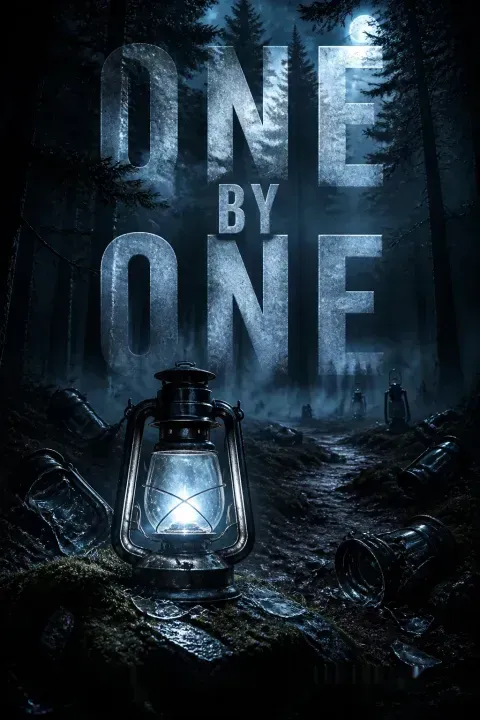


Plot Summary
Prologue
An anonymous narrator addresses the reader directly: six adults, packed into a minivan, driving to a luxury inn for six days of hiking and hot tubs. The narrator notes that the number six carries biblical weight — on the sixth day both man and the serpent were created, 666 is the devil's number, the sixth commandment forbids murder. Each of the six travelers harbors a secret. The narrator's own secret: by week's end, only one person will make it home alive.
The prologue weaponizes biblical numerology to frame the coming story as a morality play with predetermined casualties. The anonymous voice occupies a position of omniscient judgment—it knows everyone's hidden sins, it has already decided their fates—yet also implicates itself as a participant. This duality (narrator as both godlike arbiter and embedded player) creates immediate narrative tension: who among the six is speaking, and what secret do they carry? The countdown structure (six to one) promises a culling, making every subsequent interaction feel freighted with mortality.
Emma's Dark Premonition
Claire Matchett1 packs for a weeklong trip to a Colorado inn with her husband Noah2 and four friends. Their marriage has curdled into mutual contempt: they argue over a missing T-shirt, over bathroom breaks, over the separate bedrooms Claire1 secretly booked. Their seven-year-old daughter Emma7 sobs and clings, insisting she dreamed a monster in the forest would eat her parents.
Claire1 dismisses it, but an unease settles in her chest — Emma7 once predicted their grandfather's death. Claire1's sister Penny9 collects the children, pressing Claire1 to tell Noah2 something she's been hiding. Claire1 promises she will, once they're all in the car. The silver minivan pulls away, loaded with six adults and the secrets they carry.
The opening establishes domestic misery as the emotional baseline. Claire and Noah have perfected the art of wounding each other over years of accumulated grievance—the missing shirt, the bathroom squabble, the separate rooms—each a small cut that's left scar tissue. Emma's premonition is the story's first dramatic irony: the audience knows danger is coming even as Claire rationalizes it away. The 'something' Claire hides (her affair with Jack, revealed shortly) is the first explicit secret in a narrative built on them, while the children's departure marks the true point of no return.
The Gas Station Kiss
The group assembles: Lindsay,3 Claire1's best friend and a hairdresser, arrives with her new boyfriend Warner,5 a plastic surgeon so sculpted he seems manufactured. Jack4 and Michelle Alpert6 are last — Jack,4 Noah2's former college roommate with shaggy charm, and Michelle,6 a divorce attorney who radiates cold competence.
At a rest stop, Jack4 corners Claire1 behind the convenience store and kisses her. They've been sleeping together for four months, ever since he renovated her kitchen. He asks about the separate room. Claire1 reveals to the reader that she's fallen in love with Jack,4 but fears Michelle6's legal prowess would destroy him in a divorce. Lindsay3 later confronts Claire:1 she saw the kiss.
The affair with Jack is both escape and self-destruction. Claire is so starved for affection that she's accepted a man who will never leave his wife—and whose grief later suggests he may never have intended to. The gas station kiss, in its grimy, hidden setting, captures the affair's essence: furtive, desperate, built on self-deception. Lindsay witnessing it makes her the keeper of Claire's secret, a dynamic she will later weaponize. The introduction of the full cast establishes the social architecture—Warner the controlling boyfriend, Michelle the icy professional, Jack the charming opportunist—that Lindsay has studied and plans to exploit.
The Van's Last Breath
Noah2 navigates down increasingly primitive roads, following Warner5's printed map toward the inn. The GPS dies. Pavement gives way to dirt. The engine stalls and won't restart. With no cell service and no passing cars, Warner5 insists the inn is only two miles away on foot. They abandon their luggage and hike into the forest.
Hours pass. The two miles stretch into an endless trudge. Claire1 discovers deep claw marks gouged into a tree trunk — five parallel gashes no small animal could make. Lindsay,3 famished and dismissing Claire1's warnings, eats a handful of wild berries from a bush, insisting they're blueberries.
The car breakdown is the threshold between civilization and wilderness. Before this, the group's problems were marital and social; afterward, they're existential. Warner's map—which we later learn is fake—is the first visible weapon: a document of deliberate misdirection. The claw marks introduce the false premise of an animal threat, priming the group to accept 'animal attack' as explanation for what follows. Lindsay's berry consumption, seemingly impulsive, is in retrospect the first move in her performance—a woman who grew up learning to distinguish deadly nightshade from blueberries doesn't make this mistake by accident.
Blueberries and Nightshade
Lindsay3 grows pale and disoriented. She screams about seeing a bear, then collapses. Her body goes rigid in a violent seizure. Warner,5 the surgeon, performs CPR for over ten minutes while the others watch in horror. Finally he sinks back: she's gone.
Claire1 sobs over her best friend3's body, crushed by guilt — Lindsay3 wanted to stay with the car, and Claire1 overruled her. Warner5 and Michelle6 insist they must keep moving. Claire,1 devastated, places a purple wildflower on Lindsay3's chest before they abandon her corpse in the woods. Noah2 quietly offers to stay behind with Claire1 if she cannot bear to leave.
Lindsay's 'death' is the story's fulcrum—a performance so convincing it transforms the narrative's stakes from uncomfortable to mortal. It establishes Warner's medical authority (later revealed as fraudulent), creates crushing guilt in Claire that Lindsay will exploit during their final confrontation, and demonstrates the group's willingness to abandon bodies to survive. Noah's offer to stay with Claire is the first sign that beneath years of accumulated contempt, something still flickers between them—an ember the ordeal will rekindle.
Blood Among the Trees
They camp. Claire1 hears wolf-like howling, but Jack4 dismisses it. By morning, Michelle6 is gone from where she slept beside Jack4 — impossible, given her sprained ankle. They follow a trail of torn white fabric to a boulder drenched in blood. More claw marks scar the surrounding trees.
Jack,4 wild-eyed, assembles the rifle he secretly packed despite Michelle6's objections. He threatens Warner5 with it when Warner5 suggests abandoning the search. They hunt for an hour, finding nothing. Reluctantly, they move on. The group is down to four: Claire,1 Noah,2 Jack,4 and Warner.5 Claire1 notices Noah2 holding her hand — a gesture absent for years.
Michelle's disappearance crystallizes the threat and fractures group cohesion. Jack's grief seems genuine—he brandishes a rifle, he threatens violence—yet is complicated by his claimed desire to escape his marriage. The blood-and-claw-marks tableau reinforces the animal-attack narrative while being, in truth, a set piece staged by Lindsay and Warner. The howling Claire heard may have been real or may have been planted sound. Most significantly, the shared terror begins to thaw Claire and Noah's frozen bond, as mortal fear temporarily overwhelms years of accumulated resentment.
The Dawn Gunshot
Another night, another disappearance. A gunshot wakes Claire1 at dawn. She finds Jack4 gone from camp, and Warner5 nowhere. Noah2 discovers Jack4 stumbling back, his jeans and hands stained crimson. Jack4 claims he shot at a coyote, then slipped in animal blood. But the blood pool is vast, and there's no corpse. Noah2 confiscates the rifle.
Earlier, Noah2 confided to Claire1 that the compass has been pointing wrong, as if thrown off by a magnet — and that Warner5 told him Jack4 entered the woods with Michelle6 the night she vanished. Only Claire,1 Noah,2 and Jack4 remain. That night, Claire1 huddles close to Noah,2 feeling something long-dead stir between them.
Jack's story about the coyote strains credibility—whose lie is it? The narrative plants evidence against Jack (blood on his hands, motive to kill Michelle, Warner's accusation) while simultaneously seeding suspicion of Noah (who understands magnets, who may know about the affair). The ambiguity is the point: in the absence of reliable information, everyone becomes a suspect. The warming between Claire and Noah is genuine but precarious—built on the unstable ground of mutual fear rather than resolved grievances. Their reconciliation is real, but it's also happening in a pressure cooker that may be distorting everything.
The Abandoned Sandwich
Following the sun instead of the malfunctioning compass, they stumble upon a cabin. It has running water, a gas refrigerator stocked with food, and beds — but no phone. A half-eaten sandwich sits on the kitchen table. The bedroom shows signs of recent habitation: rumpled covers, a glass of water. The occupant left in a hurry.
While Noah2 naps, Claire1 searches and discovers a hollowed-out Bible with a gun-shaped cutout — empty. Outside, claw marks scar the cabin's exterior. She feels something watching from the trees. They eat, wash, and sleep in real beds. Claire1 and Noah2 make love, and she confesses her affair with Jack.4
The cabin is the story's most potent false refuge. Every comfort it offers—water, food, a bed, privacy—is poisoned by the knowledge that its owner vanished and something predatory lurks nearby. The half-eaten sandwich is a classic thriller signifier: life interrupted mid-gesture. Claire's discovery of the hollow Bible suggests the cabin's owner was preparing for violence, not prayer. Her confession to Noah, prompted by near-death intimacy, seems like emotional progress, but it also supplies Noah with a motive—one the reader knows he lacked when they reconciled, but that Jack has already accused him of acting upon.
The Corpse in the Pickup
Jack4 leads Claire1 into the woods and shows her a green pickup with a dead man slumped in the driver's seat, a stab wound in his chest — the cabin's owner. Jack4's accusation lands like a blow: Noah2 engineered everything. The minivan battery looked tampered with. The compass was thrown off by a magnet only Noah2 could have planted.
Jack4 suggests Noah2 drugged their water the first night. He reminds Claire1 that Noah2 once punched him in college after his father's death, proof of violent capability. Claire1 refuses to believe it, but later, rifling through Noah2's jeans to wash them, she finds a Swiss Army knife and hides it in a drawer.
Jack's accusation against Noah is the novel's most psychologically sophisticated misdirection. Every piece of 'evidence' he cites was either planted by Lindsay (the magnet, the tampered battery) or twisted through paranoia (the drugged water). Yet Claire's discovery of the knife—a real object Noah never mentioned carrying—gives the accusation weight. The reader is caught between two interpretations: Jack as desperate, guilty man deflecting blame, or Jack as the only one seeing clearly. The knife becomes the story's central ambiguous object: tool of self-defense, or weapon of murder? Lindsay has seeded doubt where trust might otherwise regrow.
Jack Joins the Dead
Jack4 disappears overnight. At dawn, Claire1 finds blood pooling on the cabin's doorstep. She panics and flees toward the pickup, where she discovers Jack4 in the passenger seat with a bullet hole in his forehead. He's dead. Before she can process it, Warner5 emerges from the trees, alive and aiming Jack4's rifle at her.
He marches her back to the cabin. Inside, Noah2 sits on the couch with his hands raised — because Lindsay,3 very much alive, is pressing a pistol to his skull. The seizures, the CPR, the 'death': all a performance. Lindsay3 and Warner5 have been partners from the beginning.
Jack's death completes the elimination of everyone Claire might have turned to. His murder is also narratively necessary: if Jack survived, his accusations against Noah would remain plausible. With Jack dead by Warner's hand, the story pivots definitively to Lindsay and Warner as the true architects. The double-reveal—Warner alive, then Lindsay alive—stages the twist in layers, each more devastating than the last. Lindsay's resurrection transforms the entire narrative retroactively: every 'claw mark,' every 'death,' the 'lost' compass, even Lindsay's berry expertise from her mother's garden were all orchestrated. The reader has been trapped in a constructed reality from the moment the van died.
The Godmother's True Face
Lindsay,3 Claire1's best friend since college and godmother to her children, explains the full scope of her plan. She knew about Claire1's affair with Jack.4 She also knew Noah2 once kissed her in a moment of weakness he immediately regretted. She considered them both betrayers, just like her father. Years ago, she drowned Claire1's cheating ex-boyfriend Ted.
She's killed other unfaithful men. Warner5 was her accomplice for this trip: he faked the map, carved the claw marks, murdered the cabin owner and Jack.4 Lindsay3 killed Michelle.6 Their original plan was to frame Noah,2 then kill him too. But now she executes a revision: she shoots Warner5 dead, declaring two people cannot keep a secret.
Lindsay's monologue recontextualizes the entire novel as a psychopath's morality play. Her childhood produced a woman who sees betrayal as a capital crime and herself as executioner. Her rationale—that she was 'protecting' Claire by killing Ted—reveals the narcissistic core of her pathology: she doesn't love Claire, she possesses Claire. The affair with Jack is thus not just betrayal of Noah but betrayal of Lindsay herself; Claire chose someone else's judgment over Lindsay's perfect, dangerous devotion. Warner's murder demonstrates her core principle: no partnership can survive the threat of exposure, and every accomplice is a future liability.
The Knife and the Gun
With Warner5 bleeding out on the floor, Lindsay3 aims her pistol at Claire.1 Claire1 stalls, appealing to their shared history — the nights spent talking in college, the loyalty Lindsay3 once showed. Lindsay3 wavers, lowering the gun a fraction. But she cannot trust Claire1 to keep her secrets.
As she raises the weapon to fire, Noah2 lunges from behind and drives the Swiss Army knife — the same knife Claire1 found and hid, the same knife Lindsay3 gave him at the rest stop — into Lindsay3's shoulder. The gun clatters free. Claire1 scrambles for it while Lindsay3 collapses. Police arrive within minutes; Lindsay3 had called them earlier, staging the scene for a different ending. She survives her wound and faces multiple life sentences.
The climax hinges on two objects introduced earlier and their shifting meanings. The Swiss Army knife, planted by Lindsay to implicate Noah and hidden by Claire out of suspicion, becomes the instrument of salvation. Noah's steadiness with the gun—he's never fired one before, yet his hands don't shake—hints at capabilities Claire never knew he possessed. The resolution is satisfying yet unsettled: three people are dead, the survivors are deeply traumatized, and the magnet Lindsay planted in Noah's sweatshirt has not yet been discovered. The marriage is salvaged, but on what foundation?
Epilogue
Claire1 returns home to her children. Emma7 clings to her, and the family embraces in a tight knot of relief. The official story: Warner,5 whose real name was Donald Regis, was a wanted killer who orchestrated everything; Lindsay3 posed as a surviving victim. But Emma7 mentions overhearing Noah2 plan a solo hike with Jack4 — just the two of them.
Later, unpacking Noah2's luggage, Claire1 discovers a strong refrigerator magnet in his sweatshirt pocket. She stares at it, wondering what purpose it served. Then she decides sometimes it's better not to know. In a prison coda, Lindsay3 reveals she planted both the magnet and the knife, hoping Claire1 would find them and forever doubt her husband.
The ending refuses closure. The magnet—a domestic object transformed into an instrument of doubt—symbolizes how trauma poisons the ordinary. Lindsay's final manipulation requires no presence; she has embedded suspicion into the marriage's foundation like a slow-acting poison. Claire's choice to stop asking questions is both survival strategy and moral compromise: she has decided that certainty might destroy what she has only just recovered. The ambiguity cuts two ways: maybe Noah had his own dark plan for Jack, or maybe he was innocent of everything. Lindsay's prison confession confirms her authorship of the doubt, but cannot erase it. Some questions, the novel suggests, are more dangerous answered than left alone.
Analysis
Freida McFadden's 'One by One' operates as both a wilderness survival thriller and a psychological dissection of a marriage in advanced decay. The novel's structural brilliance lies in its layered reveals: the reader first suspects the wilderness itself, then Jack,4 then Noah,2 before the true architect — Lindsay3 — steps out of the shadows. Each misdirection is earned through careful planting of ambiguous evidence (the magnet, the knife, the rifle) that supports multiple interpretations until the final act collapses the waveform into a single, devastating truth.
The book's deepest concern is not who will survive, but what survives with them. Claire1 and Noah2's marriage, presented initially as a corpse being dragged through the motions for the children's sake, is resurrected through shared trauma — but the resurrection is incomplete, haunted by unanswered questions. The magnet Claire1 finds in Noah2's sweatshirt is the novel's true ending: a small, mundane object that contains an abyss. Did Noah2 plan something for Jack?4 Lindsay3 claims she planted it, but her word is worthless. The doubt is the point.
Lindsay3 herself is a study in how childhood abuse can curdle into self-righteous violence. Her mother's attempt to poison her with nightshade berries becomes the origin story for a woman who sees betrayal everywhere and has appointed herself its punisher. Yet her diagnosis is not entirely wrong: people do betray each other. Claire1 did cheat. Noah2 did kiss Lindsay.3 Jack4 did lie to his wife. Lindsay3's madness is not in seeing the rot, but in believing she is the cure.
The novel ultimately argues that survival is not redemption — it is simply the chance to live with what you have done and what you will never know. Claire1's decision to stop asking questions about the magnet is not naivete but a calculated gamble: some truths are more expensive than ignorance, and a rebuilt marriage, however fragile, may be worth the price of uncertainty.
Review Summary
People Also Read



Characters
Claire Matchett
Guilt-ridden wife and motherA special education teacher and mother of two, Claire has been trapped for years in a marriage that has rotted into mutual contempt. She is warm, impulsive, prone to guilt—a woman who hugs strangers and still lets her children believe in Santa. Her affair with Jack4, her husband2's best friend, began four months before the trip when she was starved for any affection at all. She genuinely loves her children and her job, but her self-esteem has been eroded by years of marital warfare. The ordeal in the woods forces her to reckon with what she actually values: when faced with losing everything, she discovers that the husband2 she thought she hated is the person she most wants beside her.
Noah Matchett
Embattled husband and physicistNoah is a physicist whose marriage to Claire1 has become a war of attrition fought over laundry, bathroom breaks, and separate bedrooms. He is sarcastic, emotionally withdrawn, and defaults to criticism—but he carries a creased photo of Claire1 and the children in his wallet. He knew about Claire1's affair with Jack4 and admits he once kissed another woman in retaliation, stopping himself because she wasn't Claire1. In the wilderness, Noah transforms: he becomes protective, steady, and quietly competent, offering to stay behind with her, confessing he always imagined them growing old together. The novel leaves ambiguous whether he had his own violent intentions toward Jack4—a magnet in his sweatshirt and a Swiss Army knife in his pocket remain unexplained.
Lindsay
Best friend turned executionerClaire1's college roommate, maid of honor, and godmother to her children, Lindsay is a hairdresser with a gift for making people feel special. Beneath her warmth lies a psychopathic moral code forged in a childhood marked by a mother who tried to poison her with nightshade, a father who abandoned her emotionally, and a series of cruelties that taught her violence is the only reliable justice. She has spent her adult life killing unfaithful men—including Claire1's ex-boyfriend Ted—convinced she is protecting the women they betrayed. Her fixation on Claire1 is possessive, almost romantic; when Claire1 herself becomes a 'betrayer' by sleeping with Jack4, Lindsay's devotion curdles into murderous rage.
Jack Alpert
Best friend and secret loverNoah2's old college roommate and Claire1's lover of four months, Jack is a contractor who claims to be trapped in a loveless marriage to Michelle6. He is shaggy, charming, and good with his hands—the man Claire1 wished had asked her out before Noah2 did. His grief when Michelle6 disappears seems genuine, complicating his narrative of a sham marriage. He brought a rifle on the trip and lied about it, and his behavior grows increasingly erratic as the group's numbers dwindle. He accuses Noah2 of orchestrating everything, but is murdered by Warner5 before the truth can be untangled.
Warner
Fake surgeon, real predatorIntroduced as Lindsay3's plastic surgeon boyfriend—blond, chiseled, and controlling—Warner is actually a wanted killer named Donald Regis. He dictates what Lindsay3 eats, boasts about never tiring of breast augmentations, and recommends the inn where everything goes wrong. His fake CPR on Lindsay3 is the performance that establishes his credibility. He murders the cabin owner and Jack4, and his plan with Lindsay3 was to frame Noah2 for all the deaths before being killed himself by his partner3, who viewed him as a disposable asset. His charm is a weapon he has wielded across multiple states and multiple murders.
Michelle Alpert
Formidable divorce attorneyJack4's wife, a divorce attorney reputed to be the best in Denver. She is cool, composed, perpetually checking her watch, and disliked by the group for her habit of sending food back at restaurants. Her sprained ankle on the hike makes her vulnerable and dependent—a state she clearly loathes. She is murdered by Lindsay3 on the first night in the woods, her disappearance framed as an animal attack. Her competence and guardedness, which the other characters read as coldness, may simply have been the armor of a woman who spent her career watching marriages implode.
Emma Matchett
Anxious, prophetic daughterClaire1 and Noah2's seven-year-old daughter, prone to anxiety and unsettling premonitions. She dreams a monster will eat her parents before the trip and clings desperately to Claire1 at departure, begging her not to go. Her intuition—dismissed by Noah2 as the product of Claire1's 'nonsense' about Santa and the tooth fairy—proves unnervingly accurate.
Aiden Matchett
Practical older brotherThe Matchetts' nine-year-old son, more pragmatic like his father2. He accepts his parents' departure with a kiss on the cheek and buckles himself responsibly into his aunt9's car. He once wrote a school paper on wolves, which later feeds Claire1's fear when she hears howling in the forest.
Penny
Supportive sister and babysitterClaire1's older sister, who takes Emma7 and Aiden8 for the week. She is the picture of maternal competence—yoga pants, slip-and-slides, macaroni art—and gently pushes Claire1 to be honest with Noah2 about her secrets. When the couple goes missing, she is the one who alerts authorities.
Plot Devices
The Refrigerator Magnet
Compass sabotage, lingering doubtA strong magnet Lindsay3 took from Claire1's kitchen refrigerator and planted in the pocket of Noah2's sweatshirt. It throws off Jack4's compass throughout the hike, keeping the group lost and walking in circles so Lindsay3 and Warner5 can control their movements. After the crisis, Claire1 finds the magnet while unpacking Noah2's luggage and wonders whether he had his own sinister plan—a doubt Lindsay3 intended to seed. The magnet transforms from a mundane household object into a psychological weapon that outlasts the physical violence.
The Swiss Army Knife
Hidden weapon, salvation pivotGiven to Noah2 by Lindsay3 at the rest stop—she pretended to be afraid of handling it and asked him to carry it. Claire1 later finds the knife in Noah2's jeans and hides it, suspecting it might be the weapon that killed the cabin owner. At the climax, Noah2 uses this same knife to stab Lindsay3 in the shoulder when she is about to shoot Claire1, turning what seemed like a murder weapon into an instrument of rescue. Lindsay3's prison confession reveals she planted it hoping Claire1 would find it and suspect Noah2.
Warner's Fake Map
Deliberate misdirection into trapA printed map Warner5 provides, supposedly showing the route to the inn. It directs the group down increasingly primitive roads, then through a forest where Lindsay3 and Warner5 have pre-staged claw marks and planned their murder sequence. The map convinces the group to abandon the disabled minivan and hike into the wilderness, where they become completely dependent on Warner5's navigation and Jack4's compromised compass. After Warner5 'disappears,' the map is lost, forcing the survivors to navigate by the sun.
Jack's Hunting Rifle
Power object, murder weaponJack4 secretly packed a rifle despite telling Michelle6 he left it at home. He assembles it after Michelle6 disappears and uses it to threaten Warner5 when Warner5 suggests abandoning the search. The rifle passes between Jack4, Noah2, and eventually Warner5, becoming a physical token of who holds power. Warner5 uses it to murder Jack4 and to force Claire1 back to the cabin at gunpoint. Lindsay3 later takes her own pistol—a different weapon—to kill Warner5, maintaining a credible story that Warner5 was the sole gunman.
The Staged Claw Marks
False animal threat narrativeLindsay3 and Warner5 carved deep parallel gashes into trees and the cabin's exterior before the group arrived, using a knife to mimic the marks of a large predator. The claw marks, combined with the howling Claire1 hears at night, create the impression that a dangerous animal is stalking the group. This manufactured threat provides a plausible explanation for the blood and disappearances, directing suspicion away from the human killers until Jack4 discovers the truck owner's stab wound—a wound claws could never make.
About the Author
Other books by Freida McFadden





Download PDF
Download EPUB
.epub digital book format is ideal for reading ebooks on phones, tablets, and e-readers.








































