
Key Takeaways
1. Destiny is inscribed in one's name and life's purpose.
A person's life project is therefore inscribed in the name she/he carries.
Programmatic naming. In Dagara culture, names are not arbitrary but programmatic, describing the bearer's task and serving as a constant reminder of their responsibilities. Malidoma's name, meaning "Be friends with the stranger/enemy," foretold his unique destiny to bridge his indigenous world with the Western world. This belief underscores a profound connection between identity and predestination.
Ancestral connection. The Dagara believe every individual is an incarnation, often an ancestor, arriving with specific tasks. A "hearing" ritual before birth allows the incoming soul to communicate its mission and chosen gender, influencing the child's name and preparing the community for its role. This intricate system ensures that each life is understood as a continuation of ancestral wisdom and purpose.
Grandfather's foresight. Malidoma's grandfather, a wise elder, recognized his grandson's unique path early on. He understood that Malidoma's life would be lived largely outside the tribe, necessitating a dual identity and a mission to connect disparate worlds. This foresight shaped Malidoma's early life and provided a framework for understanding his later experiences.
2. The profound clash between indigenous and Western realities.
I was born in the early fifties in Burkina Faso in West Africa, then called Upper Volta by the colonial French government who invaded my country in the early 1900s.
Abduction and alienation. At four years old, Malidoma was kidnapped by a French Jesuit missionary, severing him from his family and culture for fifteen years. This forced immersion into the "white man's reality" — including Western history, science, and Christianity — created a deep internal conflict and a sense of profound alienation from his roots.
Contrasting worldviews. The Jesuit seminary presented a world diametrically opposed to Dagara beliefs.
- Christianity's "temperamental god" instilled fear, contrasting with Dagara's integrated spirituality.
- Western education focused on facts and logic, while Dagara wisdom was experiential and relational.
- Colonialism was framed as a benevolent mission, despite its violent and destructive impact on indigenous life.
Loss of self. Malidoma's struggle to reconcile these two contradictory worlds led to a "slow death of my identity." He found himself "sandwiched between worlds," unable to fully belong to either, a common casualty when cultures violently collide.
3. Indigenous wisdom: A holistic view of reality and spirit.
For us, as for many indigenous cultures, the supernatural is part of our everyday lives.
Integrated reality. The Dagara do not distinguish between the spiritual and the material, or reality and imagination. For them, the material is simply the spiritual taking form, and the secular is a lower key of religion. This holistic worldview means that magic is the ability to focus thought and energy to achieve results in the human plane.
"The thing that knowledge can't eat." The Dagara concept of Yielhongura describes things whose life and power depend on their resistance to human categorization. This contrasts sharply with Western scientific inquiry, which seeks to dissect and define everything, often diminishing its spiritual potency in the process.
Ancestors as guides. Ancestors are not merely dead but intimately connected to the living, serving as guides, teachers, and nurturers. They embody guidelines for successful living and represent a pathway between worlds. This deep respect for the past and its wisdom is fundamental to Dagara life, unlike the Western tendency to "turn away from functioning spiritual values."
4. The transformative power and peril of Dagara initiation.
For me, initiation had eliminated my confusion, helplessness, and pain and opened the door to a powerful understanding of the link between my own life purpose and the will of my ancestors.
A dangerous commitment. Dagara initiation (Baor) is a month-long, perilous ritual designed to integrate individuals back into their true reality and purpose. It is not a mild formality but a dangerous commitment that can, and sometimes does, result in death, highlighting its profound stakes.
Unlearning and remembering. The process involves a radical "unlearning" of preconceived notions and a "remembering" of one's innate knowledge. Malidoma's initiation forced him to confront his Western-acquired analytical mind, which initially hindered his ability to perceive the fluid, relational nature of Dagara knowledge.
Stages of transformation. Initiation involves:
- Enlargement of one's ability to "see" beyond physical sight.
- Destabilization of the body's fixed habits to allow transdimensional travel.
- The ability to journey to other worlds and return, bringing back vital knowledge.
This journey is a return to one's true, divine self, repairing the damage of forgetting.
5. The critical role of ancestors and community in Dagara life.
Unless the relationship between the living and the dead is in balance, chaos results.
Ancestral guidance. The Dagara believe ancestors are vital to the living, offering guidance, teaching, and nurturing. They are the "real school of the living," holding the wisdom necessary for the community's well-being. An imbalance in this relationship, such as Westerners being "ashamed of their ancestors," leads to a "sickness of the soul."
Communal responsibility. The community plays a central role in raising children and supporting individuals. "It takes the whole tribe to raise a child," and children are seen as society's most precious treasures. Elders, through their wisdom and connection to ancestors, guide the community and ensure its prosperity.
Healing the ancestors. The Dagara believe that if ancestors are not healed, their "sick energy will haunt the souls and psyches of those who are responsible for helping them." This highlights a reciprocal relationship where the living have a duty to heal their ancestors, thereby healing themselves and their community.
6. Colonialism's devastating impact on identity and tradition.
The subtle complexes that colonialism has produced in the hearts and psyches of the colonized still linger controllingly in the backyards of our modernity—the third world.
Erosion of tradition. Colonialism, through its missionaries and government, actively sought to eradicate traditional Dagara life-ways, beliefs, and even names. This systematic destruction destabilized the unified community and led to a profound loss of ancestral knowledge, as seen in Malidoma's father's struggles.
Internalized conflict. Malidoma's father, a victim of colonial influence, struggled between his ancestral duties and his adopted Christian faith. His refusal to perform traditional rituals for his twins led to tragic deaths, illustrating the devastating consequences of rejecting one's roots under colonial pressure.
The "Symbol" of suppression. At the seminary, the "Symbol" – a goat skull hung around the neck of anyone speaking Dagara – epitomized the violent suppression of indigenous language and identity. This tool of "memory enhancement" forced students to internalize the colonial agenda, making them "spies" against their own culture.
7. Reconciling dual identities: A bridge between worlds.
So I am a man of two worlds, trying to be at home in both of them—a difficult task at best.
A two-way passage. Malidoma's name, "Be friends with the stranger/enemy," defines his mission to serve as a bridge and conduit between his Dagara people and the Western world. He seeks to share indigenous wisdom with the West and bring Western knowledge back to his tribe, aiming for a balance between these often-conflicting realities.
The burden of knowledge. His Western education, particularly literacy, made him a "white man" in the eyes of his village, a bearer of a "terrible epidemic" that could destroy traditional ways. This dual knowledge, while useful, also created a profound sense of exile, even within his own community.
Ongoing negotiation. Malidoma's life is a continuous negotiation of his dual identity. He must constantly fight the "depressing energy of exile and homelessness," returning annually to his elders for cleansing from the "highly radioactive environment" of the West. This ongoing process highlights the challenge of integrating disparate worldviews without losing oneself.
8. The body as a vessel for the soul, not the self.
For Grandfather, sleep was tribute we pay to the body far too often. He would often say that the body is merely the clothing of the soul and that it is not good to pay too much attention to it, as if it were really us.
Spiritual priority. Dagara elders, like Malidoma's grandfather, viewed the body as a temporary vessel for the soul, not the true self. This perspective informed their practices, such as minimal attention to outward beauty or comfort, and a focus on spiritual engagement.
Detachment from physicality. The elders' ability to transcend physical discomfort, like Grandfather's indifference to his ragged boubou or the chief's painful walk, demonstrated their mastery over the body. This detachment allowed them to focus on matters of the soul, which they believed truly counted.
Initiation's physical trials. The initiation process deliberately challenged the body's limitations, through:
- Prolonged tree-gazing under the scorching sun.
- Being buried alive in the earth.
- Enduring extreme cold and heat.
These trials aimed to destabilize the body's habitual comfort and force a deeper connection with the spirit, preparing initiates for transdimensional travel.
9. Learning through experience and intuition vs. rigid instruction.
The techniques of indigenous learning were revealing themselves before my eyes, sweeping away my preconceived notions of how learning was accomplished.
Fluid knowledge. Dagara knowledge is described as "liquid," living, breathing, flexible, and spontaneous, making sense only in terms of relationship. It is acquired through direct experience, intuition, and communion with nature and spirits, rather than through fixed, logical rhetoric.
Western rigidity. In contrast, Malidoma's seminary education was "solid," wrapped in logical rhetoric, stiff, and inflexible. Learning was about memorization, regurgitation, and adherence to predefined rules, often enforced through physical punishment and fear.
Beyond analysis. Malidoma initially struggled with his "overwhelming urge to analyze and intellectualize everything," a legacy of his Western schooling. He learned that true Dagara understanding came from "feeling" rather than intellectual dissection, and that constant questioning could "destroy a mystery."
10. The healing power of nature and silence.
The invisible presence of the stillness resurrected an intense sense of home and comfort within me.
Nature as a living entity. In Dagara culture, nature is alive, pulsating with meaning and interconnectedness. Trees, rivers, mountains, and animals are not inanimate objects but beings with spirits, capable of communication and healing. Malidoma's experiences, like conversing with the yila tree or being nurtured by a dolphin-like creature, highlight this profound connection.
Silence as communication. Silence is sacred, the "day of the Spirit and of the ancestors," offering an opportunity to receive guidance. The "speech of silence" respects the integrity of meaning beyond words, allowing for a deeper, more direct form of communication and understanding.
Restoration through nature. Malidoma found solace and healing in the bush, where the "friendliness of the trees and the grass" brought him immense peace and nostalgia. This communion with nature helped him quiet his restless mind and reconnect with a fundamental sense of belonging, absent in his institutionalized life.
11. The importance of remembering one's true self and origins.
You now know where you were before becoming part of this family of people. You know what you were doing, so you know what you came here to do.
Reclaiming memory. Initiation is fundamentally about remembering what one already knows, recalling the purpose chosen before birth. The elders emphasize that "we already have everything we need for life inside of us," and the rituals are designed to unlock these innate memories.
The journey home to self. Malidoma's journey through the underworld and his past lives revealed his true nature and purpose, culminating in the realization that "I was the room and the door. It was all in me. I just had to remember." This profound self-discovery resolved his internal conflicts and brought him a sense of wholeness.
Living one's mission. The ultimate goal of initiation is not just to gain knowledge but to live it. Malidoma's transformation allowed him to embrace his destiny as a bridge between worlds, understanding that his unique experiences, even the painful ones, were part of his path to becoming his "own mission."
Review Summary
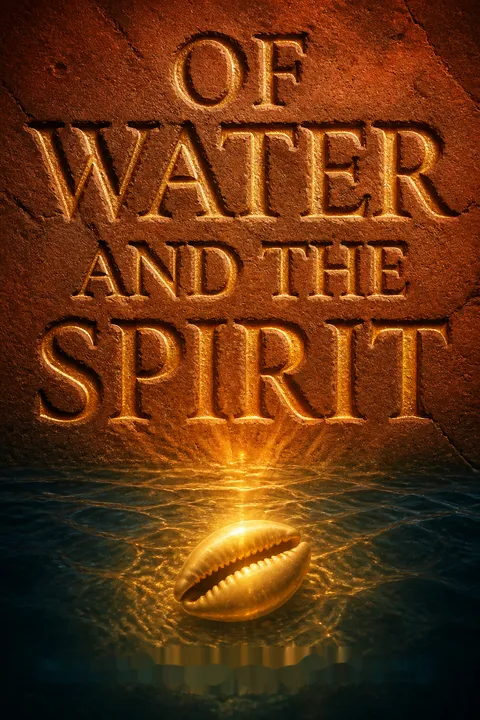
Of Water and the Spirit receives predominantly enthusiastic praise, with readers describing it as profound, eye-opening, and spiritually transformative. Many highlight its powerful portrayal of colonialism, indigenous Dagara culture, and the tension between Western rationalism and ancestral spirituality. Reviewers are particularly moved by Somé's initiation rites and his unique dual perspective as both Western-educated and tribally initiated. Some critics note pacing issues, purple prose, or skepticism about authenticity, with a few questioning whether Somé truly bridges cultures or inadvertently favors one over the other.
People Also Read

About the Author
Other books by Malidoma Patrice Somé
Download PDF
Download EPUB
.epub digital book format is ideal for reading ebooks on phones, tablets, and e-readers.








































