
Plot Summary
Visitation: A Knock at Noon
Leah Hanwell's quiet afternoon is shattered when Shar, a frantic local woman, begs for help, claiming her mother has had a heart attack. Leah, moved by empathy and a sense of community, lets Shar in, listens to her story, and gives her money for a taxi. The encounter is intimate, awkward, and charged with the weight of shared history and unspoken social boundaries. Leah's act of kindness is both a moment of connection and the beginning of a spiral of doubt, as she wonders if she's been conned or truly helped someone in need. The incident lingers, unsettling her sense of self and her place in the neighborhood.
Thirty Pounds and Trust
Leah's mother, Pauline, is quick to judge Leah's generosity as naïveté, warning her about the dangers of misplaced trust in a changing, multicultural London. Michel, Leah's husband, is equally skeptical, seeing the world as transactional and wary of letting "drama" into their lives. Leah is caught between her instinct to help and the cynicism of those around her. The episode exposes generational and cultural divides, as well as Leah's own longing for meaning and connection in a city that feels both familiar and alien. The thirty pounds becomes a symbol of her vulnerability and her struggle to define goodness.
Leah's Dilemma
Leah's internal conflict deepens as she grapples with her decision to help Shar. Her marriage to Michel is loving but strained by unspoken tensions about race, class, and the future. Michel wants children; Leah is ambivalent, fearing the loss of her current life and the relentless march of time. The couple's intimacy is real but shadowed by Leah's secret: she is pregnant but unsure if she wants to be. The pressure to "move forward" is everywhere—family, friends, society—yet Leah resists, clinging to the present and her own sense of self, even as she feels it slipping away.
The Encounter at the Shop
Leah and Michel spot Shar at a local shop, confirming their suspicions that she lied about her story. Michel confronts Shar, who flees, leaving Leah humiliated and exposed. The incident crystallizes Leah's doubts about her own judgment and the possibility of genuine connection across social divides. It also strains her marriage, as Michel's worldview—pragmatic, upwardly mobile, wary of entanglement—clashes with Leah's yearning for empathy and meaning. The city's relentless pace and diversity become both a source of richness and a backdrop for alienation and mistrust.
Marriage, Desire, and Doubt
Leah and Michel's relationship is explored in depth, revealing a history of passion, kindness, and unconventional choices. Their bond is strong but tested by differing ambitions and backgrounds. Leah's reluctance to have children is rooted in a fear of mortality and the loss of youth, while Michel sees parenthood as a necessary step forward. Their conversations oscillate between tenderness and frustration, highlighting the complexities of love, identity, and the search for purpose in a world that demands constant progress. The apple tree in their garden becomes a symbol of rootedness and the cycles of life.
Apple Tree Conversations
Michel's drive to "move forward" contrasts with Leah's desire for stasis. He dreams of owning property, achieving financial security, and providing a better life for their future children. Leah, meanwhile, is haunted by memories of her father and the weight of family history. The apple tree, under which her father's ashes are scattered, represents both continuity and the impossibility of true belonging. Their conversations reveal the tensions between aspiration and contentment, individualism and community, and the persistent question of what it means to live a good life in a rapidly changing city.
Work, Empathy, and Alienation
Leah's job at a local charity is marked by bureaucracy, underfunding, and a sense of futility. Surrounded by women from diverse backgrounds, she feels both connected and isolated, her university education both a privilege and a source of suspicion. The work demands empathy, but the system is impersonal and often ineffective. Leah's colleagues tease her about her marriage to Michel, highlighting issues of race, gender, and belonging. The office becomes a microcosm of the city: vibrant, conflicted, and full of unfulfilled potential. Leah's sense of purpose is eroded by routine and the relentless demands of adulthood.
The Lost and the Living
Leah's journeys through northwest London are filled with memories, encounters, and the ghosts of former friends. She sees Shar again, now clearly struggling with addiction and violence, and is forced to confront the limits of her own compassion. The city is alive with diversity, commerce, and the constant movement of people, yet loneliness and despair are never far away. Leah's interactions with her mother, old classmates, and the ever-present apple tree underscore the persistence of the past and the difficulty of forging a new identity. The city's beauty and brutality are inseparable.
Crossing Paths
Leah's chance encounter with Nathan Bogle, a childhood friend now fallen on hard times, brings the realities of social mobility and decline into sharp relief. The brief, awkward conversation is laden with nostalgia, regret, and the unbridgeable gap between their current lives. Leah is reminded of the arbitrary nature of success and failure, and the ways in which race, class, and circumstance shape destinies. The city's streets are both a stage for possibility and a trap for those unable to escape their origins. Leah's sense of agency is diminished, yet she continues to search for meaning.
The Return of Shar
Leah finally confronts Shar, who admits to her addiction and rejects Leah's offers of assistance. The encounter is raw, painful, and ultimately futile, exposing the limits of charity and the complexities of agency and responsibility. Leah is left feeling helpless and complicit, her good intentions rendered meaningless by the realities of poverty and addiction. The episode forces her to question the narratives she tells herself about kindness, community, and the possibility of change. The city's indifference is palpable, and Leah's isolation deepens.
Natalie's Ascent
Natalie (formerly Keisha) Blake's journey from council estate to successful barrister is traced through memories, relationships, and the relentless pursuit of achievement. Her friendship with Leah is both a source of strength and a site of tension, as their paths diverge and converge over the years. Natalie's marriage to Frank, her struggles with identity, and her navigation of race, class, and gender in elite spaces are explored with nuance and irony. The cost of upward mobility is revealed in moments of alienation, self-doubt, and the persistent sense of being an outsider, even at the pinnacle of success.
The Picnic and the Divide
A meticulously planned picnic becomes a stage for the unspoken resentments and insecurities between Leah and Natalie. Their conversations are laced with competition, judgment, and the longing for validation. Natalie's outward success masks inner turmoil, while Leah's apparent contentment conceals deep dissatisfaction. The picnic, meant to celebrate connection, instead highlights the distance between them and the impossibility of recapturing the intimacy of youth. The city's social hierarchies are mirrored in their friendship, and the search for authenticity becomes ever more elusive.
Natalie's Secret Life
Natalie's carefully constructed life begins to unravel as she seeks escape in anonymous sexual encounters arranged online. Her double life is a response to the pressures of marriage, motherhood, and professional success—a desperate attempt to reclaim agency and desire. The thrill of transgression is short-lived, replaced by guilt, shame, and the fear of exposure. Natalie's actions threaten her marriage and her sense of self, forcing her to confront the gap between who she is and who she pretends to be. The city's anonymity is both liberating and suffocating.
The Breaking Point
Natalie's secret is discovered by Frank, leading to a confrontation that shatters the illusion of their perfect life. The argument is fierce, raw, and unresolved, exposing the fault lines in their relationship and the impossibility of total honesty. Natalie flees the house, wandering the city in a state of shock and dislocation. Her journey becomes a reckoning with her past, her choices, and the limits of reinvention. The city's streets are both a refuge and a labyrinth, offering no easy answers or escape.
Night Walks and Reckonings
Natalie's night walk with Nathan Bogle is a descent into the underbelly of the city and her own psyche. Their conversation is a reckoning with history, race, and the randomness of fate. Nathan's decline is a mirror for Natalie's own fears of failure and irrelevance. The walk is both literal and metaphorical, a passage through the landscapes of childhood, ambition, and loss. The city is revealed as a place of both possibility and ruin, where the past is never truly left behind.
The Bridge and the Choice
Natalie's journey culminates at Hornsey Lane Bridge, a notorious site for suicides. Standing on the edge, she contemplates oblivion, weighed down by shame, regret, and the sense of having lost her way. The moment is charged with existential dread and the longing for release. Yet, ultimately, she steps back, choosing to continue, however uncertainly. The act of survival is both a defeat and a victory, a refusal to be defined by failure or despair. The city remains indifferent, but the possibility of renewal persists.
Visitation: Aftermath
Natalie returns home, her marriage in tatters but her sense of self newly clarified. She reconnects with Leah, Michel, and her children, seeking solace in the routines of family and friendship. The aftermath of crisis is marked by small acts of care, honesty, and forgiveness. The city's cycles of loss and renewal are embodied in the characters' attempts to rebuild their lives, however imperfectly. The possibility of change is fragile but real, sustained by the bonds of love and community.
The Circle Remains
The novel closes with a sense of circularity and unresolved tension. The characters remain haunted by their histories, their choices, and the city that shapes them. The apple tree, the council estate, and the ever-changing streets of northwest London are enduring symbols of both continuity and transformation. The search for meaning, belonging, and happiness is ongoing, marked by moments of grace and the inevitability of disappointment. The story ends not with resolution, but with the recognition that life, like the city, is always in motion, always unfinished.
Analysis
NW is a profound meditation on identity, community, and the relentless churn of urban lifeZadie Smith's novel captures the complexity of contemporary London, where race, class, and ambition intersect in unpredictable ways. Through the intertwined lives of Leah and Natalie, Smith explores the costs of reinvention, the persistence of the past, and the limits of empathy and agency. The novel's fragmented structure and shifting perspectives reflect the fractured realities of its characters, who are both shaped by and resistant to the forces around them. NW challenges the myth of meritocracy, exposing the arbitrary nature of success and the enduring impact of social structures. It is a story of longing—for connection, meaning, and authenticity—in a world that is always in motion, always unfinished. The lessons are both personal and political: that kindness is fraught, that progress is uneven, and that the search for home is ongoing. In the end, NW offers no easy answers, but insists on the value of small acts of care, the necessity of honesty, and the enduring power of friendship and community in the face of uncertainty.
Review Summary
Reviews of NW are sharply divided. Admirers praise Smith's vivid portrayal of Northwest London, her authentic rendering of multicultural voices and dialects, and her bold structural experimentation across different narrative styles. They find the characters compelling and the social observations incisive. Critics, however, argue the fragmented form undermines storytelling, finding characters unlikable and the plot nearly nonexistent. Many readers struggled with the experimental structure while acknowledging Smith's technical skill. The third section, following Natalie/Keisha, is most frequently cited as the novel's strongest portion.
People Also Read










Characters
Leah Hanwell
Leah is a white, working-class woman rooted in northwest London, defined by her loyalty to place and people. Her marriage to Michel, a French-African hairdresser, is loving but fraught with unspoken tensions about race, class, and the future. Leah is deeply empathetic, often to the point of self-doubt, and struggles with the expectations of motherhood and adulthood. Her friendship with Natalie is a source of both comfort and pain, as their lives diverge and converge. Leah's journey is marked by a longing for stasis, a fear of change, and a persistent search for meaning in a city that is both home and stranger.
Natalie (Keisha) Blake
Natalie is Leah's childhood friend, a black woman who reinvents herself through education, marriage, and professional success. Her ascent from council estate to barrister is driven by willpower, intelligence, and a relentless desire to escape the limitations of her background. Yet, Natalie is never free from the pull of the past or the pressures of race, class, and gender. Her marriage to Frank is both a triumph and a site of alienation, as she navigates the expectations of wife, mother, and professional. Natalie's secret life and eventual crisis reveal the costs of reinvention and the fragility of identity.
Michel
Michel is Leah's husband, a French-African immigrant who works as a hairdresser. He is ambitious, hardworking, and determined to "move forward" in life, seeking financial security and social mobility. Michel's worldview is shaped by his experiences of racism and exclusion, both in France and England. He loves Leah deeply but is frustrated by her reluctance to embrace change and parenthood. Michel's optimism is both inspiring and exhausting, and his relationship with Leah is a microcosm of the novel's broader themes of aspiration, belonging, and the limits of empathy.
Shar
Shar is a local woman whose plea for help sets the novel's events in motion. Her story—part truth, part con—exposes the complexities of poverty, addiction, and the limits of charity. Shar is both victim and agent, her actions forcing Leah and others to confront their own assumptions about goodness, trust, and responsibility. She is a haunting presence, a reminder of the city's failures and the persistence of need.
Pauline Hanwell
Leah's mother, Pauline, is an Irish immigrant who embodies the tensions of generational change and the anxieties of a city in flux. She is skeptical, opinionated, and fiercely protective of her daughter, often expressing her love through criticism and caution. Pauline's stories of the past are both a comfort and a burden, shaping Leah's sense of self and her relationship to the world.
Frank De Angelis
Natalie's husband, Frank, is of mixed Italian and Caribbean heritage, educated, and financially successful. He is both supportive and oblivious, his confidence masking deep insecurities about belonging and identity. Frank's relationship with Natalie is marked by love, competition, and the persistent challenge of reconciling their different backgrounds and ambitions. He is both a symbol of Natalie's success and a reminder of the compromises it entails.
Nathan Bogle
Nathan is a childhood friend of Leah and Natalie, once full of promise but now adrift, struggling with addiction and poverty. His encounters with Leah and Natalie are charged with memory, regret, and the unbridgeable gap between past and present. Nathan embodies the novel's themes of social mobility, fate, and the randomness of success and failure.
Olive
Olive is Leah and Michel's dog, cherished and cared for, her death marking a turning point in Leah's emotional life. Olive's vulnerability and eventual loss are metaphors for the fragility of happiness and the inevitability of change. Her presence in the narrative underscores the importance of small acts of love and the pain of letting go.
Cheryl Blake
Natalie's sister, Cheryl, remains in the council estate, raising children and struggling with the challenges of poverty and single motherhood. She is both a source of guilt and a reminder of the life Natalie has left behind. Cheryl's pragmatism and endurance contrast with Natalie's ambition, highlighting the different ways women navigate the constraints of class and circumstance.
Layla Dean
Layla is Natalie's childhood friend, now a successful radio producer and mother. Her life choices and perspectives serve as a counterpoint to Natalie's, offering an alternative model of fulfillment and self-acceptance. Layla's honesty and stability challenge Natalie's self-image and force her to confront the costs of her own ambitions.
Plot Devices
Fragmented Narrative Structure
The novel employs a fragmented, multi-voiced structure, moving between Leah, Natalie, and other characters, as well as between past and present. This device mirrors the complexity of urban life and the multiplicity of identities within the city. The nonlinear timeline allows for the layering of memory, history, and experience, creating a rich tapestry of interconnected lives. The use of different narrative styles—stream of consciousness, dialogue, lists, and digital communication—reflects the diversity of voices and the fractured nature of modern existence.
Foreshadowing and Recurrence
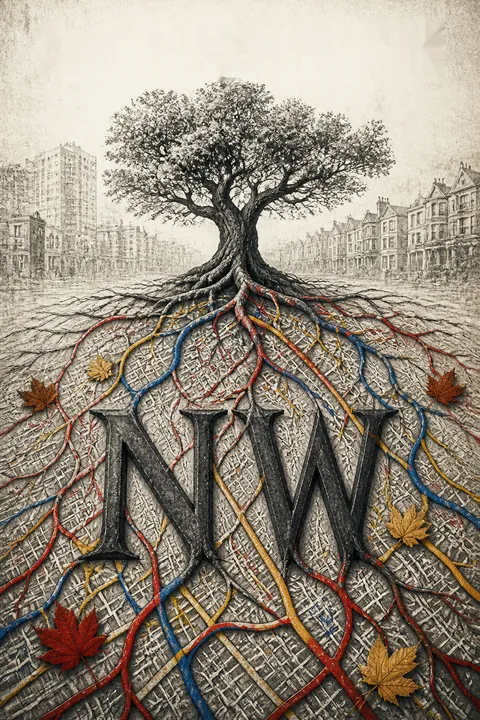
The novel is rich in recurring images and motifs: the apple tree, the number 37, the council estate, the bridge, and the act of visitation. These elements serve as anchors in the narrative, linking characters and themes across time and space. Foreshadowing is used to build tension and highlight the inevitability of certain outcomes, while the recurrence of events and symbols underscores the persistence of the past and the difficulty of true change.
Social Realism and Satire
The novel blends social realism with satirical observation, offering a vivid portrait of contemporary London in all its diversity, inequality, and contradiction. The characters' struggles with race, class, gender, and ambition are rendered with both empathy and irony, exposing the absurdities and injustices of modern life. The use of humor and satire serves to both humanize the characters and critique the systems that shape their lives.
Intertextuality and Cultural Reference
The narrative is interwoven with references to philosophy, literature, music, and contemporary media, reflecting the characters' attempts to make sense of their lives through culture. These allusions serve as both a means of connection and a source of alienation, highlighting the ways in which identity is constructed and contested in a globalized world.
The City as Character
The city itself is a central presence in the novel, shaping the destinies of its inhabitants and reflecting their hopes, fears, and contradictions. The detailed mapping of northwest London—its streets, estates, parks, and landmarks—serves as both setting and metaphor, embodying the themes of mobility, belonging, and transformation. The city's beauty and brutality are inseparable, and its constant change mirrors the characters' own struggles with identity and meaning.


Download PDF
Download EPUB
.epub digital book format is ideal for reading ebooks on phones, tablets, and e-readers.








































