
Plot Summary
Death's Shadow Follows Riley
Riley, a teenage girl, feels death trailing her like a shadow, especially after her mother's suicide and being forced to live with her abusive Cousin. She cares for her younger brother, Oliver, in a house ruled by starvation and fear, haunted by Cousin's obsession with demons. Riley's life is a constant negotiation with terror, hunger, and the need to protect Oliver. When a mysterious boy in green follows her, she wonders if death has finally caught up. The oppressive atmosphere, the rules of survival, and the ever-present threat of violence shape Riley's world, making her both fiercely protective and deeply traumatized. Her only hope is to endure until she can escape with Oliver, but the sense of being hunted never leaves her.
Escape Into the Wild
Realizing Oliver is breaking under Cousin's cruelty, Riley decides they can't wait any longer. She steals food and Cousin's gun, and in the dead of night, she and Oliver slip away, hearts pounding with fear and hope. They navigate the city's edge and board a bus to the mountains, using directions given by Noon, a strange girl who appeared at Riley's window. The journey is perilous—Oliver is weak, and the wilderness is unforgiving. As they climb into the Rockies, the siblings are stalked by hunger, exhaustion, and a mountain lion. Riley's determination is tested as she must protect Oliver from both the dangers of the wild and the demons—real and imagined—that pursue them.
The Girl at the Window
Noon, the enigmatic girl in green, becomes Riley's unlikely guide. She claims to live with other runaways in a hidden mountain sanctuary called Nowhere, a place for children who have escaped terrible things. Noon's presence is both comforting and unsettling—she seems to hover between reality and myth. She gives Riley directions to Nowhere, promising freedom and belonging. Riley is torn between skepticism and desperate hope. Noon's invitation is a lifeline, but it also stirs old fears about stories her mother told of Nowhere's dark past. The encounter with Noon marks a turning point, planting the seed of escape and the possibility of a new life beyond survival.
Nowhere Children's Sanctuary
After a harrowing journey, Riley and Oliver are rescued by Nowhere's children and brought to their hidden valley. Nowhere is a patchwork community of runaways, ruled by Noon and her close-knit group. The valley is lush, self-sustaining, and fiercely protected. The children live in converted barns and stables, growing food, hunting, and caring for each other. Rituals and rules bind them together, including a nightly "worship" that sends their breath to the ruins of Nowhere House, haunted by the memory of Leaf Winham, a notorious figure. Riley and Oliver are welcomed but must prove their worth. The sense of safety is fragile, shadowed by the valley's violent history and the children's fear of outsiders.
Blood in the Land
Food grows scarce, and the valley's balance falters. Noon leads raids into the nearby town for supplies, and the children kidnap a woman, Alison, who is bled in ritual to "feed the land." Riley is drawn into these acts, torn between horror and the desperate need to belong. The rituals are rooted in the valley's dark past—blood spilled to keep Nowhere alive, echoing the crimes of Leaf Winham and the original Nowhere children. Riley's complicity deepens her guilt, but she rationalizes it as necessary for survival. The line between victim and perpetrator blurs, and the cost of safety becomes increasingly steep.
The Lion on the Mountain
On the run, Riley and Oliver are attacked by a predatory man in the mountains. In a moment of terror and clarity, Riley shoots him dead, but a stray bullet wounds Oliver. The trauma of violence, the necessity of killing, and the guilt of harming her brother haunt Riley. The dead man turns out to be Danny, Cal's brother—one of Nowhere's own. This secret festers, threatening Riley's place in the community and her relationship with Cal, who is consumed by grief and suspicion. The mountain's dangers are both human and animal, and Riley's actions set in motion a chain of consequences that will return to claim her.
The House That Burns
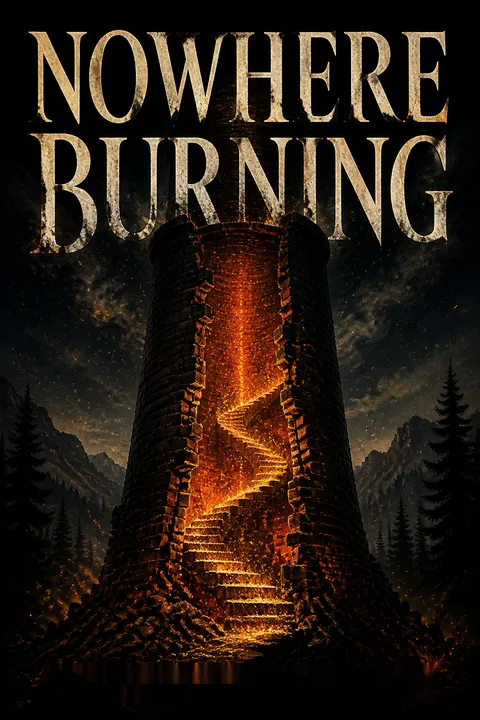
The story of Nowhere's past is revealed through Linus, a firefighter who survived the infamous blaze at Nowhere House. The house was once the domain of Leaf Winham, a charismatic but monstrous figure who lured and destroyed children. The fire, set by Adam Leahy, was both an act of destruction and a failed rescue. The valley's soil is soaked in blood and secrets—children murdered, bodies hidden, and the survivors marked forever. The myth of Nowhere is built on real horror, and the children's rituals are a way to keep the past at bay. The house's ruins loom over the valley, a constant reminder of what was lost and what still haunts them.
The Gate and the Ghosts
Marc and Kimble, documentary filmmakers, arrive in the region, drawn by rumors of the Nowhere children and the legend of Leaf Winham. Their investigation stirs paranoia and defensiveness among the children. The gate to Nowhere is welded shut, adorned with the remains of animals and warnings to outsiders. The children repel intruders with violence and fear, determined to protect their sanctuary at any cost. The presence of outsiders forces Riley and the others to confront the reality of their isolation and the lengths they will go to remain hidden. The boundary between safety and imprisonment grows thin.
The Secret Staircase
Adam Leahy, an architect, is drawn into Leaf Winham's orbit, tasked with building a secret staircase filled with peepholes and hidden rooms. Adam's relationship with Leaf is fraught with desire, manipulation, and dread. The house itself becomes a character—alive with secrets, surveillance, and the residue of violence. Adam uncovers the truth about Leaf's crimes and the fate of the missing boys. His attempt to expose Leaf and destroy the house with fire is both an act of love and vengeance. The secret spaces of Nowhere House mirror the hidden traumas of its inhabitants.
The Crocodile in the Lake
The valley's ecosystem is both nurturing and deadly. A crocodile, Tinkerbell, lurks in the lake—a relic of the house's former zoo and a symbol of the wildness that cannot be tamed. The children feed and fear the crocodile, weaving it into their rituals and stories. The presence of the beast is a reminder that danger is ever-present, even in sanctuary. The children's attempts to maintain balance—between nature and civilization, past and present, innocence and guilt—are precarious. The crocodile's hunger is a metaphor for the valley's insatiable need for sacrifice.
The Lost and the Living
As Riley and Oliver settle into Nowhere, the tension between belonging and betrayal intensifies. Riley's secret about Danny's death is exposed, and she is cast out, forced to face punishment and possible death. The children's justice is swift and unforgiving, rooted in the need to protect their own. Riley's relationship with Cal is shattered, and Oliver is forced to choose between loyalty to his sister and the community that has become his home. The price of survival is steep—trust is fragile, and forgiveness is rare.
The Price of Belonging
Riley is imprisoned, bled, and drugged with hallucinogenic mushrooms. She is forced to confront the ghosts of the Nowhere children—literal and metaphorical. The children's bones are buried in the valley, their spirits lingering, demanding remembrance and justice. Riley's guilt and trauma are compounded by the realization that she cannot save everyone, and that her own survival may require the sacrifice of others. The rituals of blood and memory bind the living to the dead, and the cycle of violence threatens to repeat.
The Tunnel of Stars
As a storm and landslide threaten to destroy Nowhere, Riley escapes her bonds and flees with Oliver through a secret tunnel beneath the house. The passage is lined with mica, sparkling like stars—a liminal space between death and freedom. The journey is perilous, with the threat of collapse and pursuit by both human and supernatural forces. The tunnel is both a literal and symbolic path to transformation, offering the possibility of escape but also demanding the abandonment of the past. Riley must choose between saving herself and saving the children she has come to love.
The Children's Bones
The history of Nowhere is revealed: once an apple farm, it was the site of a family's annihilation—five children murdered by their father, their bones buried in the cellar. The community's silence and complicity allowed the horror to be forgotten, but the land remembers. The ghosts of the original children haunt the valley, their presence felt in every ritual and sacrifice. The living children of Nowhere are both heirs and victims of this legacy, struggling to create a home in a place built on suffering. The past cannot be buried; it shapes the present in ways both seen and unseen.
The Storm and the Fire
A cataclysmic storm and landslide devastate Nowhere, destroying the gate and flooding the valley. The stables burn, the house collapses, and the community is scattered. Riley and Marc (formerly Oliver) are reunited in the chaos, forced to confront their shared past and the choices that have defined them. The storm is both a literal and metaphorical cleansing, washing away the old order and exposing the truths that have been hidden. Survival requires sacrifice, and the bonds of family are tested to their limits.
Reunion and Reckoning
In the aftermath of the storm, Riley and Marc face each other as adults, shaped by trauma and loss. Marc reveals his new life, his daughter Silvie's illness, and his need for Riley's help as a kidney donor. Riley is torn between her loyalty to the lost children of Nowhere and her responsibility to her brother and his child. The reunion is fraught with pain, regret, and the possibility of redemption. Both must reckon with the consequences of their actions and the meaning of family.
The Last Offering
Riley consents to donate her kidney, saving Silvie's life. In the hospital, she and Marc confront the reality of their choices and the impossibility of returning to the past. Riley's sense of belonging is forever tied to the lost children of Nowhere, but she recognizes the need to let go and allow Marc to build a new life. The act of sacrifice is both an ending and a beginning—a way to honor the dead and care for the living. Forgiveness is hard-won, and the scars of the past remain, but hope endures.
The End and the Beginning
Years later, Marc lives in the desert with Silvie, grateful for the second chance Riley's sacrifice gave them. Riley's fate is ambiguous—she disappears from the hospital, perhaps returning to the mountains, perhaps finally at peace. The story ends with the recognition that survival is not the same as healing, and that the past is never truly gone. The legacy of Nowhere endures in memory, in the land, and in the lives of those who escaped. The cycle of trauma and resilience continues, but so does the possibility of love and belonging.
Analysis
A modern fable of trauma, survival, and the search for homeNowhere Burning is a haunting meditation on the legacy of violence and the desperate human need for belonging. Through its interwoven narratives and psychologically rich characters, the novel explores how trauma shapes identity, relationships, and community. The children of Nowhere are both victims and perpetrators, forced to create meaning and safety in a world that has failed them. Rituals and myths become tools for survival, but also perpetuate cycles of harm. The landscape itself is alive with memory, demanding sacrifice and remembrance. The novel's ambiguous supernatural elements—ghosts, living land, haunted houses—reflect the persistence of the past and the porous boundaries between reality and imagination. Ultimately, Nowhere Burning asks whether it is possible to break free from inherited pain, to forgive and be forgiven, and to build a new home from the ashes of the old. Its lesson is both hopeful and sobering: survival is not the same as healing, but love, however flawed, can offer a path forward.
Review Summary
Nowhere Burning receives strong reviews (3.88/5 stars) for its atmospheric psychological horror blending Peter Pan reimagining with cult themes. Readers praise Catriona Ward's distinctive writing style, emotional depth, and shocking twists, particularly the devastating ending. The story follows siblings Riley and Oliver fleeing abuse to join feral children at an abandoned movie star's ranch in the Rocky Mountains. Multiple POVs and timelines create complexity that some found confusing while others appreciated the intricate narrative structure. Critics note dark themes of child abuse and trauma. Comparisons include Yellowjackets, Lord of the Flies, and Children of the Corn.
Characters
Riley
Riley is the emotional core of the novel—a teenage girl marked by trauma, loss, and an unyielding drive to protect her younger brother, Oliver. Her psyche is shaped by abuse, hunger, and the constant threat of violence, making her both resourceful and deeply mistrustful. Riley's love for Oliver is absolute, but it is also possessive and sometimes destructive, as she struggles to distinguish between saving him and controlling him. Her journey is one of survival, guilt, and the search for belonging. Riley's actions—her willingness to kill, her complicity in Nowhere's rituals, her ultimate sacrifice—reflect the complexity of trauma and the blurred lines between victim and perpetrator. Her development is a painful reckoning with her own capacity for violence and her longing for redemption.
Oliver / Marc
Oliver begins as a vulnerable, sensitive child, traumatized by loss and abuse. His relationship with Riley is both loving and fraught—he depends on her for survival but is also wounded by her choices. As an adult, he becomes Marc, a documentary filmmaker searching for answers about Nowhere and his own past. Marc's psychological journey is one of fragmentation and reintegration—he must reconcile the lost, frightened child with the competent, driven adult. His quest to save his daughter Silvie mirrors Riley's earlier desperation to save him, and his reunion with Riley forces both siblings to confront the cost of survival and the possibility of forgiveness.
Noon
Noon is the enigmatic, androgynous leader of the Nowhere children—a figure of both comfort and menace. She is fiercely protective of her community, enforcing rituals and rules that blur the line between care and coercion. Noon's past is marked by abuse and the murder of her own father, shaping her into a pragmatic, sometimes ruthless guardian. Her leadership is both nurturing and authoritarian, and her relationship with Riley is complex—part mentor, part rival, part mirror. Noon embodies the paradox of sanctuary built on violence, and her psychological depth lies in her ability to justify cruelty as necessary for survival.
Cal
Cal is defined by his bond with his brother Danny and the trauma of Danny's disappearance and death. Sensitive and loyal, Cal's grief drives him to the edge of despair and violence. His relationship with Riley is intimate but ultimately shattered by betrayal. Cal's psychological arc is one of searching for meaning in loss, struggling to forgive, and grappling with the impossibility of closure. He represents the cost of survival—the wounds that never fully heal and the longing for connection that persists even in the face of betrayal.
Danny
Danny is both a presence and an absence—a lost brother whose death at Riley's hands sets off a chain of consequences. His memory haunts Cal and the community, and his fate is a constant reminder of the dangers that lurk both within and outside Nowhere. Danny's role is that of the innocent destroyed by circumstance, and his death forces the characters to confront the limits of forgiveness and the reality of unintended harm.
Midnight
Midnight is one of Nowhere's core members, a young mother fiercely protective of her child and the community. She is pragmatic, sometimes harsh, and deeply invested in the rituals that keep Nowhere safe. Midnight's psychological complexity lies in her ability to balance care and violence, and her suspicion of outsiders reflects the community's collective trauma. Her relationship with Riley is antagonistic, shaped by competition for belonging and the fear of contamination.
Dawn
Dawn is the youngest of the core group, a girl abandoned by her parents and rescued by Nowhere. She is resourceful, optimistic, and eager to help, representing the possibility of healing and new beginnings. Dawn's loyalty to Noon and the community is strong, but she is also capable of independent thought and compassion. Her relationship with Riley is one of tentative friendship, and her actions often serve as a moral compass for the group.
Leaf Winham
Leaf is both a real person and a legend—a former child star turned cult leader and murderer. His legacy haunts Nowhere, shaping its rituals and fears. Leaf's psychological profile is that of a narcissist and predator, capable of both charm and brutality. He is the embodiment of the valley's darkness, a figure who blurs the line between victim and perpetrator. His influence persists even after death, and his presence in the narrative is both literal (as a ghost or hallucination) and symbolic (as the source of the valley's curse).
Adam Leahy
Adam is drawn into Leaf's orbit as both creator and victim. His love for Leaf is genuine but ultimately destructive, leading him to uncover the truth about Nowhere and attempt to destroy it. Adam's psychological journey is one of awakening—he moves from infatuation and denial to horror and action. His fate is tragic, but his actions set in motion the possibility of change and redemption for others.
Marc (as adult)
As an adult, Marc is driven by the need to understand and document the truth of Nowhere, both for his own healing and to save his daughter. His psychological complexity lies in his dual identity—Oliver, the lost child, and Marc, the competent adult. His relationship with Riley is fraught with unresolved pain, longing, and the hope for reconciliation. Marc's journey is one of integration, as he seeks to make peace with his past and build a future for his own child.
Plot Devices
Dual Timelines and Interwoven Narratives
The novel employs a braided narrative, shifting between Riley's present-tense survival story, Marc's documentary investigation, and flashbacks to Nowhere's origins. This structure allows the reader to experience the immediacy of trauma, the slow unraveling of secrets, and the cumulative weight of history. The interplay of timelines creates suspense, deepens character development, and underscores the cyclical nature of violence and survival.
Ritual and Myth as Survival Mechanisms
The children's rituals—worship, bloodletting, offerings to the land—serve both as coping mechanisms and as means of control. These practices are rooted in the valley's history and the need to create meaning in the face of chaos. Ritual becomes a way to process trauma, enforce belonging, and justify violence. The blurring of myth and reality reflects the psychological need for stories that make sense of suffering.
Haunted Spaces and Living Landscapes
Nowhere House, the valley, and the surrounding wilderness are more than backdrops—they are active participants in the story. The land is soaked in blood and memory, the house is alive with secrets, and the wilderness is both sanctuary and threat. These spaces reflect the characters' inner states, amplifying fear, longing, and the desire for home. The use of haunted spaces externalizes psychological conflict and grounds the novel's supernatural elements.
Unreliable Narration and Hallucination
The use of hallucinogenic mushrooms, trauma-induced dissociation, and the ambiguity of ghosts and visions create an atmosphere of uncertainty. The reader is never sure what is real and what is imagined, mirroring the characters' own confusion and instability. This device heightens suspense, deepens psychological complexity, and allows for multiple interpretations of events.
Cycles of Violence and Redemption
The novel is structured around cycles—abuse, escape, sanctuary, betrayal, and sacrifice. Each generation inherits the wounds of the past, but the possibility of breaking the cycle remains. Acts of violence are mirrored by acts of care and sacrifice, and the characters' struggles for redemption are both individual and collective. The ending suggests that healing is possible, but never complete.
About the Author

Download PDF
Download EPUB
.epub digital book format is ideal for reading ebooks on phones, tablets, and e-readers.








































