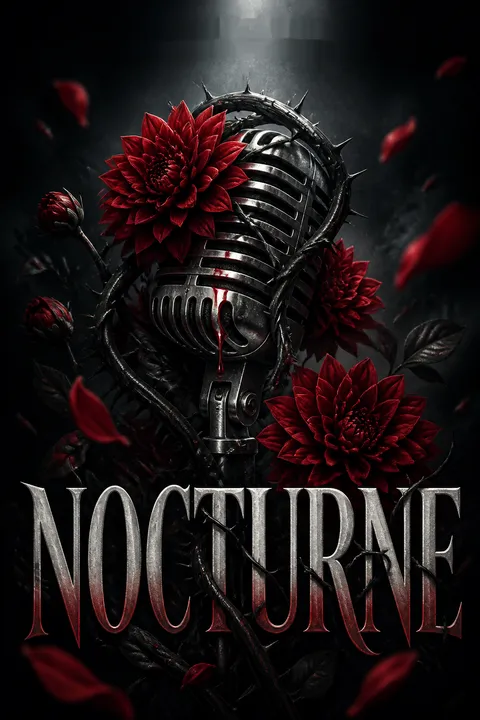

Plot Summary
City of Shadows
The city pulses with postwar energy, its neon-lit streets promising dreams and hiding nightmares. Elizabeth Short, an aspiring actress, navigates this world of false promises and real dangers. She's desperate for a break, working odd jobs for gangsters like Mickey Cohen, and haunted by the sense that she's being watched. In the city's underbelly, violence simmers beneath the surface, and the line between predator and prey blurs. The city's beauty is a mask for its rot, and Elizabeth's hope is a fragile flame in the gathering dark. As she waits in the Biltmore Hotel, a fateful encounter sets her on a path from which there is no return, watched by eyes both human and inhuman.
The Black Dahlia's Fate
Elizabeth Short's mutilated body is discovered in a vacant lot, drained of blood and marked by ritualistic violence. The press dubs her the "Black Dahlia," and the city is gripped by fear and morbid fascination. The police investigation is stymied by corruption, red herrings, and the city's tangled alliances. Private investigator Victor Callahan is drawn into the case by Elizabeth's half-sister, determined to find justice where the police cannot. As he delves into the city's secrets, he finds himself haunted by gaps in his memory, strange hungers, and a growing sense that the Dahlia's killer is not entirely human. The murder is both a crime and a message—a gateway to something darker.
Blood and Jazz
Lena, a red-haired jazz singer with a magnetic presence, performs nightly at The Emerald Room, a club owned by Cohen's syndicate. She hides her true nature—she's a vampire, born not made, living in the open by blending in. Her closest friend was Elizabeth, and Lena is wracked with guilt over her death. The city's violence is familiar, but the murder's ritualistic nature unsettles even her. Lena's relationships—with her human lover Marco, with the club's staff, and with the city itself—are fraught with danger and longing. She is both predator and protector, determined to uncover the truth behind Elizabeth's fate, even as she fears exposure.
The Detective's Hunger
Callahan, a war veteran and private eye, is drawn to the Dahlia case by both professional duty and personal obsession. He's plagued by blackouts, waking with blood on his hands and no memory of the night before. His investigation leads him to Lena, whose allure is both irresistible and unsettling. As he questions witnesses and follows leads, he senses a connection to the case that goes beyond logic—a pull toward the city's shadows and toward Lena herself. The boundaries between hunter and hunted, man and monster, begin to blur as Callahan's own nature awakens.
Dangerous Connections
The investigation reveals a web of connections: Cohen's criminal empire, the mysterious "Europeans" Elizabeth feared, and a series of unsolved murders with ritualistic elements. Lena's lover Marco is both protector and threat, his jealousy and violence escalating as Lena draws closer to Callahan. The police are compromised, and the city's elite are complicit in its darkness. Lena and Callahan's paths cross repeatedly, their mutual suspicion giving way to a dangerous attraction. Both are drawn deeper into the city's secrets, and both sense that something ancient and predatory is at work.
Secrets in the Dark
Lena discovers Elizabeth's diary, filled with cryptic entries about her work for Cohen, her fear of the Europeans, and strange symbols linked to blood rituals. The diary is both a clue and a threat—evidence that could expose Lena's true nature. As Lena and Callahan grow closer, they are stalked by unseen forces. Lena is attacked in her apartment, the diary stolen by a supernatural intruder. The sense of being hunted intensifies, and both realize that the killer is not just a man, but something more. The city's shadows are alive, and the past is coming for them.
The Diary's Truth
The diary's secrets point to the Ivanovs, an ancient Russian vampire family exiled from their realm. They are orchestrating a series of ritual murders, seeking to open a gateway to the Red Realm—their lost homeland. Each victim is chosen for a reason: rare blood types, symbolic roles in the ritual. Lena's own blood is revealed to be the rarest of all, making her the final key. Callahan's investigation uncovers his own connection to the Ivanovs—he is their lost son, adopted by humans, his vampire nature suppressed until now. The truth is a knife: he is both detective and monster, both hunter and the killer he seeks.
Predator and Prey
Callahan's vampire nature erupts, triggered by rage, blood, and his connection to Lena. He is torn between his human conscience and the predatory instincts of his bloodline. Lena and Callahan's relationship becomes a crucible—passion, violence, and the fear of losing control. The Ivanovs manipulate them both, using compulsion and blood magic to turn Callahan into their weapon. Lena is captured, tortured, and prepared as the final sacrifice. The line between predator and prey dissolves, and both must choose what kind of monster they will be.
The Ivanov Invitation
The Ivanovs lure Lena and Callahan to a mansion under the guise of a party. There, they are drugged, compelled, and forced into a ritualistic orgy—sex and blood as both pleasure and power. The Ivanovs test their control, seeking to trigger Callahan's full transformation and to bind Lena to their will. The experience is both intoxicating and horrifying, blurring the boundaries of consent, identity, and desire. When they awaken, another murder has occurred, and the ritual moves closer to completion. The Ivanovs' true plan is revealed: to use Lena's blood to open the gateway, and Callahan as the instrument of her destruction.
Rituals and Revelations
Lena is captured and prepared for the final ritual—her body marked with ancient symbols, her blood collected for the gateway. Dmitri Ivanov, Callahan's sire, reveals the full extent of his plan: the ritual murders are a key, each victim a necessary sacrifice. Callahan, under compulsion, is forced to hunt Lena, torn between his love for her and the blood bond to his father. The other vampires—Abe, Valtu, Adonis, and Ezra—mount a desperate rescue, but the Ivanovs' power is formidable. The city's fate, and the boundary between worlds, hangs in the balance.
Becoming the Monster
In the climactic confrontation, Callahan is forced to choose between obedience to his bloodline and his love for Lena. Dmitri's compulsion is nearly absolute, but Lena's blood and their bond give Callahan the strength to resist. He integrates his human and vampire selves, becoming something new—neither monster nor man, but both. In a battle of fire and blood, the Ivanovs are destroyed, the ritual interrupted, and the gateway remains closed. Marco, turned into a feral vampire, is slain. The cost is high, but Lena is saved, and Callahan claims his own destiny.
The Crimson Clover
With the Ivanovs gone, a power vacuum opens in Los Angeles. Cohen's criminal empire is exposed as complicit in the murders, and the city teeters on the edge of chaos. Konstantin, a mercenary vampire, proposes an alliance to bring Cohen down and restore balance. Lena and Callahan, now partners in both love and justice, accept the challenge. They form a new kind of detective agency—one that polices the supernatural as well as the human. The city's shadows are still dangerous, but there is hope for a new order, one built on truth and choice rather than blood and compulsion.
Bloodlines Unveiled
Lena and Callahan build a life together, haunted by the past but determined to shape their own fate. They find peace in each other, their bond forged in fire and blood. The wounds of the past begin to heal—Elizabeth's murder is avenged, the Ivanovs' legacy ended, and the city's darkness held at bay. They contemplate family, home, and the possibility of a future beyond violence. The vampire world is changed by their choices, and the city's shadows are a little less menacing.
The Final Sacrifice
The Ivanovs make one final attempt to open the gateway, using Lena as the sacrifice and Callahan as the instrument. In a burning warehouse, surrounded by fire and death, Callahan resists his father's compulsion and kills Dmitri, ending the bloodline's curse. Lena is saved, but the scars remain. The gateway is closed, but the cost is high—innocence lost, and the knowledge that monsters can be made as well as born. The city is forever changed, but so are Lena and Callahan.
Fire and Ashes
The warehouse burns, the Ivanovs are destroyed, and the ritual is ended. Lena and Callahan escape with their allies, battered but alive. The city's underworld is in chaos, and the supernatural world is forced to reckon with the consequences of the Ivanovs' ambition. Lena and Callahan must come to terms with what they have done—and what they have become. The fire is both an ending and a beginning, burning away the old to make way for the new.
Aftermath and Awakening
In the aftermath, Lena and Callahan struggle with guilt, trauma, and the challenge of living with their dual natures. They find solace in each other, and in the community of vampires who choose coexistence over predation. They begin to build a new life—hunting monsters, protecting the innocent, and seeking justice in a city that will always be haunted by its shadows. Their love is both a wound and a healing, a reminder that even monsters can choose to be more.
A New Kind of Justice
Lena and Callahan, now fully integrated as both lovers and partners, accept Konstantin's offer to bring down Cohen and reshape the city's underworld. They form a new agency, policing the supernatural and the human alike. Their bond is unbreakable, forged in blood and fire. The city's future is uncertain, but they face it together, determined to be both predators and protectors. Justice is no longer just a human concern—it is a vampire's burden as well.
Epilogue: Summer of Love
Twenty years on, Lena and Callahan live in San Francisco, raising their daughter Olivia among a community of vampires who have chosen coexistence. The world has changed—new dangers, new possibilities, new forms of darkness and light. The past is never entirely gone, but the future is theirs to shape. In the fog of Golden Gate Park, surrounded by friends and family, they find peace in the knowledge that love, choice, and hope endure—even for monsters.
Analysis
Nocturne is a dark, seductive reimagining of the Black Dahlia murder, blending noir, horror, and romance to explore the nature of monstrosity, choice, and redemption
At its core, the novel asks whether we are defined by our blood, our past, or our choices. Lena and Callahan are both predators and protectors, forced to confront the violence within themselves and the world around them. The ritual murders are both a crime and a metaphor—a gateway to another world, but also a test of what kind of world we want to build. The story is deeply modern in its concerns: the legacy of trauma, the dangers of unchecked power, the possibility of healing through love and community. By integrating the supernatural with the historical, Nocturne suggests that the monsters we fear are both within and without, and that the only way to survive is to choose, again and again, to be more than our worst instincts. The novel's ultimate message is one of hope: even in a city of shadows, even for those born monsters, love and justice are possible—and worth fighting for.
Review Summary
Nocturne received mostly positive reviews, praised for its atmospheric 1940s noir setting, vampire lore, and blend of true crime with paranormal romance. Readers enjoyed the chemistry between Lena and Callahan, the murder mystery plot, and cameos from characters in other Halle novels. Some found the romance predictable or underdeveloped, but most appreciated the spicy scenes and engaging storytelling. The book's unique combination of vampires, historical fiction, and the Black Dahlia case resonated with many readers.
People Also Read
Characters
Lena Reid
Lena is a red-haired jazz singer whose magnetic presence masks her true nature: she is a vampire, born not made, living in the open by blending into the city's nightlife. Her friendship with Elizabeth Short is genuine, and her guilt over Elizabeth's death drives her quest for justice. Lena is fiercely independent, both predator and protector, haunted by the violence of her world and her own capacity for it. Her relationships—with Marco, with Callahan, with the city—are fraught with longing, danger, and the constant threat of exposure. Over the course of the story, Lena evolves from a woman hiding her true self to one who embraces her power, her love, and her responsibility to shape her own fate.
Victor Callahan
Callahan is a war veteran and private investigator, drawn to the Black Dahlia case by both professional duty and a personal sense of justice. Plagued by blackouts, strange hungers, and a growing sense of otherness, he is both hunter and hunted. His investigation uncovers not only the city's secrets but his own: he is the lost son of Dmitri Ivanov, his vampire nature suppressed until now. Callahan's journey is one of integration—accepting both his human conscience and his predatory instincts. His love for Lena is both a salvation and a crucible, forcing him to choose what kind of monster he will be. By the end, he is both detective and vampire, both protector and predator, forging his own destiny.
Dmitri Ivanov
Dmitri is the head of the Ivanov family, exiled from the Red Realm and obsessed with returning. He orchestrates the ritual murders, seeking to open a gateway through blood magic and sacrifice. Cold, calculating, and charismatic, Dmitri sees himself as a visionary, willing to destroy anyone—including his own son—to achieve his goals. His compulsion over Callahan is nearly absolute, but his arrogance blinds him to the power of choice and love. Dmitri is both a father and a monster, a symbol of the old world's cruelty and the dangers of unchecked ambition.
Katya Ivanov
Katya is Dmitri's daughter, a vampire of formidable power and predatory charm. She delights in manipulation, using sex, compulsion, and violence to achieve her ends. Katya is both a temptress and a torturer, instrumental in the ritual murders and the attempt to bind Lena and Callahan to the Ivanovs' will. Her relationship with her family is complex—loyalty, rivalry, and a shared hunger for power. Katya's downfall comes from underestimating the strength of love and the unpredictability of her prey.
Marco Russo
Marco is Lena's human lover, an enforcer for Cohen's syndicate. His possessiveness and violence are both a shield and a prison for Lena. Marco is ultimately a victim—turned into a feral vampire by the Ivanovs, used as a weapon against Lena and Callahan. His transformation is a warning about the dangers of unchecked rage and the ease with which monsters can be made. Marco's death is both a tragedy and a necessary ending, freeing Lena from his shadow.
Abraham Van Helsing (Abe)
Abe is an ancient vampire who has chosen coexistence over predation. He runs a sanctuary for vampires in Malibu, offering guidance, healing, and a model for a different way of living. Abe is both wise and compassionate, serving as a mentor to Lena and Callahan. His knowledge of vampire lore, rituals, and history is instrumental in unraveling the Ivanovs' plan. Abe's presence is a reminder that monsters can choose to be more, and that redemption is possible even for the damned.
Valtu Aminoff (Dracula)
Valtu is the inspiration for Dracula, a vampire of immense power and charisma. He is both a warrior and a lover, haunted by loss and driven by a desire for meaning. Valtu's experience and strength are crucial in the battle against the Ivanovs, and his perspective offers a long view of vampire history and the dangers of unchecked ambition. He is both a cautionary tale and a source of hope—a reminder that even the oldest monsters can change.
Konstantin
Konstantin is a vampire who has worked for both Cohen and the Ivanovs, always serving his own interests. He is pragmatic, dangerous, and ultimately chooses to align with Lena and Callahan to bring down Cohen. Konstantin represents the possibility of redemption and the complexity of vampire morality—he is neither hero nor villain, but a survivor navigating a world of shifting alliances.
Ezra
Ezra is part of Abe's circle, a vampire who has chosen coexistence and community over isolation. He is practical, resourceful, and deeply loyal to his friends. Ezra's presence is a stabilizing force, offering support and perspective in times of crisis. He represents the possibility of a vampire society built on trust and mutual aid.
Adonis
Adonis is a towering figure, both physically and morally. He is a warrior, a protector, and a man of few words. Adonis's strength and loyalty are crucial in the battles against the Ivanovs and Cohen. He is a reminder that power can be used for protection as well as predation, and that even the most dangerous monsters can choose to be guardians.
Plot Devices
Ritual Murder and Blood Magic
The central plot device is the series of ritual murders, each victim chosen for their symbolic and biological significance. The Ivanovs use blood magic—ancient symbols, rare blood types, and carefully orchestrated violence—to attempt to open a gateway to the Red Realm. The murders are both a crime and a supernatural ritual, blending noir mystery with horror and fantasy. The diary, the symbols, and the escalating violence all serve as clues and foreshadowing, building tension and revealing the true stakes.
Duality and Integration
The narrative structure is built around the duality of its protagonists—Lena and Callahan are both human and vampire, both predator and protector. Their journeys are mirrored: Lena hides her nature to survive, while Callahan must accept his to save others. The process of integration—accepting both sides, choosing what kind of monster to be—is both a personal and a thematic arc. The story uses foreshadowing (blackouts, hunger, compulsion) and parallelism (rituals, relationships, choices) to explore the tension between nature and choice.
Compulsion and Free Will
Vampire compulsion is both a literal and metaphorical device—Dmitri's control over Callahan, the Ivanovs' manipulation of Lena, and the broader question of whether blood is destiny. The struggle for free will is central: can monsters choose to be more? The narrative uses compulsion as both a source of horror and a test of character, with the ultimate victory being the ability to choose love, justice, and selfhood over inherited evil.
Noir Structure and Perspective
The story is structured as a noir mystery, with Callahan as the hard-boiled detective and Lena as the femme fatale. The investigation is both external (the Dahlia case) and internal (the search for identity and truth). The use of unreliable narration—blackouts, missing memories, shifting perspectives—creates suspense and ambiguity, keeping the reader guessing about the true nature of the characters and the crimes.
Historical and Supernatural Setting
The setting is both historically grounded and fantastical—real events (the Black Dahlia murder, the city's corruption) are reimagined through a supernatural lens. The city itself is a character, its beauty and rot reflecting the duality of the protagonists. The blending of real and imagined, human and monster, creates a world where the boundaries of genre and morality are constantly in flux.
About the Author

Download PDF
Download EPUB
.epub digital book format is ideal for reading ebooks on phones, tablets, and e-readers.








































