


Plot Summary
Mateo's Magnetic Smile
Jodi Quinn1 stops at a remote Texas gas station while driving her two college-aged children, Poppy4 and Ralph,3 to Northanger University in New Mexico. The attendant, Mateo,7 is unusually handsome, and Jodi,1 a sexually liberated widow, extends her stop to flirt.
She uses the employee bathroom, shops with deliberate slowness, and secures his phone number on a receipt for a promised rendezvous. When she returns to the car and drives away, she notices Poppy4 crying silently in the passenger seat. Then a gruff voice rises from the backseat.
A repulsive stranger2 with yellowed teeth and a stained tank top is holding a pistol to Ralph's3 head. He informs the family that no one may speak without his permission. Jodi's1 delay at the gas station gave him exactly the window he needed to slip into the car unseen.
This opening establishes cruel irony as the engine of horror. Jodi's healthy sexual appetite, a source of empowerment after her husband's death, directly enables the nightmare. The gas station becomes a threshold between normal life and atrocity. Mateo's receipt, meant to symbolize future pleasure, transforms into a talisman of everything stolen. The narrative also introduces the family's deep bond through Jodi's reflections on their shared cinema obsession, making the coming violation of those relationships devastating. The Man's first words establish total control through enforced silence: the family's voices, like their autonomy, now belong to him.
The Man in the Backseat
The Man2 interrogates the family, demanding their names and making lewd comments about Poppy.4 He asks invasive questions about the siblings' sex lives, forcing them to confess private details in front of their mother.1
When Ralph3 speaks up to defend his sister,4 The Man2 smashes the gun handle into his face, breaking his nose and spraying blood across the backseat. Ralph3 has already wet his pants from terror. The Man2 reveals his philosophy: he does what he does because he loves being hated.
His body is a catalog of neglect: sunburn flakes, ingrown hairs, a prominent white pimple on his shoulder, and a stench of spoiled milk and sweat. Jodi1 drives one-handed while Poppy4 crushes the other, the girl growing increasingly catatonic as the Texas heat battles the car's air conditioning.
The interrogation reveals The Man's methodology beyond mere violence. He doesn't just want compliance; he wants to dismantle dignity piece by piece. Forcing the siblings to discuss their sex lives in front of their mother isn't about gathering information. It demonstrates that all boundaries, all privacy, all normal social contracts have been erased. Ralph's broken nose and wet pants ground the terror in humiliating bodily reality. The Man's admission that he loves being hated positions him as someone whose identity is constructed entirely through the negative attention he generates, a hollow person who only feels real when reflected in his victims' fear and loathing.
Andy's Final Wave
The Man2 orders Jodi1 to pull over beside a stranded car where an elderly couple, Andy6 and Brenda Springfield,5 wait with their broken-down vehicle. He hides the gun and instructs Poppy4 to speak with the approaching husband.
Andy,6 nearly deaf and visually impaired, notices nothing amiss and asks for help getting his wife to the gas station. The Man2 offers to squeeze Brenda5 into the backseat. Andy6 agrees and retrieves his frail wife.5 When the elderly man returns and opens the car door, The Man2 levels the pistol and shoots him point-blank in the face.
The bullet shreds through Andy's6 eye socket, and his brains spill across the hot pavement. Brenda5 freezes in shock. The Man2 yanks her into the car by her wrist, her head cracking against the door frame. Jodi1 accelerates away as ordered.
Andy's murder marks the definitive point of no return. Before this moment, the family could harbor desperate hope that The Man might only want transportation or money. The killing annihilates that fantasy with a single trigger pull. The scene's horror is amplified through dramatic irony: the trusting elderly man walks toward death completely unaware of the predator in the backseat. The Man forces Poppy to be the family's spokesperson, making them all unwilling participants in the trap. This manufactured complicity deepens their psychological trauma even before the physical violence escalates, transforming victims into bait.
Driven into the Wasteland
The Man2 orders Jodi1 to steer off the highway and into the desert. The car lurches over hills and trenches until they descend into a dried creek bed miles from any road. Under the blazing sun, he forces everyone out and makes Brenda5 handle his erect, diseased penis while holding the gun to her temple.
When her arthritic hands fail to stimulate Ralph3 on command, The Man2 grows enraged. He retrieves his blue duffle bag from the car and unzips it, revealing a collection of filthy sex toys: dildos, vibrators, anal beads, and a rubber fist, all crusted with dried blood, feces, and fluids from previous victims.
Among the obscene inventory lies a hunting knife with a broad, blood-stained blade. The bag's contents confirm The Man2 has done this many times before.
The transition from confined car to open desert paradoxically increases claustrophobia. The vast emptiness guarantees no witnesses, no help, no intervention. The duffle bag's reveal is the story's most significant inflection point: these are not merely sex toys but trophies and tools from previous atrocities, confirming The Man as a serial predator. The knife among the toys collapses the distinction between sexual violation and lethal violence. The desert itself, described as a place where not even lizards thrive, becomes an indifferent character: ancient, silent, and utterly unconcerned with what transpires within its boundaries. Nature offers no sanctuary.
The Duffle Bag Emptied
The Man2 orders Poppy4 to strip. When she hesitates, Jodi1 helps undress her daughter4 to prevent worse violence. Ralph3 is forced to strip as well. Then comes the most sadistic command: the siblings must have sex with each other.
The Man2 inserts a soiled vibrating butt plug into Ralph3 to mechanically stimulate him. On her hands and knees in the rocky dirt, Poppy4 endures her brother's3 dry, forced anal penetration while The Man2 masturbates. Jodi1 watches her children defile each other, blood from Poppy's4 cut knees mixing with the desert floor.
Ralph3 weeps and apologizes continuously. The assault lasts two hours as the sun sets. When Ralph3 finally ejaculates onto the ground between his sister's4 legs, The Man2 steps behind Poppy4 and declares that this is love.
The forced incest represents the psychological nadir. The Man doesn't merely want to rape his victims; he wants to destroy the relationships that define them. The bond between Ralph and Poppy, their shared filmmaking dreams, their mutual creative completion: all of it is weaponized against them. Jodi's active participation in undressing her daughter introduces the unbearable dynamic of maternal protection becoming facilitation. The two-hour duration emphasizes methodical destruction rather than impulsive violence. The Man's declaration that this is love perverts the concept entirely, defining his worldview where domination and affection are indistinguishable, where intimacy equals violation.
Poppy's Last Hiccup
Without warning, The Man2 presses the gun to the top of Poppy's4 head and fires. The bullet punches through her skull and exits through her chin. She pitches forward, her bowels releasing in death. The Man2 then orders Ralph3 to continue having sex with his sister's4 corpse.
When Ralph3 refuses, Jodi1 lunges at The Man2 and tackles him against the car hood. The gun drops. Ralph3 scrambles for it, but The Man2 recovers his hunting knife and holds the blade to Jodi's1 throat.
Though Jodi1 screams for Ralph3 to shoot, her son3 cannot pull the trigger knowing the knife would slash his mother's1 throat. He drops the weapon. The Man2 reasserts control, forcing Ralph3 to resume humping Poppy's4 body while Jodi1 is made to perform oral sex on her captor.2 A failed revolt becomes another layer of degradation.
Poppy's murder shatters the last pretense that compliance ensures survival. The Man had implied cooperation might spare them, and his decision to execute her after the siblings performed exactly as ordered reveals that his promises meant nothing. The failed revolt is structured as a miniature tragedy: the family had the gun, had the opening, but Ralph's inability to sacrifice his mother becomes both his moral victory and their strategic defeat. The image of Poppy's final hiccup ties her death to the sensitive, rule-following girl who hadn't cried at birth because she didn't want to bother anyone. Even in death, her body performs consideration.
Brenda's Unspooled Guts
While The Man2 rapes Jodi's1 mouth, Brenda5 attempts to scale the creek wall and escape. He shoots her in the leg and drags her back down. Enraged by the defiance, he straddles the elderly woman5 and stabs her repeatedly in the face and chest.
He carves open her belly, then shoves his fist into the wound and pulls out a tangled knot of intestines. Brenda5 remains alive, gasping blood. Unsatisfied, The Man2 retrieves a string of soiled anal beads.
He forces them down Brenda's5 throat, then reaches into her stomach cavity, fishes the beads through her perforated organs, and pulls them out through the abdominal wound. Brenda's5 eyes roll white as she finally dies. The Man2 tosses the gore-slicked beads onto her unspooled intestines like a completed magic trick.
Brenda's murder is the story's most graphically excessive set piece, serving a precise structural purpose. By this point, the reader has been numbed by Poppy's death and the forced incest. The escalation into near-cartoonish gore re-sensitizes, making violence feel newly shocking. The anal beads trick literalizes The Man's project: he erases boundaries entirely, turning the human body into a single undifferentiated cavity. Brenda's ceaseless prayer, maintained throughout the ordeal, is answered not with rescue but with the most elaborate death of all, a grim theological statement about divine absence in the face of extreme human cruelty. Her faith offers no protection.
The Knife Finds His Neck
While forcing Jodi1 to continue fellating him, The Man2 fails to notice Ralph3 pick up the hunting knife from where it was discarded near Brenda's5 body. Ralph3 drives the blade deep into The Man's2 neck. The attacker2 fires his gun reflexively, but every chamber is empty.
Jodi1 seizes the opening: with his penis still in her mouth, she bites down with all her strength and severs the organ from his body. She stands, holding the bloody flesh in her mouth, and spits it directly into The Man's2 horrified face.
She grips the knife handle and pulls it free from his neck. Blood erupts from the wound in a fountain, and The Man2 collapses, bleeding out rapidly into the dirt. The family's torturer2 dies at their feet as the desert night swallows the creek bed.
The revenge sequence is engineered for maximum catharsis and symbolic weight. The knife, introduced as a tool of terror, becomes the instrument of liberation. Jodi's bite internalizes the violence before expelling it back at the attacker. Spitting his severed penis into his face reverses the flow of degradation: everything he forced into his victims' bodies is symbolically returned. The empty gun reveals his dominance was always contingent and fragile. The Man's pathetic pleading for mercy in his final moments confirms what the narrative has suggested throughout: his cruelty was never strength but a desperate performance masking profound emptiness. Power that requires a loaded weapon was never truly power at all.
Epilogue
Jodi1 and Ralph3 emerge from the desert naked and covered in dried blood, walking miles back to the gas station. They enter near the end of Mateo's7 shift. He does not recognize the blood-caked woman as the flirtatious customer from hours earlier. At first, he thinks they are zombies. Jodi1 asks to use the bathroom, her voice hollow and unfamiliar even to herself.
She looks past Mateo7 toward the employee door she had walked through earlier, the memory of her prior lust now grotesquely ironic. Mateo7 directs them to the bathroom and, once the two survivors are out of sight, picks up the phone and calls the police. Jodi1 and Ralph3 wash the blood from their bodies as sirens approach in the distance.
The return to the gas station creates a devastating bookend. The same space that hosted Jodi's sexual confidence and anticipation now receives her as an unrecognizable trauma survivor. Mateo, who was meant to be a future lover, becomes instead the person who summons authorities to a crime scene he cannot comprehend. His failure to recognize Jodi underscores her complete transformation: the woman who flirted with him no longer exists. The police call offers no resolution, only the beginning of a different ordeal: the process of explaining what happened, of being believed, of attempting to live with memories no therapy can fully address. Ralph and Jodi survive, but the story refuses to call this a happy ending. Survival is merely the start of another journey.
Analysis
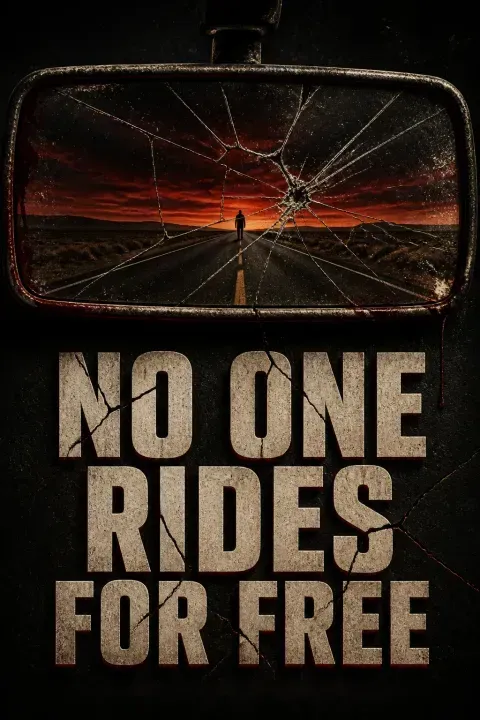
No One Rides for Free operates within the rape-and-revenge subgenre, drawing from 1970s grindhouse cinema while pushing into splatterpunk literary territory. The novella functions on a logic of relentless escalation: each violation must exceed the last to maintain the reader's horrified attention. Yet beneath the graphic surface, the narrative engages seriously with questions of agency, complicity, and trauma's aftermath. Jodi's1 sexuality is presented positively at the start, a widow reclaiming pleasure on her own terms after her husband's death. The story punishes her for it, not through moralistic judgment, but through the cruel mechanics of chance: a few extra minutes of flirtation create the window for evil to enter. The structure mirrors the randomness of violence in the real world, where catastrophe often follows mundane decisions. The confined setting of the car and the empty desert creates an existential pressure cooker. There is no outside help, no divine intervention, no deus ex machina. The characters must save themselves or die. Brenda's5 unanswered prayers articulate the story's bleak theology: the universe is indifferent to human suffering, and survival depends entirely on seizing the right moment. The revenge, when it arrives, is engineered for maximum catharsis. Every element of The Man's2 power is systematically reversed: the gun runs empty, the knife is turned against him, his penis is bitten off and spat into his face. The revenge sequence literalizes the genre's promise that degradation can be returned to its source. But the epilogue refuses to offer comfort. Jodi1 and Ralph3 survive, but the woman who flirted with Mateo7 is gone forever. The police sirens signal not rescue but the beginning of a different ordeal: the process of explaining, of being believed, of living with memories that no therapy can fully address. The story's title becomes its thesis: every ride has a cost, and trauma is a fare that never stops being paid.
Review Summary
No One Rides For Free receives mixed reviews, averaging 2.71/5. Fans of extreme horror and splatterpunk praise its raw, unrelenting intensity, calling it a wild, nauseating ride. However, many critics argue the novella lacks character development, meaningful plot, and substance beyond shock value. Common complaints include cheesy dialogue, flat characters, and an overreliance on graphic sexual violence and rape. Several reviewers note the book was written in approximately ten days, which many feel is evident in its quality.
People Also Read
Characters
Jodi Quinn
Fierce mother and widowA woman in her forties, manager of a grocery store, and widow of five years. She raised her two children alone after her husband Jackson died in a car accident, working two jobs while nurturing their shared love of cinema with Friday night theater trips. Sexually liberated, she maintains relationships with multiple men but refuses romantic attachment, reserving genuine love only for her children. Her flirtation with Mateo7 at the gas station, born of healthy desire, becomes the source of crushing guilt. Resourceful and fiercely protective, she endures unimaginable horror while strategizing survival. Her transformation from confident sexual agent to trauma survivor is the story's emotional spine. She discovers a capacity for lethal violence she never knew she possessed.
The Man
Sadistic serial predatorAn unnamed, short, pudgy drifter with yellowed teeth, wiry gray hair, and a body covered in sunburn flakes, ingrown hairs, and a prominent white pimple. He wears a stained wife-beater and gym shorts, smelling of spoiled milk, sweat, and feces. Motivated purely by a desire to be hated, he admits he loves the feeling of being despised. His blue duffle bag of used, crusted sex toys confirms a history of prior victims. He methodically escalates from humiliation to forced acts to murder, treating human lives as disposable props for his gratification. When stripped of his weapon, his bravado collapses into pathetic pleading, revealing his cruelty as a performance masking profound emptiness.
Ralph
Protective older brotherJodi's1 son, a college junior studying film at Northanger University. He shares an extraordinarily close creative bond with his sister Poppy4; they have written five screenplays together and plan to become filmmakers. He wears his blonde hair long like his late father, whom he physically resembles. Protective of his sister, he speaks up against The Man2 despite brutal consequences, including a broken nose. His forced violation of Poppy's4 body, both alive and dead, destroys the sibling relationship that defined his identity. He ultimately becomes the one who strikes the first lethal blow, retrieving the forgotten knife and driving it into The Man's2 neck.
Poppy
Sensitive younger sisterJodi's1 daughter, a college freshman. Sensitive, rule-following, and eager to please, she completes her brother3 creatively: she generates the ideas, he executes them. She didn't cry at birth because she didn't want to bother anyone. Her sensitivity makes The Man's2 abuse particularly cruel; she withdraws into catatonia during the ordeal, her body developing hives and nervous ticks. The Man's2 sexual interrogation and the subsequent forced incest destroy her psychologically before the bullet destroys her physically. Her death, marked by a final hiccup, echoes her lifelong pattern of minimizing her own suffering.
Brenda Springfield
Elderly praying victimA frail, arthritic elderly woman traveling with her husband Andy6 when their car breaks down. Deeply religious, she prays ceaselessly during her captivity, her faith becoming a mantra against the horror. Forced to handle The Man's2 penis and attempt to stimulate Ralph3 despite her crippled hands, she endures profound degradation. Her attempted escape up the creek wall represents the only act of physical defiance by any victim, but it results in the most gruesome death. Her prayers go unanswered in the most brutal fashion, a grim commentary on divine silence.
Andy Springfield
Trusting elderly husbandBrenda's5 husband, nearly deaf and visually impaired, wearing a white tank top and possessing no teeth. He approaches the family's car believing they are Good Samaritans who will help his stranded wife5. His inability to perceive the danger costs his life instantly when The Man2 shoots him in the face.
Mateo
Handsome gas station clerkA Mexican man with bright blue eyes, a bushy beard, and a musky cologne who works at the remote Texas gas station. Jodi1 flirts with him extensively and secures his phone number. He becomes the unwitting bookend to the story, failing to recognize the blood-soaked Jodi1 when she returns, and ultimately calling the police.
Plot Devices
The Gun
Enforces all commandsThe Man's2 primary instrument of control, a pistol he holds to various heads throughout the ordeal. It fires four times: once into Andy's6 face, once into the air as warning, once into Poppy's4 skull, and once into Brenda's5 leg. During the climactic confrontation, the gun clicks empty, revealing the finite nature of The Man's2 power. The gun's silence in the final moments allows the family's counterattack to succeed. Its emptiness is the story's crucial dramatic reveal: the weapon that enforced absolute submission was, at the decisive moment, useless.
The Duffle Bag
Reveals serial predation historyA blue, frayed duffle bag The Man2 carries with him. When unzipped in the desert creek bed, it spills dozens of used sex toys crusted with dried blood, feces, bile, and other fluids from previous victims. The collection includes dildos, vibrators, anal beads, a rubber fist, gags, and masks. Among these trophies lies a hunting knife with a blood-stained blade. The bag serves as evidence that The Man2 is not an impulsive criminal but a practiced serial predator who has performed this ritual many times before with other families. The toys become the instruments of the Quinn family's degradation.
The Hunting Knife
Tool of murder and liberationA broad-bladed knife, tattooed with dried blood, discovered among the sex toys in The Man's2 duffle bag. He uses it to threaten Jodi1 during the failed revolt and to butcher Brenda5. Crucially, The Man2 leaves the knife in the dirt beside Brenda's5 body after killing her. This careless act allows Ralph3 to retrieve it during the final confrontation. Ralph3 stabs the blade into The Man's2 neck, and Jodi1 later pulls it free, causing the fatal hemorrhage. The knife transitions from being an instrument of the predator's2 power to the means of his destruction, embodying the revenge narrative's core logic.
Mateo's Receipt
Symbol of interrupted normalcyThe gas station receipt on which Mateo7 writes his phone number for Jodi1. She plans to call him on her return trip for a sexual encounter. The receipt represents her sexual agency and the ordinary pleasures of her life before the attack. After the ordeal, when she returns to the gas station as a blood-soaked survivor, Mateo7 does not recognize her. The receipt, presumably still in her pocket or the car, becomes a relic of a woman who no longer exists. The promised rendezvous that will never happen symbolizes everything The Man2 destroyed beyond the physical losses.
Download PDF
Download EPUB
.epub digital book format is ideal for reading ebooks on phones, tablets, and e-readers.








































