
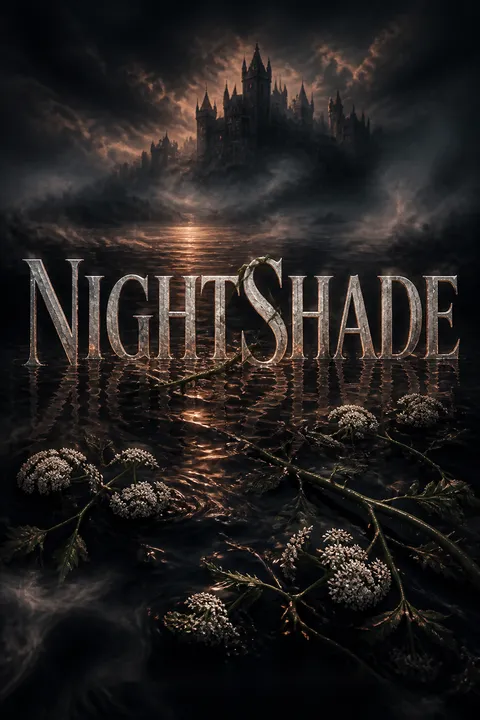


Plot Summary
Prologue
An anonymous voice confesses his all-consuming love for a woman named Annalise.11 She was his treasure, his solace — but she chose another man. He compares his love to a disease that festered inside a cage until it devoured every vein and bone. Unable to possess her, he did what their ancestors did with treasures they could not use: he buried her. She remains, he declares, forever his.
The Gates She Swore Against
Ophelia Winters1 stands before the wrought iron gates of Sorrowsong University — a centuries-old Scottish castle embedded in a remote highland valley — and cannot will herself forward. She promised her dead father she would never set foot here, back when he was alive to hear such promises.
Four years earlier, both her parents died in a helicopter crash a mile from these gates, and no institution of justice acknowledged their deaths. Now twenty-one, broke, kicked out of school for non-attendance, denied by every other university, Ophelia1 has been funneled here by a mysterious scholarship.
She carries a duffel bag with everything she owns. Inside the castle waits a degree in psychology, and somewhere in its archives, the truth about why a Green Aviation helicopter crashed into the hillside.
The Killer's Son in the Rolls-Royce
A black Rolls-Royce Phantom nearly flattens her on the muddy approach road. The driver — green-eyed, tattooed, devastatingly assured — steals her bag to force her into the passenger seat. Their five-minute ride is electric and combative: she threatens to stab his voice box, he calls her Oliver Twist.
He gives only his first name: Alex.2 Minutes later, inside the castle, a bubbly new student named Colette4 mentions his full surname — Corbeau-Green — and Ophelia's1 world fractures.
She is seventeen again, crawling beneath police tape toward a sickening tangle of burning metal, the words Green Aviation stamped on a charred fragment buried in earth. Alex's father, Cain Green,7 runs the company whose helicopter killed her parents. She vows never to speak to his son again.
Nightshade's Unwilling Recruit
Chancellor Carmichael5 — a spectral figure in a Victorian tailcoat who already knows her name — assigns Ophelia1 not to athletic Hemlock House but to Nightshade, infamous for producing both CEOs and serial killers.
Her roommate is Sofia Ivanov,10 a Russian crime boss's daughter who greets her with a blade and stolen bed space. Ophelia's1 name appears pre-written on the swim roster in unfamiliar handwriting, and a Hamlet quote has been pinned to her headboard. A social psychology class pairs her with Alex2 for an extended essay, forcing regular contact.
She befriends Divya,8 a sharp medical student, and meets Alex's2 loyal best friend Vincenzo Morello,3 whose sister Belladonna9 captains the swim team. During a solo swim, her shoelaces vanish and reappear knotted to a branch. The scent of cloves lingers.
Hemlock Flowers at Four AM
At a Nightshade party, someone spikes Ophelia's1 drink. She hallucinates Achlys — the weeping, grinning woman from the castle's grand painting — lurching through the crowd, and collapses. She wakes hours later in darkness, reaches toward Sofia's10 bed, and finds her roommate cold. Dead.
White hemlock flowers sit delicately between her lips, tied with ribbon. An email from someone calling themselves Alan Sine arrived while Ophelia1 slept, quoting Keats. Alex2 appears in the hallway, wet and muddied at four AM. Neither trusts the other.
He stages an alibi — hiding Ophelia1 in his bed, mussing her hair, unbuttoning her shirt to simulate a night together. When Carmichael5 arrives, Alex2 swears neither of them killed Sofia,10 and the chancellor accepts it without question. The murder is handled internally. No police. Classmates begin whispering that Ophelia1 is a killer.
The Coerced Engineer's Daughter
Divya8 hacks old maintenance databases and uncovers the name of a former Green Aviation contractor. Ophelia1 calls him — he is terrified and hangs up, but eventually provides the number of Laura,13 daughter of the engineer who signed the helicopter's final safety check.
Using Colette's4 private driver, Ophelia1 reaches Laura's13 crumbling house in Inverness. Laura13 holds a knife to Ophelia's1 throat, then collapses in tears. She explains that Cain Green7 had her kidnapped as a teenager to coerce her father into loosening bolts on the helicopter's rotor hub.
Her father recorded a dying confession before his guilt consumed him. Laura13 later mails the tape to Ophelia1 — concrete proof that Cain7 ordered the sabotage. But publishing it would devastate Alex's2 mentally ill mother and his six younger sisters. The evidence is devastating and unusable.
Facedown in the Tarn
Swimming alone at twilight, Ophelia1 hears a footstep. Two hands slam her face into the shallows. She fights — kicks, claws, headbutts — smelling cloves and anise on her attacker. Water fills her lungs. She loses consciousness.
Miles away, Alex2 is running off his rage after beating Shawn Miller12 in the Nightshade gym for insulting his mother's mental illness. He spots Ophelia's1 orange swim float drifting across the black tarn and finds her on the bank, bruised and barely breathing.
He performs CPR with Belladonna9 coaching by phone, breathing into her frozen lips until she coughs. He carries her to his room, cleans her wounds, brushes her hair in the bath. For the first time, she lets herself be cared for. For the first time, she suspects Alex2 is nothing like his father.
Trapped Beneath the Chancellor's Sofa
Ophelia1 sneaks into Carmichael's5 candlelit office seeking helicopter maintenance files, but the November folder has vanished. When Carmichael5 arrives unexpectedly, she dives under the sofa. Then Alex2 enters for a scheduled meeting and sits directly on top of her.
Through suffocating leather, she discovers that Carmichael5 chairs the Green Aviation board and that Alex2 has been lobbying for a vote of no confidence against his own father — his real reason for attending Sorrowsong. Alex,2 recognizing her scent on the cushions, sends flirtatious crossword-themed emails while she struggles to breathe beneath him.
Later, Carmichael5 confronts Ophelia1 directly, snarling that her mother was no angel and ordering her to cease all investigation. The chancellor's fury confirms he knows the truth about the crash and has been protecting it.
Her Mother's Scratched-Out Face
Ophelia1 returns to find her bedroom wallpapered with Polaroids of her mother — intimate, undressed, in a stranger's bedroom. Every face is violently scratched away. A love letter in her mother's handwriting addresses an unnamed lover, calling Ophelia's1 father spineless, promising to leave with her daughter.
A Shakespeare quote drips in red paint across the wall. Alex2 tears down the explicit photos and carries Ophelia1 to his room. In the pool the next morning, the puzzle crystallizes: Alan Sine rearranges into Annalise — her mother's name.
The stalker is not merely watching Ophelia;1 he is grieving her mother, punishing her daughter for existing. Alex2 traces the emails to a laptop within Sorrowsong. The stalker who killed Sofia10 and the person who ordered the helicopter crash may be the same man.
Please, Until Midnight
After weeks of near-misses and retreats, Alex2 asks permission to kiss her. She whispers the word please, and it undoes them both. His hand slides into her hair; hers clutch his shoulders. He kisses her like he has been rehearsing for months — slow, possessive, devastating.
They establish a ritual: let yourself be loved until midnight, then return to separate corners. Each midnight becomes harder to honor. Alex2 confesses his depression, the grayness that swallows his days, how she threads a strand of copper through his monochrome existence.
She lets him teach her things she has never experienced — patient, praising, rough only when she wants. For five nights they build a fragile sanctuary of ramen cups, Jelly Baby negotiations, Lord of the Rings marathons, and crossword flirtation conducted in email subject lines. It feels dangerously like home.
The Orphan's Empty Kitchen
Christmas break. Ophelia1 goes home to a freezing house with a broken boiler, empty cupboards, and no one to call. Alex2 video calls from Paris, surrounded by sisters and wrapping paper. His mother Elise11 — a former supermodel battling schizophrenia — takes the phone and tells Ophelia1 she can see why her son is happier.
Ophelia1 decides she cannot publish her evidence; the media storm would shatter this fragile woman. She deletes the file. On Boxing Day, Alex2 flies to Scotland uninvited. He enters her tiny house and finds three coats in the cupboard — all hers.
She confesses everything: the crash, four years of solitude, her mission to destroy his family name. He does not leave. He tells her he loves her. That night, in a rented car strung with fairy lights, she gives him everything she has left.
Bancroft's Old Spice
Back at Sorrowsong, Ophelia1 sits in Professor Bancroft's6 office — the gentle psychology lecturer who once said she looked just like her mother. He leans close. Cloves, anise, cinnamon — the scent from the tarn, from Sofia's10 deathbed, from her ransacked bedroom — burns her nostrils.
The door is locked. A knife presses against her spine. Bancroft6 confesses: he was Annalise's lover. When she chose her family over him, he blackmailed Cain Green7 with a compromising video and demanded the murder of Annalise and her husband.
He killed Sofia.10 He tried to drown Ophelia.1 She stabs him and escapes into the Solemn Woods. Alex2 tracks her AirPods and finds her gripping a bloody knife. She tells him she loves him for the first time. Together they watch Bancroft6 die as she recites Keats over his body.
One Hundred Thirty Missed Calls
Alex2 wakes to catastrophe. His phone, silenced overnight, holds one hundred thirty missed calls. Someone has published Ophelia's evidence report to twenty journalists — sent from her email account. His mother has been hospitalized after Cain7 struck her.
His sister Fleur14 is hurt defending their mother. The youngest girls are terrified and begging him to come. Alex2 opens Ophelia's1 laptop and finds the report recovered from its Trash folder — four years of research aimed squarely at destroying his family. He cannot bring himself to wake her, cannot face the fight.
He drives to Inverness and boards a private jet to New York, choosing to seize the CEO position before his father retaliates. He blocks Ophelia's1 number. His sister screams at him through the phone: he is just like their father — choosing the company over family.
Checkmate from the Shadows
Ophelia1 wakes alone and discovers the leaked article bearing her name. She races to the airport but Alex2 has already passed through security. Through the glass, she sees him — red-eyed, jaw set, unreachable. Her frantic texts go unanswered.
She watches the private jet lift into a gray Scottish sky, each second widening the distance between them. Then a text arrives from an unknown number: a grainy photograph of her and Alex2 standing over Bancroft's6 corpse in the moonlit forest, knife glinting in hand.
The sender demands she hand herself over, or Alex2 will be exposed for murder. Another literary quote. Another invisible enemy watching from the dark. The stalker she buried was not working alone. Ophelia1 collapses on the airport floor. The story she thought was ending has only just begun.
Analysis
Nightshade operates as a sustained examination of how grief can calcify into identity — and what happens when love threatens to dissolve the only self you have left. Ophelia1 arrives at Sorrowsong with rage as her sole life-support system; her four-year investigation is less a quest for justice than a psychological survival mechanism. The moment she stops needing revenge is the moment she must confront the emptiness it has been masking. This creates the novel's governing irony: falling in love with Alex2 both heals her and strips away the only structure keeping her upright.
The dual-POV architecture exposes a devastating complementarity. Alex's2 depression manifests as gray numbness — the absence of all feeling — while Ophelia's1 manifests as amplified sensation, every emotion cranked to overwhelming volume. They are matching pathologies: she feels too much, he feels too little, and together they briefly normalize. His therapist's observation that Alex2 has an addictive personality reframes his devotion to Ophelia1 not merely as romance but as his latest coping mechanism, replacing alcohol, running, and architectural drawing in a cycle he cannot break.
The novel subverts dark academia conventions by making the gothic castle less important than the psychological prisons its characters construct inside it. Sorrowsong's cobwebbed hallways and spectral paintings are atmospheric furnishing; the real darkness lives in Ophelia's1 compulsion to weaponize her own suffering, in Alex's2 conviction that saving others justifies self-annihilation, and in the structural violence of dynastic wealth that allows Cain Green7 to erase deaths and purchase silence with equal ease.
The cliffhanger ending crystallizes a question the lovers have been avoiding: can justice and love coexist when they target the same family? Ophelia1 deleted her report — an act of love — but someone else published it, demonstrating that choosing not to pull the trigger does not defuse the bomb. In systems built on inherited power, personal choices are rarely sufficient. Structural change requires structural destruction, and that destruction is always indiscriminate.
Review Summary
Nightshade has captivated readers with its dark academia setting, compelling characters, and gripping plot. Many praise the chemistry between Ophelia and Alex, the slow-burn romance, and the intricate mystery. The Gothic atmosphere and Scottish university backdrop add to the allure. Readers appreciate the complex character development and witty banter. While some found aspects predictable, most were engrossed by the twists and turns. The cliffhanger ending has left fans eagerly anticipating the sequel, with many calling it a favorite read of the year.
People Also Read





Characters
Ophelia Winters
Grieving orphan seeking justiceA twenty-one-year-old carrying four years of frozen grief inside a body that refuses to stop fighting. Ophelia lost both parents at seventeen in a helicopter crash she believes was no accident, and her life has been on pause since — no school, no friends, no future until Sorrowsong offered a scholarship she couldn't refuse. She arrives armed with crossword puzzles to cage her spiraling thoughts and a burning need for revenge against Cain Green7. Beneath her defensive hostility and self-deprecating humor lies someone starved for connection — a girl who whispers to dead parents during evening swims and cries at animated movies alone. Her psychological architecture is built around control: she would rather suffer in silence than risk being pitied. What drives her is not hatred but the terror that she might lose her capacity to love entirely.
Alex Corbeau-Green
Heir battling his father's legacyThe twenty-three-year-old heir to Green Aviation who looks like Wall Street and feels like a wasteland. Alex dropped out of Yale to care for his mentally ill mother11 and has spent years raising six younger sisters while his father Cain7 wields power like a weapon. He came to Sorrowsong not for education but for a single strategic goal that could free his family. Beneath his cold exterior, Alex battles chronic depression — a grayness he describes as a shapeless monster planted by his father. He has an addictive personality that latches onto one thing at a time: alcohol, running, drawing, and eventually Ophelia1. His therapist identifies the pattern: he commits too fast, protects too hard, and leaves nothing for himself. His tattoos — seven ravens escaping a broken cage — tell his family's story in ink before his lips ever could.
Vincenzo Morello
Alex's loyal mafia-heir best friendHeir to an Italian crime syndicate, Vincenzo is a tattooed, bald, chipped-tooth force of loyalty and chaos. He watches terrible reality TV during lectures, texts like a hurricane, and would kill for the people he loves without hesitation. His bond with Alex2 is twelve years deep, forged during their fathers' criminal dealings in New York. Despite his joking exterior, he carries the weight of inheriting violent power he never asked for.
Colette DuPont
Ophelia's generous royal friendA warm, generous woman estranged from the Luxembourgish royal family after a public scandal. Colette becomes one of Ophelia's1 closest friends, offering her private driver, her wardrobe, and unwavering kindness without expecting anything in return. She bridges Ophelia's1 isolation with movie nights and borrowed dresses, representing the uncomplicated female friendship Ophelia1 has desperately missed for four years.
Chancellor Carmichael
Sorrowsong's cryptic gatekeeperThe enigmatic head of Sorrowsong who haunts the castle like a Victorian apparition, complete with handlebar mustache and pocket watch. He chairs the Green Aviation board, knows far more than he reveals, and trapped Ophelia1 in Nightshade without explanation. His motivations remain opaque — sometimes appearing protective, sometimes menacing. He despises Ophelia's1 mother for reasons he will not disclose and treats knowledge as currency, dispensing warnings in literary quotations.
Professor Bancroft
Kindly lecturer with secretsA rumpled, gentle psychology professor who tells Ophelia1 she looks like her mother and offers tissues, extra lecture notes, and a sympathetic ear. He seems like Sorrowsong's only genuinely kind faculty member — a man worn down by life who speaks with warmth about his own losses. He carries knowledge about Ophelia's1 mother that he dispenses in careful, cryptic doses, always warning her to tread carefully around Carmichael5.
Cain Green
Alex's ruthless aviation CEO fatherCEO of Green Aviation and the absent patriarch of Alex's2 fractured family. His public image gleams while his private reality corrodes everything it touches. He views his wife's11 illness as bad publicity, his children as props, and human life as a line item on a balance sheet. He trained Alex2 to believe emotions are weakness. His casual indifference to the people destroyed by his decisions defines the moral void at the story's center.
Divya
Ophelia's tech-savvy first friendAn Indian medical student and Ophelia's1 first genuine friend at Sorrowsong, whose father monopolizes insulin in India. Divya is practical, witty, and technically gifted — her computer expertise proves invaluable to Ophelia's1 investigations. She represents the possibility that real friendship can exist even in Sorrowsong's toxic ecosystem, though her loyalty faces tests as the semester's chaos mounts.
Belladonna Morello
Swim captain and Nightshade commanderVincenzo's3 older sister, a fifth-year medical student who captains the swim team and runs Nightshade House with the precision of a military commander. Intimidating, competent, and fiercely protective of her brother, her medical expertise and unshakeable composure make her an indispensable ally whenever crisis strikes — which, at Sorrowsong, is often.
Sofia Ivanov
Ophelia's hostile mafia roommateDaughter of a Russian crime boss and twin sister of Kirill, Sofia greets Ophelia1 with knives and demands she sleep elsewhere. Her aggression stems from suspicion that Ophelia1 is a spy for the rival Morello3 family, making her a volatile and dangerous presence in Ophelia's1 daily life.
Elise Corbeau
Alex's fragile supermodel motherA former world-famous model battling severe mental illness after years of media scrutiny destroyed her self-image. Her vulnerability anchors Alex's2 motivations and forces Ophelia1 to weigh her desire for justice against its potential human cost.
Shawn Miller
Shallow finance student suitorA slick, blond American finance student who pursues Ophelia1 with performative charm. His father sits on the Green Aviation board. His shallow insensitivity — particularly regarding mental illness — reveals the emptiness behind his polished surface.
Laura
Engineer's grieving daughterThe reclusive daughter of an engineer who once worked at Sorrowsong, now living alone in a freezing Inverness terrace. She carries traumatic knowledge about the helicopter crash that connects her grief to Ophelia's1, making her a reluctant but crucial witness.
Fleur
Alex's wise eldest sisterAlex's2 sixteen-year-old sister who carries emotional maturity beyond her years. She understands his mission but feels the weight of his physical absence, serving simultaneously as his greatest supporter and his sharpest critic.
Plot Devices
The Alan Sine Emails
Stalker's literary breadcrumb trailA series of anonymous emails sent to Ophelia's1 personal account, each containing a classical literary quote — Keats, Shakespeare, Brontë, Austen. They begin as unsettling curiosities and escalate into direct threats timed to Ophelia's1 movements, proving intimate surveillance. The sender name is eventually revealed to be an anagram of Annalise, Ophelia's1 mother's name, connecting the stalker's identity to her mother's hidden past. The emails function as red herrings that initially point toward Carmichael5 and Alex2, as psychological weapons designed to make Ophelia1 feel perpetually watched, and ultimately as the thread that unravels the central mystery when the literary obsession intersects with a familiar scent.
The Helicopter Crash Investigation
Ophelia's driving purpose and armorThe central mystery propelling Ophelia's1 time at Sorrowsong. Her parents died in a staff shuttle helicopter that Green Aviation maintained, and all records were scrubbed from existence. Her investigation unfolds in layers: Divya8 hacking maintenance databases, a terrified former contractor's silence, a coerced engineer's daughter in Inverness13, and red boxes of maintenance logs in Carmichael's5 office. Each discovery deepens the conspiracy while simultaneously complicating Ophelia's1 growing feelings for Alex2. The investigation functions as both plot engine and psychological survival mechanism — as long as she is seeking justice, she has a reason to keep waking up each morning.
Ophelia's Evidence Report
Weapon she chose not to fireA forty-page document compiled over four years containing screenshots, emails, a transcribed dying confession, and meticulous analysis of Cain Green's7 criminal activities. It represents both Ophelia's1 life's work and her deepest moral conflict. She builds it for revenge, then deletes it after falling in love with Alex2 and meeting his vulnerable mother11 — choosing his family's wellbeing over her own justice. The file lingers in her laptop's Trash folder, recoverable for thirty days, until someone publishes it from her email account without her knowledge, detonating Alex's2 family and their relationship simultaneously. The report embodies the novel's central tension: the impossibility of pursuing justice without collateral damage.
The Achlys Painting
Gothic mirror of Ophelia's griefA fifteen-foot painting dominating Sorrowsong's Grand Hall depicting Achlys, the Greek personification of sorrow — dirty, bloodied, slumped on a rock yet grinning maniacally while clutching four poisonous plants representing the university's houses. Carmichael5 explains that the castle's builder believed his dying wife was Achlys reborn, her wails woven into the valley's wind. The painting mirrors Ophelia's1 trajectory: a woman destroyed by love yet refusing to appear defeated. Achlys materializes in Ophelia's1 drug-induced hallucinations and nightmares, becoming a recurring specter that collapses the boundary between Sorrowsong's gothic architecture and Ophelia's1 deteriorating mental state.
The 'Until Midnight' Ritual
Romance's temporal architectureA bargain Alex2 and Ophelia1 strike to navigate their impossible attraction. He asks her to let herself be loved until midnight, promising they can return to their separate wars afterward. The deadline creates permission — a container for intimacy that Ophelia's1 damaged psyche can accept because it carries an expiration date. Alex2 always appends a quiet amendment: until midnight, a hundred years from now. The ritual recurs throughout their relationship as shorthand for trust, vulnerability, and the hope that temporary permission might become permanent. It becomes the emotional signature of their romance — two fractured people negotiating exactly how much love they can survive.
FAQ
Basic Details
What is Nightshade about?
- Grief-stricken outsider enters elite, dangerous university: Ophelia Winters, haunted by the mysterious helicopter crash that killed her parents, arrives at Sorrowsong University, a gothic institution for the world's wealthiest and most morally ambiguous heirs.
- Forced alliance with a dangerous heir: She is immediately thrust into conflict and reluctant partnership with Alex Corbeau-Green, the son of the aviation tycoon whose company owned the helicopter, as they navigate the university's cutthroat social hierarchy and dark secrets.
- Uncovering a conspiracy and facing a deadly stalker: While investigating her parents' death, Ophelia uncovers a deep-seated conspiracy involving blackmail and murder, all while being tormented by an anonymous stalker who seems intimately connected to her mother's past and the university's history.
Why should I read Nightshade?
- Intense psychological thriller with gothic atmosphere: The book masterfully blends a dark academia setting with elements of psychological suspense, creating a pervasive sense of dread and mystery that keeps you hooked.
- Complex, morally gray characters: Ophelia and Alex are deeply flawed protagonists, each battling personal demons and inherited legacies, whose evolving relationship is as compelling as the central mystery.
- Rich symbolism and literary depth: The narrative is woven with literary allusions, particularly to Shakespeare and Keats, and uses symbolism (like the Achlys painting and the Nightshade flower) to add layers of meaning to the characters' struggles and the university's dark nature.
What is the background of Nightshade?
- Set in a secluded, gothic Scottish valley: The story takes place at Sorrowsong University, a centuries-old castle embedded in a remote valley, surrounded by a tarn and dense woods, creating an isolated and oppressive atmosphere.
- University for the global elite's heirs: Sorrowsong is depicted as a breeding ground for the children of powerful figures (mafia, tycoons, politicians), where traditional academia is intertwined with corruption, blackmail, and a distinct lack of moral boundaries.
- Themes of inherited wealth, power, and corruption: The backdrop highlights the pervasive influence of old money and power, exploring how privilege can shield individuals from consequences and perpetuate cycles of violence and amorality across generations.
What are the most memorable quotes in Nightshade?
- "Anything in excess is a poison.": This quote, attributed to Theodore Levitt and used as an epigraph, foreshadows the novel's themes of destructive obsession, unchecked power, and how even love can become toxic when taken to extremes.
- "Scientia potentia est. Knowledge is power.": The university's motto, initially appearing as a standard academic phrase, is quickly subverted to represent the dark truth of Sorrowsong, where knowledge is explicitly used for blackmail and manipulation ("They're not referring to cures for cancer... they're talking about blackmail.").
- "Facilis descensus Averno.": The Nightshade house motto, meaning "The descent to Avernus is easy," directly references Virgil's Aeneid and symbolizes the house's reputation for moral decay and the ease with which its students (and perhaps Ophelia) can fall into darkness.
What writing style, narrative choices, and literary techniques does Autumn Woods use?
- Dual Narration and Shifting POV: The story alternates between Ophelia and Alex's first-person viewpoints, providing intimate access to their thoughts, emotions, and internal conflicts, while also creating dramatic irony as the reader knows more than each character individually.
- Atmospheric and sensory descriptions: Woods employs vivid descriptions of the setting, weather, and sensory details (smells, sounds, textures) to build a strong gothic atmosphere and reflect the characters' psychological states ("The air around me reeks of wasted potential," "The Nightshade mansion sighs and groans at night, battered by the howling wind.").
- Integration of literary allusions and symbolism: The narrative is rich with references to classic literature (Shakespeare, Keats, Brontë, Austen, Dickens) and recurring symbols (Achlys, ravens, Nightshade flower, crosswords, the tarn) that deepen thematic resonance and foreshadow events.
Hidden Details & Subtle Connections
What are some minor details that add significant meaning?
- The recurring scent of cloves and anise: This specific, unusual scent is first noticed by Ophelia at the tarn after her shoelaces are taken, then later in her room after it's invaded, and finally on Dr. Bancroft just before he attacks her, subtly linking him to the stalking and attempted murder long before his identity is revealed.
- Carmichael's position on the Green Aviation board: A seemingly minor detail mentioned during Alex's conversation with his father, this reveals Carmichael's vested interest in protecting Cain Green and explains his cryptic warnings to Ophelia and his reluctance to involve external authorities in Sofia's death.
- The missing November maintenance log: Ophelia's discovery that the helicopter maintenance records for the month her parents died are missing from Carmichael's meticulously organized boxes, despite the box showing signs of recent disturbance, strongly suggests a deliberate cover-up and points suspicion towards someone with access to his office.
What are some subtle foreshadowing and callbacks?
- Alex's initial offer to "make it look like an accident": In their very first encounter, Alex jokingly offers to run Ophelia over and dispose of her body, a dark jest that chillingly foreshadows the actual murder and disposal of Bancroft's body that they are involved in later.
- The repeated motif of being watched: From Ophelia's initial feeling at the university gates to the specific sensation at the tarn and in her room, this recurring feeling foreshadows the constant surveillance by her stalker, highlighting the pervasive lack of safety and privacy at Sorrowsong.
- Bancroft's early comment about Ophelia resembling her mother: This seemingly innocent observation gains sinister weight when Bancroft is revealed as the stalker, whose obsession with Ophelia's mother drove his actions, making his initial kindness a chilling form of manipulation rooted in his past fixation.
What are some unexpected character connections?
- Dr. Bancroft's past relationship with Ophelia's mother: The revelation that Bancroft was deeply, even obsessively, in love with Ophelia's mother, Annalise, and believed she was going to leave Ophelia's father for him, provides the twisted motive for his stalking of Ophelia and his role in her parents' death.
- Cain Green's blackmail target being Carmichael's PA: The confession that Cain Green was blackmailed into killing Ophelia's parents by someone who had videos of him with Carmichael's PA, Eva, reveals a surprising connection between the university staff and the high-stakes corporate world, showing how personal indiscretions can have deadly consequences.
- Vincenzo's family connection to Alex's father's business: Vincenzo's father, Rocco, is a client of Cain Green, relying on Green Aviation for helicopters, which explains Alex and Vincenzo's long-standing friendship and highlights the intertwined nature of their families' illicit activities.
Who are the most significant supporting characters?
- Dr. Bancroft: Initially appearing as a kind, if slightly eccentric, professor, his true significance is revealed as the primary antagonist – Ophelia's stalker and her mother's murderer – making him central to the plot's mystery and Ophelia's trauma.
- Chancellor Carmichael: As the head of Sorrowsong and a figure with deep connections to both the university's secrets and Cain Green's business, Carmichael represents the institutional corruption Ophelia faces and acts as a gatekeeper to the truth, his ambiguous motives constantly influencing the narrative.
- Divya: More than just a friendly face, Divya provides crucial technical assistance by helping Ophelia access digital information, acts as a sounding board for her theories, and offers unwavering emotional support, serving as Ophelia's primary ally and a grounding force amidst the chaos.
Psychological, Emotional, & Relational Analysis
What are some unspoken motivations of the characters?
- Ophelia's underlying desire for connection: Despite her outward cynicism and attempts to isolate herself, Ophelia secretly yearns for friendship and belonging, evident in her initial hopes for a roommate relationship and her deep gratitude for the connections she forms with Divya, Colette, and eventually Alex and Vincenzo.
- Alex's need for validation beyond his father: While publicly pursuing his father's approval and legacy, Alex is deeply motivated by a need to prove his worth and capability independently, particularly to himself and his sisters, driving his efforts at university and his plan to take down Cain.
- Carmichael's self-preservation and protection of Sorrowsong's image: Beyond any personal animosity, Carmichael's primary motivation is likely to protect the university's reputation and his own position, leading him to cover up scandals and control information, even if it means endangering students like Ophelia.
What psychological complexities do the characters exhibit?
- Ophelia's trauma-induced isolation and hyper-vigilance: Ophelia exhibits classic signs of complex trauma, including difficulty forming attachments, a constant sense of being watched, and a struggle to regulate her emotions, which manifest in her sharp wit, defensive posture, and reliance on coping mechanisms like crosswords and swimming.
- Alex's apathy as a defense mechanism against emotional pain: Alex's seemingly detached and bored demeanor is a psychological shield developed to cope with the immense stress of his mother's illness, his father's abuse, and the burden of his family's legacy, making his moments of genuine emotion or vulnerability particularly impactful.
- Dr. Bancroft's erotomania and narcissistic rage: Bancroft's psychological profile is defined by an obsessive delusion of a romantic relationship with Ophelia's mother (erotomania) and a violent, vengeful reaction (narcissistic rage) when his fantasy is shattered, leading him to project his fixation and anger onto Ophelia.
What are the major emotional turning points?
- Ophelia's sorting into Nightshade House: This moment shatters Ophelia's fragile hope for a normal university experience and forces her to confront the harsh reality of Sorrowsong's true nature and her own vulnerability, marking a significant shift from cautious optimism to defensive survival mode.
- Alex finding Ophelia after the tarn attack: This event is a major emotional turning point for Alex, breaking through his apathy and activating his protective instincts, revealing the depth of his feelings for Ophelia and solidifying their bond in the face of shared trauma.
- Ophelia discovering her mother's affair and Bancroft's identity: The simultaneous revelations about her mother's infidelity and her stalker's identity fundamentally alter Ophelia's understanding of her past and her parents, shattering her idealized memories and forcing her to grapple with complex grief and betrayal.
How do relationship dynamics evolve?
- Ophelia and Alex's shift from animosity to codependent intimacy: Their relationship begins with mutual distrust and sharp banter, evolves through forced proximity and shared trauma (Sofia's death, the tarn attack), and culminates in a complex, intense intimacy built on vulnerability, protection, and a shared understanding of darkness, despite the secrets between them.
- Ophelia's development of genuine friendships: Despite her initial isolation, Ophelia forms meaningful connections with Divya and Colette, moving from wary distance to mutual support and affection, demonstrating her capacity for healthy relationships when given the chance and providing her with crucial emotional lifelines.
- Alex's relationship with his sisters as a driving force: Alex's deep bond with his six sisters is consistently portrayed as his primary motivation and emotional anchor, highlighting his protective nature and contrasting sharply with his strained relationship with his father, shaping his decisions and sacrifices throughout the narrative.
Interpretation & Debate
Which parts of the story remain ambiguous or open-ended?
- The full extent of Carmichael's complicity: While strongly implied to be involved in the cover-up and potentially aware of Bancroft's actions, Carmichael's precise level of knowledge, motivation (beyond protecting Green investments and the university), and future role remain unclear by the end of the book.
- The identity and motives of Bancroft's accomplice: The final email and photo from an "Unknown" sender, clearly aware of Bancroft's death and Ophelia's involvement, introduces a new, unresolved threat, leaving the identity and goals of this accomplice entirely open for the sequel.
- The future of Alex and Ophelia's relationship: Despite their declarations of love and shared trauma, the massive betrayal caused by the leaked report (regardless of who sent it) and Alex's departure for New York leave their relationship in a state of profound uncertainty and heartbreak at the cliffhanger.
What are some debatable, controversial scenes or moments in Nightshade?
- Ophelia's decision to lie about her parents' profession: Ophelia's initial lie about her parents working in government, rather than as university staff, is debatable. While understandable given her trauma and desire to fit in, it creates a foundation of dishonesty in her relationships, particularly with Alex, that has significant consequences later.
- The decision to kill and bury Dr. Bancroft: The choice by Ophelia, Alex, and Vincenzo's men to kill Bancroft and dispose of his body rather than involve the authorities is highly controversial. It highlights the moral compromises characters make in Sorrowsong's lawless environment and raises questions about justice, vengeance, and their own descent into darkness.
- The leaking of the report on Cain Green's crimes: The act of publishing the detailed report, regardless of whether Ophelia intended it or if an accomplice did, is debatable in its timing and impact. While exposing a criminal, it immediately endangers Alex's family and shatters his trust in Ophelia, forcing a confrontation with the high cost of seeking justice.
Nightshade Ending Explained: How It Ends & What It Means
- The Stalker is Revealed and Defeated: The climax reveals Dr. Bancroft as the stalker, driven by obsessive love for Ophelia's mother and a desire for revenge. Ophelia confronts and ultimately participates in killing him in the woods, with Alex and Vincenzo's help, ending the immediate threat but implicating them in murder.
- Cain Green's Crimes Are Exposed, Causing Catastrophe: A report detailing Cain Green's criminal activities, including his role in the helicopter crash, is leaked from Ophelia's email account. This triggers a media frenzy, endangers Alex's family (his mother is hospitalized, sisters threatened), and forces Alex to prioritize protecting them and confronting his father in New York.
- Betrayal, Separation, and a New Threat: Believing Ophelia leaked the report and betrayed his trust, Alex leaves for New York without saying goodbye, blocking her contact. The final scene reveals Bancroft had an accomplice who possesses evidence of his death and threatens Ophelia, leaving her alone, heartbroken, and facing potential exposure and imprisonment, setting up a major cliffhanger for the next book.
Sorrowsong University Series
Download PDF
Download EPUB
.epub digital book format is ideal for reading ebooks on phones, tablets, and e-readers.








































