
Plot Summary
Bloodguzzler's Regret
Bo Blackman, newly turned vampire, is haunted by regret and desperate to reverse her transformation. She prowls the rain-slicked streets of London, feeling alienated from both her new Montserrat Family and her lost human life. Her search for a mythical "reversion spell" leads her to Fingertips and Frolics, a magic shop run by the enigmatic Frolic. The shopkeeper, wary of crossing the powerful vampire Families, refuses to help, warning Bo of the dangers and political consequences. Bo's isolation is palpable—she's a fledgling among predators, a misfit in a world of supernatural politics, and her only comfort is the hope, however faint, that she might reclaim her humanity. The chapter sets the tone: Bo's journey is one of identity, loss, and the search for agency in a world that has rewritten her rules.
Bargains and Boundaries
Bo's quest for a cure is met with skepticism and self-interest at every turn. Frolic, the shopkeeper, demands payment for her time and silence, forcing Bo to buy overpriced magical trinkets. Even her allies, like the daemon O'Shea, are limited in their willingness or ability to help. When Michael Montserrat, the Family head and her reluctant sire, confronts her, he offers a compromise: if Bo promises not to sneak out, he'll personally train her in her new abilities. The bargain is laced with both threat and care, highlighting the complex, often coercive relationships within vampire society. Bo's struggle is not just for a cure, but for autonomy—her every move is watched, her choices constrained by the power structures of the Families. The emotional tension between Bo and Michael simmers, hinting at deeper connections and unresolved guilt.
Lessons in the Night
Bo's new life is a series of lessons—physical, moral, and emotional. Under Michael's tutelage, she tests her vampiric strength and speed, scaling rooftops and racing across the city. Yet the exhilaration is shadowed by her aversion to feeding; drinking blood from willing "vampettes" is both a necessity and a source of shame. The Montserrat mansion is a gilded cage, filled with fledglings, politics, and the ever-present threat of losing control. Bo's relationships with other vampires, like the brash Beth and the damaged Matt, reveal the varied ways recruits cope with their new existence. The chapter explores the tension between power and vulnerability, the seductive thrill of the hunt, and the persistent ache of lost humanity.
Family Ties Fray
Bo's past and present collide as she's drawn into the affairs of her former colleague Arzo, now a Sanguine (a vampire who resisted full transformation). When Arzo's old friend Stephen Templeton seeks help finding his missing wife, Bo is pulled into a web of secrets, betrayals, and supernatural intrigue. The investigation exposes the criminal underbelly of both human and triber (supernatural) society, from Triad gangsters to corrupt witches. Bo's own family history—her grandfather's reputation, her mother's absence—haunts her, complicating her sense of belonging. The Montserrat Family's rules chafe, and Bo's desire for independence grows, even as the dangers of going rogue become clear.
Feathers and Factions
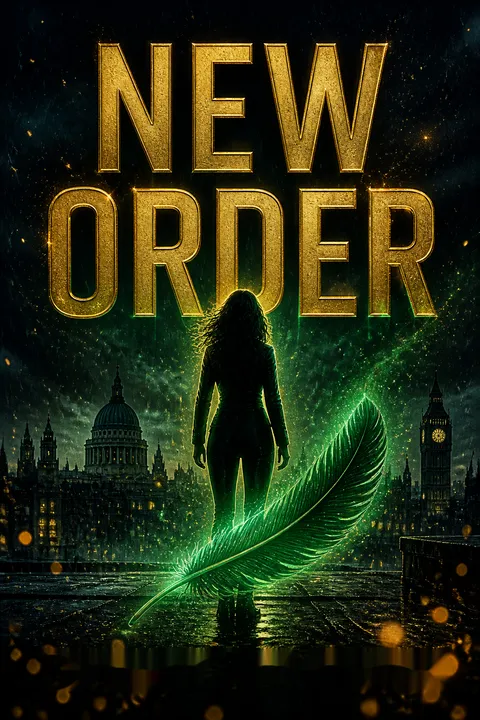
The green feather Bo acquires from Frolic becomes a symbol of her quest—a token, a challenge, and a potential key to the cure. Its theft by a street mugger, and the mugger's subsequent death in police custody under mysterious magical circumstances, point to deeper machinations. The world of witches is riven by debates over "black" and "white" magic, with language, prejudice, and power struggles echoing human history. Bo's investigation leads her to suspect that the feather is more than a trinket; it's a thread connecting her to a larger conspiracy involving Magix, a corporate giant intent on monopolizing magical commerce. The chapter explores the intersections of race, magic, and identity, and the ways symbols can both empower and endanger.
Hunger and Humanity
Bo's refusal to feed regularly leaves her weak and vulnerable, a danger to herself and others. Her aversion to drinking from humans is both a psychological wound and a point of pride—she clings to her humanity even as her body betrays her. The Montserrat Family's system of "vampettes" (willing human donors) is revealed as both exploitative and consensual, blurring the lines between victim and volunteer. Bo's interactions with Connor, a cheerful regular donor, and her horror at the predatory attitudes of some vampires, highlight the ethical ambiguities of her new existence. The chapter delves into addiction, consent, and the search for dignity in a world that demands predation.
Rooftop Revelations
Michael's training pushes Bo to embrace her vampiric abilities, leading to a night of rooftop running and daredevil leaps across the London skyline. The physical freedom is intoxicating, a rare moment of joy in Bo's otherwise fraught existence. Yet the exercise is also a test—of trust, of loyalty, and of Bo's willingness to accept her new self. The rooftop race becomes a metaphor for her journey: perilous, exhilarating, and always on the edge of falling. When a mugging interrupts their night, Bo's instincts as both predator and protector are put to the test, forcing her to confront the realities of violence and justice in the triber world.
Crossed Lines
Bo's repeated defiance of Montserrat Family rules—sneaking out, investigating forbidden matters, seeking a cure—brings her into conflict with Michael and the other vampires. The tension between personal freedom and collective security is laid bare, as Bo is threatened with confinement for her own safety. Her psychological struggles intensify, manifesting as hallucinations and panic attacks. The chapter explores trauma, agency, and the costs of rebellion. When Bo finally invokes legal technicalities to leave the Family, aided by the human lawyer D'Argneau, she steps into a dangerous new phase: a vampire without a Family, exposed to enemies on all sides.
The Price of Freedom
Alone and unprotected, Bo navigates the perils of vampire society as a free agent. She is courted by rival Families, threatened by old enemies, and hunted by those who see her as a pawn or a threat. The search for Dahlia Templeton leads her into the heart of London's criminal and magical underworld, from Triad poker games to the lairs of witches and daemons. The cost of freedom is high: Bo is forced to confront her own limitations, her need for connection, and the ever-present danger of losing herself to bloodlust or despair. The chapter is a meditation on autonomy, vulnerability, and the search for purpose.
Shadows and Schemes
Bo's investigation into the green feather, the death of the mugger, and the disappearance of Dahlia uncovers a web of intrigue involving Magix, corrupt witches, and the enigmatic Kakos daemons. The boundaries between black and white magic blur, and the myth of the Janus—a being who can wield both—emerges as a central threat. Bo's encounters with ghosts at Crossbones Graveyard, and her conversations with the spectral Maisie and the mysterious Mother, reveal the lingering wounds of history and the dangers of forgetting the past. The chapter weaves together personal and political mysteries, setting the stage for a confrontation with forces that threaten the balance of the triber world.
The Janus Witch
The revelation that Magix is creating hybrid witches—capable of wielding both black and white magic—signals a seismic shift in the supernatural order. The Janus, a mythical figure of duality, becomes a symbol of both hope and terror. Bo's encounters with these hybrids are fraught with danger; they are unpredictable, powerful, and unmoored from the traditional codes that kept the magical world in check. The chapter explores the allure and peril of breaking boundaries, the costs of innovation, and the ways in which old hatreds can be both perpetuated and transcended.
Betrayals Unveiled
The true architects of the conspiracy are revealed: O'Connell, the head of Magix, is unmasked as the presumed-dead Fingertip, orchestrating a revolution in magic from behind a corporate façade. Frolic, once a potential ally, is exposed as both victim and manipulator, her quest for vengeance leading to unintended consequences. The Medici Family's machinations come to light, as they attempt to sabotage the fledgling agency meant to bridge the gap between vampires and humans. Bo is forced to confront the reality that power corrupts, and that even those with the best intentions can become monsters. The chapter is a reckoning with betrayal, loss, and the necessity of hard choices.
Playing with Fire
Bo's efforts to protect her friends and expose the truth put her in mortal danger. She faces assassination attempts, magical traps, and the ever-present threat of sunlight. The cost of her quest is high: allies are lost, enemies multiply, and the line between right and wrong blurs. Bo's willingness to risk everything for a chance at justice—and perhaps a cure—marks her as both hero and outcast. The chapter is a crucible, burning away illusions and forcing Bo to confront the reality of her own nature.
The Cure's Cost
The long-sought cure for vampirism is revealed to be the blood of a Kakos daemon—a solution as dangerous as the condition it would reverse. Bo is forced to choose between her desire for humanity and her responsibilities to her friends, her new agency, and the fragile peace of the triber world. The cure is both a temptation and a threat, its existence a potential catalyst for chaos. Bo's decision is a testament to her growth: she chooses to remain a vampire, not out of resignation, but out of commitment to a cause greater than herself. The chapter is a meditation on sacrifice, identity, and the meaning of belonging.
New Order Rising
In the aftermath of betrayal and loss, Bo and her allies establish New Order, an agency dedicated to mediating between vampires and humans. The project is both a symbol of hope and a pragmatic response to rising tensions and violence. Bo's grandfather, a retired spymaster, is recruited to lead the agency, bringing experience and gravitas to the fledgling operation. The final chapter is one of cautious optimism: old wounds remain, but new possibilities emerge. Bo's journey—from reluctant vampire to leader and bridge-builder—is complete, though the challenges ahead are formidable. The story ends with a sense of hard-won purpose, the promise of change, and the enduring struggle to balance power, justice, and humanity.
Analysis
Helen Harper's New Order is a deftly plotted urban fantasy that uses the conventions of vampire fiction to explore themes of identity, power, and the search for belonging. At its core, the novel is a meditation on the costs of transformation—personal, social, and political. Bo Blackman's journey from reluctant fledgling to leader of a new agency mirrors the struggles of anyone forced to navigate systems that demand conformity while punishing difference. The story interrogates the ethics of power: who gets to decide what is "natural," who is allowed to change, and at what cost. The hybrid witches and the Janus myth serve as metaphors for the dangers and possibilities of breaking boundaries—racial, magical, or otherwise. The novel is also a commentary on trauma, addiction, and the search for healing: Bo's aversion to blood, her psychological struggles, and her ultimate decision to remain a vampire are all refracted through the lens of recovery and self-acceptance. In a world where old hatreds persist and new threats emerge, New Order argues for the necessity of bridges—between species, between past and future, and most of all, between the self we were and the self we choose to become. The lesson is clear: true change is possible, but only when we face our fears, own our choices, and work together for something greater than ourselves.
Characters
Bo Blackman
Bo is the heart of the story—a private investigator turned fledgling vampire against her will. Her journey is defined by regret, resilience, and a fierce desire for autonomy. Psychoanalytically, Bo embodies the struggle between id and superego: her vampiric instincts war with her moral compass, and her quest for a cure is as much about reclaiming agency as it is about escaping monstrosity. Her relationships—with Michael, Arzo, O'Shea, and her grandfather—are fraught with longing, guilt, and the need for connection. Bo's development is marked by increasing self-acceptance: she moves from denial and self-loathing to a hard-won embrace of her new identity, choosing to use her power for the greater good.
Michael Montserrat
Michael is both Bo's sire and the head of the Montserrat Family. He is a study in contrasts: authoritative yet vulnerable, ruthless yet capable of tenderness. His sense of responsibility for Bo is tinged with guilt and attraction, complicating their dynamic. Michael's leadership is pragmatic—he bends rules for Bo, but never loses sight of the Family's interests. Psychologically, he is haunted by past violence and the burden of power. His willingness to let Bo go, and later to support her independent agency, marks his own growth: he learns to trust, to delegate, and to accept change.
Arzo Gelzman
Arzo, a Sanguine who resisted full vampiric transformation, is Bo's friend and confidant. His past is marked by betrayal—his fiancée left him for his best friend, and he was recruited into the triber world under false pretenses. Arzo's psychological resilience is remarkable: he channels his pain into helping others, becoming a stabilizing force in Bo's life. His role in founding New Order is both redemptive and pragmatic; he seeks to prevent others from suffering as he did. Arzo's development is a journey from victimhood to agency, from isolation to leadership.
O'Shea (Devlin)
O'Shea is a daemon with a penchant for mischief and a complicated relationship with Bo. He is both helper and hindrance, his actions often motivated by self-interest but tempered by genuine affection. Psychologically, O'Shea represents the chaotic, unpredictable elements of the supernatural world. His willingness to risk himself for Bo, and his role in her escape from the Montserrat mansion, reveal a capacity for loyalty and growth. O'Shea's humor and irreverence provide comic relief, but also mask deeper insecurities.
Frolic
Frolic is the owner of Fingertips and Frolics, a magic shop at the center of the story's mysteries. She is pragmatic, self-interested, and ultimately desperate—a survivor in a world that has little mercy for the weak. Frolic's relationship with Bo is transactional, but not without moments of empathy. Her quest for vengeance against Magix, and her willingness to use others as pawns, reveal both her resourcefulness and her moral ambiguity. Frolic's death is a turning point, exposing the costs of revenge and the dangers of unchecked ambition.
Connor
Connor is a human "vampette," offering his blood to vampires in exchange for money and a sense of belonging. He is cheerful, pragmatic, and surprisingly resilient. Connor's role is to humanize the feeding process, challenging Bo's assumptions about exploitation and consent. Psychologically, he represents the complexities of agency and desire in a world where power is unevenly distributed. His loyalty to Bo and the agency is unwavering, and his presence is a reminder that humanity persists even in the most unlikely places.
Matt
Matt is a fellow Montserrat recruit, traumatized by magical manipulation and struggling to adapt. His obedience is both a survival mechanism and a source of pathos; he is exploited by others, but also capable of unexpected insight and courage. Matt's journey is one of gradual empowerment, aided by Bo's compassion and the support of the new agency. He embodies the costs of power and the need for community.
Stephen Templeton
Templeton is a human accountant whose search for his missing wife draws Bo into the story's central mysteries. He is manipulative, self-pitying, and ultimately tragic—a man undone by his own choices and the machinations of others. Templeton's relationship with Bo is transactional, but his story serves as a cautionary tale about the dangers of greed, betrayal, and the limits of control.
O'Connell (Fingertip)
O'Connell, the head of Magix and secretly the presumed-dead Fingertip, is the story's primary antagonist. He is charismatic, intelligent, and utterly convinced of his own righteousness. O'Connell's quest to create hybrid witches and revolutionize magic is both visionary and monstrous; he is willing to sacrifice anything and anyone for his cause. Psychologically, he is a study in hubris—the belief that ends justify means, and that power can be wielded without consequence.
X (Kakos Daemon)
X is a Kakos daemon, a being of immense power and inscrutable motives. He is both threat and ally, rescuing Bo at key moments but always on his own terms. X's blood is the key to the cure for vampirism, making him both temptation and warning. Psychologically, X represents the unknowable, the limits of human (and vampire) understanding, and the dangers of seeking power without wisdom.
Plot Devices
The Green Feather
The green feather, acquired by Bo from Frolic, is a classic MacGuffin—an object that drives the plot and connects disparate characters and events. It serves as a token of Bo's quest for a cure, a marker of her outsider status, and a thread linking her to the larger conspiracy involving Magix and the Janus witches. The feather's theft, its role in magical bargains, and its ultimate destruction are all foreshadowed, creating a sense of inevitability and tragedy. The feather also functions as a symbol of agency: to possess it is to have a choice, to lose it is to be at the mercy of others.
Hybrid Magic and the Janus
The creation of hybrid witches—capable of wielding both black and white magic—serves as both plot engine and thematic device. It represents the dangers of unchecked innovation, the allure of breaking taboos, and the potential for both progress and catastrophe. The Janus myth, invoked throughout the story, is a metaphor for duality, ambiguity, and the costs of transcending boundaries. The hybrids are both hope and threat, their existence a challenge to the established order and a catalyst for conflict.
The Cure
The search for a cure for vampirism is the story's central quest, driving Bo's actions and shaping her relationships. The revelation that the cure is Kakos daemon blood raises the stakes: to become human again is to risk unleashing forces beyond control. The cure is both a literal solution and a metaphor for the desire to escape pain, responsibility, and difference. Its existence forces Bo—and the reader—to confront the costs of change, the value of belonging, and the dangers of wishing away what makes us unique.
Narrative Structure
The novel employs a classic detective structure—Bo's investigation into Dahlia's disappearance, the green feather, and the machinations of Magix—layered with supernatural politics and personal drama. Foreshadowing is used to build suspense: early hints about the Janus, the true nature of Magix, and the dangers of hybrid magic pay off in later revelations. The story's emotional arc mirrors Bo's psychological journey: from denial and resistance, through crisis and confrontation, to acceptance and agency.
Bo Blackman Series
Download PDF
Download EPUB
.epub digital book format is ideal for reading ebooks on phones, tablets, and e-readers.








































