
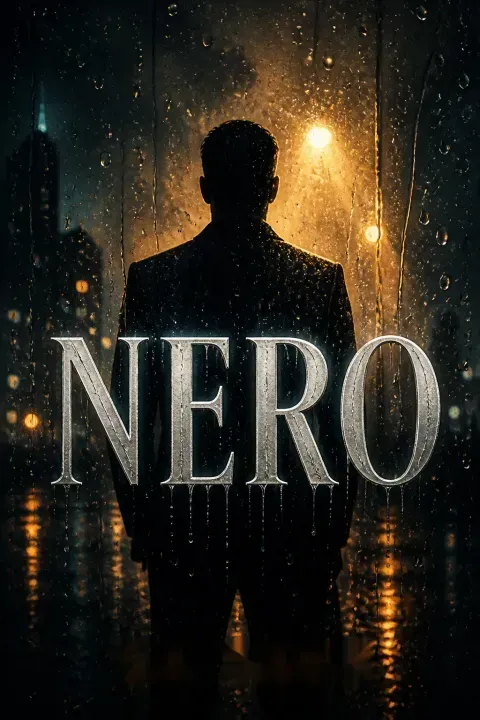


Plot Summary
The Balcony Intruder
Payton1 watches The Wizard of Oz in her small Minneapolis apartment, the patio door open to a brewing storm. A gust of wind blows a leaf across the room, then a man2 materializes in the doorway: tall, dark-haired, bearded, wearing an expensive suit and carrying a gun.
Police sirens wail past outside. He crosses the room in two strides, lowers himself onto her couch, and begins eating her popcorn. She freezes, too shocked to scream. He tells her to relax, that he will not hurt her, and continues watching the movie as if he belongs there.
When he places a hand on her thigh, the heat of his palm sears through her blanket. Her body obeys his command to relax, even as her mind screams danger. Eventually, exhaustion overtakes her and she falls asleep against her will.
This section establishes the core dynamic: Nero's predatory intrusion framed as fate, Payton's frozen trauma response mistaken for consent. The open door is the first symbolic invitation. Nero's calm amidst danger signals his power. Payton's inability to act is not weakness but a survival mechanism honed by years of abuse. The Wizard of Oz becomes their shared text, a motif of wanting to be whisked away from a grey life into color. Nero's gentleness coexists with implicit threat (the gun, the command to stay). The scene asks: is her relaxation trust or dissociation?
Nightmares and Stolen Panties
Nero2 explores her apartment while she sleeps. He finds her mail, learning her full name: Payton Vawdrey.1 He unlocks her phone with facial recognition and pockets a pair of her underwear from the laundry basket. A nightmare seizes her: her stepfather Arthur4 choking her, calling her stupid and worthless. Nero2's voice cuts through the dream, his palm pressing against her breastbone to steady her breathing.
Disoriented but calmed, she grips his forearm. When he asks for the name of the man who hurt her, she whispers Arthur.4 He extracts a promise: she will tell no one about tonight, and he will not tell Arthur4 she sent him. Then he strides to her front door, pauses, and shoves her dirty panties into his pocket with a smirk.
Nero's invasion of her privacy (reading mail, unlocking phone, stealing underwear) is framed as intimacy rather than violation, a hallmark of dark romance. Payton's nightmare reveals the source of her broken self-worth: Arthur's sustained emotional and physical abuse. Nero's question makes her visible for the first time; someone finally asks who hurt her. The stolen panties become the first trophy in his collection, and the hundred-dollar bills to follow establish a transactional undertone that slowly transforms into genuine care.
Rose-Scented Currency
The morning after, Payton1 discovers her rose-scented body wash is missing. In its place sits a crisp hundred-dollar bill, soggy from the steam. Her mind reels: the intruder2 explored her entire apartment while she slept, took her half-empty bottle, and left payment. The realization sends unexpected heat through her body. She should call the police.
She does not. Instead, she buys a larger bottle of the same scent and matching lotion, imagining him inhaling her fragrance in his own shower. Later at Twin's Café, a tall, broad man3 in a suit enters. He asks her favorite drink, pays with another hundred-dollar bill, and leaves a stack of twenties as a tip. He calls her Payton1 though she wears no name tag.
The hundred-dollar bills become a recurring motif, transforming surveillance into a perverse form of care (he pays for what he takes, he tips lavishly). Payton's decision not to report the crime reveals her isolation: the police never helped her before, and this violation feels more like being seen than being threatened. Her purchase of matching rose products is the first active choice she makes toward their relationship, an unconscious preparation for being consumed. The man at the café (King) functions as Nero's proxy, extending his reach into her workplace.
The Open Door Invitation
After a devastating day (a rude customer, a fall on the sidewalk, a rent increase notice), Payton1 makes a deliberate choice. She leaves her patio door open, changes into a red silk pajama set, and waits. Hours later, she wakes to find the door closed and a presence in her apartment. She walks to her bedroom and finds him sitting on her bed in the dark, suit jacket discarded, tie loosened.
He tells her this is her one chance to say no. She does not. Instead, she strips at his command, revealing a body no one has ever seen. He calls himself Nero2 only when he is inside her, breaking through her virginity with one brutal thrust. Afterward, he cleans her with a cold washcloth, claims he is not staying, then climbs into bed and holds her.
Payton's choice to leave the door open is the story's pivotal act of agency: after a lifetime of having choices made for her, she selects her own deflowering. The red silk pajamas become ceremonial garb. Nero's disclosure of his name only during penetration fuses identity with possession. The cold washcloth is simultaneously clinical and tender, a paradox that defines their dynamic. His insistence that he is not staying followed immediately by cuddling reveals the internal war between his self-image as a monster and his genuine need for connection.
A Finger in Fargo
While Payton1 sleeps beside him, Nero2 dreams of her dead with a slashed throat. He wakes, calls King,3 and they fly to Fargo, North Dakota, before dawn. They find Arthur4 asleep in a recliner in the filthy house where Payton1 grew up. Nero2 slams his fist into Arthur4's chest, topples the chair, and sits on him.
He notices the gold pinky ring and remembers Payton1's nightmare of it pressing into her throat. He wraps Arthur4's finger in a strip torn from his own shirt for grip, then yanks until the bone snaps through skin. Nero2 rips the finger off entirely, slides the ring free, and shoves the severed digit down Arthur4's throat. Then he collapses Arthur4's trachea with a final punch. They torch the house.
This scene literalizes the dark romance promise: the hero's violence, directed outward, becomes an act of love. Nero's dream reveals his core fear: losing her to the world that already hurt her. The pinky ring, once an instrument of torture against Payton's throat, becomes a trophy. The method (finger torn off, shoved down throat, trachea crushed) mirrors the choking she endured. Arthur's death by his own finger in his throat is poetic justice. King's presence humanizes the killers without sanitizing the act.
The Coconut Honey Code
Nero2 walks into Twin's Café. Payton1's heart lifts until the mayor calls out to him and Nero2's expression shutters into cold indifference. He acts as if he has never seen her before, ordering a turkey panini and, inexplicably, a coconut honey latte.
She makes it exactly how she likes it, with whipped cream and honey drizzle. When she whispers whether he is real, he slides a hundred-dollar bill across the counter and murmurs confirmation. Then he sits with the mayor, ignoring her. Later, a text from an unknown number instructs her to look up.
It is Nero,2 watching her from across the room, directing her to maintain the charade of strangers. When Carlton8 arrives with concert tickets, Nero2's jealousy erupts in a flood of possessive messages and a threatening voicemail about seeing her at home.
The public denial is the first test of their bond. Nero orders her favorite drink as a secret signal: he sees her even when he pretends not to. The mayor's presence forces Nero's mask, revealing the dangerous gap between his public persona and private obsession. Payton's whispered question exposes her deepest fear: that this connection is a trauma-induced hallucination. His hundred-dollar bills become proof of existence. The texting creates a parallel private channel. Carlton becomes an unwitting foil, his normalcy highlighting Nero's extremity.
Metal Music and Submission
Defying Nero2's command to stay home, Payton1 wears a short skirt and thigh-high stockings to Carlton8's metal concert. Nero2 follows, waits in line like a civilian, and finds her against the back wall.
He presses against her from behind, drapes his suit jacket over them as a shield, and orders her to remove her underwear. With the music deafening and strobe lights flashing, he slides his hand into her skirt, fingers her until she is slick, then guides himself into her from behind.
She shudders through an orgasm as he pulses inside her. When Carlton8 stumbles upon them, Nero2 locks eyes with him, grins, and lets the evidence drip down her thigh. Afterward, he drives her home, explaining that his life is dangerous and she must obey or risk both their lives.
The concert scene transforms public space into a site of private domination. The music's volume and the crowd's anonymity enable a transgression impossible in silence. Nero's suit becomes a shield for his savagery. The act is both punishment for disobedience and a claiming of uncharted territory. Carlton witnessing them functions as a primal display: the lion marking his kill before the gazelle. Payton's orgasm under these conditions cements her psychology: she finds freedom in surrender, safety in his absolute control.
The Birthday Party Wound
An elegant black invitation appears under her door: Nero2's 40th birthday party. Payton1 buys a sequined dress and ice-blue heels, attends alone at a museum venue. She finds Nero2 devastating in all black, but a stunning woman in red5 is pressed against his side, her nails on his chest.
When their eyes meet, Nero2 deliberately slides his hand around the woman's hip and looks away. Payton1 freezes, the old voices rushing back: stupid, worthless, nobody. She flees, leaving her shoes on the marble steps when she slips.
At home, she packs a bag to run, then sobs on her bed until exhaustion claims her. Nero2 later explains the woman5 was a hired distraction, his touch a performance to drive her away from a threat in the room: Mikhail,6 the son of a mafia boss Nero2 killed long ago.
The party scene weaponizes Payton's deepest wound: the belief that she is fundamentally discardable. Nero's calculated cruelty (using exactly the gesture that would shatter her) is meant to protect her but replicates her original trauma. The abandoned shoes (Cinderella inverted) mark her retreat from a fairy tale that curdled. Her packing to run activates her survival script from age 17, proving that trauma responses are not outgrown but waiting. Nero's later explanation reveals the dark romance's central paradox: love that wounds to protect is indistinguishable from abuse except in the intention it claims.
The Ring of Vengeance
Nero2 breaks into Payton1's apartment after the party, drags her from bed by her ankles, and flips her onto her stomach. With a switchblade, he cuts off her underwear and spanks her bruised backside for attending the party, for giving Carlton8 her number, for planning to run. She sobs that he was with another woman.5 He explains the woman5 was a hired escort to distract the crowd.
Then, while still buried inside her, he holds up a gold pinky ring. She recognizes it instantly: Arthur4's ring, the one that pressed into her throat during countless chokeholds. Nero2 tells her Arthur4 is dead, that he killed him for her. She breaks down, thanking him through tears. He confesses he loves her; she says it back. No one has ever told her that before.
This scene fuses sex, violence, and revelation into a single cathartic act. The ring, shown during penetration, links Nero's killing of Arthur to his claiming of Payton's body: both are acts of possession that liberate her. Her gratitude for murder is the story's most transgressive moment. The mutual confession of love, each saying it for the first time in their lives, recontextualizes every prior interaction. Nero's violence is reframed not as pathology but as devotion; Payton's submission not as weakness but as trust. The ring, later melted into her tracking necklace, becomes the symbol of their covenant.
The Escort's Shearing
After moving Payton1 to his mansion, Nero2 discovers the party invitation was not his doing. King3 pulls the hallway footage: Nikki,5 the hired escort from the party, slipped it under Payton1's door. Consumed with rage, Nero2 goes to Nikki5's apartment with Aspen,9 King3's fierce younger sister.
He tells Nikki5 she has one chance to live. She admits she acted alone, driven by obsession: she wanted to break them up, believing Nero2 belonged with her. She got Payton1's address from the mayor. Nero2 resists the urge to kill her only because he does not kill women.
Instead, Aspen9 hacks off Nikki5's long black ponytail, then crops the rest to the scalp. Nero2 banishes her from Minneapolis forever. On the way home, he and Aspen9 spot a scruffy stray dog10 digging through garbage. Nero2 takes it.
Nikki is a dark mirror of Payton: both women are drawn to Nero's power, but where Payton's need stems from trauma and a desire for safety, Nikki's is pure narcissistic entitlement. The shearing of her hair (her primary asset as an escort) is a punishment tailored to her vanity, a destruction of identity rather than life. Nero's rule against killing women creates an interesting moral line in his otherwise amoral world. The stray dog, found immediately after, is the counterpoint: Nero's capacity for violence coexists with an impulse to rescue the abandoned.
The Coffee Run Ambush
While Nero2 is away on business in Chicago, Payton1 grows stir-crazy in the mansion. She convinces her bodyguard Robert7 to take her for coffee, implying Nero2 approved. A two-car convoy escorts her: Robert7 and driver Giles in her vehicle, two more men in the lead SUV.
At a suburban coffeeshop, Giles orders her a roasted chestnut mocha and a tiny cup of whipped cream for Toto.10 On the return drive, the lead SUV explodes. Giles shouts, the windshield shatters, and he is shot dead through the driver's window. Robert7 fires back.
Another vehicle rams them, and the SUV rolls onto its side. Payton,1 dangling from her seatbelt, watches Robert7 bleed. Hands reach through the smashed rear window, cutting her free. She fights, screaming, until an arm locks around her throat and she blacks out.
This is the moment Payton's sheltered bubble violently ruptures. Her small act of rebellion (coffee) has catastrophic consequences, fulfilling Nero's warnings in the worst way. The whipped cream for Toto underscores the domestic innocence shattered by the attack. Her evolution from passive victim to active fighter (she claws, kicks, screams) marks a crucial character shift. The explosion killing men whose names she never learned drives home the collateral cost of her new life. This is the price of being loved by a monster.
Rocket at the Gate
Nero2 receives the vehicle's destruction alert while in Chicago. He calls Payton,1 hears her screams, then silence. Robert,7 bleeding out, gasps that Mikhail6's men took her. Nero2 commandeers a faster plane, flies back at breakneck speed, and lands on the road outside Mikhail6's estate.
Dozens of his men, armed and armored, emerge from the tree line. Then King3 strides down the street carrying a surface-to-air rocket launcher. He fires at the reinforced gate, blowing it open. Nero2's sharpshooters climb onto the plane's fuselage and pick off guards.
The army pours through the smoke, mowing down Mikhail6's men room by room. Nero2 walks through the carnage, calling Mikhail6's name, following the GPS tracker hidden in the pendant of Payton1's necklace, forged from Arthur4's melted-down ring.
The rescue sequence is pure power fantasy, a display of Nero's absolute dominion. King's rocket launcher literalizes the Alliance's capacity for overwhelming force. The plane landing on a residential street signals that normal rules do not apply. The GPS tracker in the necklace made from Arthur's ring is the story's most elegant narrative loop: the instrument of her childhood torture, melted down and remade, now guides her rescuer to her. The slaughter is described as extermination, underscoring the one-sided nature of Nero's retribution.
Her Finger on the Trigger
In Mikhail6's office, Payton1 is dragged by her hair, a gun pressed to her temple. Nikki5 is there, shorn-headed and bitter, until Mikhail6 shoots her dead for trying to flee. Then Nero2 kicks the door shut behind him. He tosses his guns to the floor. Mikhail6 taunts him, fires three times: one bullet grazes Nero2's arm, one hits his bulletproof vest. Nero2 lunges.
Payton,1 on her hands and knees, finds one of Nero2's discarded guns. With her wrists still taped together, she twists, raises the weapon, and pulls the trigger. The bullet tears through Mikhail6's neck, spraying arterial blood. He drops. Nero2 takes the gun from her, empties the remaining rounds into Mikhail6's body, and tells her he killed the man, not her. Then he carries her out.
Payton's killing of Mikhail completes her arc from victim to survivor to protector. She uses the very gun Nero dropped, the weapon she was too afraid to learn, and fires with bound hands. Nero's immediate erasure of her act is a psychological mercy: he knows she cannot carry the weight of taking a life while still processing her own trauma. But her bullet was true, and the story does not diminish it. Nikki's death at Mikhail's hand closes her arc with brutal irony. The rescue is mutual: she saved herself as much as he saved her.
Epilogue
Six months after the kidnapping, Payton1 marries Nero2 in their garden. She wears a princess ballgown covered in silk flowers and sparkly red shoes beneath the skirt. Toto10 serves as ring bearer. Aspen,9 now her closest friend, helps with her jeweled headband. Robert7 walks her down the aisle. The guest list is small but includes everyone who matters.
Nero,2 seeing her approach, abandons protocol and kisses her before the preacher speaks. Later, at the Grand Canyon, Payton1 kneels before Nero2 on a bench at sunset. She tells him this is her favorite vacation, better than their Belize honeymoon. Then she takes him into her mouth as the sky explodes with color. He grips her ponytail and concedes she is right.
The wedding crystallizes the fairy tale Payton always wanted but never believed she deserved. The red shoes are her ruby slippers: she clicked her heels and found home was not a place but a person. Toto as ring bearer completes the Oz motif that began the night they met. The Grand Canyon vacation (her first time leaving the Midwest) represents the world opened to her. The final sex act, her kneeling before him at sunset, is now fully chosen, fully mutual. She is no longer the frozen woman on the couch but an active participant who knows exactly what she wants and takes it.
Analysis
Nero2 is a case study in the dark romance's central proposition: that a love strong enough to kill for you is worth the danger of being loved by a killer. The novel does not pretend its hero is redeemable in any conventional sense. Nero2 is a stalker, a murderer, and a controlling force who systematically dismantles Payton1's independent life and rebuilds it under his protection. The fantasy is not that he becomes good but that his badness is precisely calibrated to her needs: a hypervigilant woman who has spent a decade terrified of men's violence finds safety in a man who monopolizes all violence, directing it outward at her enemies rather than inward at her.
The book's treatment of trauma is more sophisticated than its genre trappings suggest. Payton1's inability to act during the initial home invasion is not a failure of character but an accurate portrayal of the freeze response, a survival mechanism developed in childhood when fight and flight were impossible. Her gradual thawing (from frozen terror on the couch to pulling a trigger to save Nero2) charts a recovery arc that is problematic in real-world terms but psychologically coherent within the story's heightened reality. The novel suggests, controversially, that reclaiming agency can look like surrender to the right person.
The Oz motif supplies the fairy-tale structure that dark romance requires to function. Like Dorothy, Payton1 is transported from a grey, constrained life to a world of color and danger. The ruby slippers become red high heels; the Yellow Brick Road becomes a private plane to Fargo for vengeance; the Wizard becomes a man who actually has the power he claims. The reversal is that Oz is the real world and Kansas was the nightmare. Home is not a place you return to but a person who will burn the world to keep you.
The violence in the novel is targeted exclusively at those the reader has been primed to despise: the child abuser,4 the human trafficker, the jealous saboteur.5 This is a form of moral licensing that allows the reader to enjoy the brutality without guilt. Nero2's one rule (no killing women) creates a boundary that distinguishes him from true monsters even as he commits monstrous acts. The Alliance's origin story (overthrowing families that trafficked women) retroactively justifies his entire criminal enterprise as a necessary evil.
Ultimately, Nero2 succeeds as dark romance because it fully commits to its premise. It never apologizes for its hero's darkness or pathologizes its heroine's submission. Their happy ending is not a return to normalcy but an embrace of their shared abnormality. The wedding in the garden, with Toto10 as ring bearer and ruby shoes beneath the gown, is not a sanitization of their story but its logical conclusion: two people who found in each other the monster they needed.
Review Summary
Nero by S.J. Tilly is a controversial dark mafia romance that has divided readers. Some praise its intense, obsessive love story and steamy scenes, while others criticize its insta-love plot and underdeveloped characters. The book follows Nero, a possessive mafia boss, and Payton, a young woman with a troubled past. Readers noted the age gap, stalker elements, and touch-her-and-die tropes. While some found it entertaining and addictive, others felt it lacked depth and realism. The book's popularity on social media platforms has further fueled debate among romance readers.
People Also Read









Characters
Payton Vawdrey
Traumatized café worker seeking safetyA 27-year-old woman who ran away from home at 17 after overhearing her stepfather4 plan to sell her virginity. She has spent a decade in Minneapolis working low-wage jobs, living in a cramped apartment, and carefully avoiding closeness with anyone, especially men. Her trauma manifests as hypervigilance, a compulsive need to keep her environment ordered, and a deep-seated belief that she is worthless. She loves violent storms because they promise cleansing change. Her favorite movie is The Wizard of Oz, which she watches repeatedly, wishing to be transported to a world of color. Beneath her timidity lies a fierce survival instinct and a capacity for love she has never been allowed to express.
Nero
Obsessive mafia boss who kills to protectA 40-year-old orphan raised in the Russian Bratva from age 8, now the feared leader of The Alliance, a criminal empire he built after slaughtering the previous regime. He runs a legitimate security company as cover. Nero has never loved anyone and believes himself incapable of gentleness. His first glimpse of Payton1 through her open patio door triggers an obsession that reshapes his entire existence. He expresses care through surveillance, violence against her enemies, and possessive sexuality. He is wealthy beyond measure, utterly ruthless with adversaries, and unexpectedly tender in private moments. His only moral line is a refusal to traffic women, the crime that sparked his original rebellion.
King Vass
Nero's silent partner and best friendNero2's closest ally and equal partner in The Alliance, though few know it. He comes from a wealthy family and projects the image of a carefree businessman, but beneath the charm is a capable killer. He acts as Nero2's sounding board, occasional field support, and comic relief. His fierce protectiveness of his sisters reveals a capacity for loyalty that matches Nero2's own. He values his anonymity, knowing that public association with Nero2 would endanger his family.
Arthur
Payton's abusive stepfatherThe man who terrorized Payton1 throughout her childhood with beatings, chokeholds, and verbal abuse. A drunk and a gambler, he planned to sell Payton1's virginity to a friend for six hundred dollars when she turned 18. His gold pinky ring, pressed into her throat during his attacks, becomes the lasting symbol of her trauma. He represents everything Payton1 fled and everything Nero2 is determined to destroy.
Nikki
Obsessed escort turned saboteurA high-end escort Nero2 occasionally hired before meeting Payton1. Her professional arrangement curdles into obsession; she believes she belongs with Nero2 and views Payton1 as an obstacle to be eliminated through psychological warfare. Her vanity and entitlement make her dangerous in a way that brute force is not. Her long black hair is her prized asset and the target of her eventual punishment.
Mikhail
Vengeful son of a slain mobsterThe son of a Russian mafia leader Nero2 killed during his violent takeover fifteen years earlier. He has spent his adulthood nursing a grudge and building power, waiting for the right moment to strike. Where Nero2 kills from cold pragmatism, Mikhail kills from wounded pride and a theatrical sense of grievance. He underestimates both Nero2's reach and Payton1's hidden steel.
Robert
Payton's protective bodyguardA former military man assigned as Payton1's personal security detail after she moves into Nero2's mansion. Gruff, professional, and unexpectedly kind, he becomes one of the few people Payton1 trusts. He walks the line between following Nero2's orders and bending rules to preserve Payton1's sanity during Nero2's absences. His sense of duty is absolute, and he carries guilt for the ambush that nearly killed her.
Carlton
Oblivious musician and mild rivalA lanky, friendly regular at Twin's Café who harbors a casual crush on Payton1. He invites her to his band's concert, inadvertently triggering Nero2's most intense jealousy. He is harmless but functions as a foil, representing the normal relationship Payton1 might have had in another life.
Aspen
King's fierce younger sisterKing3's sharp-tongued, capable sister who shares her brother's coloring and none of his patience. She assists Nero2 in punishing Nikki5 and later becomes Payton1's first genuine female friend, introducing her to charitable work and high-society navigation. Her loyalty is earned slowly but given absolutely. She is married but keeps her husband in check through sheer force of personality.
Toto
Rescued stray turned family symbolA wiry brown mutt Nero2 finds digging through garbage the night he punishes Nikki5. He gives the dog to Payton1, who names him Toto after The Wizard of Oz. The dog becomes her constant companion and the living proof that Nero2's darkness can also create warmth and home.
Plot Devices
Rose-scented body wash
Olfactory signature of their bondThe dusky rose body wash Payton1 splurged on becomes the sensory thread connecting her and Nero2. He steals her half-empty bottle the first night, leaving a hundred-dollar bill in its place. He uses it to stimulate himself, craving her scent. When she moves into his mansion, she finds his shower stocked with matching rose products: shampoo, conditioner, face wash, body scrub. The scent is not light or girly but dark and complex, like Payton1 herself. It represents his obsession made tangible and her essence colonizing his private space.
Arthur's pinky ring
Trophy of vengeance and proof of loveThe gaudy gold class ring Arthur4 wore while choking Payton1 throughout her childhood. Nero2 tears it from Arthur4's severed finger during the murder in Fargo, wipes it clean, and later shows it to Payton1 during sex to prove he killed her abuser. The ring is eventually melted down and reforged into the pendant of her tracking necklace, transforming the symbol of her torture into the instrument of her protection.
The GPS tracking necklace
Hidden lifeline and possession markerA delicate gold necklace Nero2 places around Payton1's throat while she sleeps. The pendant, forged from Arthur4's melted-down ring, contains a hidden GPS tracker. Nero2 uses it to locate her when she is kidnapped by Mikhail6. The necklace embodies the dual nature of his love: it is surveillance and salvation, a collar and a lifeline. Payton1 never removes it, by his command and later by her own choice.
Hundred-dollar bills
Recurring transactional intimacyCrisp hundred-dollar bills appear whenever Nero2 takes something (body wash, underwear) or gives something (tips at the café, money in her drawer). They evolve from unsettling payment to inside joke to symbol of his wealth and his promise that she will never want again. The bills are a tangible thread of his presence even when he is absent, proof that he is real and watching over her.
The open patio door
Threshold of consent and invitationPayton1's habit of leaving her patio door open during storms is the vulnerability Nero2 exploits. The first time, he enters uninvited while evading police. The second time, she leaves it open deliberately, transforming it from a security lapse into an invitation. The door becomes the physical manifestation of her consent: when it is closed, he stays out; when it is open, he enters. It is her only way of exercising agency in a dynamic defined by his overwhelming power.
FAQ
Synopsis & Basic Details
What is Nero about?
- Dark Mafia Romance: Nero is a dark mafia romance novel that follows the intense and dangerous relationship between Payton, a woman with a traumatic past, and Nero, a powerful and enigmatic figure in the criminal underworld.
- Intrigue and Danger: The story is filled with suspense, violence, and complex characters, exploring themes of power, control, and the blurred lines between love and obsession.
- Character Transformation: It focuses on Payton's journey of self-discovery and empowerment as she navigates her feelings for Nero and the dangerous world he inhabits, while Nero grapples with his own demons and the desire to protect her.
Why should I read Nero?
- Intense Emotional Journey: Readers who enjoy emotionally charged stories with complex characters will find Nero compelling, as it delves into the depths of trauma, desire, and the struggle for control.
- Dark and Gritty Romance: The novel offers a dark and gritty romance that challenges traditional tropes, exploring the complexities of a relationship between a seemingly innocent woman and a dangerous man.
- Suspenseful Plot: The plot is filled with unexpected twists and turns, keeping readers engaged and invested in the characters' fates, as they navigate a world of crime, violence, and intense passion.
What is the background of Nero?
- Contemporary Setting: The story is set in a contemporary urban environment, with elements of the criminal underworld and high society, creating a stark contrast between the characters' lives.
- Mafia Underworld: The background includes a detailed portrayal of a dark mafia world, with its own rules, power structures, and dangerous figures, adding a layer of complexity and intrigue to the narrative.
- Emotional Trauma: The characters' backgrounds are marked by emotional trauma and abuse, which significantly influence their actions and relationships, adding a layer of psychological depth to the story.
What are the most memorable quotes in Nero?
- "I'm not going to hurt you.": This quote, spoken by Nero to Payton, is memorable for its deceptive nature, as it contrasts with his dangerous actions and the violence he is capable of, highlighting the complex nature of his character.
- "You're mine now.": This possessive declaration, repeated throughout the story, is iconic for its intensity and the power dynamic it establishes between Nero and Payton, emphasizing the themes of control and ownership.
- "I'm Payton's wrath. And you're about to die.": This quote, spoken by Nero to Arthur, is powerful for its raw emotion and the promise of retribution, showcasing Nero's fierce protectiveness and the lengths he will go to for Payton.
What writing style, narrative choices, and literary techniques does S.J. Tilly use?
- Alternating Perspectives: Tilly employs alternating points of view between Payton and Nero, allowing readers to understand their individual thoughts, motivations, and emotional states, enhancing the complexity of their relationship.
- Intense Internal Monologues: The narrative is characterized by intense internal monologues, particularly from Nero, which reveal his inner turmoil, conflicting desires, and the darkness that resides within him, adding depth to his character.
- Foreshadowing and Symbolism: Tilly uses subtle foreshadowing and recurring symbols, such as the color red and the scent of roses, to create a sense of unease and to hint at future events, enhancing the suspense and thematic depth of the story.
Hidden Details & Subtle Connections
What are some minor details that add significant meaning?
- The Red and Gold Leaf: The red and gold leaf that floats into Payton's apartment at the beginning of the story foreshadows the danger and passion that Nero will bring into her life, symbolizing both the beauty and the violence that will follow.
- The Stolen Body Wash: Nero's act of taking Payton's rose-scented body wash and leaving a hundred-dollar bill in its place is a subtle detail that reveals his obsession with her scent and his desire to possess a part of her, highlighting his stalker tendencies.
- The Pinky Ring: Arthur's gold pinky ring, described in detail, becomes a symbol of his abuse and control over Payton, and its eventual removal by Nero signifies the end of Arthur's power over her.
What are some subtle foreshadowing and callbacks?
- Payton's Love of Storms: Payton's unusual love for violent weather, established early in the story, foreshadows the tumultuous and intense nature of her relationship with Nero, as well as her own inner strength and resilience.
- The Open Patio Door: The recurring image of Payton's open patio door serves as a callback to the beginning of the story, symbolizing her vulnerability and the invitation she unknowingly extends to Nero, highlighting the theme of fate and destiny.
- The Coconut Honey Latte: The detail of Payton's favorite drink, the coconut honey latte, becomes a subtle callback when Nero orders it, revealing his attentiveness to her preferences and his desire to connect with her on a personal level.
What are some unexpected character connections?
- King and Nero's Shared Past: The deep bond between King and Nero, revealed through their shared history in the criminal underworld, highlights the theme of loyalty and the complex relationships formed in the face of adversity.
- Mayor Devon and Nero: The connection between Mayor Devon and Nero, initially presented as a business relationship, is later revealed to be more complex, with the mayor's knowledge of Nero's interest in Payton, adding a layer of intrigue and danger.
- Nikki and Mikhail: The connection between Nikki and Mikhail, initially presented as a business arrangement, is later revealed to be a personal vendetta, highlighting the theme of betrayal and the lengths people will go to for power and revenge.
Who are the most significant supporting characters?
- King: As Nero's second-in-command and closest confidant, King plays a crucial role in the plot, providing support, advice, and a glimpse into Nero's past, highlighting the importance of loyalty and brotherhood in the criminal underworld.
- Robert: As Payton's bodyguard, Robert's presence underscores the dangers of Nero's world and the lengths he goes to protect her, while also providing a sense of stability and support in her new life.
- Aspen: As King's sister, Aspen's role is significant in providing a female perspective and a sense of camaraderie for Payton, highlighting the importance of female friendships and support in a male-dominated world.
Psychological, Emotional, & Relational Analysis
What are some unspoken motivations of the characters?
- Nero's Need for Control: Nero's unspoken motivation is his need for control, stemming from his traumatic past and his desire to protect Payton, which often manifests as possessiveness and a need to dominate.
- Payton's Desire for Safety: Payton's unspoken motivation is her deep-seated desire for safety and security, which draws her to Nero despite the danger he represents, as she seeks a sense of belonging and protection she never had.
- Mikhail's Obsession with Revenge: Mikhail's unspoken motivation is his all-consuming desire for revenge against Nero, which drives his actions and ultimately leads to his downfall, highlighting the destructive nature of hatred and obsession.
What psychological complexities do the characters exhibit?
- Nero's Internal Conflict: Nero exhibits a complex psychological profile, torn between his violent nature and his desire to protect Payton, showcasing his internal struggle with his past and his attempts to reconcile his criminal life with his feelings for her.
- Payton's Trauma Response: Payton's psychological complexities are rooted in her past trauma, which manifests as fear, anxiety, and a tendency to self-blame, highlighting the lasting impact of abuse and her journey towards healing.
- Mikhail's Delusions of Grandeur: Mikhail's psychological complexities are evident in his delusions of grandeur and his obsessive need for revenge, showcasing his distorted perception of reality and his inability to see the consequences of his actions.
What are the major emotional turning points?
- Payton's Choice to Give Herself to Nero: Payton's decision to give herself to Nero is a major emotional turning point, symbolizing her reclaiming control over her body and desires, and marking a shift in their relationship dynamic.
- Nero's Confession of Love: Nero's confession of love for Payton is a major emotional turning point, revealing his vulnerability and his willingness to embrace a future with her, despite the dangers it brings.
- Payton's Reaction to Arthur's Death: Payton's emotional reaction to Arthur's death, marked by both relief and a sense of closure, is a major turning point, highlighting her journey towards healing and her ability to move past her trauma.
How do relationship dynamics evolve?
- From Intrusion as Catalyst to Protector: The relationship between Nero and Payton evolves from a dangerous intrusion to a complex bond of protection and desire, highlighting the transformative power of love and the blurring lines between victim and savior.
- From Fear to Trust: Payton's feelings for Nero evolve from fear and apprehension to trust and dependence, showcasing her journey towards empowerment and her willingness to embrace the risks that come with loving him.
- From Obsession to Devotion: Nero's feelings for Payton evolve from a possessive obsession to a deep and unwavering devotion, highlighting his internal struggle and his commitment to protecting her at all costs.
Interpretation & Debate
Which parts of the story remain ambiguous or open-ended?
- The Extent of Nero's Criminal Activities: The full extent of Nero's criminal activities and the nature of his work with The Alliance remain somewhat ambiguous, leaving readers to speculate about the true scope of his power and influence.
- The Future of The Alliance: The future of The Alliance and the potential for conflict with other criminal organizations remain open-ended, leaving readers to wonder about the long-term implications of Nero's actions and his ability to protect Payton.
- The Nature of Payton's Trauma: While Payton's past trauma is explored, the full extent of its impact on her psyche and her ability to fully heal remains somewhat open-ended, leaving readers to consider the long-term effects of abuse and the complexities of recovery.
What are some debatable, controversial scenes or moments in Nero?
- The Initial Encounter: The initial encounter between Nero and Payton, where he enters her apartment uninvited, is a controversial scene that raises questions about consent and the power dynamics in their relationship, sparking debate about the nature of their connection.
- The Intimate Encounter: The intimate encounter between Nero and Payton, while consensual, is a controversial moment that challenges traditional notions of romance and highlights the complexities of desire and power, sparking debate about the nature of their relationship.
- Nero's Violence: Nero's violent actions, while often presented as protective, are a controversial aspect of his character, raising questions about the morality of his methods and the impact of his actions on those around him, sparking debate about the nature of his redemption.
Nero Ending Explained: How It Ends & What It Means
- A Promise of Protection: The ending of Nero sees Payton and Nero together, with Nero vowing to protect her, highlighting the theme of love as a source of safety and security, but also acknowledging the inherent dangers of their relationship.
- A Future of Uncertainty: While the ending offers a sense of hope and new beginnings, it also leaves the future of their relationship somewhat uncertain, as they must navigate the complexities of their lives and the threats that continue to surround them.
- A Testament to Love as Redemption: The ending ultimately serves as a testament to the transformative power of love, as Payton and Nero choose to embrace their connection despite the risks, highlighting the enduring strength of their bond and the promise of a future together.
Alliance Series



About the Author






Download PDF
Download EPUB
.epub digital book format is ideal for reading ebooks on phones, tablets, and e-readers.








































