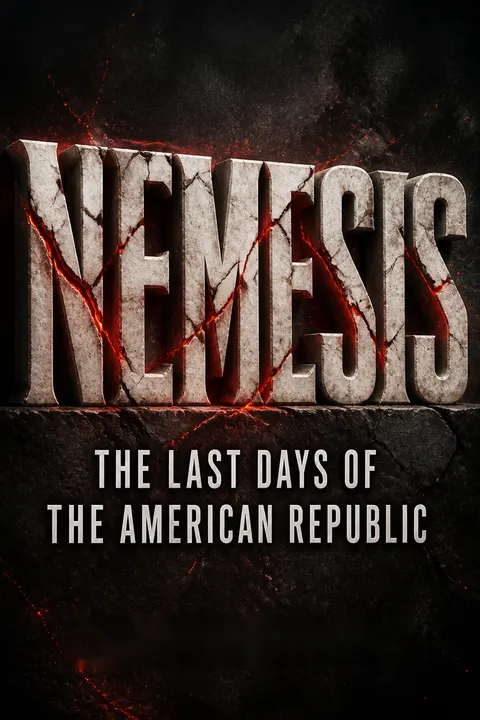

Key Takeaways
1. Blowback: The Unforeseen Consequences of Covert Empire
"Blowback" does not mean just revenge but rather retaliation for covert, illegal violence that our government has carried out abroad that it kept totally secret from the American public (even though such acts are seldom secret among the people on the receiving end).
Secret actions, public shock. The concept of "blowback" describes the unintended, negative consequences of covert government operations abroad, particularly when these actions are hidden from the American public. When retaliation occurs, as with the 9/11 attacks, most Americans lack the context to understand the cause-and-effect, leading to responses that often perpetuate the cycle. The CIA itself coined the term after the 1953 overthrow of Iran's elected government, which brought the U.S.-backed Shah to power, only for him to be overthrown by anti-American Islamic fundamentalists in 1979.
9/11 as blowback. The terrorist attacks of September 11, 2001, serve as a stark example of blowback. While President Bush claimed the terrorists hated America for its values, Osama bin Laden explicitly cited U.S. policies as his motivation:
- Sanctions against Iraq (1991-2003), which led to the deaths of an estimated one million Iraqi children.
- American policies toward Israel and the occupied territories.
- The stationing of U.S. troops and military bases in Saudi Arabia.
The administration's failure to acknowledge these policy-based reasons led to a response that exacerbated the situation, undermining international cooperation and fueling further anti-American sentiment.
Disastrous responses. Instead of treating the 9/11 attacks as crimes, the U.S. responded with a "global war on terror," launching high-tech military campaigns against impoverished nations like Afghanistan and Iraq. This approach led to:
- The undermining of the NATO alliance.
- The rise of Islamic fundamentalist allies in Iraq.
- Widespread torture and illegal imprisonment, contravening the Geneva Conventions.
- Massive civilian casualties, further alienating populations and creating a "world of enemies."
2. Militarism's Grip: Eroding Constitutional Government
Of all the enemies of true liberty, war is, perhaps, the most to be dreaded, because it comprises and develops the germ of every other.
War's corrosive effect. James Madison, a primary author of the U.S. Constitution, warned that war is the greatest threat to liberty, as it inevitably leads to standing armies, debts, taxes, and the expansion of executive power. Since 1941, the United States has been continuously engaged in or mobilized for war, leading to a profound shift in its governmental structure. This perpetual state of conflict has allowed the executive branch to accumulate power at the expense of legislative and judicial checks and balances.
Rise of the military-industrial complex. The post-World War II era saw the emergence of a powerful military-industrial complex, which Eisenhower warned against. This complex, fueled by continuous warfare and massive defense spending, has become deeply entrenched in American society:
- Funds for military hardware are distributed across states to ensure congressional support.
- Domestic base closings are met with panic due to economic dependence on military spending.
- The military is increasingly seen as the most effective public institution, despite its role in numerous interventions that have not fostered democracy.
Undermining democracy. The unchecked growth of militarism has led to an "imperial presidency" that dominates government in ways unimaginable to the Founders. This includes:
- The president's ability to wage wars of choice, often shrouded in secrecy and based on deception.
- The atrophying of legislative and judicial branches, which increasingly fail to provide effective oversight.
- The acceptance by broad sectors of the public that military power is the truest measure of national greatness, even at the cost of constitutional principles.
3. The Imperial Presidency and its Secret Army: The CIA
The president’s untrammeled control of the CIA is probably the single most extraordinary power the imperial presidency possesses—totally beyond the balance of powers intended to protect the United States from the rise of a tyrant.
CIA: The President's Private Army. The Central Intelligence Agency (CIA), created in 1947, quickly evolved beyond its intelligence-gathering mandate to become the president's personal, secret, and unaccountable army. The vaguely worded "other functions" clause in its founding act allowed it to engage in covert operations, which soon absorbed the majority of its budget and personnel. This unchecked power allows presidents to bypass Congress and international law, engaging in actions that would otherwise be illegal or politically impossible.
A history of covert actions. Since 1953, the CIA has been involved in numerous clandestine operations globally, often with disastrous long-term consequences:
- Overthrowing democratically elected governments (e.g., Iran 1953, Guatemala 1954, Chile 1973).
- Attempting to assassinate foreign leaders (e.g., Fidel Castro).
- Sponsoring guerrilla wars and insurgencies (e.g., Afghanistan against the Soviets).
- Manipulating foreign elections and media through "black propaganda."
These actions, justified by the Cold War, were kept secret from the American public, leading to a lack of accountability and setting the stage for future blowback.
Extraordinary renditions and torture. The post-9/11 era saw a dramatic expansion of the CIA's covert activities, particularly "extraordinary renditions"—the abduction of terror suspects and their transfer to countries known for torture or to secret CIA prisons. This practice, often conducted with the complicity of foreign governments, violates international law and has been exposed through leaks and investigations. The CIA's "sloppy work" in cases like the Milan abduction highlights the agency's hubris and belief in operating with complete impunity, further damaging America's reputation and undermining its stated values.
4. A Global Empire of Bases: Manifestation of Hegemony
The basing posture of the United States, particularly its overseas basing, is the skeleton of national security upon which flesh and muscle will be molded to enable us to protect our national interests and the interests of our allies, not just today, but for decades to come.
The physical footprint of empire. The vast network of U.S. military bases in over 130 countries serves as the concrete manifestation of America's global hegemony. With over 737 official overseas installations (and likely over 1,000 in reality), these bases are designed for "force projection" and "full spectrum dominance," ensuring no other nation can challenge U.S. military supremacy. This global presence, however, is often resented by host nations and generates significant anti-American sentiment.
Types of bases and their impact. The Pentagon categorizes its overseas installations into:
- Main Operating Bases (MOBs): Large, permanent facilities with combat forces, extensive infrastructure, and family accommodations (e.g., Ramstein Air Base, Kadena Air Base). These often become "little Americas" with their own rules, including slot machines and abortion bans.
- Forward Operating Sites (FOSs): Major military installations without families, where troops rotate on shorter tours (e.g., Diego Garcia, Manas Air Base). These are often downplayed in importance but serve as crucial strategic outposts.
- Cooperative Security Locations (CSLs): Small, austere "lily pads" with prepositioned weapons and negotiated access rights, often in remote or unstable regions (e.g., in Africa, Latin America). These are intended for rapid deployment but risk theft or appropriation.
SOFAs and sovereignty. Status of Forces Agreements (SOFAs) are legal contracts that grant U.S. forces special privileges, often exempting them from local laws and environmental regulations. These agreements, rarely reciprocal, infringe on the sovereignty of host nations and are a constant source of friction:
- U.S. military personnel are often exempt from local passport, visa, and driving laws.
- Environmental damage caused by bases is not the responsibility of the U.S. military upon return of facilities.
- Criminal jurisdiction disputes, as seen in Okinawa, highlight the perceived impunity of U.S. servicemen, fueling anti-American protests and calls for SOFA revisions.
5. Space: The Ultimate Frontier of Imperial Ambition
Our vision calls for prompt global strike space systems with the capability to directly apply force from or through space against terrestrial targets.
The militarization of space. President Reagan's "Star Wars" initiative, initially a fantasy of an impenetrable missile shield, evolved into a multi-billion dollar military-industrial undertaking aimed at conquering and weaponizing space. This "ultimate imperialist project" seeks to control the planet from space, free from the constraints of international law or local opposition, by deploying weaponry that can strike Earth targets or disable other nations' satellites.
Missile defense: A costly illusion. The ground-based missile defense system, primarily at Fort Greely, Alaska, and Vandenberg Air Force Base, California, is designed to intercept a limited strike from a "rogue state" like North Korea, not a major power. Despite over $100 billion spent, the system remains largely ineffective:
- Interceptor failures: Tests reveal problems with interceptor rockets and their ability to distinguish warheads from decoys.
- Detection gaps: New spy satellites and X-band radars needed for detection are not yet fully operational.
- Decoy problem: Experts like MIT's Theodore Postol argue the system cannot reliably differentiate warheads from decoys, rendering the entire effort futile.
The program is criticized as a "high-tech scarecrow" and a "cash cow" for aerospace corporations, driven by fear-mongering and political lobbying rather than genuine defense needs.
The dangers of space warfare. The air force's pursuit of "space superiority" and "counterspace operations" risks an arms race in space and the creation of lethal orbital debris. Such a conflict would:
- Increase space junk: Destroying satellites would create millions of untrackable fragments, threatening all orbiting spacecraft, including U.S. military and commercial assets.
- Disproportionately harm the U.S.: As the nation with the most satellites, the U.S. would suffer the most from increased debris.
- Threaten global infrastructure: Commercial satellites are vital for communication, navigation, and financial transactions, and their disruption would cripple global life.
The air force's "Fire, Aim, Ready" approach to space combat ignores these catastrophic consequences, prioritizing institutional interests over national and global security.
6. The Path to Bankruptcy: Military Keynesianism and Deficits
U.S. global power, as presently conceived by the overwhelming majority of the U.S. establishment, is unsustainable.... The empire can no longer raise enough taxes or soldiers, it is increasingly indebted, and key vassal states are no longer reliable.
Unsustainable economic model. The United States is on a path to financial bankruptcy, driven by unprecedented military spending and massive deficits. The nation's economy has become dependent on "military Keynesianism"—artificially boosting economic growth through government spending on armies and weapons, a practice that began with World War II and intensified during the Cold War and the "Global War on Terror." This model creates a permanent institution whose "pump must always be primed," regardless of actual defense needs.
Mounting deficits. The U.S. faces staggering financial imbalances:
- Current account deficit: Hit $805 billion in 2005, 6.4% of national income, the fastest quarterly deterioration ever.
- Trade deficit: Soared to an all-time high of $725.8 billion in 2005, with China alone accounting for $201.6 billion.
- National debt: Raised to $8.96 trillion in 2006, the fourth increase since 2001, financed largely by foreign creditors like China and Japan.
These deficits are sustained by foreign lending, allowing American consumers to continue buying imports, but this reliance on "the kindness of strangers" is precarious and unsustainable.
The true cost of militarism. Official defense statistics significantly understate the actual cost of the military establishment. The true annual cost, including non-Pentagon expenditures and war supplements, doubles the official budget, making it larger than all other defense budgets combined. This includes:
- Department of Energy spending on nuclear weapons ($16.4 billion in 2005).
- Department of Homeland Security outlays ($41 billion).
- Department of Veterans Affairs for lifetime care of wounded ($68 billion, a severe underestimate).
- Treasury Department pensions for military retirees.
The Iraq War alone is estimated to cost $2 trillion, a figure far exceeding public acknowledgments. This opaque accounting and massive spending are leading the nation toward a drastic lowering of its standard of living and a loss of control over international affairs.
7. Erosion of Liberties: Secrecy and the Assault on the Constitution
A popular government without popular information, or the means of acquiring it, is but a prologue to a farce or a tragedy, or perhaps both.
Assault on the right to know. President Bush's administration has systematically attacked the public's right to information, which James Madison considered fundamental to a functioning democracy. This "monarchical doctrine" relies on sweeping claims to executive secrecy, effectively undermining congressional and public oversight. Attorney General John Ashcroft's 2001 memo encouraged federal agencies to deny Freedom of Information Act (FOIA) requests, reversing previous policies and making it harder for citizens to access government information.
Subverting constitutional safeguards. The administration's actions have included:
- Executive Order 13233 (2001): Countermanding the Presidential Records Act, giving the president the right to veto requests to see his own and former presidents' records, effectively concealing historical abuses of power.
- Illegal NSA surveillance: Authorizing the National Security Agency (NSA) to eavesdrop on American citizens without court-approved warrants, in direct violation of the Fourth Amendment and the Foreign Intelligence Surveillance Act (FISA). This was done despite the FISA court's near-universal approval of government surveillance requests.
- Data mining projects: Continuing ambitious data-mining initiatives like Total Information Awareness (TIA) under new, secret agencies like the Counterintelligence Field Activity (CIFA), compiling vast amounts of personal data on citizens without oversight.
Signing statements and congressional complicity. President Bush has used "signing statements" to unilaterally challenge and effectively nullify provisions of laws passed by Congress, asserting presidential supremacy in foreign affairs and the "war on terror." This practice, akin to an unconstitutional line-item veto, undermines the legislative branch's power. Congress, through its partisanship, complacency, and corruption (e.g., earmarks, lobbying), has largely abdicated its responsibility to check executive power, allowing the "imperial presidency" to flourish and further erode the constitutional separation of powers.
8. Historical Echoes: Rome, Britain, and America's Choice
Republican checks and balances are simply incompatible with the maintenance of a large empire and a huge standing army.
Lessons from fallen empires. The histories of the Roman Republic and the British Empire offer stark warnings and choices for the United States. The Roman Republic's collapse into dictatorship demonstrates how imperialism and militarism can subtly erode democratic foundations. Its professionalized army, loyal to generals rather than the state, and the expansion of empire led to a loss of liberties and the rise of autocratic rule. The British Empire, while often brutal, ultimately chose to shed its imperial burden after World War II to preserve its domestic democracy, rather than transform into a tyranny.
America's perilous path. The U.S. has adopted many political principles from Rome, including separation of powers and constitutional law, but its current trajectory mirrors Rome's decline:
- Imperial overstretch: The vast global empire of bases and continuous warfare strain resources and undermine democratic norms.
- Militarism's dominance: A professional, all-volunteer military, increasingly separate from civilian society, is ripe for a populist leader who prioritizes military power over republican niceties.
- Erosion of checks and balances: The imperial presidency, unchecked by a compliant Congress and a deferential judiciary, wields power that threatens the very structure of the republic.
The choice ahead. The United States stands at a crossroads, facing a choice between maintaining its empire and preserving its democracy. Continuing on the current path of empire, as Rome did, risks losing democracy and facing inevitable blowback and bankruptcy. The alternative, following Britain's post-WWII example, is to shed the empire to save the republic. This would entail:
- A drastic lowering of the standard of living.
- A loss of control over international affairs.
- Adjusting to the rise of other global powers.
- Relearning cooperation and adhering to international law.
The author, like Hotsumi Ozaki who warned Japan of its imperial folly, believes the U.S. must abandon its dangerous path or face the consequences of Nemesis, the goddess of retribution.
Review Summary
Nemesis, the final volume of Chalmers Johnson's Blowback Trilogy, examines American imperialism's threat to democracy. Reviewers praise Johnson's well-researched critique of militarism, executive power expansion, and constitutional erosion, particularly under the Bush administration. He argues America must choose between empire and democracy, drawing parallels to Rome and Britain. While some find the historical analogies problematic or repetitive, most appreciate his warnings about military Keynesianism, CIA operations, and global base networks. Critics note the book's apocalyptic tone and redundancy with earlier works, though many consider it essential, prescient reading that remains disturbingly relevant years after its 2006 publication.
People Also Read






About the Author
Other books by Chalmers Johnson
Download PDF
Download EPUB
.epub digital book format is ideal for reading ebooks on phones, tablets, and e-readers.








































