
Key Takeaways
1. Nationalism's Ancient Origins: Beyond Modern Invention
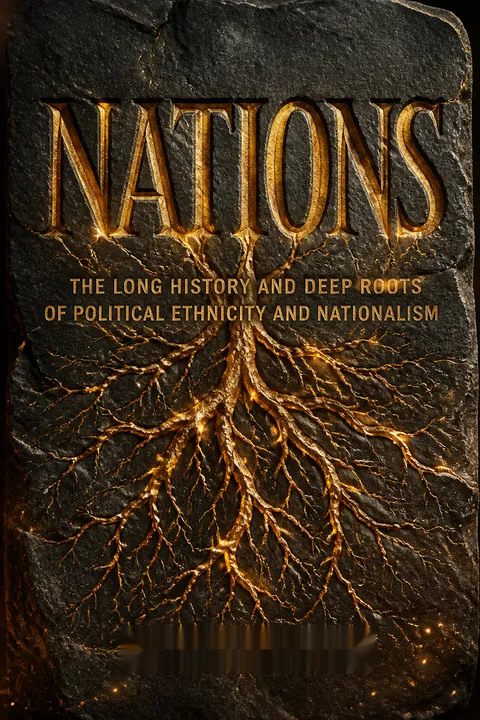
While fully acknowledging the tremendous growth of modern nationalism in response to the massive forces of transformation generated by modernity, I am closer to the view of those who criticize and reject the exclusive identification of the nation with modernity.
Challenging Modernist Dogma. The prevailing academic view, especially since the 1980s, posits nations and nationalism as modern, contrived, or "invented" phenomena, emerging with the French and Industrial Revolutions. This book fundamentally challenges this "modernist" perspective, arguing that such theories often radicalize the concept beyond its original form and create false dichotomies. It suggests that this narrow focus overlooks the deep historical roots and enduring nature of national identity.
A Perennial Phenomenon. Instead, the author aligns with "traditionalist" or "perennial" views, asserting that nationhood, as both a reality and a sentiment, is far older, existing before modernity and spanning millennia across the globe. While acknowledging that nations evolve and are not "primordial" in an unchanging sense, the core idea of a nation—a rough congruence between culture or ethnicity and a state—is not confined to modern times. This broader perspective is crucial for understanding nationalism's persistent and often explosive power.
The Elephant in the Room. The author contends that major social theories like liberalism and Marxism have consistently overlooked or downplayed nationalism's profound presence, leading to repeated surprise when its movements shake societies. This "systematic blindness" is likened to the ancient tale of blind men examining an elephant, each grasping only a part of the whole. A comprehensive understanding requires perceiving nationhood in its entirety, recognizing its long history and deep-seated nature.
2. Ethnicity: A Deep-Seated Force in Human Evolution
Ethnicity – kin–culture reality and a sense of identity – is a human-specific and universal extending far back to the beginning of our species.
Evolutionary Roots of Group Identity. The intense emotions aroused by nationalism are not a modern anomaly but stem from deep within the human psyche, rooted in our evolutionary past. Humans possess an innate predisposition to prefer closer kin and those who share their culture, a trait that evolved because it enhanced gene representation and group survival. This "sociobiological" perspective explains the fundamental basis of tribalism, ethnocentrism, and, in part, nationalism.
Kinship and Culture Intertwined. Ethnicity is defined as a population of shared kinship (real or perceived) and culture. In aboriginal hunter-gatherer societies, where humans spent most of their existence, regional groups (tribes) were dense networks of close kin. Shared culture—especially language, customs, and values—became a strong predictor of kinship and a vital tool for social cooperation. This co-evolution of genes and culture cemented attachment to one's kin-culture group, as cooperation was dramatically more effective within shared cultural codes.
Survival in a Competitive World. Intense competition and conflict among early human groups meant that those with greater internal solidarity and willingness to sacrifice for the group had an adaptive advantage. Communal rituals, cults, and religion, far from being wasteful superstitions, fostered social cohesion and legitimized cooperation, contributing to group survival. This deep-seated preference for one's kin-culture group, shaped over millennia, remains a potent, albeit modulated, predisposition in human behavior, influencing allegiances far beyond immediate family.
3. States and Nations: An Intertwined History Since Antiquity
Ethnicity made the state and the state made ethnicity, in a reciprocal and dialectical process.
From Tribes to States. The emergence of states, beginning around 5,000 years ago with the advent of agriculture, profoundly transformed existing kin-culture populations. As property accumulated and social hierarchies deepened, tribal societies evolved into chiefdoms and then states. This process involved the suppression and cooptation of tribal elites, the establishment of centralized authority, and the replacement of kin-based social structures with state administrative units.
Ethnicity as a Foundation for Statehood. Despite these transformations, ethnic bonds remained central to state existence and politics. States tended to emerge within a pre-existing ethnic space, where shared kin-culture attributes facilitated unification. The state, in turn, greatly reinforced the ethnic unity of its realm through deliberate leveling and fusion efforts, fostering loyalty and cohesion. This reciprocal relationship highlights how deeply political ethnicity has always been.
The National State Template. When a state roughly encompassed and was largely confined to a distinct ethnic space, identified with a particular "Staatsvolk" (state-people), it formed a "national state" or "nation-state." This template of political organization, far from being a modern invention, was prevalent in premodern times across the globe. What sociologists often label "territorial states" or "dynastic monarchies" were, in many cases, effectively national monarchies, where the link between ethnos and state shaped boundaries and cohesion.
4. Premodern National States: A Global, Perennial Reality
Nations and national states can be found wherever states emerged since the beginning of history.
Beyond Eurocentrism. Contrary to the Eurocentric bias in nationalism studies, which often focuses exclusively on medieval or modern Europe, national states were a global phenomenon. Asia, as the earliest cradle of civilization, also saw the emergence of some of the most ancient national states millennia before Europe. Examples include:
- Ancient Egypt: The world's first large, unified state (c. 3000 BC), congruent with a distinct people and culture for nearly three millennia.
- China: A singular civilization with a virtually unbroken cultural and political continuum, profoundly affecting East Asia.
- Korea, Japan, Vietnam: These nations developed distinct statehoods and identities, often in reaction to China's overwhelming influence.
Evidence from the Mute Masses. While direct records of illiterate peasants' thoughts are scarce, their actions speak volumes. Popular resistance to foreign intrusion, mass uprisings, and stubborn struggles for independence, often involving immense sacrifice, demonstrate a deep-seated sense of collective identity and loyalty to their native land and people. These were not purely elite matters but reflected widespread popular sentiment.
Resilience and Transformation. These premodern national states, though subject to historical transformations and often challenged by empires, exhibited remarkable endurance. Their existence refutes the modernist claim that premodern polities were merely elite power structures devoid of popular national sentiment. The congruence of state, people, and culture was a powerful, non-accidental reality, making these states easier to unify, defend, and maintain.
5. Empires: Built on Dominant Ethnic Cores, Not Blindness
In reality, empires were indeed elite power structures, yet, at the same time, nearly all of them were grounded in and relied upon a dominant ethnic nucleus.
The Imperial Paradox. While empires often destroyed nascent national states and are sometimes seen as ethnically neutral elite structures, this view is highly simplistic. Almost universally, empires were overtly or tacitly the empires of a particular people or ethnos. This dominant group formed the military and political backbone, providing rulers and most of the elite, and its loyalty was crucial for the empire's survival.
Hierarchy and Identity. Even when empires projected an inclusive image and coopted elites from other groups, power relations and benefit allocation were skewed in favor of the imperial people. Examples include:
- Persian Empire: Dominated by Persians and Medes, with other Iranian peoples forming a secondary circle.
- Hellenistic Empires: Seleucid and Ptolemaic empires were fundamentally Greek-Macedonian, with Greek populations enjoying privileged status.
- Roman Empire: Expanded through Romanization and citizenship extension, creating a Latin-speaking Italian people, but with a clear Roman core.
- Ottoman Empire: Relied on its Turkish element, with a clear hierarchy despite religious universalism and millet system.
- Mughal Empire: Despite its tolerance and cooptation of Hindu Rajputs, it was founded and dominated by a Turko-Mongol elite.
Coercion and Assimilation. Empires often faced endemic resistance from indigenous ethnopolitical communities, leading to brutal suppression and mass deportations (e.g., Assyria). While some conquered populations assimilated culturally (e.g., Latinization in Western Roman Empire, Arabization in the Middle East), others retained distinct identities, often becoming sources of future unrest. The notion that empires were "ethnically blind" overlooks the profound political significance of ethnicity in their formation, maintenance, and eventual decline.
6. Europe's Distinct Path: Proliferation of National States
The national state was the most typical form of political consolidation in Europe north of the old Roman frontier soon after the beginning of state consolidation across these vast territories.
Geography and State Formation. Europe's fragmented geography, with numerous mountain ranges and seas, made it difficult for hegemonic empires to endure, unlike the open plains of Asia. This fostered the proliferation and resilience of medium-sized national states. Tribal entities in Europe also largely disappeared with the rise of states, unlike in some other regions.
Early European National States:
- Ancient Macedon: Europe's first national state, consolidating an ethnic-tribal space into a powerful monarchy with popular participation.
- Anglo-Saxon England: Unified by the 10th century, with a strong sense of "Englishness" and a flourishing vernacular literature.
- Scandinavian Kingdoms: Denmark, Norway, and Sweden emerged as distinct national states around 1000 AD, with strong patriotic sentiments reflected in sagas.
- German Empire: Though aspiring to universal empire, it was fundamentally a German state, despite later fragmentation.
- Czech Lands: The Hussite Wars (15th century) demonstrated a powerful, popular Czech national consciousness, deeply intertwined with language and religion.
- Poland and Russia: Consolidated as national states in the late Middle Ages, relying on shared language, religion, and a sense of common peoplehood, despite later aristocratic dominance or despotism.
Resilience of Identity. These early national consolidations, often built on pre-existing ethnic formations, proved remarkably durable, with many European peoples and nations tracing their origins back over a millennium. While feudal fragmentation and later imperial expansions (e.g., Habsburgs) sometimes challenged these nascent national identities, they rarely eradicated them. This long history contradicts the modernist claim that European nations are purely modern constructs.
7. Modernity's Transformation: Releasing and Enhancing Nationalism
The sweeping processes of modernization, rather than inaugurating nationalism, simultaneously released, transformed, and enhanced it, while greatly increasing its legitimacy.
The Rise of Mass Society. Modernization, driven by industrialization, urbanization, mass literacy, and communication technologies, profoundly transformed societies. Peasants, once dispersed and politically impotent, became concentrated urban masses, capable of collective action. This shift from rural to urban societies, coupled with expanded education and compulsory military service, dramatically increased social integration and political mobilization.
Popular Sovereignty and National Expression. The advent of popular sovereignty meant that regimes now had to derive legitimacy from mass consent. This empowered the people to express their political preferences, which, as history showed, were overwhelmingly nationalistic. Modernization thus didn't create national sentiments, but rather provided the means for their widespread expression and political triumph.
Imperial Disintegration. The decline of imperial coercion, partly due to modernization and partly due to changing international norms, allowed suppressed national aspirations to materialize. The disintegration of the Ottoman, Habsburg, and Russian empires, and later the decolonization of liberal democratic empires, demonstrated that when given a choice, peoples almost invariably opted for national self-determination. This process revealed nationalism as a powerful, pre-existing force, unleashed and amplified by modern conditions.
8. "Civic" vs. "Ethnic" Nations: A False Dichotomy
In reality, civic nationalism too – indeed, civil nationalism in particular – generates assimilation into the ethnonational community, either as an explicit (“republican”) requirement or as a tacit assumption.
Beyond the Ideal Type. The common distinction between "civic" (liberal, inclusive, Western) and "ethnic" (xenophobic, exclusive, Eastern) nationalism is largely misleading. Even paradigmatic "civic" nations like France and Britain are built upon strong ethnocultural foundations. France, for instance, insists on a "monocultural" national identity, demanding assimilation into French language and culture, effectively denying the official existence of other ethnic identities within its borders.
Cultural Content of "Civic" Identity. "Civic nationalism" is not merely allegiance to a constitution; it presumes a shared national identity with significant cultural content. This content, while indifferent to ethnic descent, is not neutral to ethnic identity if it involves a different language or cultural heritage. The French concept of laïcité, for example, while secular, reflects a post-Christian cultural heritage that can clash with other religious identities.
The Price of Inclusion. While "civic" models aim for inclusiveness, they often achieve it by expecting minorities to adopt the majority's culture. This can lead to cultural oppression for those wishing to preserve distinct identities, as seen with the Kurdish minority in Turkey or the Slav Macedonian community in Greece. Conversely, acknowledging distinct national minorities (as in Slovakia) means the state's identity reflects the majority, not the whole citizenry, creating a different set of challenges.
9. Immigrant Nations: Forging New Amalgamated Identities
While retaining a distinct sense of their origin and culture, especially during the first generations after immigration, the various immigrant communities take on a great deal more in terms of cultural baggage, replacing most notably their language and much else.
More Than Civic Allegiance. Immigrant nations like the United States, Canada, Australia, and New Zealand are often labeled "civic" because their populations originate from diverse backgrounds. However, their national identity is far more substantial than mere allegiance to laws and institutions. It involves a dynamic process of cultural amalgamation and the forging of new, shared kin-culture identities.
The American Melting Pot (and Beyond). The United States, for example, began as an Anglo-Saxon Protestant nation. Over centuries, waves of immigrants, while retaining some heritage, largely assimilated into an English-speaking American culture. This process, marked by rising intermarriage rates across ethnic and religious lines, creates a growing sense of shared kinship and a distinct American identity. This common culture, shaped by media, popular tastes, and historical narratives, transcends purely civic bonds.
Challenges and Nuances. While integration is a dominant trend, it's not uniform or without challenges. Canada, with its distinct Francophone population in Quebec, illustrates how a substantial, territorially concentrated, and culturally distinct group can resist full amalgamation, leading to a binational state. Debates over contemporary immigration, such as the large Latino influx in the US, highlight ongoing questions about cultural integration and the evolving nature of national identity, demonstrating that a nation's cultural core, though dynamic, remains crucial.
10. Postcolonial Nation-Building: Navigating Deep Ethnic Divides
In sub-Saharan Africa, there is a strong emotional attachment to language and ethnicity.
Colonial Legacies and Ethnic Mosaics. Many postcolonial states in Africa and parts of Asia inherited arbitrary colonial borders that disregarded existing ethnic realities, creating states with diverse, often conflicting, ethnic groups. Unlike East Asian nations with long histories of premodern statehood, these countries often lack a unifying ethnocultural majority or a shared historical tradition.
Challenges to Unity. This ethnic diversity, coupled with the absence of a common native language (often relying on former colonial languages as lingua francas) and sometimes deep religious cleavages, poses immense challenges to nation-building. The strong emotional attachment to local languages and ethnicities often leads to:
- Intra- and interstate conflicts: Civil wars, secessionist movements, and ethnic strife are common.
- Weak state and democracy: Ethnic divisions can undermine political stability and democratic institutions.
- "Tribalism": A pejorative term often used to describe strong ethnic allegiances that challenge state unity.
The Indian Experiment. India, a vast and diverse democracy, represents a complex case. While officially secular and pluralistic, its national identity is strongly shaped by its Hindu majority culture. The federal system accommodates linguistic diversity, but the overarching Indian identity, rooted in a shared historical and cultural tradition, is crucial for its unity. Pakistan, by contrast, despite a shared Islamic identity, has faced greater challenges due to deeper ethnic divides and a less cohesive national narrative.
11. Nationalism's Enduring Power in a Globalized World
Nothing in the spontaneous operations of the global economy has so far been able to replace the social, redistributive and welfare functions of the territorial state, nor of the desire of human groups to establish specific collective identities.
Globalization's Limits. Despite rapid globalization in communication, culture, and economy, nationalism remains a potent force. While economic interdependence and liberal values have reduced interstate wars among developed nations, they have not eradicated the desire for specific collective identities. Territorial nation-states continue to be the primary effective decision-makers, as evidenced by tensions within the European Union.
War and Welfare. Nationalism's power is most evident in two classical spheres: war and the welfare state. Historically, national affinity and solidarity have been paramount in mobilizing people for war, a commitment that intensified with modern popular sovereignty. In the modern era, the willingness to pay for social welfare programs is also strongly correlated with ethnic homogeneity, demonstrating that feelings of national solidarity underpin redistributive policies.
Defensive Nationalism. In liberal democracies, nationalism has evolved into a largely implicit, defensive form. Secure national self-determination, coupled with economic prosperity and the decline of acute foreign threats, has made national sentiments appear "banal" or transparent. However, when challenged (e.g., by large-scale immigration or threats to national culture), these sentiments can be powerfully re-triggered, demonstrating their continued vitality. The global triumph of nationalism is as much a result of the collapse of authoritarian empires as it is of modernization.
12. Constitutional Identity: Reflecting Ethno-Cultural Realities
A State may have an interest – even a constitutionally declared responsibility – to support persons belonging to national minorities residing in other States based on ethnic, cultural, linguistic, religious historical or any other ties [while respecting the sovereignty of the countries where those minorities reside].
Beyond Pure Civic Neutrality. Modern constitutional texts, while emphasizing universal civic equality, rarely achieve cultural neutrality. States typically define themselves in national terms, reflecting the identity of their majority population, even if they formally recognize national minorities. This is evident in constitutional preambles, official languages, and state symbols, which often express a specific cultural and historical heritage.
The Dilemma of Recognition. Recognizing a minority's distinct national identity (e.g., Slovakia's Hungarian minority) offers cultural protection but means the state's overall national identity is not fully shared by all citizens. Conversely, insisting on a single, inclusive national identity (e.g., France) can lead to cultural assimilation pressures, even if it aims for universal civic participation. The choice between these models involves trade-offs between cohesion and diversity.
Kin-States and Diasporas. The concept of "kin-states" supporting ethnic or cultural minorities in other countries (e.g., Germany's ties to its diaspora, Finland's Ingrian Finns) highlights that national identity often transcends state borders and is rooted in shared ethnocultural characteristics. This demonstrates that even in a globalized, liberal world, the connection between a state and a specific national identity, often with a clear ethnocultural underpinning, remains a powerful and constitutionally acknowledged reality.
People Also Read

Download PDF
Download EPUB
.epub digital book format is ideal for reading ebooks on phones, tablets, and e-readers.








































