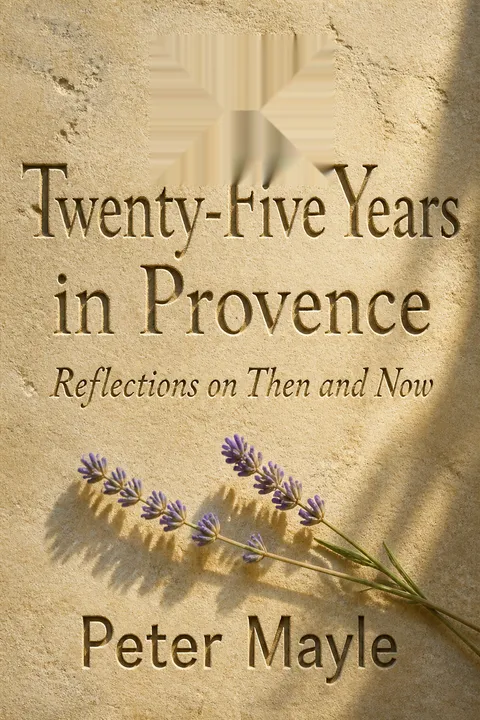

Key Takeaways
1. Provence's Irresistible Call: A Serendipitous Relocation
A situation like this requires some kind of consolation.
Accidental discovery. Peter Mayle and his wife, Jennie, initially sought refuge from a rainy English summer on the Côte d'Azur, only to find more rain. This unexpected turn of events led them inland to explore uncharted French territory, eventually stumbling upon Aix-en-Provence and the picturesque Luberon mountains. This unplanned detour sparked an immediate connection with the region's beauty and slower pace of life.
Dreaming of change. The initial visit, marked by charming villages like Gordes and a memorable stay in what turned out to be a brothel in Cavaillon, planted the seed for a life-altering decision. Back in England, the allure of Provence grew stronger, prompting them to sell their Devon farmhouse and commit to a new life abroad. This transition, though daunting for a "mature" couple, was fueled by optimism and a desire for a simpler, sunnier existence.
First impressions. Upon their return, now as aspiring residents, Provence felt different—it was to be home. Settling into a rented apartment in Gordes, they savored the local cuisine at Chez Monique, where even the dogs were welcomed with water bowls. The exotic smells and honey-colored stone of the village confirmed their decision, marking a delightful beginning to their Provençal adventure.
2. Mastering French Politesse: A Cultural Imperative
The French are as human as the rest of us, but they come equipped from childhood with what is sometimes seen as a barrier rather than a civilized way of life—the habit of politeness.
The art of contact. French politeness, a striking contrast to English informality, emphasizes physical contact and formal address. Handshakes are obligatory, even if it means putting down burdens or offering an elbow or little finger. Cheek-kissing, or la bise, varies from two to four kisses depending on intimacy and region, a ritual that British visitors once found exotic.
Verbal nuances. The French language itself reflects this politeness through its distinct forms of "you": vous for formal interactions and tu or toi for familiarity. The simple greeting "bonjour" is a vital verbal passport, its omission risking being perceived as ill-mannered. A Parisian café even offered discounts for customers who included "bonjour" and a smile with their coffee order, highlighting its cultural significance.
Gestures and exceptions. Beyond words, French communication is rich with gestures—from a rocking hand signaling uncertainty to a tapped nose indicating discretion. However, this civility often takes a backseat in two specific scenarios:
- Driving: Normally mild-mannered individuals transform into aggressive, horn-blasting overtakers.
- Queuing: The concept of an orderly line is often ignored, with cunning and ruthless tactics employed to get to the front.
3. The Provençal Palate: A Celebration of Food and Wine
Anyone saying that today would be sent to the bottom of the tasting class and have his corkscrew confiscated.
Culinary evolution. Provence, historically a poorer region, has seen its culinary scene evolve from simple home cooking to a respected gastronomic destination. While some renovated restaurants now feature elaborate dishes and "foam," the true essence of Provençal dining lies in its fresh, local ingredients and unpretentious preparation. The author highlights favorites like La Closerie for its seasonal asparagus and truffles, and Peron in Marseille for its traditional bouillabaisse.
Rosé's renaissance. Once dismissed as a frivolous "picnic wine," Provençal rosé has undergone a dramatic transformation, earning global recognition. This surge in popularity is attributed to:
- Improved quality: Influenced by vineyards like Ott in Bandol, local farmers shifted from solely red wine to producing sophisticated rosés.
- Versatility: Fresh, clean, and slightly fruity, it pairs well with various dishes and serves as an ideal apéritif.
- Unpretentious enjoyment: It doesn't require aging and is often enjoyed chilled, sometimes with ice cubes directly in the glass.
Festival of flavors. Provence is a land of countless food and wine festivals, offering a delightful sensory experience. These informal events, from the Fête du Riz in Arles to the Fête des Truffes in Aups, allow visitors to sample local produce directly from growers. The mobile wine bar at markets and the practice of offering free trials exemplify the region's generous approach to sharing its culinary treasures.
4. The Village Café: Provence's Enduring Heartbeat
The café is much more than just a place to get a quick cup of coffee or a drink.
Community hub. The village café serves as the social and informational pulse of Provence, a vital compromise between a barstool and a formal restaurant. It offers a welcoming space for solitary contemplation or communal gossip, making it a unique institution in French society. Its long hours, from early morning to late evening, ensure it's always a focal point for village life.
Daily rituals. Regulars, like the man with his newspaper, occupy their preordained spots, receiving their usual orders without needing to speak. The café owner, like Laure, acts as the village's CNN, disseminating daily news and gossip—from local feuds to new romances. This vibrant exchange often goes unnoticed by tourists, who perceive the village as marvelously peaceful.
Seasonal transformations. The café's rhythm shifts dramatically with the seasons. In summer, it becomes a bustling "League of Nations," catering to cyclists, international tourists, and Parisians. The terrace expands, creating a lively, good-humored "bedlam" where pedestrians take precedence. In winter, it shrinks back to a cozy haven for locals, with Laure and her permanent staff, like Annie, ensuring smooth operation and even offering personal advice, acting as a "one-woman advice center" for village problems.
5. Navigating French Life: Bureaucracy, Health, and Humor
France must be one of the best places in the world to find professional medical help.
Paperwork perils. French bureaucracy, with its obsession for official documents, proved to be a recurring irritation for the author. Residents are advised to keep vital papers—electricity bills, tax declarations, phone bills—for years, sometimes even a decade. Despite the meticulous record-keeping, the author notes the irony that he was rarely, if ever, asked to produce these "highly sensitive" documents.
Hypochondria and healthcare. The French are often perceived as health-conscious, a trait the author initially mistook for hypochondria. Inquiries about one's health can lead to detailed accounts of various ailments, from turbulent livers to arthritic toes. However, the French public health system is highly regarded:
- Charming doctors: Like Madame Medicine, who writes "embarrassingly generous prescriptions."
- Qualified specialists: Well-organized and professional.
- Knowledgeable pharmacists: Providing extensive consultations rather than quick purchases.
The author's own experience, including a "pubic shave" before a minor operation, highlights the surprising refinements of French medical care.
Humorous encounters. Life in Provence is punctuated by amusing cultural misunderstandings and observations. From journalists asking about famous neighbors to the sports editor baffled by boules, the author finds humor in the clash of expectations. Even receiving a truly unpleasant letter from a reader, which he responded to with a suppository, became a memorable anecdote, showcasing his ability to find levity in unexpected situations.
6. The Rhythms of Provence: Seasons, Guests, and Local Life
It is one of the few certainties in life: If you are fortunate enough to live in a lovely part of the world with a predictably excellent climate, guests will descend on you.
The guest season. Provence's idyllic climate inevitably attracts a steady stream of guests, from spontaneous "drop-bys" to highly organized planners. These visitors, a "summer League of Nations," bring their own quirks:
- Americans: Energetic, curious, meticulously planning every sight.
- English: Polite but struggle with language, often bringing umbrellas "just in case" of rain.
- Germans: Focused on "bière et bronzage" (beer and tanning), well-organized.
- Parisians: Often perceived as arrogant and snobbish by locals.
- Japanese: Quiet, observant, armed with smartphone cameras.
Despite occasional gripes about heat or prices, most guests return, drawn by Provence's charm.
Summer invasion, autumn exodus. July and August see a massive influx of tourists, transforming sleepy villages into bustling hubs. This "overpopularity" brings crowds, traffic, and increased business for local establishments. However, the "almost shocking speed" of the autumn exodus in late August brings a welcome return to tranquility, allowing villagers to reclaim their spaces and enjoy a "second spring" in September.
Winter's unique charm. Winter in Provence, though chilly, offers its own beauty and activities. The hunting season, once marked by gunfire, has seen a reduction due to the "cochonglier" (wild boar-pig hybrid) whose meat is deemed unpleasant. This shift allows for quieter pursuits like truffle hunting, a secretive and optimistic endeavor. The author cherishes January for its beautiful light, flawless blue skies, and the feeling of having the Luberon to himself.
7. Embracing Change While Cherishing Tradition
What the nostalgians either forget or ignore is that everywhere in the world has been changing, often for the better.
Nostalgia's lens. The author observes that many visitors lament how Provence has changed, often comparing it to a "simpler, cheaper, less crowded world" that may only exist in "nostalgic memories." While acknowledging some disappointments, like renovated cafés losing their charm or beloved restaurants closing, he counters that change is inevitable and often positive, particularly in the quality of local wines.
Enduring allure. Despite modern developments like new buildings or the availability of fast food, Provence retains its fundamental appeal. Its climate, with "ten months a year" of sunshine, and its "unashamedly decorative" natural beauty—from poppy fields to lavender blooms—continue to draw artists and admirers. The centuries-old hilltop villages, Roman viaducts, and historic cities like Marseille offer a timeless backdrop that resists complete modernization.
The slow pace of life. A key aspect that remains unchanged and deeply cherished is the Provençal pace of life. Locals "saunter, rather than run," appreciating the day slowly, often punctuated by stops at the café. This deliberate slowness allows for a deeper appreciation of the scenery, the historical contributions of man, and the simple pleasures of good food without the "ceremonial complications" of more formal dining.
8. Unexpected Honors and Everyday Joys of Expat Life
Not for the first time, I blessed the moment we decided to come and live in Provence.
A writer's life. The author's life in Provence, initially intended for writing, was constantly "disturbed" by the region's many charms and local characters like Faustin, the vineyard caretaker. While journalists often sought "background" stories about his life, he found genuine connection with food journalists over lunch and amusement in cultural misunderstandings, like explaining cricket to locals or boules to a Surrey sports editor.
Hollywood's visit. A surprising chapter in his Provençal life was the adaptation of his book, "A Good Year," into a film by Ridley Scott. The filming brought Hollywood to the Luberon, with stars like Russell Crowe and Marion Cotillard. The author observed the "extremely well organized, unhurried, and actually quite relaxed" set, culminating in a memorable premiere in the village of Cucuron, where locals celebrated "our film" with rosé instead of champagne.
A gift from Napoleon. The ultimate validation of his integration into French society came with his nomination as a Chevalier de la Légion d’Honneur, an honor founded by Napoleon to reward outstanding merit. This "mysterious call" from the mayor of Ménerbes led to a joyous celebration, complete with a medal and a speech in his adopted language. This experience, alongside the simple joys of nature, local markets, and the enduring institution of pastis, solidified his profound appreciation for his twenty-five years in Provence.
Review Summary
My Twenty-Five Years in Provence receives generally positive reviews, averaging 3.93/5. Readers praise Mayle's charming, humorous writing style and his evocative descriptions of Provençal food, wine, and landscapes. Many note the bittersweet quality of reading his final work, published posthumously after his January 2018 death. Fans of his earlier Provence books find it a fitting farewell, though some critics feel it rehashes previous material and lacks depth. The audiobook narration by John Lee receives particular praise.
Download PDF
Download EPUB
.epub digital book format is ideal for reading ebooks on phones, tablets, and e-readers.








































