
Plot Summary
Orphaned and Idolized
Philip Ashley, orphaned as a baby, is raised on a remote Cornish estate by his older cousin Ambrose, who becomes his guardian, father figure, and idol. Their world is masculine, isolated, and resistant to change, with Ambrose's eccentricities and misogyny shaping Philip's worldview. The estate is a bastion of tradition, and Philip grows up longing to emulate Ambrose in every way. Their bond is deep, affectionate, and exclusive, setting the stage for the intense loyalty and jealousy that will later define Philip's actions. The absence of women and the insular nature of their lives create a sense of timelessness and emotional dependency, making any intrusion from the outside world—especially from a woman—feel like a threat to their carefully constructed existence.
Letters from Florence
When Ambrose's health requires him to winter abroad, he travels to Florence, leaving Philip to manage the estate. Ambrose's letters home are initially filled with enthusiasm for Italian gardens and the company of a distant cousin, Rachel, a half-English, half-Italian widow. The tone of his correspondence shifts from cheerful to increasingly troubled, hinting at mysterious illnesses and growing unease. Philip, left behind, feels both pride in his responsibilities and a gnawing sense of displacement as Ambrose's attention turns to Rachel. The letters become a lifeline, but also a source of anxiety, as gaps in communication and ambiguous hints sow seeds of doubt and foreboding in Philip's mind.
Ambrose's Sudden Marriage
Ambrose's unexpected marriage to Rachel shocks Philip and the entire community. The news arrives in a letter, filled with Ambrose's joy and assurances that nothing will change between him and Philip. Yet, Philip is consumed by jealousy and insecurity, fearing the loss of his place in Ambrose's life and the estate. The neighborhood buzzes with speculation about the new Mrs. Ashley, and Philip's imagination conjures a host of unflattering images. The prospect of a new heir and the potential for change threaten Philip's sense of belonging and identity, intensifying his resentment toward the unseen Rachel and setting the stage for future conflict.
Shadows and Suspicions
As months pass, Ambrose's letters from Florence become increasingly erratic and disturbing. He complains of headaches, distrusts his doctors, and hints at being watched and manipulated. His references to Rachel shift from affectionate to fearful, and he accuses her—directly or indirectly—of causing his suffering. The letters culminate in a desperate plea for Philip to come to Florence, suggesting that Rachel is responsible for his impending doom. Philip, alarmed and guilt-ridden, sets out on a frantic journey, determined to save Ambrose and uncover the truth behind the cryptic warnings and the shadowy figure of Rachel.
A Desperate Journey
Philip's journey to Florence is fraught with anxiety and dread. He arrives to find the villa Sangalletti shuttered, Ambrose dead, and Rachel gone. The Italian servants recount Ambrose's decline—violent headaches, paranoia, and sudden death—while Rachel's absence and the removal of Ambrose's belongings deepen Philip's suspicions. The official explanation is a brain tumor, but Philip is haunted by Ambrose's final, frantic letter: "She has done for me at last, Rachel my torment." The ambiguity of Ambrose's illness and the conflicting accounts from Rachel's advisor, Rainaldi, leave Philip with more questions than answers, fueling his obsession with Rachel's guilt or innocence.
The Villa Sangalletti
Exploring the villa, Philip is struck by its oppressive atmosphere and the lingering presence of Ambrose's suffering. The Italian servants describe Rachel's devotion during Ambrose's illness, but also her swift departure and the thorough removal of his possessions. Philip's meeting with Rainaldi is tense and unsatisfying; Rainaldi insists Ambrose died of natural causes, dismisses the accusations as delusions, and reveals that Rachel has no claim to the estate. The encounter leaves Philip feeling manipulated and powerless, his grief compounded by the unresolved mystery and the sense that the truth is forever out of reach.
Ambrose's Death and Doubt
Back in Cornwall, Philip is both master of the estate and prisoner of his doubts. The community mourns Ambrose, but Philip is isolated by his obsession with Rachel's possible guilt. He clashes with his godfather, Nick Kendall, over the interpretation of Ambrose's letters and the cause of his death. The will leaves everything to Philip, with no provision for Rachel, intensifying his sense of responsibility and guilt. When Rachel writes from Plymouth, bringing Ambrose's belongings and asking for guidance, Philip impulsively invites her to visit, driven by a mixture of hostility, curiosity, and a desire for confrontation.
Rachel's Arrival in Cornwall
Rachel's arrival is nothing like Philip imagined. She is small, elegant, and disarmingly gentle, not the monstrous figure of his fantasies. Her manners, humor, and vulnerability unsettle Philip, who finds himself both suspicious and captivated. The household and community are charmed by her, and she quickly adapts to life on the estate, winning over servants and tenants alike. Philip's resolve to confront her with accusations dissolves in the face of her warmth and apparent sincerity. The boundaries between host and guest, accuser and accused, begin to blur, as Philip is drawn deeper into Rachel's enigmatic orbit.
The Enigmatic Widow
Rachel proves impossible to categorize—by turns maternal, seductive, practical, and elusive. She brings new life to the estate, introducing Italian customs, herbal remedies, and a sense of refinement. Philip oscillates between suspicion and infatuation, unable to reconcile Ambrose's accusations with the woman before him. Their relationship becomes increasingly intimate, yet always shadowed by ambiguity. Rachel's financial situation is precarious, and Philip, moved by guilt and affection, arranges a generous allowance for her. The question of Ambrose's death lingers, unresolved, as Philip's emotional dependence on Rachel grows, blinding him to the dangers of his own obsession.
Bewitchment and Obsession
As Rachel's influence over Philip intensifies, he becomes increasingly reckless. He showers her with gifts, including family jewels, and arranges to transfer the estate to her on his twenty-fifth birthday, believing this will secure her happiness and perhaps her love. Their relationship reaches a fever pitch on his birthday, culminating in a night of passion that Philip interprets as a promise of marriage. However, Rachel's response is ambiguous, and the next day she denies any such promise, humiliating Philip in front of his friends. The gulf between their perceptions is stark, and Philip's sense of betrayal and confusion deepens.
Gifts, Wills, and Inheritance
Philip's transfer of the estate to Rachel creates legal and social complications. His godfather and the community are scandalized, and Rachel's financial dealings—her generosity, her secret meetings with Rainaldi, and her plans to return to Italy—arouse further suspicion. Philip's health deteriorates, and he becomes increasingly isolated, both emotionally and physically. The discovery of ambiguous evidence—letters, herbal remedies, and Rachel's secretive behavior—fuels his paranoia. The boundaries between love, jealousy, and hatred blur, as Philip struggles to discern Rachel's true motives and the reality of Ambrose's fate.
The Birthday and Betrayal
On the night of his twenty-fifth birthday, Philip gives Rachel the family jewels and believes they are now engaged. The next day, however, Rachel denies any promise of marriage, leaving Philip devastated and humiliated. Their relationship collapses into mistrust and estrangement, with Rachel inviting a companion to stay in the house to avoid being alone with him. Philip's health declines rapidly, and he is plagued by fever, pain, and hallucinations. The sense of betrayal is overwhelming, and the possibility that Rachel has poisoned him, as Ambrose claimed, becomes a haunting obsession.
Illness, Isolation, and Recovery
Philip's mysterious illness confines him to bed for weeks, during which Rachel nurses him with apparent devotion. His recovery is slow, and his memories of the period are fragmented and dreamlike. The household is filled with whispers and secrets, and Rachel's behavior is both caring and distant. As Philip regains his strength, he is tormented by doubts about what happened during his illness—was he poisoned, or simply sick? Rachel's plans to return to Italy become more concrete, and Philip is left feeling abandoned, powerless, and haunted by the possibility that he has been the victim of both love and malice.
Rainaldi's Shadow
Rainaldi's visit to Cornwall and his secret meetings with Rachel at the Rose and Crown intensify Philip's suspicions. Rainaldi is suave, enigmatic, and subtly contemptuous of Philip, reinforcing the sense of being an outsider in his own home. Rachel's loyalty to Rainaldi and her plans to return to Florence suggest a life and identity beyond Philip's reach. The discovery of ambiguous evidence—letters, lists of herbs, and the presence of laburnum seeds—raises the specter of poisoning, but nothing is conclusive. The psychological tension mounts, as Philip is caught between longing, jealousy, and the fear that he has been manipulated by both Rachel and Rainaldi.
Seeds of Poison
Philip's search for proof of Rachel's guilt leads him to discover laburnum seeds—known to be poisonous—hidden among her possessions. He recalls Ambrose's accusations and his own illness, but the evidence is circumstantial and open to interpretation. A letter from Rainaldi, written in English, offers no incriminating information, and Rachel's behavior remains inscrutable. Louise, Philip's childhood friend, urges caution, warning that without proof, any accusation would be unforgivable. The line between victim and perpetrator, love and hate, becomes increasingly blurred, as Philip confronts the possibility that the truth may never be known.
The Final Accident
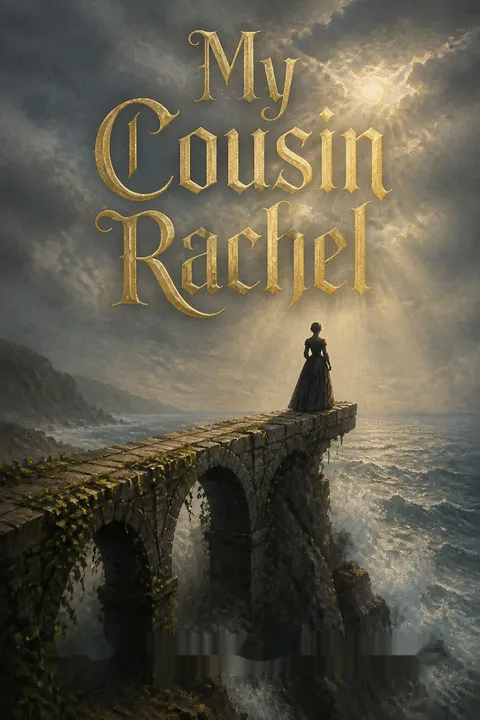
Rachel's fate is sealed when she falls to her death from an unfinished bridge in the garden—a structure Philip had failed to warn her about. The accident is sudden and ambiguous, leaving Philip with a sense of guilt and the haunting suspicion that he may have unconsciously wished for her death. In her final moments, Rachel mistakes Philip for Ambrose, underscoring the tragic confusion and miscommunication that have plagued their relationships. The estate, once again, is left in Philip's hands, but he is forever marked by doubt, loss, and the unresolved question of Rachel's innocence or guilt.
Truths Buried and Unburied
In the aftermath of Rachel's death, Philip is left to grapple with the legacy of obsession, suspicion, and ambiguity. The evidence of poisoning is inconclusive, the motives of all involved remain shrouded in uncertainty, and the truth of Ambrose's death is never fully revealed. The estate returns to its masculine solitude, but Philip is haunted by memories, regrets, and the possibility that he has been both victim and perpetrator. The story ends as it began, with the image of the gallows at Four Turnings—a symbol of judgment, guilt, and the impossibility of ever truly knowing another's heart.
Analysis
A haunting meditation on obsession, ambiguity, and the unknowability of othersMy Cousin Rachel is a masterful exploration of psychological suspense, built on the shifting sands of perception, desire, and doubt. Daphne du Maurier crafts a narrative in which every certainty is undermined, every motive suspect, and every relationship fraught with the potential for both love and destruction. The novel interrogates the dangers of projection—how we see in others what we most fear or desire—and the limits of knowledge, especially across the divides of gender, culture, and power. Rachel's character resists all attempts at definition, embodying both the threat and the promise of the unknown. The story's refusal to resolve its central mystery is not a flaw, but a deliberate challenge to the reader: to accept that some truths are forever elusive, and that the line between victim and perpetrator, love and hate, is often impossibly thin. In a modern context, the novel remains a powerful critique of misogyny, xenophobia, and the destructive consequences of emotional isolation. Its lessons are as relevant now as they were in du Maurier's time: beware the stories we tell ourselves about others, for they may be the most dangerous poison of all.
Review Summary
My Cousin Rachel is a masterful Gothic novel filled with suspense and ambiguity. Readers praise du Maurier's atmospheric writing and ability to keep them guessing about Rachel's true nature. The story explores themes of obsession, jealousy, and the dangers of rejected men. Many found it compelling and thought-provoking, though some felt it didn't quite match Rebecca. The open-ended conclusion sparked much debate among readers. Overall, it's considered a gripping psychological thriller that showcases du Maurier's talent for creating complex characters and maintaining tension throughout.
People Also Read





Characters
Philip Ashley
Philip is the young, impressionable heir to the Ashley estate, raised in isolation by his cousin Ambrose. His identity is shaped by devotion to Ambrose and a deep-seated suspicion of women. Philip's psychological journey is marked by jealousy, possessiveness, and a desperate need for certainty in a world that offers only ambiguity. His infatuation with Rachel transforms from suspicion to obsession, blinding him to her complexity and leading to reckless decisions. As narrator, Philip's perspective is limited and often self-serving, casting doubt on the reliability of his account. His development is a tragic arc from innocence to disillusionment, forever haunted by the unresolved mysteries of love, guilt, and loss.
Rachel Ashley (Contessa Sangalletti)
Rachel is a half-English, half-Italian widow whose arrival in Cornwall disrupts the insular world of the Ashleys. She is intelligent, charming, and adaptable, able to play multiple roles—nurturer, seductress, victim, and manipulator—depending on the needs of those around her. Her motives and feelings remain elusive, filtered through Philip's unreliable gaze. Rachel's past is marked by loss, financial instability, and ambiguous relationships, particularly with Ambrose and Rainaldi. She resists being possessed or defined by men, yet is continually subject to their suspicions and projections. Her psychological complexity and ambiguity make her both a victim and a possible perpetrator, embodying the novel's central theme of unknowability.
Ambrose Ashley
Ambrose is Philip's guardian and the original master of the estate. Eccentric, misogynistic, and deeply attached to Philip, Ambrose's worldview shapes the novel's masculine enclave. His late-life marriage to Rachel is both a source of joy and the catalyst for his downfall. Ambrose's decline—marked by illness, paranoia, and ambiguous accusations—sets the central mystery in motion. His letters, both affectionate and accusatory, haunt Philip and the narrative, blurring the line between madness and insight. Ambrose's psychological fragility and inability to adapt to change make him both a victim of circumstance and a symbol of the dangers of emotional isolation.
Rainaldi
Rainaldi is Rachel's Italian advisor and friend, whose presence looms over the narrative as a symbol of foreignness, sophistication, and potential threat. He is suave, intelligent, and subtly contemptuous of Philip, reinforcing the sense of cultural and emotional distance between Rachel and the Ashleys. Rainaldi's motives are ambiguous—he may be a loyal friend, a manipulator, or a lover. His influence over Rachel and his role in her financial and personal decisions make him a focal point for Philip's suspicions. Psychologically, Rainaldi represents the unknown and the unknowable, challenging the insularity and certainty of the Ashley world.
Nick Kendall
Nick Kendall is Philip's godfather and the executor of Ambrose's will. Practical, cautious, and emotionally reserved, he serves as a counterpoint to Philip's impulsiveness. Kendall's legalistic mindset and adherence to social norms make him both a stabilizing force and a source of frustration for Philip. He is skeptical of Rachel, concerned about propriety and the preservation of the estate. Kendall's psychoanalytic role is that of the superego—enforcing boundaries, questioning motives, and warning against the dangers of unchecked emotion. His inability to fully understand or control the unfolding tragedy underscores the limits of reason in the face of passion and ambiguity.
Louise Kendall
Louise is Nick Kendall's daughter and Philip's childhood companion. Intelligent, loyal, and perceptive, she serves as a confidante and occasional voice of skepticism. Louise's feelings for Philip are understated but genuine, and her observations often cut through the fog of his obsession. She represents the possibility of a more stable, conventional happiness, but is ultimately sidelined by Philip's fixation on Rachel. Psychologically, Louise embodies the repressed, rational alternative to the novel's destructive passions, and her presence highlights the costs of Philip's choices.
Seecombe
Seecombe is the long-serving steward of the Ashley estate, embodying loyalty, routine, and the continuity of the old order. He is resistant to change, skeptical of Rachel, and deeply invested in the well-being of the estate and its master. Seecombe's psychoanalytic role is that of the guardian of the status quo, providing stability and a sense of belonging. His reactions to Rachel and the unfolding drama reflect the anxieties of a society threatened by the intrusion of the foreign and the feminine.
Mary Pascoe
Mary Pascoe, the vicar's daughter, is invited by Rachel to serve as a companion and chaperone, creating a barrier between Philip and Rachel after their relationship deteriorates. She represents the pressures of social convention and the need for appearances, as well as the limitations placed on women's autonomy. Mary's presence is both a comfort and an irritation, highlighting the constraints of the world in which the characters live.
Tamlyn
Tamlyn is the head gardener, devoted to Ambrose's vision and later to Rachel's innovations. He serves as a bridge between the old and new orders, witnessing the changes brought by Rachel and the tensions they create. Tamlyn's psychoanalytic role is that of the observer, grounded in the practical realities of the estate, yet sensitive to the emotional undercurrents that shape its fate.
The Estate (Cornwall)
The Ashley estate is more than a backdrop—it is a living entity, shaped by generations and resistant to change. Its masculine, insular atmosphere reflects the psychological state of its inhabitants, and its transformation under Rachel's influence mirrors the novel's central conflicts. The estate's psychoanalytic role is that of the unconscious, harboring secrets, resentments, and desires that drive the narrative toward its tragic conclusion.
Plot Devices
Unreliable Narration
The entire narrative is filtered through Philip's subjective, emotionally charged point of view. His biases, obsessions, and limited understanding color every event and character, creating a pervasive sense of ambiguity. The reader is constantly forced to question the accuracy of his account, the validity of his suspicions, and the reality of Rachel's actions. This device heightens the psychological tension and ensures that the central mystery—Rachel's innocence or guilt—remains unresolved.
Epistolary Evidence
Ambrose's letters from Florence, filled with shifting tones and cryptic warnings, serve as the initial catalyst for Philip's journey and suspicions. Later, the discovery of additional letters, lists, and notes—some ambiguous, some potentially incriminating—fuels the narrative's uncertainty. The epistolary device allows for multiple interpretations, blurring the line between fact and paranoia, and reinforcing the theme of unknowability.
Poison and Herbal Remedies
Rachel's use of herbal remedies and tisanas is a recurring motif, symbolizing both nurturing and potential harm. The presence of laburnum seeds—known to be poisonous—serves as a possible means of murder, but the evidence is always circumstantial. This device embodies the novel's central ambiguity: is Rachel a healer or a poisoner, a victim or a perpetrator? The motif of poison also functions as a metaphor for the psychological toxins of jealousy, suspicion, and misogyny.
Doubling and Mirroring
Philip and Ambrose are doubles—physically similar, emotionally dependent, and ultimately undone by their relationships with Rachel. Rachel herself is a mirror for the projections and fantasies of the men around her, never fully knowable in her own right. The repetition of events—illness, suspicion, ambiguous evidence—creates a sense of fatal inevitability, as if the characters are trapped in a cycle they cannot escape.
Social and Gender Inversion
Rachel's arrival upends the masculine order of the estate, challenging the authority and identity of its male inhabitants. The novel explores the anxieties and resentments provoked by female autonomy, foreignness, and sexuality. The inversion of social and gender roles—Rachel as both guest and master, Philip as both accuser and victim—creates psychological instability and drives the narrative toward tragedy.
Foreshadowing and Symbolism
The novel is rich in foreshadowing: the gallows at Four Turnings, the laburnum tree, the unfinished bridge, and the recurring references to poison and death. These symbols create an atmosphere of doom and uncertainty, suggesting that the characters are caught in forces beyond their control. The final accident—Rachel's fall—serves as both literal and symbolic resolution, leaving the truth forever out of reach.

Download PDF
Download EPUB
.epub digital book format is ideal for reading ebooks on phones, tablets, and e-readers.








































