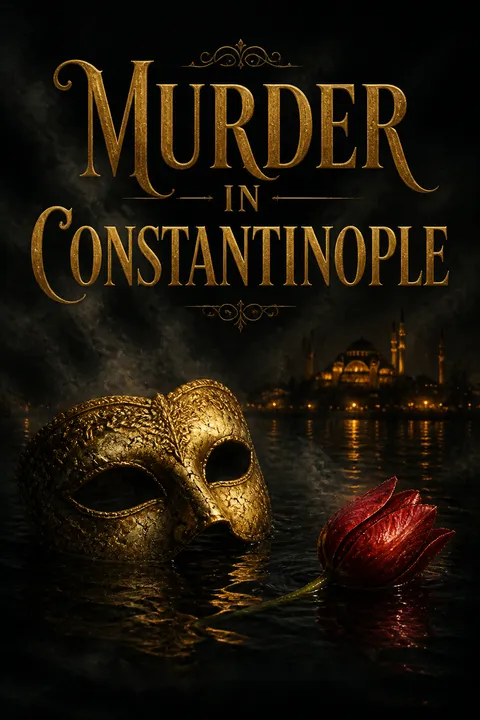

Plot Summary
Fateful Night on the Bosporus
The novel opens with a tense midnight confrontation on the waterfronts of Constantinople. A woman, cornered and desperate, realizes there's no escape when she recognizes her pursuer—a man she knows too well. The two speak quietly, her pleas met with sympathy but inevitability. Under the moon's gaze, they drift onto the Bosporus, the city lights slipping behind. Her fate is sealed by the words and actions of her companion—marked by masks, regret, and a kiss of death that is as quiet as falling asleep. Her last words, "Ben—," shroud the subsequent mystery. This prologue launches the reader into a world of secrets, chosen betrayals, and vanished futures, forecasting a narrative thick with unresolved love and looming mortality.
Chaotic Sabbath in Whitechapel
In London's Jewish East End, the Canaan family home buzzes with anxiety, humor, and hardship on Friday night. The household, comprised of three generations, is convulsed over the absence of Benjy, eldest son and family contrarian. The dinner table dialogue brims with Yiddish banter, economic worries, and simmering generational wounds: patriarch Solly's pride, his son's disregard for tailoring, and matriarchal efforts to sustain dignity amid poverty. There is love here, but also strain—Benjy's late arrival promises confrontation, yet beneath the chaos is craving for belonging and recognition. The Canaan home is more than background; it is the emotional hearth around which identity, expectation, and sorrow flicker through the novel.
Good-for-Nothings and Claridge's Scandal
Benjy—called Ben by his friends—escapes his family's confines through perilous wit and illicit fun with Jack Hauser and Leo Pereira. Disguised, they infiltrate a high-society ball at Claridge's, targeting wealth, romance, and rebellion. Their deception spirals into violence: Ben courts Catherine Arbuthnot with invented grandeur, only to be unmasked when the real Sebastian Pallow arrives. A brawl erupts, a gun discharges, and they flee amidst scandal. This misadventure marks Ben's alienation from society's upper crust and his own family's values, while foreshadowing how his desire for something greater (or different) endlessly entangles him in self-destructive pursuits. The episode cements his outlaw status and sets him on a path toward deeper, deadlier mysteries.
Dream Lost: Ben and Elizabeth
In a luminous, bittersweet flashback, Ben recalls his encounter with Elizabeth de Varney. Their meeting at the Great Exhibition is electric: she's intelligent, political, and daring. Their whirlwind affair is embroidered with mischief, philosophy, class collision, and Ben's first taste of belonging outside familial bonds. But love collapses into absence—she disappears, and later her father's letter announces her death from smallpox. Ben is left with haunting objects: a daguerreotype and unfinished questions. Elizabeth's memory colors everything that follows: she becomes a canvas for Ben's yearning, regret, and longing for escape, while her true fate lies at the novel's center, elusive and charged with political danger.
The Haunted Daguerreotype
While helping fit the Home Secretary Palmerston for a suit, Ben accidentally receives the wrong jacket and discovers a letter and daguerreotype—the image unmistakably of Elizabeth, alive long after her supposed death. The cryptic note on the photograph hints at a deadly secret ("The White Death") and connects her fate to world events. This discovery ignites Ben's investigation, entwining his personal loss and global intrigue. As he digs, historical currents—Crimea's war, national intrigue—disturb the shallow grave of Elizabeth's story. The haunted daguerreotype becomes a symbol of grief reinvigorated, a disruption rippling from the private heart into public danger.
Ben Becomes a Fugitive
Haunted by suspicion and pursued by the law thanks to his escapades at Claridge's, Ben's restlessness morphs into outright flight. Sergeant O'Connor arrives to arrest him on witness testimony. He flees Whitechapel, barely escaping arrest, leaving family, identity, and safety behind. Driven by the daguerreotype's mysteries and memories, Ben's personal crisis merges with external threats. This marks a critical transformation from wayward scion to hunted man: Ben cannot go home, and cannot outrun his past. His only choice is to burrow deeper into dangerous new worlds—of crime, espionage, and uncertain self-reinvention.
Among Dockland Dogs
Ben turns to Lennie Glass—the underworld kingpin of the East End—for sanctuary and a new identity. Lennie's world is grim: pickpockets, opium dens, enforcers, and refugees. Here, Ben trades one entrapment for another, forced to rely on the charity and cruelty of criminals. Lennie engineers Ben's strategic disappearance with forged papers and the threat of permanent banishment. Amidst opium haze and existential dread, Ben is pushed further from his origins, yet simultaneously stands on the threshold of a new, more perilous self—an accidental player on a world stage he barely understands.
A Disappearing Act
At Alf the counterfeiter's workshop, Ben's "disposal" is orchestrated: he becomes Rupert Rogers, listed as a Yorkshire deckhand bound for the battlefronts of Crimea. His passage is gained by suborned military officer Captain Eddie, whose criminal bent makes Ben's voyage possible. The episode's weight lies in Ben's internal unraveling: doomed love, familial banishment, criminal bonds—all spiral around his loss of identity. What began as mischief has now exiled him to literal and figurative seas, in the company of strangers, with no anchor.
Passage to Constantinople
Aboard the squalid HMS Midas, Ben endures seasickness, starvation, violence, and the leveling reality of war. The ship's multicultural, battered company models the vastness and indifference of empires. Amid sickness and survival, Ben meets the haunted Jasper Johns—a veteran scarred by history. As the Midas approaches the dazzling, fraught city of Constantinople, Ben is no longer simply a fugitive. He is a participant in the chaos of the age, globally adrift, yet inwardly seeking meaning: his transformation now is irreversible.
A New Identity Found
Arriving in Constantinople, Ben, cut off and without resources, seeks help at Ahrida Synagogue—one small sanctuary for Jews in a teeming, alien city. The Rabbi, Shabtai Akbar, takes him in. The Akbars are welcoming, and Ben is introduced to the aristocratic Carminos at Shabbat dinner: among them, the proudly beautiful Shoshanna, whose family tragedy is a window on the city's wider corruption and loss. Here, religious and cultural identity is both source of solace and a reminder of exile, dispossession, and the fragility of community. Ben's precarious reinvention teeters: even sanctuary is shadowed by danger and secrets.
Shabbat at the Ahrida Synagogue
Akbar's home and the Ahrida Synagogue cocoon Ben in warmth, but the world of the Carminos—recently ruined by the suspicious death of patriarch Abraham and subsequent political disgrace—hints at the city's deeper rot. Through dinner conversation and the rabbi's stories, Ben gathers both precious cultural insight and a sense of how closely personal loss is braided to political treachery. Shoshanna, proud and sharp, becomes both Ben's tentative ally and a symbol of what might be reclaimed if the truth can be unveiled.
The Intrigue of the Carminos
Ben's investigation deepens: through the Carminos and the documents he's recovered, the threads of familial and imperial betrayal begin to twist together. The "White Death," a series of mysterious, seemingly natural deaths among the empire's elite—starting, the dossier suggests, with the Carmino patriarch and including English diplomats, Ottoman royalty, and finally Elizabeth/Marta—signals a campaign of calculated murders. The resurfacing of Elizabeth/Marta's daguerreotype collapses Ben's private anguish into the city's grand betrayal: the line between lover and assassin, intimacy and conspiracy, begins to dissolve.
The Riddle of the White Death
Collaborating with contacts such as Black Fez, Ben plunges into morgues and laboratories, uncovering the forensic reality behind the "White Death." Victims, pale and mummified, die instantly from an undetectable toxin, their bodies evidence of a murder campaign disguised as illness or suicide. Those who chase the truth—like Heathcote, the attaché, and Abraham Carmino—become its next targets. The mystery is more than a personal vendetta: it is political, scientific, and tied to the mechanisms of a war that kills anonymously and without consequence.
Harem Secrets and the Sultan's Son
Pursuing the origin of the "White Death," Ben infiltrates the Sultan's palace, posing as a deaf-mute messenger. In a fraught meeting with Mihrima, the Sultan's bereaved consort, he learns her son Ahmed's death—officially "cholera"—bears marks of the signature murder: pale skin, draining fluids, a masked assassin's visit. Mihrima's description triggers Ben's realization that the perpetrator—a masked figure with a woman's silhouette and the smell of an exclusive perfume—is likely Marta/Elizabeth. The revelation links personal suffering with political plot: the murder of a child heir for purposes not just of grief, but of succession and control.
Portraits, Masks, and Lies
The plot's complexity grows as Ben and Shoshanna—orbiting each other as suspicious partners—trace testimonies and backstories. With the aid of witnesses like Clio Tavoularis, the Mavros housekeeper, it's revealed that Marta (a.k.a. Elizabeth, a.k.a. Zoya) played a role far more complex than victim or lover: spy, assassin, and pawn of Russian agents embedded in the highest levels of power. Layers of false identity are stripped: the seductions of political power are revealed as both irresistible and poisonous. For Ben, love's recollection is rewritten as complicity; for Shoshanna, her family's fall is exposed as one act in the operating theater of empire.
Breaking the Web of Spies
Hot on the trail of the killers, Ben, Shoshanna, and their new allies—including the formidable exiled Countess Zofia—expose the Russian Third Section, an espionage outfit orchestrating the deaths, blackmailing elite families, and attempting a palace coup. Marta's defection and betrayal lead to her own assassination by fellow agents. The plot is grand: murder, infiltration, and statecraft as a chess game. Zofia, herself maimed by Russian cruelty, frames resistance as a duty, not simply to nation, but to collective dignity. The network of spies and betrayals is more Hydra than web—defeated only to regrow.
Boethius and the Poisoned Tulips
The code word "Boethius" (from Thorsbury's burnt letter and a crate aboard the Boethius) leads Ben and Ismail to Büyükada, where they uncover the laboratory: a clandestine workshop producing the poison (Scorpion's Kiss) in bulk, using tulip derivatives as the base. Dozens of test victims hang in refrigeration—a visual horror confirming mass experimentation. Here, Ben confronts the masked "White Death"—revealed not as any one person, but a role played by several (including a man with burnt hands, Marta herself, and Khalil the gendarme). This confrontation nearly kills Ben, but he's rescued by Zofia's mercenaries, setting the stage for the final reckoning.
Tannhaüser and the Assassination Plot
As "Bayram," the palace ball, swells around them—with Ben and Shoshanna disguised as American honeymooners—the full shape of the plot emerges: Russian agents, with Mavros complicit, intend to assassinate the Sultan on a musical cue (from Wagner's Tannhaüser). The palace's beauty hides a massacre-in-waiting. The costumed, glittering event is a mask for violence; Ben's love, regret, and self-sacrifice juxtapose with the conspirators' cold ambition. Tension, spectacle, and music converge: Ben, mortally wounded, manages to disrupt the assassination at the last moment, the White Death undone, but not without cost.
Death in Dolmabahçe Palace
Ben's confrontation with the White Death is the book's bloody apex. Amidst chaos, he is shot twice, while the White Death (now revealed as both a man and a mask for the Third Section's agents) commits spectacular suicide by his own poison, dying publicly and grotesquely. As the confused crowd recoils and Mavros's involvement is exposed, Ben's world spins: dying in the Sultan's box, he hears the swirl of imperial music, the voices of his family, the closing of an unimaginable chapter of his life. Only intervention by allies saves him. The wounds—physical, emotional, political—run deep.
The Costs of Victory
Months pass as the plot's aftermath ripples outward: Mavros is executed, corrupt police are purged, the Carmino family's name is cleared, and Shoshanna's family bank is restored. Ben recovers under the care of Florence Nightingale, watched and celebrated by Constantinople's gossips as "the Jew who saved the Sultan." Despite public honors, private costs mount: faith in happy endings is undermined by political realities, betrayals, and the ongoing mechanisms of power. Ben is offered a chance to stay—by Shoshanna, by Zofia—but the wound of exile is deeper than any scar.
Homecoming and Unquiet Rest
Ben returns to Whitechapel, welcomed by his loving but bewildered family. His absences are matched with silences—he cannot confess the truth. The Canaan home is altered: Judit is engaged, Tuvia has died, Max is growing up. Old injuries linger beneath new stability. Ben's adventures are reduced, for his family, to a vague period of "danger" and "wandering," his hard-won wisdom invisible. His rest is uneasy; the city hums as ever, but he is irrevocably changed, balanced between old duties and new portents.
Facing the Past in London
Palmerston, now Prime Minister, summons Ben: the stolen daguerreotype and letter must be returned. Ben receives a cryptic job offer—an "extended audition"—an invitation to clandestine work for the British state. Meanwhile, at home, old wounds begin to heal: Ben apologizes to Solly, who in turn acknowledges both pride and regret. Family tensions give way to a quiet peace, even as the lure of future intrigue beckons Ben. Acceptance mingles with longing: he can never be fully one thing or the other. The trauma and triumph of empire are those of the family too.
A New Game Begins
As Ben settles into a life split between the tailor shop and the shadows of politics, he finds a fragile balance. The hundred pounds he earned in Constantinople stabilizes the family's fortunes, and he begins to share hard-won wisdom with brothers and friends. Lennie Glass reluctantly releases Ben from his obligations, accepting a gold sovereign in lieu of enmity. The family celebrates Judit's marriage, and Ben is welcomed back into the Sabbath routines. Still, the hidden world remains: mysterious government agents arrive at the shop, summoning Ben on a new mission—his "audition" extending into life, a perpetual negotiation between the mundane and the world-shaping.
Spies, Exiles, and New Orders
Countess Zofia, exiled queen and Ben's unlikely ally, shares her own losses at the hands of the Russian Third Section. She tasks Ben with understanding, if not eradicating, the hydra of espionage that mutilates lives for the sake of power. The final chapters meditate on the impermanence of safety and the impossibility of belonging: the past is never fully buried, love is always colored by loss, and duty is both burden and privilege. The book's coda evokes Tolstoy's reflections on war, grief, and history—reminding both Ben and the reader that even when one story closes, the river of time carries all onward to the next uncertain crossing.
Analysis
In Murder in Constantinople, A.E. Goldin crafts a sweeping vision of 19th-century turbulence that is as much about family and longing as it is about power, war, and the illusions of identity. Through Ben Canaan—the restless, clever, exiled "good-for-nothing"—Goldin explores the psychic costs of modernity: the hunger for escape, the paradoxes of assimilation, and the impossibility of ever truly going home. The novel is haunted at every turn by the sense that what matters most—love, belonging, dignity—must always be pursued and never perfectly attained; every mask, every title, is a refuge and a trap. Goldin's murder mystery expands into political allegory, where the cycles of violence played on the world stage are echoed in home, heart, and memory. The lessons are urgent for contemporary readers: that complicity is easy, but courage—the refusal to settle or turn a blind eye—comes at a profound personal cost, yet is the only road to meaning. The fate of Elizabeth/Marta, the White Death, the Third Section, and the endless succession of victims and exiles stand as both warning and call to action: that the work of justice never ends, and that the stories of the lost must continue to be told, even and especially when victory is most fragile.
People Also Read



Characters
Ben Canaan
Ben is the eldest son of a struggling Jewish family in London's East End. Gifted and rebellious, he resents the confines of tailoring, yearning for learning and escape. Psychologically, Ben's character is shaped by longing—intellectual, romantic, and existential. His inability to rest, to commit, or to choose between competing duties makes him both a sharp investigator and a perennial exile. Ben's development is marked by loss—of love (Elizabeth/Marta), of innocence, and of clear belonging. The traumas of betrayal—familial, romantic, and political—drive him toward truth-seeking at all costs. His relationships with family and friends (especially Shoshanna, Solly, and Jack) illustrate both his desire for and his incapacity to settle. He is a quintessential anti-hero: clever, often wounded, and unwilling to fully surrender to any one world, propelled ever toward the next mystery or rescue.
Shoshanna Carmino
Shoshanna is the daughter of Constantinople's once-aristocratic Carmino family, brought low by her father's suspicious death and the family's disgrace. Her intelligence and emotional sharpness often mask profound grief and guilt. She bridges worlds—Sephardic heritage, imperial politics, and the wounded dignity of a proud family. Her relationship with Ben is layered: rivalry, partnership, unspoken affection, and shared trauma. Shoshanna's psychological journey is one from powerless mourning to self-determined agency—ultimately orchestrating her family's vindication and playing a decisive part in foiling the White Death plot. Beneath her self-sufficiency lies a lasting vulnerability—a longing for connection, justice, and redemption.
Elizabeth de Varney / Marta Mavros / Zoya Sa'id
Elizabeth is at the core of Ben's emotional world: the lover who ghosts him, the muse of his restlessness, and the face in the haunting daguerreotype. Her character is a palimpsest—what seems romantic and liberating is revealed as deception and tragic duress. Recruited as a child by the Russian Third Section, she is shaped by powerlessness, compelled into roles as assassin, wife, and double agent. Her relationship with Ben is both genuine and a cover—her love both real and weaponized. Ultimately, her tragedy is collective: a person erased and reconstructed by history's violence, whose suffering spans continents and fates.
Solly Canaan
Ben's father, the patriarch of the Canaan family, is both a pillar and a source of frustration. Solly's work ethic, honor, and adherence to tradition make him inflexible, fearful of shame, and often blind to his son's needs. He is motivated by deep generational trauma and the necessity of dignity—resistant to both charity and change. Psychologically, he guards vulnerability with stoicism, but his love for his children is fierce. Ultimately, Solly's journey is one of grudging understanding: learning to accept Ben's difference, recognizing his own limits, and offering—at last—trust and blessing.
Jack Hauser
Jack is Ben's partner-in-crime and moral foil. Ambitious, fast-talking, and irrepressible, he dreams of upward mobility but remains deeply tied to the culture and constraints of Whitechapel. As Ben's confidant and occasional conscience, Jack provides comic relief and grounds the story's more grandiose escapades. His apprentice relationship to Solly and courtship of Judit mirror Ben's own familial conflicts, but Jack is ultimately a stabilizer—choosing home, work, and kindness over danger.
Lennie Glass
Lennie Glass rules London's underworld with brutality and a purveyor's charm. For Ben, Lennie is both savior and threat—his mercy comes at a price, and his world is one of insecurity and violence. Psychologically, Lennie is a survivor who has learned to thrive on the margins, wielding power through fear and manipulation. He recognizes potential in Ben but is bound by the logic of loyalty and self-preservation. Lennie's willingness to let Ben go, eventually, signals both grudging respect and strategic calculation.
Shabtai Akbar
Rabbi Shabtai offers Ben sanctuary and guidance in Constantinople—a living reminder of the endurance and flexibility of Jewish identity. As much psychologist as spiritual leader, he is generous, careful, and tolerant, extending kindness regardless of Ben's deception. Shabtai personifies the persistence of community and compassion even amidst displacement and peril; his role as a temporary father-figure is a balm for Ben's alienation.
Countess Zofia Radozsesky
Zofia, a Polish exile ruined by Russian violence, is Ben's mentor in the world of espionage and resistance. Her pain has become purpose—she turns betrayal and loss into arms, plotting revolution and revenge against those who destroyed her family and homeland. Zofia is psychologically complex: both nurturing and manipulative, loving and ruthless. She regards Ben with both warmth and the clear-eyed understanding of someone who knows the limits of sentimentality. Zofia is the spiritual forebear of the "good-for-nothing" who fights because there is nothing left to lose, her cause always just out of reach.
Alexander Mavros
Mavros is both victim and villain, a prince whose family was deposed in the empire's great reshufflings. Attractive, skilled, and opportunistic, he is at once beguiling and ruthless. His motivations are tangled: the restoration of family honor, personal advancement, and the seductions of power. Psychologically, Mavros is more chameleon than monster—able to charm adversaries even as he plots their undoing. Ultimately, the hunt for dignity metastasizes into collaboration with evil, making him as tragic as those he destroys.
The White Death / Khalil / "Burnt Man"
The "White Death"—first a myth, then a series of faces—is the weaponized absence at the heart of the novel. Wielded by the Russian Third Section, the identity is assumed by Marta, Khalil the deputy, and an unnamed burnt man: all alienated, all erased. The mask permits acts of atrocity that are faceless and thus unpunishable. For Ben, the White Death is the shadow of lost identity; for the state, it is the horror of an enemy who is everywhere and no one. Psychologically, the mask is both armor and annihilation: its wearers are both agents and victims of history's most inhuman logic.
Plot Devices
Structure of parallel quests and dual mysteries
Goldin's structure tightly interweaves Ben's private search for Elizabeth/Elizabeth's meaning with the sprawling murder investigation. Scenes of domestic argument and Sabbath contrast with action set-pieces and political machination. Each new clue or betrayal resonates both as a progress toward personal reunion or redemption and as another escalation in the broader, more threatening world plots. The effect is a kinetic entwinement of micro and macro, where family, love, and world events all heighten each other, never entirely allowing the reader (or Ben) the comfort of simple closure.
Foreshadowing via objects and repeated motifs
Daguerreotypes, letters, tattoos, and small gifts (such as a compass or diamond) function as anchors for memory and prophecy. They connect the living to the lost, the innocence of the past to the violences of the present, and operate as emotional touchstones. These objects repeatedly foreshadow devastating reversals: love is shown to have been a lie; death was a transformation; acts of kindness may be recalled as tricks or betrayals. Through such motifs, Goldin crafts an atmosphere of uncertainty and constant threat.
Masking, identities, and masquerade
Masks are pivotal, not only in the literal sense (during the palace ball or as the weaponized "White Death") but as the lived experience of all major characters. People pose—as good-for-nothings, as spouses, as patriots, as family—yet always run the risk that their adopted or imposed face will become a permanent exile from their self. The revelation of the White Death as a role taken by many, not a single villain, dramatizes the emotional and existential cost of secrecy, surveillance, and self-abandonment.
Political allegory as crime/personal narrative
Everything in Murder in Constantinople has two meanings: the domestic drama and the history play. The death of the Carmino patriarch, Ben's exile, even the succession struggles in the harem, are not merely isolated tragedies—they model the ways individuals and tribes are swept up, erased, and weaponized by empire. Familial betrayal and the seductions of assimilation mirror the fates of nations and classes. Goldin uses personal stakes (lost love, lost homes, lost dignity) to dramatize world movements, and conversely shows that the consequences of politics never stop at the borders of the home.
The inexorability of cycles—revenge and reform
Through the deaths (Tuvia, Elizabeth, Abraham, the Sultan's son, the White Death's many faces), the cycle of violence and betrayal is shown to be relentless. Each "victory" against evil opens more tracks for vengeance, fresh schisms, and new exiles. The river of time, as Ben and Tolstoy discuss, does not pause for any one loss or heroism. Even the book's happy moments (bank reopened, family reconciled) are shot through with foreshadowing: new missions, new plots, new wounds. Ben's journey is less a closed arc than one loop in a never-ending, ever-darkening spiral.
Download PDF
Download EPUB
.epub digital book format is ideal for reading ebooks on phones, tablets, and e-readers.








































